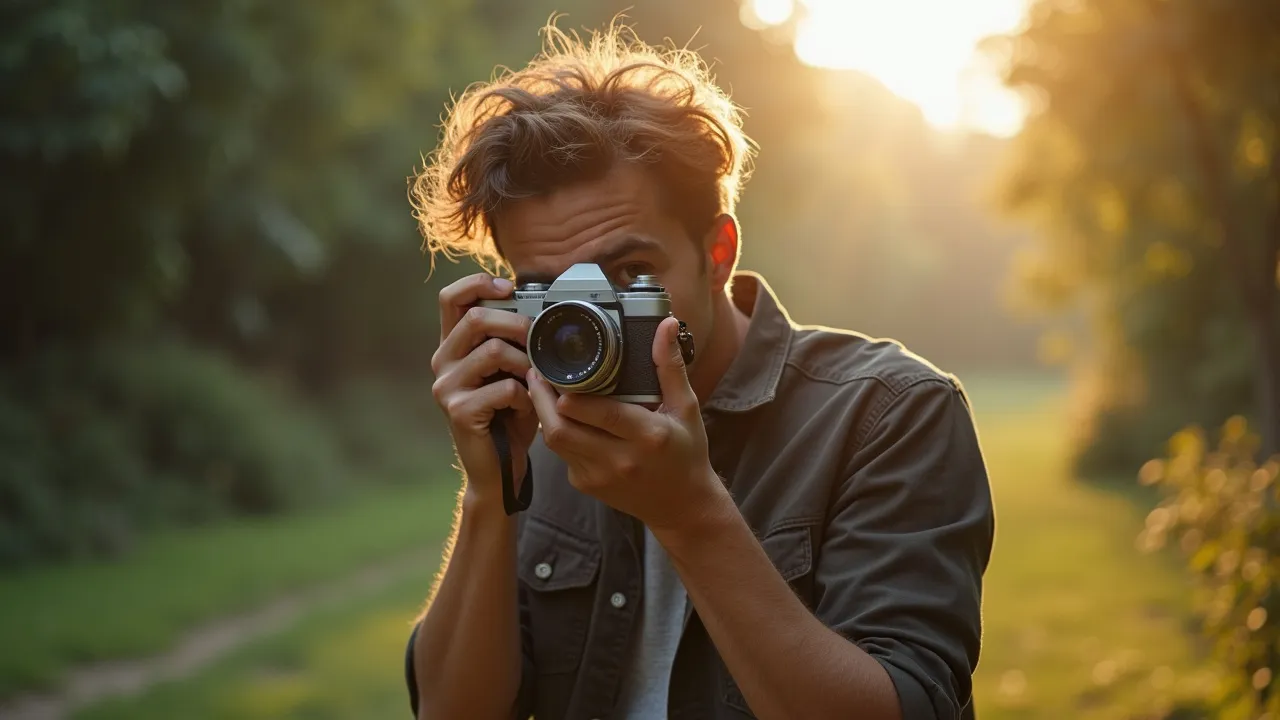
World Photography Day on August 19th celebrates the art and science of photography, honoring the invention of the daguerreotype in 1839. It's a day for photographers worldwide to share their work and passion.
The Historical Origins & Evolutionary Journey
World Photography Day, observed annually on August 19th, traces its roots to the official announcement of the daguerreotype process in 1839. This date marks a pivotal moment in human history when photography was first made freely available to the world.
The Foundational Catalyst
On August 19, 1839, the French government announced the invention of the daguerreotype by Louis Daguerre, effectively gifting the technology to the world. This act of open access democratized image-making and sparked a revolution in visual culture. The daguerreotype produced highly detailed, permanent images on silver-plated copper sheets, quickly gaining popularity across Europe and North America.
The Legislative/Official Adoption
While the date itself has been celebrated informally for decades, the modern World Photography Day began as a global online event in 2010, initiated by Australian photographer Korske Ara and supported by the World Photography Day organization. It was not tied to any government proclamation but grew organically through social media and community efforts. The official website (worldphotographyday.com) launched in 2011, formalizing the celebration.
Modern Global Legacy
Today, World Photography Day is recognized by photographers, enthusiasts, and brands worldwide. It serves as a platform to showcase the power of photography in documenting history, expressing creativity, and driving social change. The day emphasizes the importance of visual literacy and the evolving role of photography in the digital age.
How to Celebrate World Photography Day
World Photography Day offers countless ways to participate, from solo projects to global collaborations. Below are structured strategies for individuals, schools, and organizations to make the most of this observance.
For Individuals
- Take a photo a day: Commit to capturing one image every hour to document your day.
- Share on social media: Use hashtags like #WorldPhotographyDay and #WPD to connect with the global community.
- Learn a new technique: Experiment with long exposure, macro, or portrait lighting.
- Organize a photo walk: Gather friends or join a local group to explore your city through the lens.
For Schools & Educational Institutions
- Host a photography contest: Encourage students to submit photos based on a theme, such as 'community' or 'nature'.
- Invite a guest photographer: Arrange a virtual or in-person talk to inspire students.
- Create a slideshow exhibition: Display students' work in hallways or on the school website.
For Organizations & Brands
- Launch a user-generated content campaign: Ask followers to share their photos with a branded hashtag.
- Donate to photography education: Support nonprofits that teach photography to underserved communities.
- Offer discounts on photography gear: Partner with camera manufacturers for special promotions.
Regional Variations
While August 19th is the primary date, some regions hold alternative celebrations. For example, in India, National Photography Day is celebrated on August 19th as well, aligning with the global date. In some countries, photography festivals occur around this time, such as the Rencontres d'Arles in France (held throughout summer) or the Visa pour l'Image festival in Perpignan, which often coincides with late August. These events offer unique opportunities for cultural exchange and professional development.
The Global Impact of Photography
Photography has transformed how we perceive reality, document history, and communicate across cultures. On World Photography Day, we reflect on its profound societal influence.
Documentary and Journalism
Photojournalism has brought critical issues to light, from the Vietnam War to modern refugee crises. Images like Nick Ut's 'The Napalm Girl' or Kevin Carter's 'Starving Child and Vulture' have spurred global action and debate.
Social Media and Self-Expression
Platforms like Instagram have democratized photography, allowing anyone to become a visual storyteller. This has fostered creativity but also raised concerns about authenticity and mental health.
Scientific and Medical Advances
Photography is indispensable in fields like astronomy (Hubble images), microscopy (cellular imaging), and radiology (X-rays). It enables us to see the invisible and advance knowledge.
Preservation of Heritage
Photography archives cultural artifacts, endangered languages, and disappearing landscapes. Organizations like the Endangered Archaeology in the Middle East use aerial photography to document heritage sites.
Technological Evolution: From Daguerreotype to AI
The journey of photography technology is a story of constant innovation, from bulky daguerreotype cameras to smartphone sensors and AI-driven editing.
The Analog Era
Early processes required long exposures and delicate handling. The introduction of roll film by George Eastman in 1888 made photography accessible to amateurs. The 35mm format, popularized by Leica, dominated the 20th century.
The Digital Revolution
The first digital camera was invented in 1975 by Kodak engineer Steven Sasson. By the 2000s, digital cameras surpassed film in sales, and smartphones eventually integrated high-quality cameras, making photography ubiquitous.
Artificial Intelligence and Beyond
Modern AI enhances computational photography, enabling features like night mode, portrait bokeh, and automatic editing. However, it also raises ethical questions about manipulation and deepfakes. The future may involve light-field cameras and advanced sensor technologies that capture depth and motion in new ways.
Themes in Contemporary Photography
World Photography Day often highlights themes that reflect current societal conversations. In recent years, key themes include:
- Climate change: Photographers document melting glaciers, wildfires, and the impact of human activity on the planet.
- Identity and representation: Underrepresented voices use photography to challenge stereotypes and reclaim narratives.
- Mental health: Self-portraiture and therapeutic photography help individuals cope with anxiety and depression.
- Abstract and conceptual: Artists push boundaries with surreal compositions and mixed media.
These themes underscore photography's role as both an art form and a tool for advocacy.
Ethics and Responsibility in Photography
With great power comes great responsibility. World Photography Day also serves as a reminder of ethical practices in image-making.
Consent and Privacy
Photographers must respect subjects' rights, especially in vulnerable situations. The rise of street photography and surveillance cameras has sparked debates about public vs. private space.
Authenticity and Manipulation
While post-processing is acceptable, misleading edits that distort reality undermine trust. Photojournalistic standards require maintaining the integrity of the original scene.
Cultural Sensitivity
Photographing cultural rituals or sacred sites requires permission and understanding. Exploitative imagery can perpetuate stereotypes and colonial attitudes.
By adhering to ethical guidelines, photographers can ensure their work contributes positively to society.
Historical Timeline
Louis Daguerre's daguerreotype process is announced to the public in Paris, marking the birth of practical photography.
George Eastman introduces the Kodak camera, making photography accessible to amateurs with the slogan 'You press the button, we do the rest.'
The Leica I camera is launched, popularizing the 35mm format and revolutionizing candid and street photography.
Edwin Land demonstrates the Polaroid instant camera, allowing instant photo development.
Steven Sasson at Kodak invents the first digital camera, a 0.01-megapixel device that recorded black-and-white images onto a cassette tape.
Adobe Photoshop 1.0 is released, transforming digital image editing.
The first camera phone, the Sharp J-SH04, is released in Japan, beginning the era of mobile photography.
World Photography Day is first observed as a global online event, initiated by Australian photographer Korske Ara.
Instagram reaches 300 million users, solidifying the platform as the dominant social network for photography.
The COVID-19 pandemic spurs a surge in home-based photography projects and virtual exhibitions.
AI image generators like DALL-E and Midjourney challenge traditional definitions of photography.