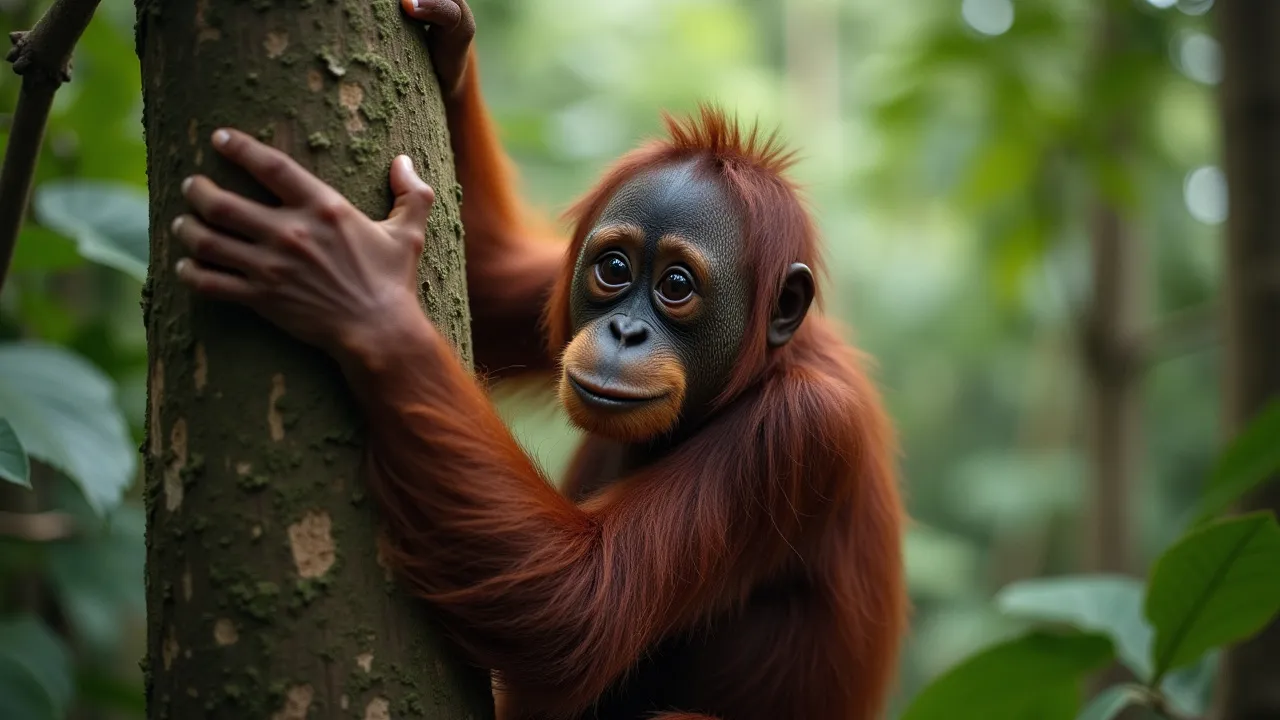
International Orangutan Day on August 19th raises awareness for the critically endangered orangutans and their rapidly vanishing rainforest habitats. This day calls for global action to protect these great apes.
The Historical Origins & Evolutionary Journey of International Orangutan Day
International Orangutan Day, observed annually on August 19th, emerged from a growing global recognition of the dire plight facing orangutans. These great apes, native exclusively to the rainforests of Borneo and Sumatra, have seen their populations plummet due to deforestation, illegal wildlife trade, and habitat fragmentation. The day was first conceived by conservation organizations, notably the Orangutan Foundation International (OFI), to galvanize public support and funding for orangutan protection.
The Foundational Catalyst
In the early 2000s, scientists warned that orangutans could become extinct in the wild within decades if immediate action was not taken. The rapid expansion of palm oil plantations, logging, and mining had destroyed over 80% of their habitat in some regions. In response, OFI, the World Wildlife Fund (WWF), and local Indonesian and Malaysian NGOs began coordinating awareness campaigns. The first official International Orangutan Day was celebrated in 2014, marking a pivotal moment when the global community united to shine a spotlight on these critically endangered primates.
The Legislative/Official Adoption
Although not a federal holiday in any country, the day gained official endorsements from zoos, botanical gardens, and conservation agencies worldwide. Many governments in orangutan range states, such as Indonesia and Malaysia, incorporate the day into their environmental education programs. The United Nations Environment Programme (UNEP) also recognizes the day as part of its broader biodiversity awareness initiatives.
Modern Global Legacy
Since 2014, International Orangutan Day has grown into a global movement. Thousands of events are held annually—from school assemblies to fundraising galas—all aimed at protecting orangutans and their habitats. The day has also become a platform to advocate for sustainable palm oil, reforestation, and anti-poaching laws. Its legacy is a heightened public consciousness that ensures orangutans remain a priority in conservation discourse.
How to Celebrate International Orangutan Day
International Orangutan Day offers countless opportunities for individuals, schools, and organizations to make a tangible difference. Whether you are a seasoned conservationist or a curious newcomer, here is your definitive guide to celebrating this critical day.
For Individuals
- Educate yourself: Watch documentaries like 'The Great Apes' or read books by Dr. Birute Galdikas. Understanding the challenges orangutans face is the first step.
- Adopt an orangutan: Symbolic adoptions through the Orangutan Foundation International or WWF fund rescue and rehabilitation efforts.
- Raise funds: Set up a small online fundraiser or donate directly to verified conservation projects.
- Go palm-oil-free for a day: Check labels and avoid products containing unsustainable palm oil. Use the 'Sustainable Palm Oil Shopping' app to guide you.
For Schools
- Host an educational assembly: Invite guest speakers from local zoos or conservation groups. Show slideshows of orangutans in the wild.
- Create awareness campaigns: Have students design posters or social media graphics sharing facts about orangutans.
- Organize a 'Rainforest Day': Decorate classrooms with paper vines and leaves, and teach children about the biodiversity of Bornean and Sumatran forests.
For Organizations
- Corporate matching gifts: Announce that your company will match employee donations to orangutan charities.
- Sustainable sourcing review: Use the day to audit your supply chain for palm oil and commit to certified sustainable sources.
- Volunteer day: Partner with local conservation groups for a tree-planting or clean-up event.
Traditions Around the World
In Indonesia, zoos and conservation centers hold 'Orangutan Enrichment Days' where caretakers introduce new toys and puzzles to stimulate the apes. In the UK, the Durrell Wildlife Park organizes a 'Great Ape Awareness Week' leading up to August 19th. In the United States, the annual 'Orangutan Festival' at the Miami Zoo features educational booths and sustainable palm oil demonstrations. These regional variations highlight the universal appeal of orangutan conservation.
The Critical State of Orangutans: Population and Conservation Status
Orangutans are among the most endangered species on Earth. The Bornean orangutan (Pongo pygmaeus) is listed as Critically Endangered by the IUCN, with an estimated 100,000 individuals remaining in the wild. The Sumatran orangutan (Pongo abelii) is also Critically Endangered, with fewer than 14,000 left. The recently discovered Tapanuli orangutan (Pongo tapanuliensis) is the rarest great ape, with only about 800 individuals surviving in a small forest fragment in Sumatra.
Population Decline Trends
Since the 1960s, orangutan populations have declined by over 50%. Key drivers include:
- Habitat loss: Over 30% of orangutan habitat was lost between 1990 and 2010 due to palm oil, logging, and mining.
- Illegal wildlife trade: Hunderds of orangutans are captured each year for the pet trade, often killing mothers to steal babies.
- Human-wildlife conflict: As forests shrink, orangutans are forced into plantations where farmers kill them as pests.
Conservation Successes
Despite the grim numbers, there are glimmers of hope. The establishment of protected areas like Gunung Leuser National Park in Sumatra and Tanjung Puting National Park in Borneo has provided safe havens. Reintroduction programs have successfully returned hundreds of rehabilitated orangutans to the wild. International pressure has also led to moratoriums on new palm oil concessions in some regions.
Threats to Orangutans: Deforestation and the Palm Oil Industry
The single greatest threat to orangutans is the destruction of their rainforest habitat for palm oil production. Palm oil is an edible vegetable oil used in half of all packaged goods, from chocolate to shampoo. Indonesia and Malaysia produce 85% of the world's palm oil, and their forests are cleared at an alarming rate to make way for monoculture plantations.
The Deforestation Crisis
Satellite imagery shows that over the past two decades, nearly 10 million hectares of orangutan habitat have been cleared—an area roughly the size of Iceland. This not only eliminates homes for orangutans but also fragments populations, making them vulnerable to inbreeding and local extinction.
Impact of Climate Change
Climate change exacerbates the crisis. More frequent and severe droughts lead to forest fires, which kill orangutans and destroy their food sources. The 2015 El Niño fires in Indonesia killed an estimated 2,000 orangutans.
The Role of Consumer Choices
Consumers can drive change by choosing products that use Certified Sustainable Palm Oil (CSPO) or palm oil-free alternatives. Companies like Nestlé and Unilever have committed to sustainable sourcing, but enforcement remains weak. International Orangutan Day serves as a reminder to hold corporations accountable.
Conservation Efforts and Success Stories
Dedicated conservation initiatives have achieved remarkable results despite overwhelming odds. Dr. Birute Galdikas, a protégé of Louis Leakey and Jane Goodall, has spent over 40 years studying and rehabilitating orangutans in Borneo. Her organization, the Orangutan Foundation International (OFI), operates a 4,000-hectare reserve at Pasir Panjang and has released hundreds of orangutans back into the wild.
Rehabilitation and Release Programs
Centers like the Sepilok Orangutan Rehabilitation Centre in Malaysia and the Sumatran Orangutan Conservation Programme (SOCP) in Indonesia take in orphaned and displaced orangutans. After months of medical care and forest school training, these apes are released into protected forests. Since 2000, SOCP has released over 200 Sumatran orangutans.
Community-Based Conservation
Local communities are central to long-term success. Projects like the Borneo Orangutan Survival Foundation (BOSF) work with indigenous groups to promote sustainable agriculture and ecotourism. In the village of Sungai Putri, former poachers now serve as forest guardians, earning a living protecting the very orangutans they once hunted.
Legal Victories
In 2018, an Indonesian court sentenced a palm oil company to pay $300 million in damages for illegally clearing orangutan habitat—a landmark ruling that sent shockwaves through the industry.
How to Support Orangutan Protection Year-Round
International Orangutan Day may be on August 19th, but orangutans need help every day. Here are lasting ways to contribute:
- Adopt an orangutan: Symbolic adoptions from WWF or OFI fund rescue, rehabilitation, and habitat protection.
- Choose sustainable palm oil: Use the 'Palm Oil Guide' app to find responsible brands. Look for RSPO certification.
- Reduce, reuse, recycle: Less consumption means less demand for raw materials that drive deforestation.
- Eco-tourism: Visit orangutan sanctuaries in Borneo or Sumatra. Revenue from responsible tourism supports conservation.
- Advocate: Write to your government representatives urging them to ban imports of products tied to deforestation.
- Educate others: Share resources and facts about orangutans on social media using #InternationalOrangutanDay.
Historical Timeline
Dr. Birute Galdikas begins her groundbreaking field study of orangutans in Borneo, later founding the Orangutan Foundation International.
The Sumatran orangutan is listed as Critically Endangered on the IUCN Red List, highlighting the species' dire status.
Palm oil expansion accelerates; orangutan habitat loss reaches crisis levels. Conservation groups intensify anti-deforestation campaigns.
The Sumatran Orangutan Conservation Programme (SOCP) is established, focusing on rescue, rehabilitation, and release.
The first International Orangutan Day is celebrated on August 19th, initiated by the Orangutan Foundation International and partners.
Massive forest fires in Indonesia kill an estimated 2,000 orangutans; International Orangutan Day gains broader attention.
The Tapanuli orangutan is discovered and immediately classified as Critically Endangered, with fewer than 800 individuals.
Virtual events dominate International Orangutan Day as COVID-19 limits in-person gatherings; online fundraising surges.