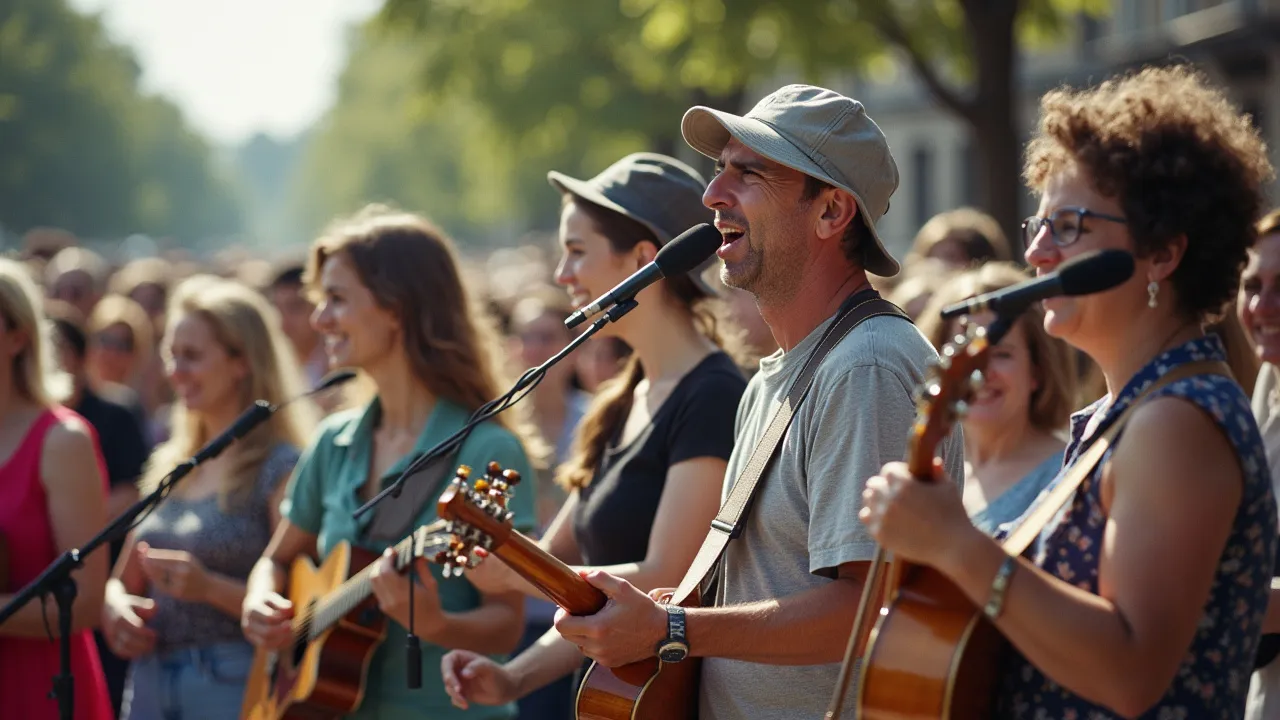
World Music Day, or Fête de la Musique, celebrates music worldwide on June 21st. Initiated in France in 1982, it encourages amateur and professional musicians to perform publicly, fostering community and cultural exchange.
The Historical Origins & Evolutionary Journey
World Music Day, originally known as Fête de la Musique, was born from a vision to democratize music and bring it into the streets. The foundational catalyst was a 1976 study by French musician and composer Maurice Fleuret, who discovered that only 5% of French population played a musical instrument. He conceived the idea of a day when everyone would make music, not just listen.
The Foundational Catalyst
In 1981, Fleuret became director of music and dance at the French Ministry of Culture. Together with Minister Jack Lang, they planned a massive free music festival for the summer solstice. The first edition on June 21, 1982, saw thousands of amateur and professional musicians performing for free in streets, parks, and public squares across France. The event was an instant success.
The Legislative/Official Adoption
While not a law, the French government officially endorsed the event, and it quickly spread. In 1985, the European Music Day was launched, encouraging participation across Europe. By the 1990s, over 100 countries had adopted the concept. The United States launched Make Music Day in 2006 through the National Association of Music Merchants (NAMM).
Modern Global Legacy
Today, World Music Day is celebrated in more than 120 countries. It has evolved from a French grassroots movement into a global phenomenon, often paired with digital streaming events and social media campaigns. The core principle remains: music is for everyone, and everyone is invited to make it.
How to Celebrate World Music Day (Fête de la Musique)
Celebrating World Music Day is simple: make music or listen to music. Here is a definitive guide for individuals, schools, and organizations across different cultures.
Individual Participation
- Play an instrument in a public place: a park, sidewalk, or your balcony.
- Sing in a choir or karaoke session.
- Attend free concerts organized in your city.
- Share your music on social media using hashtags like #WorldMusicDay or #FetedelaMusique.
School and Community Events
- Organize a student recital or open mic.
- Host a music workshop where participants learn a new instrument.
- Arrange a flash mob with a simple song.
Country-Specific Traditions
In France, the streets fill with musicians of all genres, from classical to hip-hop. In Germany, cities like Berlin feature hundreds of free stages. In India, classical and folk music performances are emphasized. In the United States, Make Music Day partners with local venues and schools for a nationwide celebration. Many countries also use the day to promote traditional indigenous music.
Global Impact and Cultural Significance
World Music Day has transformed how people engage with music. It breaks down barriers between amateur and professional, and between genres. The event promotes cultural diversity by showcasing traditional music alongside contemporary pop. In many conflict-affected regions, it serves as a tool for peace and reconciliation. For example, in Israel and Palestine, joint concerts have been organized. The day also supports music education, as schools open their doors to community performances. Economically, it boosts local tourism and hospitality industries, as street musicians attract crowds to cafes and restaurants.
The Role of Technology and Social Media
Technology has amplified World Music Day's reach. Since the 2010s, live streaming and virtual concerts have allowed remote participation. Platforms like YouTube and Spotify curate playlists for the day. Social media trends like #StreetMusic and #MusicDay go viral, encouraging user-generated content. In 2020, during the COVID-19 pandemic, the day went digital with online performances, proving its adaptability. Mobile apps help users find nearby events, and GPS-based maps show live performances worldwide. However, the essence remains offline: the joy of live, unamplified music in public spaces.
Economic and Tourism Impact
World Music Day generates significant economic activity. In France alone, the event attracts millions of participants and boosts spending on transportation, food, and merchandise. Cities like Paris, Lyon, and Marseille see increased foot traffic, benefiting local businesses. Globally, it promotes cultural tourism: travelers plan trips around the day to experience unique musical traditions. For instance, New Orleans uses the day to celebrate jazz, while Rio de Janeiro highlights samba. The free concerts also provide a platform for emerging artists to gain exposure and future gigs. Governments and tourism boards often partner with the event to showcase their cultural heritage.
Educational and Community Initiatives
World Music Day strongly emphasizes music education. Many schools organize instrument petting zoos where children can try different instruments. Workshops on music production, songwriting, and traditional techniques are common. Nonprofits use the day to fundraise for music programs in underprivileged areas. In the UK, the Musicians' Union supports free lessons. Community choirs and drum circles bring people together. Additionally, the day encourages intergenerational bonding: grandparents teach folk songs to grandchildren. Libraries and museums often host lectures on music history. Overall, it reinforces that music is a fundamental human activity, not just a spectator sport.
Historical Timeline
French musician Maurice Fleuret conducts a study on musical practices, revealing that only 5% of the French population plays an instrument. He dreams of a day when everyone makes music.
Jack Lang becomes French Minister of Culture and appoints Fleuret as director of music and dance. They start planning a massive free music festival.
First Fête de la Musique on June 21st, the summer solstice. Thousands of amateur and professional musicians perform for free across France.
European Music Day launched, with many countries in Europe joining the celebration.
World Music Day spreads globally, adopted in over 100 countries, including Japan, Australia, and South Africa.
The National Association of Music Merchants (NAMM) introduces Make Music Day in the United States, aligning with the global event.
Make Music Day officially becomes a US national event with a coalition of partners, including the Library of Congress.
During the COVID-19 pandemic, World Music Day goes digital with live-streamed performances and virtual participation.
Over 120 countries celebrate World Music Day, with events ranging from street performances to virtual reality concerts.