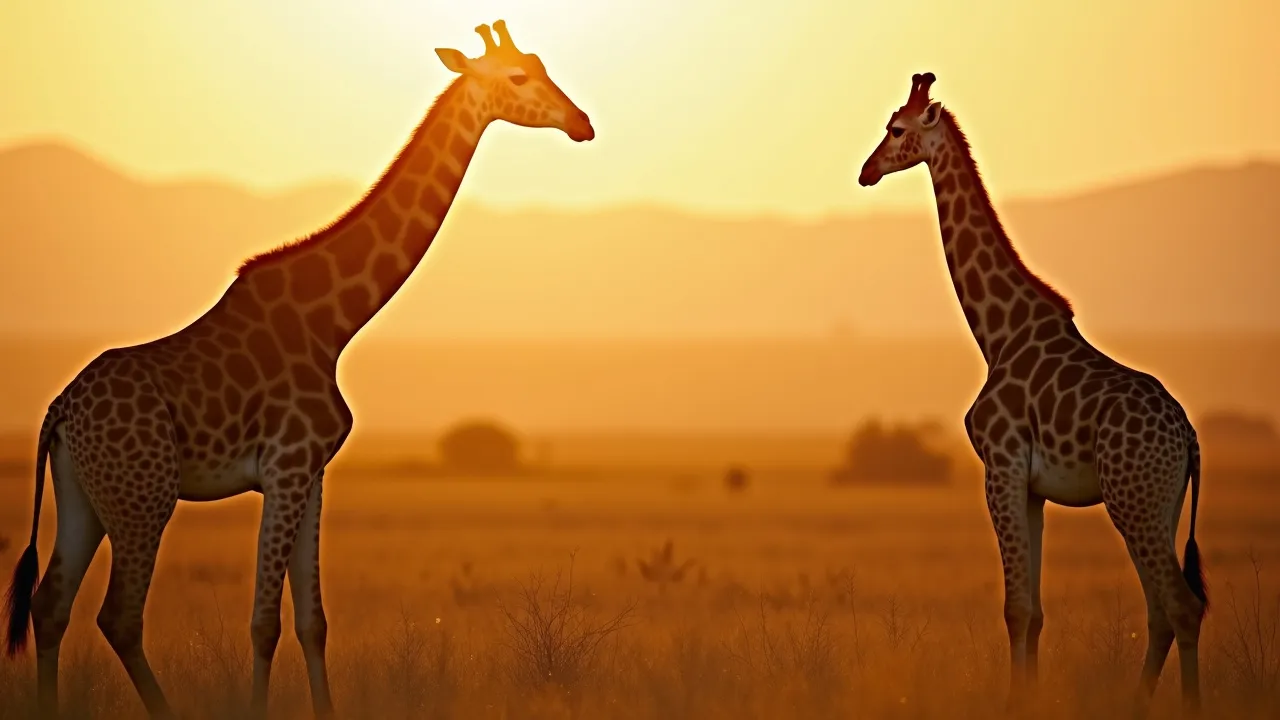
World Giraffe Day, observed on June 21st each year, celebrates the world's tallest mammal and raises awareness for giraffe conservation. Initiated by the Giraffe Conservation Foundation in 2014, it highlights the silent extinction crisis facing giraffes across Africa.
The Historical Origins & Evolutionary Journey
World Giraffe Day was established in 2014 by the Giraffe Conservation Foundation (GCF) to address the alarming decline of giraffe populations across Africa. The date June 21st was chosen symbolically as the longest day of the year in the Northern Hemisphere, mirroring the giraffe's long neck and its stature as the world's tallest mammal.
The Foundational Catalyst
Prior to 2014, giraffes were largely overlooked in mainstream conservation efforts. Dr. Julian Fennessy, co-founder of GCF, recognized that giraffes were undergoing a "silent extinction" — their numbers plummeted from an estimated 140,000 in 1999 to fewer than 100,000 by 2014. This stark decline prompted the creation of a dedicated awareness day.
- 2012: GCF begins preliminary research on giraffe population genetics.
- 2013: Global conservation partners call for a unified awareness campaign.
- 2014: World Giraffe Day is officially launched on June 21st.
The Legislative/Official Adoption
While not a legal holiday, World Giraffe Day has been endorsed by numerous zoos, wildlife reserves, and educational institutions worldwide. The International Union for Conservation of Nature (IUCN) has since upgraded giraffes' status from Least Concern to Vulnerable, partly due to advocacy from GCF and World Giraffe Day campaigns.
Modern Global Legacy
Today, World Giraffe Day is celebrated in over 50 countries, involving zoo events, online fundraisers, and community education. The day has helped raise millions of dollars for giraffe conservation projects in Africa, including anti-poaching patrols and habitat restoration.
How to Celebrate World Giraffe Day
World Giraffe Day offers a spectrum of participation opportunities, from individual actions to large institutional events. Below are comprehensive strategies for different sectors.
For Individuals & Families
- Learn and Share: Watch documentaries like "The Last Giraffe" or read GCF reports. Share facts on social media using #WorldGiraffeDay.
- Adopt a Giraffe: Donate to GCF's symbolic adoption program, which directly supports field projects.
- Reduce Waste: Giraffe habitat is threatened by human encroachment. Commit to reducing plastic and recycling.
For Schools & Youth Groups
- Classroom Activities: Host a giraffe-themed art contest, or measure children's height against a giraffe cutout.
- Fundraiser: Organize a bake sale or run-a-thon with proceeds going to GCF.
- Virtual Field Trip: Connect via Zoom with a ranger from a giraffe sanctuary in Namibia.
For Zoos & Conservation Organizations
- Special Feeding Sessions: Offer giraffe feeding experiences with educational commentary.
- Social Media Campaigns: Live stream giraffe habitats and interview conservationists.
- Pledge Drives: Encourage visitors to commit to sustainable choices that protect giraffe habitats.
Global Traditions
In Kenya, local communities hold "Giraffe Walks" through the savanna. In Europe, many zoos host overnight "Giraffe Safaris." The day is also used to spotlight the four distinct giraffe species (Masai, Reticulated, Northern, Southern) and their varying conservation needs.
Conservation Impact & Threats
Giraffe populations have declined by nearly 40% over the past three decades, a phenomenon known as the "silent extinction." World Giraffe Day directly addresses these threats through awareness and funding.
Primary Threats
- Habitat Loss: Agriculture, mining, and settlement expansion fragment giraffe ranges.
- Poaching: Illegal hunting for meat, hide, and tails — often for local bushmeat trade.
- Civil Unrest: Conflicts in regions like South Sudan and northern Kenya disrupt conservation efforts.
- Climate Change: Altered rainfall patterns affect the acacia trees giraffes depend on.
Conservation Success Stories
Thanks to GCF and partners, the Rothschild's giraffe (now classified as Nubian giraffe) has seen a population increase from under 2,000 to over 3,500. In Niger, the West African giraffe rebounded from just 50 individuals to over 600 today through community-led protection.
How World Giraffe Day Helps
Funds raised go directly to GPS-tagging projects, anti-poaching patrols, and reintroduction programs. The day also pushes for policy changes, such as the inclusion of giraffes under CITES Appendix II, which regulates international trade.
Giraffe Biology & Unique Adaptations
Giraffes are evolutionary marvels, and World Giraffe Day is an opportunity to appreciate their biological uniqueness.
The Tallest Bodily Systems
- Cardiovascular: A giraffe's heart weighs up to 12 kg (26 lbs) and beats at 30-40 bpm. Special valves prevent blood from pooling in the legs.
- Circulatory: High blood pressure (twice that of humans) is required to pump blood up the 2-meter neck. A complex system of vessels in the head regulates flow when bending down.
- Neck: Despite its length, the giraffe neck has only seven vertebrae (like humans), each elongated up to 10 inches.
Social & Reproductive Behavior
Giraffes live in fluid social groups called "towers." Males engage in "necking" – a combat behavior using their necks as clubs to establish dominance. Females give birth standing up, and calves can stand within 30 minutes.
Diet & Digestion
They are browsers, feeding primarily on acacia leaves. Their tongues are up to 45 cm (18 in) long, prehensile, and covered in thick saliva to protect against thorns. They can go without water for days, obtaining moisture from leaves.
Global Awareness & Education
World Giraffe Day serves as a powerful educational platform. Its reach extends across continents, engaging diverse audiences through media and events.
Media Campaigns
- Documentaries: BBC, National Geographic, and Netflix feature giraffe programs coinciding with June 21st.
- Social Media: The #WorldGiraffeDay hashtag trends annually, with celebrities like Ellen DeGeneres and conservationist Jane Goodall lending support.
- School Curricula: GCF provides free lesson plans for teachers covering ecology, conservation, and geography.
Community Involvement
In Namibia, local schools host "Giraffe Ambassador" programs, where children patrol communal lands for giraffe sightings. In the United States, many zoos offer discounted admission for wearing giraffe-print clothing.
Digital Tools
Virtual reality tours, live webcams from African reserves, and interactive maps showing giraffe migration patterns expand the day's educational impact globally.
Economic & Tourism Aspects
Giraffes contribute to ecotourism, a vital economic sector for many African countries. World Giraffe Day promotes sustainable tourism practices that benefit local communities.
Tourism Revenue
Giraffe-viewing safaris generate millions of dollars annually in countries like Kenya, Tanzania, South Africa, and Namibia. A single giraffe can bring in up to $150,000 in tourism revenue over its lifetime. World Giraffe Day encourages travelers to book ethical tours that prioritize animal welfare.
Community Benefits
- Job Creation: Local guides, lodge staff, and artisans benefit from giraffe-related tourism.
- Conservation Levies: Many reserves charge a "conservation fee" per visitor, directly funding anti-poaching efforts.
- Cultural Pride: Giraffes feature prominently in Maasai and San folklore, and tourism helps preserve these traditions.
Sustainable Practices
World Giraffe Day advocates for low-impact tourism, such as using electric safari vehicles, limiting group sizes, and prohibiting off-road driving that damages vegetation.
Future Outlook & Call to Action
The future of giraffes hinges on sustained global engagement. World Giraffe Day galvanizes support for long-term strategies.
Conservation Goals
- Population Recovery: GCF aims to achieve 200,000 giraffes in the wild by 2050.
- Habitat Connectivity: Creating wildlife corridors between fragmented reserves remains a priority.
- Legislation: Pushing for stronger anti-poaching laws and trade restrictions.
How You Can Help Beyond the Day
- Monthly Donations: Subscribe to GCF’s conservation program.
- Be a Responsible Tourist: Choose companies that give back to conservation.
- Advocate: Write to policymakers about protecting giraffe habitats.
- Spread Awareness: Host a movie night or lecture in your community.
World Giraffe Day is not just a celebration — it’s a lifeline. Every action, big or small, contributes to ensuring that future generations will see giraffes roaming the African savanna.
Historical Timeline
Dr. Julian Fennessy and colleagues initiate comprehensive genetic research on giraffe populations across Africa, laying the groundwork for conservation prioritization.
The Giraffe Conservation Foundation (GCF) is established, and the idea of a dedicated awareness day is proposed.
First World Giraffe Day celebrated on June 21st. GCF launches campaign highlighting the 'silent extinction' – giraffe populations had fallen to under 100,000.
IUCN Red List upgrades giraffe status from Least Concern to Vulnerable, partially due to data from GCF and World Giraffe Day advocacy.
GCF confirms four distinct giraffe species (Masai, Reticulated, Northern, Southern) via genetic analysis, refining conservation strategies.
World Giraffe Day goes virtual due to COVID-19, with online events reaching over 10 million people globally.
GCF reports that the Nubian giraffe (former Rothschild's giraffe) population has increased to over 3,500, a conservation milestone.
World Giraffe Day celebrates its 10th anniversary; over $5 million raised for conservation since inception.