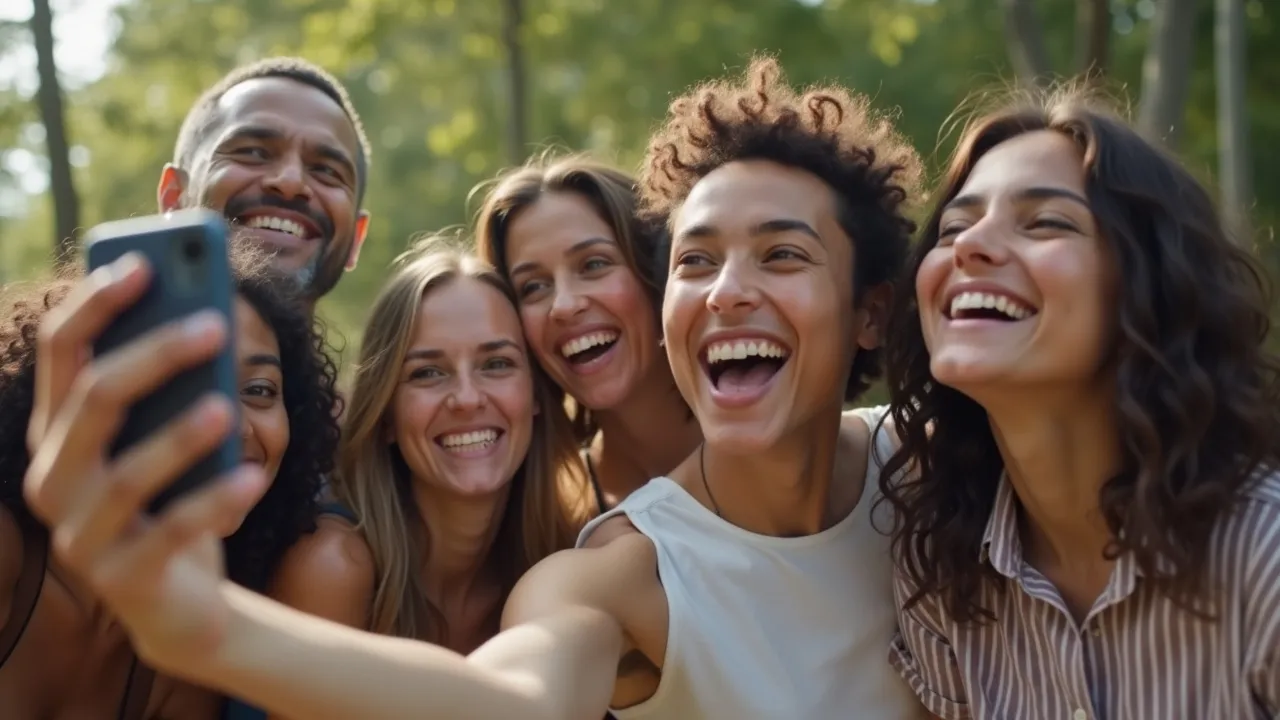
National Selfie Day, observed annually on June 21st, celebrates the art of the self-portrait photograph. It encourages individuals to capture and share moments of self-expression, confidence, and creativity through the ubiquitous smartphone camera.
The Historical Origins & Evolutionary Journey
National Selfie Day, celebrated on June 21st each year, is a modern observance that captures the zeitgeist of the digital age. While the act of taking a self-portrait dates back to the early days of photography, the formal designation of a day dedicated to selfies emerged from the rise of social media and smartphone technology. The holiday was established in 2014 by Rick McNeely, a radio host from the United States, who aimed to create a fun, lighthearted day for people to share their self-portraits online.
The Foundational Catalyst
The word "selfie" was first used in 2002 on an Australian online forum, but it gained mainstream traction with the advent of front-facing cameras on smartphones. Apple introduced the iPhone 4 in 2010 with a front camera, and shortly after, Instagram launched in 2010, revolutionizing how people share photos. The selfie became a cultural phenomenon, peaking in 2013 when the word "selfie" was named Oxford Dictionaries' Word of the Year. This recognition cemented the selfie as a legitimate form of communication and self-expression.
The Legislative/Official Adoption
Unlike many official holidays, National Selfie Day was not established by government proclamation but through grassroots and media promotion. McNeely, a radio personality on WKRQ in Cincinnati, Ohio, proposed the idea and used his platform to encourage listeners to take selfies on the summer solstice (often June 21). The idea quickly spread through social media and news outlets, and by 2015, the day was widely recognized in the United States and beyond. No official legislation has been passed, but the day is now listed on numerous holiday calendars and celebrated globally.
Modern Global Legacy
National Selfie Day has evolved into a worldwide digital phenomenon. Brands, celebrities, and ordinary people participate by posting selfies with hashtags like #NationalSelfieDay. The day also highlights the intersection of identity, technology, and culture. In some regions, it has prompted discussions about self-esteem, digital literacy, and the ethics of sharing personal images. Today, June 21st serves as a reminder of how a simple self-portrait can connect people across borders, cultures, and generations.
How to Celebrate National Selfie Day
National Selfie Day is a global invitation to snap, edit, and share your self-portrait. Whether you are a seasoned selfie-taker or a beginner, there are countless ways to participate. Below is a comprehensive guide to celebrating this day with creativity, safety, and inclusivity.
Individual Celebrations
- Capture your moment: Take a selfie that reflects your personality—try different poses, backgrounds, or lighting. Use natural light for the best results.
- Tell a story: Share a selfie that conveys how you are feeling or what you are doing. Add a caption that explains the context.
- Experiment with editing apps: Use photo editing tools to add filters, text, or artistic effects. But keep it authentic—avoid over-editing that changes your appearance drastically.
- Create a series: Take multiple selfies throughout the day to document your activities. Compile them into a collage or a short video.
Social Media Engagement
- Post with hashtags: Use #NationalSelfieDay, #SelfieDay, and #June21. This helps your content reach a wider audience.
- Tag friends: Nominate friends to take their own selfies. Challenge them to recreate a classic portrait or a themed pose.
- Join trends: Look out for trending challenges or filters on platforms like Instagram, TikTok, and Twitter. Participate in brand-sponsored contests.
Group and Corporate Celebrations
Schools, offices, and organizations can celebrate National Selfie Day by organizing team-building activities. For example, hold a "best group selfie" contest with a prize, or set up a photo booth with props. Companies can engage customers by offering discounts to those who post a selfie with their product using a specific hashtag. Nonprofits might use the day to promote body positivity campaigns, encouraging people to share unfiltered selfies.
Global Traditions
While National Selfie Day is most prominent in the United States, it is observed worldwide. In Japan, selfies often incorporate cute hand gestures and filters. In Brazil, the day coincides with the winter solstice, and people take selfies at beaches. In India, selfie spots are popular at historical monuments. Regardless of location, the core tradition remains: capturing and sharing a piece of oneself with the world.
Cultural Impact of Selfies in the Digital Age
Selfies have transformed how we perceive identity and communication. Once dismissed as narcissistic, they are now recognized as a legitimate form of self-expression and social documentation. National Selfie Day amplifies this cultural shift.
The Democratization of Photography
Smartphone cameras have given everyone the ability to create and share images instantly. Selfies are a primary tool for marginalized groups to represent themselves authentically, challenging traditional media stereotypes. Movements like #BlackSelfieDay or #TransSelfieDay use selfies to reclaim visibility and assert identity.
Selfies and Mental Health
The debate over selfies and self-esteem continues. Some studies suggest that taking selfies can boost confidence and serve as a positive mirror. Others warn of the dangers of validation-seeking through likes. National Selfie Day encourages a balanced approach: celebrate yourself without comparing to others. Many influencers use the day to promote self-love and mental health awareness.
Selfies as Historical Artifacts
Curators and historians now consider selfies as cultural artifacts that document everyday life. Museums have exhibitions on the history of self-portraiture, connecting modern selfies to Renaissance paintings. This day serves as a reminder that every selfie is a small piece of history.
The Psychology Behind Selfies: Why We Snap
Understanding why we take selfies reveals deep psychological needs. National Selfie Day is an opportune moment to explore the motivations behind the lens.
Self-Presentation and Identity
Selfies allow individuals to curate their online persona. They choose angles, filters, and backgrounds to project a desired image—confident, fun, serious, or artistic. This process helps reinforce self-identity and allows for identity exploration.
Social Connection and Validation
Posting a selfie is an invitation for feedback. Positive comments and likes trigger dopamine release, reinforcing the behavior. On National Selfie Day, the collective sharing creates a sense of belonging and social bonding.
Empowerment and Agency
For many, taking a selfie is an act of control. In a world where images of us are often taken by others (e.g., surveillance, paparazzi), taking a selfie puts the power in our own hands. It is a declaration of existence and autonomy.
National Selfie Day encourages mindful selfie-taking: focus on genuine expression rather than perfection, and remember that the best selfies are those that reflect your true self.
Evolution of Smartphone Photography and the Selfie Revolution
The selfie as we know it is intrinsically linked to advances in mobile photography. From pixelated front cameras to high-resolution sensors, technology has shaped how we take and share selfies.
The First Selfie Phones
Early smartphones like the Sony Ericsson Z1010 (2003) had front cameras, but they were low-quality. The real turning point was the iPhone 4 (2010) with a VGA front camera and later the Samsung Galaxy S series. By 2015, phones like the LG G4 introduced the "gesture shot" feature for easier selfies.
Software Innovations
Apps like Snapchat (2011) and Instagram popularized filters and lenses that transform faces with augmented reality. Portrait mode, beauty filters, and AI enhancements now allow users to take professional-looking selfies. These tools become part of National Selfie Day celebrations, with many users trying out new filters.
The Future of Selfies
Emerging technologies like foldable phones with rear camera selfie screens and AI-generated avatars are redefining the selfie. National Selfie Day may soon include AR selfies where users can place themselves in virtual environments. The core act remains: a person capturing themselves, but the possibilities are endless.
Selfie Etiquette, Safety, and Best Practices
With the popularity of selfies comes responsibility. National Selfie Day is a good time to review guidelines for safe and respectful selfie-taking.
Consent and Privacy
- Ask permission: If others are in your selfie, obtain their consent before posting. Respect boundaries.
- Avoid sensitive locations: Do not take selfies at memorials, disaster sites, or places where photography is prohibited.
- Check background: Ensure no private information or strangers are unintentionally captured.
Safety First
- Be aware of your surroundings: Do not take risky selfies near cliffs, traffic, or wildlife. Many accidents occur due to distraction.
- Keep your phone secure: Do not hand your phone to strangers to take your picture—risk of theft or damage.
Digital Wellbeing
- Limit comparison: Remember that social media selfies are often curated. Focus on your own journey.
- Take breaks: Spending too much time trying to get the perfect selfie can be stressful. Enjoy the moment.
By following these practices, you can enjoy National Selfie Day while staying safe and respectful.
Historical Timeline
First recorded use of the word 'selfie' on an Australian online forum.
iPhone 4 introduces a front-facing camera, enabling easier self-portraits. Instagram launches, popularizing photo sharing.
'Selfie' is named Oxford Dictionaries' Word of the Year, reflecting its global cultural significance.
Rick McNeely, a radio host in Cincinnati, establishes National Selfie Day on June 21st. The day gains traction through social media and news coverage.
National Selfie Day is widely recognized in the US and begins spreading internationally. Brands and celebrities participate.
The Smithsonian Museum acquires a collection of selfies for its 'Selfie Portraits' exhibition, recognizing them as cultural artifacts.
During the COVID-19 pandemic, selfies become a key tool for social connection while social distancing. National Selfie Day sees record participation.
National Selfie Day continues to evolve with AI-enhanced selfies and AR filters, maintaining its relevance in the digital age.