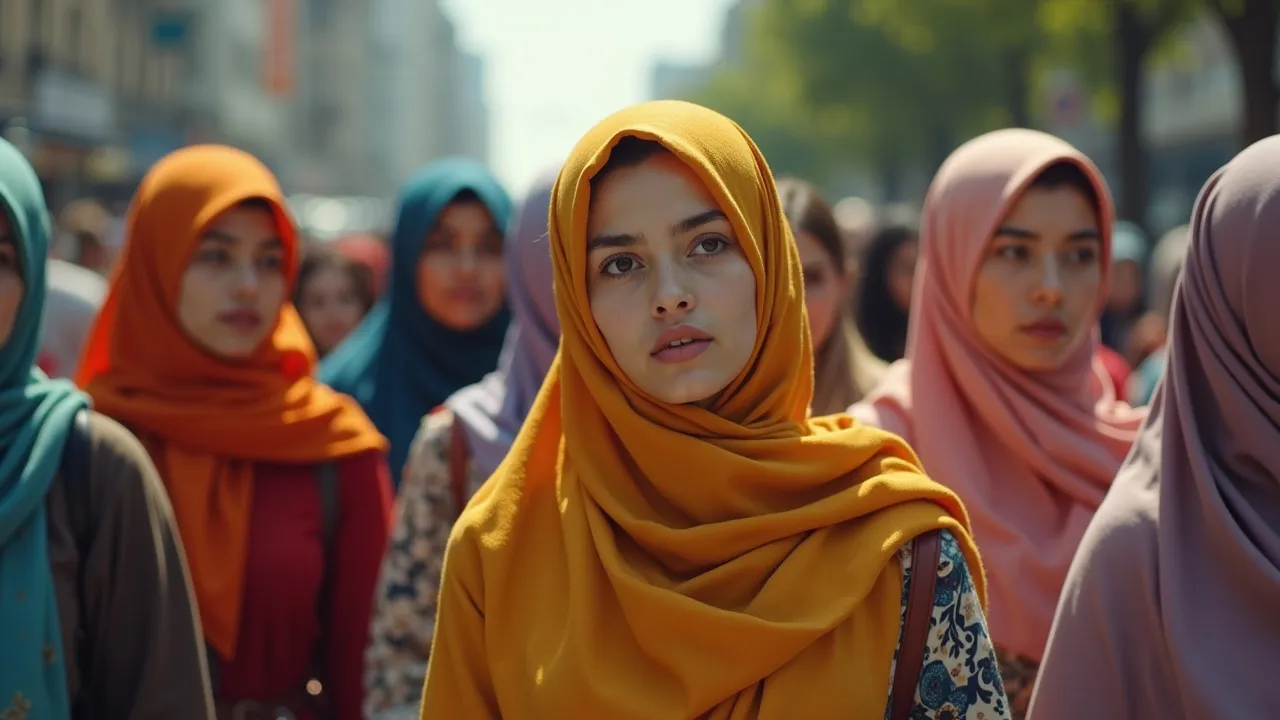
World Hijab Day, observed on February 1st, honors Muslim women’s choice to wear the hijab while promoting religious tolerance and cultural understanding. Founded by Nazma Khan in 2013, it encourages women of all backgrounds to experience the hijab for a day.
The Historical Origins & Evolutionary Journey
World Hijab Day was initiated in 2013 by Nazma Khan, a Bangladeshi-American Muslim who founded the movement after experiencing discrimination for wearing the hijab as a teenager in New York. The day was designed to foster religious tolerance and understanding by inviting both Muslim and non-Muslim women to experience wearing a hijab for one day.
The Foundational Catalyst
Nazma Khan faced years of bullying and prejudice after moving to the United States from Bangladesh. In an effort to confront stereotypes and open a dialogue, she conceived World Hijab Day as a global awareness event. The first celebration took place on February 1, 2013, with participants from over 50 countries.
The Legislative/Official Adoption
While World Hijab Day is not an official government holiday, it has garnered support from numerous human rights organizations and interfaith groups. In 2016, the New York State Senate passed a resolution recognizing February 1st as World Hijab Day. Similar recognitions have occurred in other jurisdictions, including the Philippines and several European cities.
Modern Global Legacy
Since its inception, the day has grown to include events, social media campaigns, and educational programs. The official website provides resources for schools, workplaces, and religious institutions. The movement has also faced criticism and controversy, but remains a powerful platform for dialogue about religious freedom and women’s rights.
How to Celebrate World Hijab Day
World Hijab Day offers a range of activities for individuals, communities, and organizations. The central act is to wear a hijab for the day, but there are many ways to participate meaningfully.
Individual Actions
- Wear a hijab for the entire day, even if you are not Muslim. Many participants borrow or purchase a scarf and learn basic wrapping techniques from online tutorials.
- Share your experience on social media using the hashtag #WorldHijabDay to raise awareness and join a global conversation.
- Read or watch content about hijab from authentic sources to deepen your understanding of its significance in Islam.
School and Workplace Events
- Organize a hijab-wrapping station where people can learn different styles, such as the Turkish, Malay, or Arab-style wrap.
- Host a lunchtime panel discussion featuring Muslim women who wear hijab, covering topics like modesty, identity, and workplace challenges.
- Encourage non-Muslim colleagues to try the hijab for a day and share reflections in a safe, respectful environment.
Community and Interfaith Gatherings
- Partner with local mosques or Islamic centers to hold open houses where visitors can ask questions about hijab in a friendly setting.
- Coordinate with interfaith councils to create educational pamphlets or display boards explaining the history and diversity of hijab styles across cultures.
Above all, the day is about empathy and understanding. The goal is not to convert but to build bridges.
Global Impact and Cultural Significance
World Hijab Day has influenced fashion, media, and workplace policies worldwide. Major fashion brands have featured hijab-wearing models in campaigns, while several countries have relaxed uniform codes to accommodate the hijab.
Fashion and Modest Wear Industry
The global modest fashion market, valued at over $280 billion by 2021, has been partly boosted by the visibility of World Hijab Day. Designers now create innovative fabrics and styles that blend tradition with modern trends. Hijab tutorials have become a popular genre on YouTube, with millions of subscribers.
Media Representation
Since 2013, more films, documentaries, and news segments have focused on hijab, often featuring participants of World Hijab Day. This has helped counter negative stereotypes and humanize the act of veiling.
Workplace and Educational Inclusion
The day has spurred conversations about accommodating religious attire in schools and workplaces. Several companies have revised their dress codes to explicitly allow headscarves, citing the spirit of World Hijab Day.
Religious and Personal Dimensions of Hijab
Hijab in Islam is not merely a piece of cloth but a symbol of modesty and devotion. For many Muslim women, it is a deeply personal spiritual practice.
Scriptural Foundations
The Quran instructs both men and women to dress modestly. Verses such as 24:31 and 33:59 encourage covering the adornments and drawing the cloak over the body. Scholars interpret these verses in various ways, leading to diverse practices across cultures.
Personal Testimonies
Many women describe hijab as a source of empowerment and identity. World Hijab Day provides a platform for these voices, allowing women to share their journeys without judgment.
Diverse Interpretations
Not all Muslim women wear hijab; the decision varies based on personal conviction, family tradition, and societal norms. The day respects this diversity by focusing on choice and respect.
Controversies and Misconceptions
World Hijab Day has not been without controversy. Some critics argue that the day oversimplifies complex issues of women's rights and religious freedom.
Misconception 1: Hijab as Oppression
A common misconception is that all Muslim women who wear hijab are forced. In reality, many choose it as an expression of faith. World Hijab Day emphasizes that coercion is against Islamic principles.
Misconception 2: Universal Experience
Another criticism is that the day treats hijab as a monolithic practice. In truth, styles, colors, and reasons for wearing vary enormously. The movement aims to acknowledge this diversity.
Criticism from Within
Some Muslim communities feel the day is unnecessary or even harmful by drawing attention to a practice that should remain private. However, supporters argue that open dialogue can reduce prejudice.
Future of World Hijab Day
Looking ahead, World Hijab Day continues to evolve. The digital age has allowed the movement to reach billions through social media. Plans for future years include partnerships with educational institutions to develop curriculum materials about hijab and religious tolerance.
Growing Global Recognition
More governments and NGOs are endorsing the day. In 2022, the United Nations Alliance of Civilizations included World Hijab Day in its calendar of interfaith events.
Youth and Social Media
Young people are driving the conversation through viral campaigns, podcasts, and influencers. This grassroots energy ensures the day remains relevant in a changing world.
Continued Challenges
Despite progress, incidents of hijab-based discrimination persist. World Hijab Day will likely continue as a platform to advocate for legal protections and cultural understanding.
Historical Timeline
World Hijab Day is founded by Nazma Khan and first observed on February 1st. Participants from over 50 countries join.
The event gains international media coverage, with several news outlets featuring the campaign.
The New York State Senate passes a resolution recognizing February 1st as World Hijab Day.
World Hijab Day receives official endorsement from the United Nations Office for the Coordination of Humanitarian Affairs.
Major fashion brands collaborate with hijab activists, launching limited-edition scarves for the day.
The Philippines' government issues a proclamation supporting World Hijab Day in schools.
Pandemic leads to virtual events, including online hijab tutorials and webinars with scholars.
United Nations Alliance of Civilizations includes World Hijab Day in its interfaith calendar.
10th anniversary celebrated globally; more than 150 countries participate.