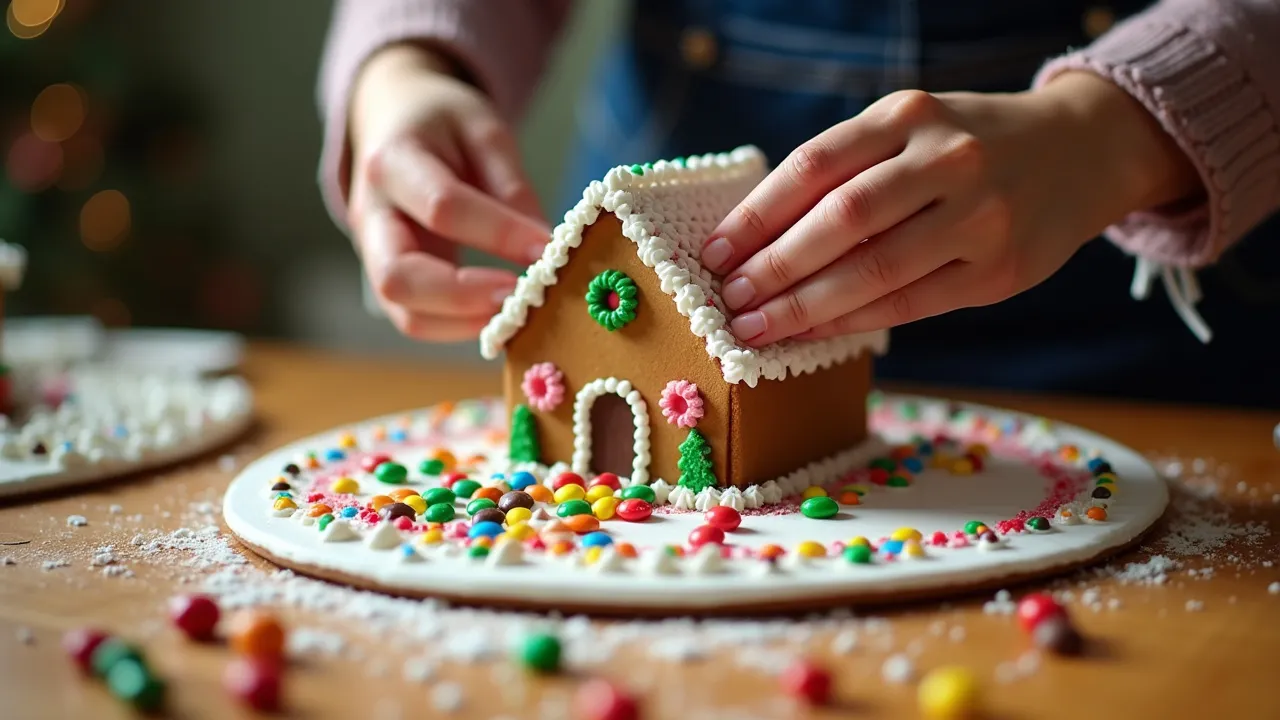
Celebrate Decorating With Candy Day on February 1st by transforming sweets into stunning edible art! From gingerbread houses to candy wreaths, this day encourages creativity with confections.
The Historical Origins & Evolutionary Journey
Decorating With Candy Day is a relatively modern observance that celebrates the intersection of confectionery and creativity. While the exact origins remain unclear, the practice of using candy as a decorative medium dates back centuries. This section explores the foundational catalysts, official recognition, and global legacy of this sweet holiday.
The Foundational Catalyst
The tradition of decorating with candy can be traced to ancient cultures that used honey and fruit preserves to embellish pastries. However, the modern concept gained momentum in the 19th century with the invention of gumdrop and hard candy. Gingerbread houses, popularized in Germany during the 1500s, became a centerpiece for candy decoration, especially during Christmas. By the 20th century, candy companies like Brach's and M&M's promoted decorative uses in their marketing campaigns.
The Legislative/Official Adoption
Unlike many national holidays, Decorating With Candy Day has no official government proclamation. It emerged organically in the 1990s through candy blogs, Pinterest boards, and food TV shows. The day gained traction when National Confectioners Association informally endorsed it as a way to boost candy sales in February, a month historically low in candy consumption after the holiday season. Social media hashtags like #DecoratingWithCandyDay further cemented its popularity.
Modern Global Legacy
Today, the observance is recognized internationally through shared hashtags and community events. In the United States, it coincides with National Candy Month? Actually, June is Candy Month; February 1st is chosen because it falls between Valentine's Day and Easter prep. Many countries have adapted the day with local sweets:
- Japan uses wagashi and colorful mochi
- Mexico incorporates cajeta and tamarind candies
- UK uses sherbet and sugar mice
How to Celebrate Decorating With Candy Day
Whether you're a professional baker or a casual candy lover, celebrating Decorating With Candy Day is easy and fun. Below are actionable strategies for individuals, schools, and organizations.
For Individuals at Home
- Create a Candy Charcuterie Board: Arrange candies on a board with small decorations like frosting dips and sprinkles.
- Decorate a Cake: Use M&Ms, licorice, and gummies to create patterns or faces on a plain cake.
- Make Candy Wreaths: Thread wrapped candies onto a wire ring to make edible decor.
For Schools and Community Centers
- Host a gingerbread house decorating contest (use graham crackers if budget is tight).
- Organize a candy sculpture workshop teaching children about color theory and geometry.
- Set up a "candy art gallery" where participants display their edible creations.
For Organizations and Businesses
- Candy bar decorating stations in offices encourage team bonding.
- Partner with local bakeries to offer special candy-decorated treats.
- Run a social media campaign with prizes for most creative candy decor.
Global variations include:
- In Italy, use torrone and amaretti-covered cupcakes.
- In Australia, use freckle cookies with smarties.
- In Brazil, decorate brigadeiros with colorful sprinkles.
The Art of Candy Decorating: Techniques & Trends
Candy decoration is not child's play; it requires skill and creativity. Candy art has evolved into a recognized craft.
Key Techniques
- Piping with melted candy: Use candy melts as glue or for intricate details.
- Isomalt sculptures: Sugar glass created by heating isomalt to high temperatures.
- Candy mosaic: Arrange hard candies to form pictures, similar to stained glass.
Current Trends
- 3D printed candy: Using edible inks and food-safe printers for complex designs.
- Floral candy bouquets: Artificial flowers made from lollipops and licorice stems.
- Kawaii-style candy art: Japanese cute character designs using gummy candies.
Professional decorators now use digital tools to prototype designs before working with actual sugar.
Social Media and Decorating With Candy Day
Social media platforms have transformed Decorating With Candy Day into a viral phenomenon. Influencers and brands leverage hashtags to showcase their creations.
Platform-Specific Strategies
- Instagram: Post high-quality photos with #CandyDecor and #SweetArt. Reels showing time-lapse decoration get high engagement.
- TikTok: Short tutorials using trending soundtracks. Popular challenges include "candy mosaic celebrity portraits."
- Pinterest: Create boards with step-by-step infographics for DIY projects.
Brands often collaborate with food bloggers to launch limited-edition candy decorating kits. User-generated content (UGC) drives sales for candy manufacturers.
In 2023, the hashtag #DecoratingWithCandyDay had over 2 million impressions. The day is now a key marketing opportunity for confectionery companies.
Health-Conscious Alternatives & Nutrition Considerations
While candy is central to the day, many seek healthier options. Sugar-free and low-carb trends have influenced candy decoration.
Healthier Candy Alternatives
- Fruit leather and dried fruit strips can replace licorice for wrapping.
- Candy made with stevia or monk fruit offers sweetness without spikes.
- Dark chocolate with minimal sugar provides a rich base for decorations.
Nutritional Tips
- Use candy decorations sparingly—apply a thin layer rather than covering entire desserts.
- Incorporate nuts, seeds, and dried fruit for added nutrients.
- Focus on presentation using vibrant colors from natural dyes (e.g., beet powder, turmeric).
Dieticians recommend that children consume candy in moderation, even on special days. Parents can use this day to teach portion control and balance.
Global Traditions and Regional Variations
Decorating With Candy Day is celebrated with local twists around the world. While the United States focuses on gingerbread houses and cake pops, other countries have unique customs.
Regional Celebrations
- Japan: Kawaii candy boxes (okashi bukuro) filled with beautifully arranged sweets.
- Mexico: Sugar skulls (calaveras) decorated with colorful icing and candies for Day of the Dead, but also adapted for this day.
- India: Mithai (Indian sweets) like barfi and ladoo decorated with edible silver leaf (vark) and pistachios.
- Sweden: Polkagris (candy canes) are hand-painted with patterns using colored sugar.
In some European countries, the date coincides with Candlemas (February 2), where leftover candy from Christmas is used to decorate pancakes. This syncretism adds depth to the observance.
Historical Timeline
Gingerbread houses originated in Germany, often decorated with candies and icing, laying the groundwork for candy decoration.
Candy melts and edible pens are invented, revolutionizing the ease of decorating with candy at home.
The rise of the internet and food blogs popularizes candy decoration as a hobby. Unofficial 'Decorating With Candy Day' begins to appear on early holiday calendars.
Social media platforms like Flickr and early Facebook groups showcase candy art, inspiring a global community.
Pinterest emerges as a major platform for candy decoration ideas, with boards dedicated to candy crafts.
During the COVID-19 pandemic, candy decoration at home surges as a family activity. Hashtag #DecoratingWithCandyDay trends on Twitter.
The observance gains official recognition from the National Confectioners Association, which sponsors a virtual candy decorating contest.