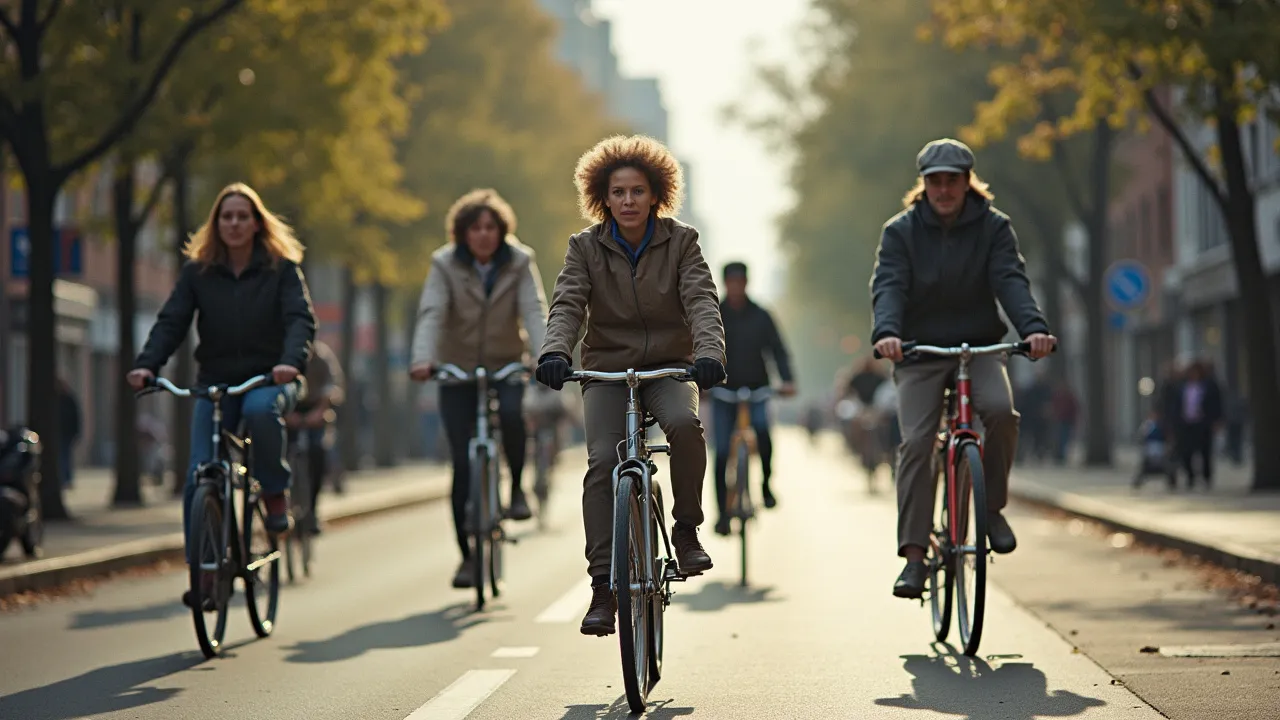
World Bicycle Day, observed on June 3rd, celebrates the bicycle as a simple, affordable, reliable, and sustainable transport. It promotes health, environmental benefits, and social equity, recognized by the United Nations since 2018.
The Historical Origins & Evolutionary Journey
World Bicycle Day, observed annually on June 3rd, honors the bicycle as a sustainable, healthy, and inclusive mode of transport. The journey to this global observance is rooted in decades of advocacy and the bicycle's profound impact on society.
The Foundational Catalyst
The movement for a dedicated day began with Professor Leszek Sibilski, a Polish-American sociologist who researched cycling's benefits and campaigned for UN recognition. He engaged students, NGOs, and governments to build support. The bicycle's role in achieving the Sustainable Development Goals (SDGs)—particularly health, climate action, and sustainable cities—became a core argument.
The Legislative/Official Adoption
On April 12, 2018, the United Nations General Assembly unanimously adopted resolution A/RES/72/272, designating June 3rd as World Bicycle Day. The resolution recognized the bicycle's uniqueness, age-long history, and versatility. It encouraged member states to integrate cycling into transport and development policies.
Modern Global Legacy
Since its first celebration in 2018, World Bicycle Day has sparked events worldwide: community rides, bike-to-work days, safety workshops, and policy discussions. The day also honors the bicycle's evolution from the 1817 Draisienne to modern e-bikes and cargo bicycles, emphasizing its enduring relevance.
How to Celebrate World Bicycle Day
World Bicycle Day offers countless ways to participate, whether as an individual, school, or organization. Below are actionable strategies tailored for different contexts and regions.
For Individuals
- Ride a bike: commute, explore, or exercise. Share your journey on social media with #WorldBicycleDay.
- Organize a neighborhood ride: gather friends and family for a casual group ride.
- Support local bike shops: get a tune-up or buy accessories.
- Learn basic bike maintenance: fix a flat or adjust brakes.
For Schools
- Host a Bike-to-School Day with safe routes and parent volunteers.
- Teach cycling history and road safety in classes.
- Organize a bike decorating contest or parade.
For Organizations
- Launch a Bike-to-Work challenge with prizes.
- Provide secure bike parking and shower facilities.
- Sponsor a community bike repair workshop.
Regional Variations
While June 3rd is universal, traditions differ. In Europe, city leaders often announce new bike lanes. In India, mass rides and awareness rallies are common. In South America, ciclovias (open streets) are popular. In Africa, focus on bicycles as a tool for education and healthcare access. Always check local events.
Environmental Impact: Cycling for a Greener Planet
Cycling is a zero-emission mode of transport that significantly reduces carbon footprints. On World Bicycle Day, we highlight its environmental benefits.
CO2 Emission Reduction
Replacing a car trip of just 8 km (5 miles) with a bicycle saves approximately 1.5 kg of CO2. If 10% of urban commuters switched to bikes, global emissions could drop by millions of tons annually.
Land Use & Urban Greening
Bicycles require far less space than cars—a single car parking spot can accommodate up to 10 bicycles. Bike lanes promote compact, walkable cities, reducing urban sprawl and preserving green spaces.
Resource Efficiency
A bicycle requires about 5% of the materials and energy needed to produce a car. E-bikes, while using battery power, still have a much lower lifecycle impact than motor vehicles.
Health Benefits of Regular Cycling
Cycling is one of the most accessible forms of physical activity, offering profound health benefits recognized on World Bicycle Day.
Cardiovascular & Muscular Health
- Improves heart health, reducing risk of coronary disease by up to 50%.
- Strengthens leg muscles, core, and improves joint mobility.
Mental Wellbeing
Regular cycling reduces stress, anxiety, and depression. Outdoor cycling exposes riders to sunlight, boosting vitamin D and circadian rhythms.
Weight Management & Longevity
A 30-minute daily ride burns about 200-300 calories, helping maintain healthy weight. Studies show cyclists have a 15% lower risk of all-cause mortality.
Cycling and Urban Infrastructure
World Bicycle Day advocates for safe and inclusive cycling infrastructure. Key components include:
Protected Bike Lanes
Separated cycle tracks reduce accidents by 40% and encourage ridership. Cities like Copenhagen and Amsterdam are models, with over 60% of residents cycling daily.
Bike Sharing Systems
Dock-based and dockless bike shares have expanded globally, with over 2,000 systems operating. They offer low-cost mobility for short trips.
Traffic Calming & Intermodality
Integrating bikes with public transit—such as bike racks on buses and trains—creates seamless journeys. Speed bumps, roundabouts, and reduced speed limits benefit all road users.
Investing in cycling infrastructure yields economic returns: for every $1 spent, cities save $3-4 in health and environmental costs.
Economic and Social Benefits
The bicycle is a driver of economic growth and social equity, especially in developing regions.
Affordable Transportation
Bicycles cost a fraction of a car to purchase and maintain. In rural Africa, a bicycle can reduce travel time to markets and clinics by hours, boosting incomes and access to services.
Job Creation
The cycling industry—manufacturing, retail, repair, and tour guiding—employs millions worldwide. Bike tourism alone generates billions in revenue annually.
Empowerment & Inclusion
Bicycles empower women and girls by providing independent mobility, increasing school attendance and economic participation. Programs like World Bicycle Relief distribute bikes to students and healthcare workers in underserved areas.
Global Cycling Cultures and Traditions
World Bicycle Day showcases diverse cycling cultures that have shaped the bicycle's identity.
Europe: The Cycling Heartland
Countries like the Netherlands, Denmark, and Germany have deep cycling roots. In the Netherlands, bicycle paths outnumber roads, and cycling is a national habit.
Asia: Two-Wheeled Dominance
China, India, and Japan have immense cycling populations. In Chinese cities, electric bikes are ubiquitous, while India's bicycle rickshaws remain a vital transport mode.
Americas: Recreation and Adventure
In the U.S., mountain biking and long-distance touring are popular. Latin American cities host weekly ciclovías, closing streets to cars for cyclists and pedestrians.
Africa: Utility and Resilience
In many African nations, bicycles are essential for commuting, transporting goods, and accessing water. Charities and social enterprises are improving access through donations and microfinance.
Historical Timeline
Baron Karl von Drais invents the Laufmaschine (Draisienne), a two-wheeled, human-powered vehicle considered the precursor to the modern bicycle.
Pierre Michaux and his son Ernest add pedals to the front wheel, creating the velocipede, the first true bicycle.
John Kemp Starley introduces the Rover Safety Bicycle with equal-sized wheels and a chain drive, establishing the modern bicycle design.
The bicycle boom sweeps the world, making cycling a popular recreation and transport. Bicycles empower women's suffrage movements.
Bike advocacy groups form in the U.S. and Europe, pushing for better infrastructure. The oil crisis sparks renewed interest in cycling.
The United Nations General Assembly declares June 3rd as World Bicycle Day, recognizing the bicycle's role in sustainable development.