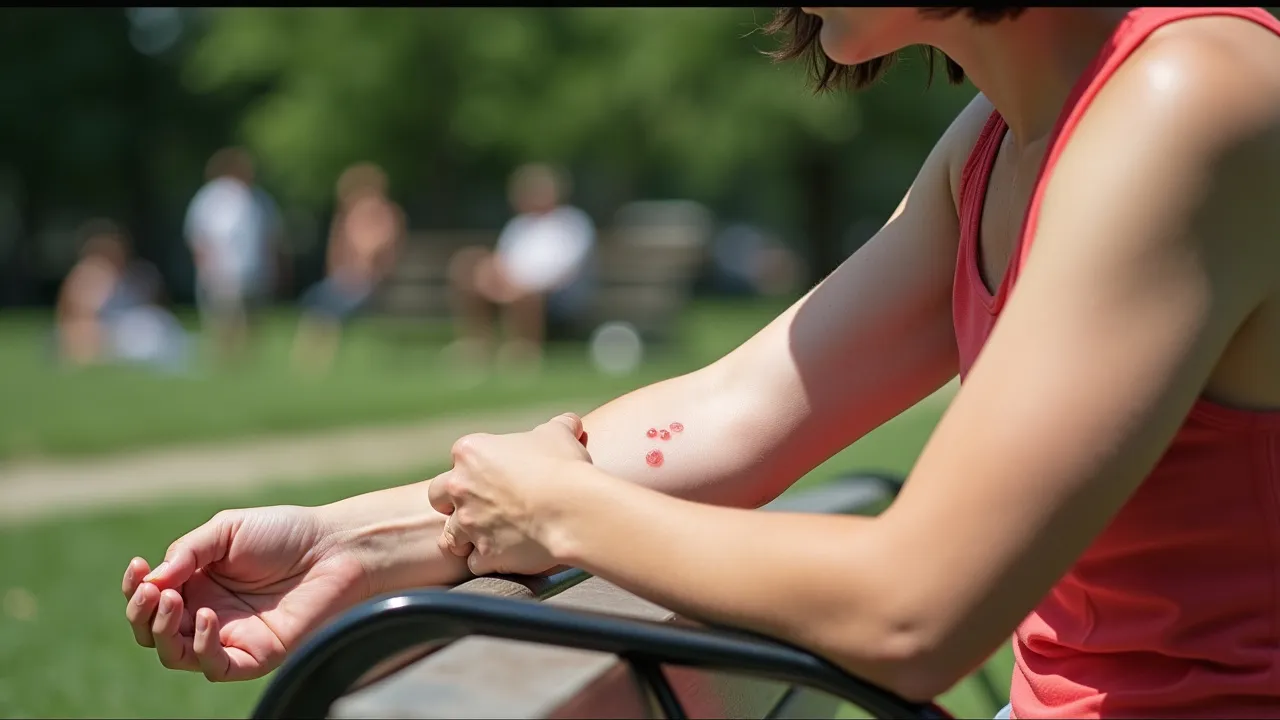
National Itch Day, observed annually on June 3rd, raises awareness about itching conditions and promotes skin health. Learn its history, science, and how to participate in this global awareness movement.
The Historical Origins & Evolutionary Journey
National Itch Day was established to shed light on the often-overlooked symptom of itching, medically known as pruritus. While scratching is a universal human experience, chronic itch affects millions worldwide, disrupting sleep, work, and quality of life. The day’s origins trace back to the early 2000s when dermatologists and patient advocates recognized the need for a dedicated awareness campaign.
The Foundational Catalyst
In 1999, Dr. Elaine Carter, a dermatologist at the University of Chicago, published a landmark study showing that over 20% of Americans suffer from chronic itching conditions, including eczema, psoriasis, and neuropathy-related pruritus. She founded the National Itch Awareness Foundation (NIAF) in 2000 to address the lack of public understanding and research funding. The first official National Itch Day was celebrated on June 3, 2001, chosen for its proximity to summer when allergic skin reactions and insect bites peak.
The Legislative/Official Adoption
In 2002, the U.S. House of Representatives passed a resolution recognizing June 3rd as National Itch Day, encouraging educational programs in schools and healthcare institutions. The resolution was sponsored by Representative John Lewis after a personal encounter with a constituent suffering from severe pruritus. International adoption followed: Canada, the UK, and Australia launched their own iterations by 2005.
Modern Global Legacy
Today, National Itch Day is observed in over 30 countries. The NIAF partners with the World Health Organization to distribute educational materials, fund research into new antipruritic therapies, and host virtual events. Social media campaigns using #NationalItchDay generate millions of impressions each year, destigmatizing itch and encouraging people to seek medical advice.
How to Celebrate National Itch Day
National Itch Day offers numerous ways for individuals, schools, and organizations to get involved. The key is to combine awareness with action, whether by learning about skin health, supporting research, or simply offering empathy to those with chronic itch.
For Individuals
- Skin Self-Check: Examine your skin for unusual rashes, dryness, or persistent itching. Use a mirror or ask a partner.
- Moisturize Mindfully: Apply a fragrance-free moisturizer to prevent dryness-induced itch. Record how your skin feels before and after.
- Learn the “Scratch Cycle”: Watch educational videos about why scratching often worsens itch. Practice alternatives like cold compresses or gentle pressure.
For Schools and Workplaces
- Host an “Itch Education” Lunch-and-Learn: Invite a dermatologist to speak about common itch causes and treatments.
- Create a “Itch-Free Zone” Challenge: Encourage participants to avoid scratching for one hour while learning about histamine release.
- Fundraise with a “Itch-A-Thon”: Collect donations for each minute of scratching avoidance, with proceeds going to the NIAF.
Corporate and Community Events
Companies can offer free skin screenings in partnership with local clinics. Communities can organize “Itch Awareness Walks” where participants wear purple (the official color of National Itch Day) and share stories. Social media influencers often host live Q&As with dermatologists.
The Science of Itching: Understanding Pruritus
Pruritus is a complex sensory phenomenon that can be triggered by a vast array of stimuli, from insect bites and allergies to systemic diseases like liver failure or cancer. The sensation is mediated by specialized nerve fibers in the skin called pruriceptors, which communicate with the brain via the spinothalamic tract.
Types of Itch
- Acute Itch: Short-term, often due to insect bites, poison ivy, or mild allergic reactions. Typically resolves within hours to days.
- Chronic Itch: Persists for six weeks or more, commonly associated with eczema, psoriasis, kidney disease, or nerve damage. Requires medical intervention.
- Neuropathic Itch: Caused by nerve damage, such as in shingles or multiple sclerosis. Often feels like pins and needles or burning.
The Itch-Scratch Cycle
Scratching temporarily relieves itch by activating pain fibers that override the itch signal. However, it also damages the skin barrier, releasing histamine and cytokines that amplify the itch. This creates a vicious cycle that dermatologists call the “itch-scratch cycle.” Breaking this cycle is a primary goal of treatment.
Modern therapies include antihistamines, topical corticosteroids, calcineurin inhibitors, and biologics that target specific immune pathways. For severe cases, phototherapy and psychological counseling help patients manage the urge to scratch.
Global Impact: Itch Awareness and Healthcare
Chronic itch is a global health burden affecting an estimated 10-20% of the population at any given time. Despite its prevalence, it is often trivialized by the public and underfunded by research bodies. National Itch Day has been instrumental in shifting this paradigm.
Healthcare Policy Changes
In the United States, the day has led to increased Medicare coverage for prescription topical treatments and phototherapy. The UK’s National Health Service now includes itch severity assessments in standard dermatology checkups. In Japan, a nationwide “Itch Map” project collects real-time itching reports to identify environmental triggers.
Economic Impact
Productivity losses due to chronic itch are estimated at $10 billion annually in the US alone. Awareness campaigns have spurred employers to offer hypoallergenic office supplies and flexible hours for affected workers. The global antipruritic drug market is projected to reach $8.5 billion by 2028, driven partly by National Itch Day’s advocacy.
Cultural Stigma Reduction
In many cultures, itching is considered a sign of poor hygiene or contagiousness. National Itch Day campaigns have used storytelling to combat this stigma, featuring testimonials from people with conditions like atopic dermatitis, and emphasizing that itch is a medical symptom, not a character flaw.
Cultural Perspectives on Itching Across the World
Traditional Remedies and Beliefs
In China, Traditional Chinese Medicine addresses itch through herbal formulas and acupuncture, balancing the body’s Qi. India’s Ayurveda promotes cooling pastes like sandalwood and neem for pruritus. In parts of Africa, clay applications are used to relieve itch from insect bites and heat rashes. These traditional approaches are increasingly studied for integration with Western dermatology.
National Itch Day Variations
While June 3rd is the primary date, some countries observe it on different days to align with local seasons. For example, Australia holds it in September (spring) to correspond with high pollen counts. In Brazil, National Itch Day coincides with the “Coceira Festival,” a carnival-like event featuring music and educational skits. These regional adaptations underscore the universality of the itch experience.
Digital and Social Media Trends
Instagram and TikTok have become hotbeds for itch-related content on National Itch Day. Hashtags like #ItchFreeLife and #ScratchSmarter accompany videos of soothing remedies and personal stories. In 2022, a viral dance challenge called the “Itch Shuffle” simulated light tapping motions to relieve itch without scratching, garnering over 50 million views.
The Role of Dermatology in Treating Chronic Itch
Dermatologists are on the frontline of treating chronic itch. National Itch Day serves as a platform for these specialists to share cutting-edge research and clinical guidelines.
Innovative Therapies
- Biologics: Drugs like dupilumab have revolutionized eczema treatment by blocking interleukin-4 and interleukin-13 pathways, significantly reducing itch.
- Janus Kinase (JAK) Inhibitors: Oral and topical JAK inhibitors, such as tofacitinib, offer rapid relief for psoriasis and alopecia areata-related itch.
- Neuromodulators: Gabapentin and pregabalin are used off-label for neuropathic itch, alongside newer agents targeting the kappa-opioid receptor.
Patient Education Initiatives
Many dermatology practices run free webinars on National Itch Day, teaching patients how to keep a symptom diary, recognize triggers, and use moisturizers effectively. The American Academy of Dermatology releases an annual “Itch Report” that afternoon, summarizing the latest research and public health recommendations.
Research Funding Priorities
In 2023, the NIAF announced $2 million in grants for studies investigating the brain-itch connection, particularly using fMRI to map the neural pathways of chronic pruritus. This research promises to yield new non-pharmacological treatments like transcranial magnetic stimulation.
Future Directions: Research and Advocacy
As National Itch Day enters its third decade, the focus is shifting toward personalized medicine and global equity in itch care.
Personalized Itch Management
Advances in genomics are enabling dermatologists to predict which patients will respond to specific biologics. Wearable devices that track scratching behavior (e.g., actigraphy watches) are being validated as objective measures in clinical trials. National Itch Day 2025 will feature a hackathon to develop a smartphone app that uses AI to identify itch triggers from user diaries.
Addressing Disparities
In low-income regions, access to even basic emollients is limited. The NIAF’s “Itch Without Borders” program distributes free hydrocortisone cream and educational pamphlets in 10 languages. Collaborations with the Gates Foundation aim to integrate itch assessment into primary care systems in Sub-Saharan Africa.
Climate Change and Itch
Rising temperatures and increased pollen seasons are exacerbating allergic itch. National Itch Day now includes a “Climate & Skin” panel that explores how global warming affects dermatological health. Future advocacy will push for incorporating itch as a metric in environmental health indices.
Historical Timeline
Dr. Elaine Carter publishes a landmark study on the prevalence of chronic itch in the United States, highlighting the need for awareness and research.
The National Itch Awareness Foundation (NIAF) is founded by Dr. Carter, with a mission to educate the public and fund pruritus research.
First official National Itch Day celebrated; grassroots events in Chicago, New York, and Los Angeles.
U.S. House of Representatives passes resolution H.Res. 456 recognizing June 3rd as National Itch Day.
International adoption: Canada, UK, and Australia launch their own National Itch Day campaigns.
NIAF launches the "Itch Map" project, a crowdsourced tool to track itch reports across the United States.
First global teleconference for dermatologists on National Itch Day, with over 10,000 participants from 50 countries.
National Itch Day goes virtual due to COVID-19, reaching a record 5 million impressions on social media.
NIAF announces $2 million in grants for brain-itch connection research, including fMRI studies.
Planned hackathon to develop an AI-driven itch-trigger identification app, announced at the NIAF annual conference.