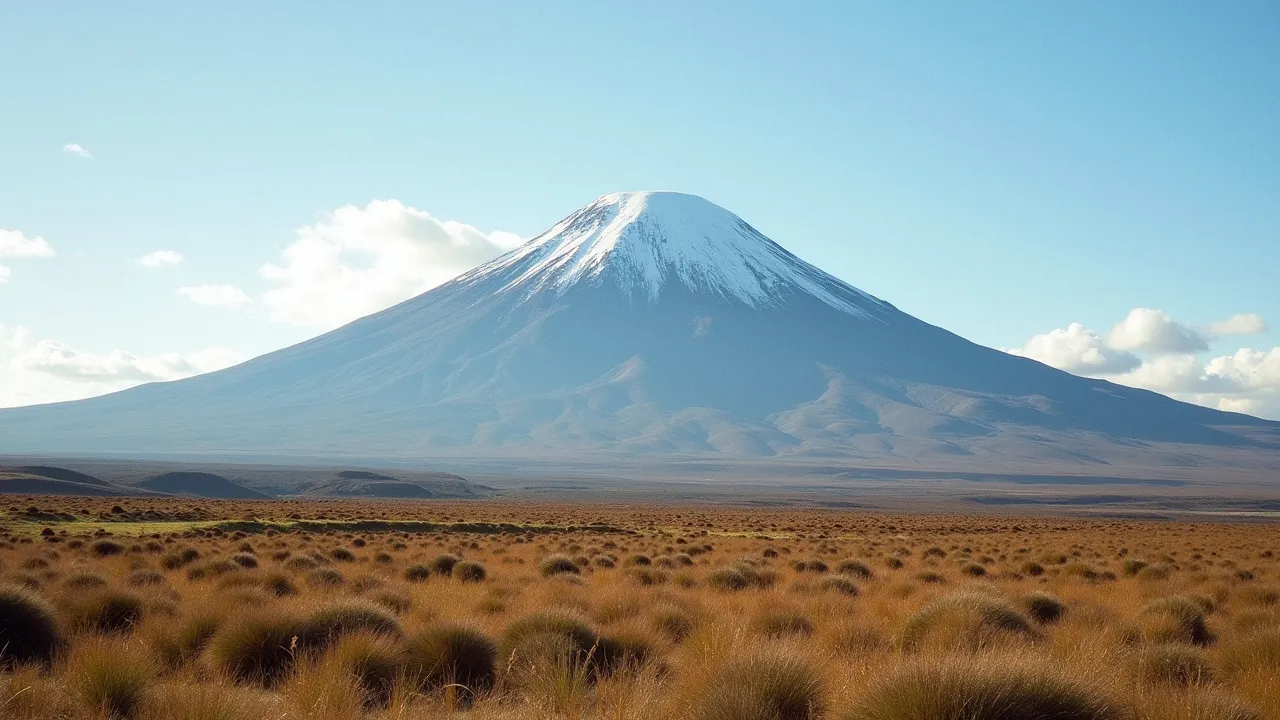
Chimborazo Day, observed on June 3, celebrates Ecuador's highest peak and the province's cultural heritage. It honors the volcano's significance and promotes environmental awareness.
The Historical Origins & Evolutionary Journey
Chimborazo Day, observed annually on June 3, commemorates the majestic Chimborazo volcano and the rich cultural heritage of the surrounding province. The observance has evolved from a local provincial celebration into a national day of pride, environmental awareness, and tourism promotion.
The Foundational Catalyst
The impetus for Chimborazo Day arose in the mid-20th century as Ecuador sought to highlight its natural wonders and indigenous traditions. The Chimborazo volcano, standing at 6,263 meters (20,548 feet), is the highest peak in Ecuador and the point on Earth closest to the sun due to the planet's equatorial bulge. This unique geographical distinction made it a symbol of national pride. Local historians and civic leaders in Riobamba, the provincial capital, proposed a dedicated day to celebrate the volcano and its surrounding landscapes. The initiative gained momentum from indigenous communities who viewed the mountain as a sacred Apus (mountain spirit) and wanted to preserve traditional rituals.
The Legislative/Official Adoption
In 1955, the provincial government of Chimborazo officially declared June 3 as Chimborazo Day through a local ordinance. The date was chosen to coincide with the beginning of the dry season, making outdoor festivities more feasible. The first official celebration took place in 1956, featuring a civic parade, folkloric dances, and a ceremonial climb to the mountain's base camp. Over the following decades, the observance gained national recognition; in 1975, the Ecuadorian Ministry of Tourism endorsed the day as a promotional event for international visitors. By the 1990s, Chimborazo Day had become a fixture in the national calendar, with events coordinated across the province and supported by the central government.
Modern Global Legacy
Today, Chimborazo Day is not only a local celebration but also a platform for environmental conservation and scientific research. The Chimborazo volcano is a critical water source for millions, and the day is used to promote sustainable tourism and climate action. International mountaineering groups and scientific expeditions often schedule their activities around June 3 to participate in local events. The day has also inspired similar observances in other Andean countries. In 2020, UNESCO recognized the Chimborazo Biosphere Reserve, further elevating the global significance of the day. Modern celebrations blend indigenous ceremonies with contemporary eco-awareness campaigns, ensuring the legacy of Chimborazo Day endures for future generations.
How to Celebrate Chimborazo Day
Chimborazo Day offers a multitude of ways for individuals, schools, and organizations to honor the volcano and its cultural significance. Whether you are in Ecuador or abroad, these celebration strategies ensure a meaningful observance.
For Individuals and Families
- Attend Local Festivities: In Riobamba and surrounding towns, join the main parade featuring traditional Andean music, dance troupes, and colorful costumes. Many communities host food fairs with local delicacies such as cuy asado (roasted guinea pig) and chicha (corn beer).
- Hike or Climb: For the adventurous, guided hikes to the Chimborazo base camp (around 5,000 meters) are organized. Even a partial ascent offers breathtaking views and a sense of accomplishment. Always acclimatize and hire certified guides.
- Virtual Participation: If unable to travel, watch live streams of the events on official tourism websites or social media. Many cultural performances are broadcast, and online storytelling sessions recount indigenous legends about the volcano.
For Schools and Educational Institutions
- Organize a Themed Lesson: Integrate geography, geology, and anthropology by teaching about Chimborazo's unique equatorial location, its glaciers, and its role in indigenous cosmology. Use interactive maps and videos.
- Art and Essay Contests: Encourage students to create drawings, paintings, or essays on the theme 'Why Chimborazo Matters'. Display the best entries in a school exhibition.
- Community Clean-Up: Partner with local environmental groups to clean up nearby parks or trails, emphasizing the importance of protecting mountain ecosystems.
For Corporations and Organizations
- Sponsor a Conservation Project: Fund initiatives that protect Chimborazo's páramo grasslands and water sources. Many NGOs offer sponsorship programs for reforestation or sustainable farming.
- Host a Cultural Event: Organize a company-wide event featuring Ecuadorian cuisine, music, and a presentation on the volcano's significance. Donate proceeds to local communities.
- Employee Volunteering: Arrange a group volunteer day at a local environmental non-profit or indigenous cooperative. This builds team spirit and supports the region.
Worldwide, celebrations vary. In the United States, Ecuadorian diaspora communities hold gatherings in cities like New York and Miami, with folk dances and food. In Europe, mountaineering clubs schedule special climbs in the Alps as a tribute. Regardless of location, the core spirit is to appreciate nature and indigenous heritage.
Geographical Significance of Chimborazo Volcano
Chimborazo is not just a mountain; it is a geographic marvel that challenges our understanding of altitude and planetary shape. Its importance extends beyond Ecuador's borders.
The Closest Point to the Sun
Due to Earth's equatorial bulge, the summit of Chimborazo is the farthest point from the Earth's center, making it the closest point on the planet's surface to the sun. This fact is often misunderstood: while Mount Everest has the highest altitude above sea level, Chimborazo's summit is over 2,000 meters farther from the Earth's core. This distinction draws scientists and tourists alike.
Glaciers and Water Source
Chimborazo's glaciers, though receding due to climate change, provide fresh water for millions of people in the surrounding provinces. The meltwater feeds into the Guayas and Amazon river systems, supporting agriculture and hydroelectric power. The volcano's páramo ecosystem acts as a natural sponge, regulating water flow. Conservationists emphasize the need to protect these glaciers from global warming.
Biodiversity Hotspot
The slopes of Chimborazo host a unique array of flora and fauna adapted to high altitudes. Species such as the Andean condor, vicuña, and the endangered Chimborazo frog (Telmatobius) are found here. The lower elevations are covered in grasslands, while higher zones feature lichens and mosses. This biodiversity makes the region a priority for conservation efforts.
Environmental and Cultural Impact
Chimborazo Day has a profound impact on both the environment and the cultural identity of the region.
Environmental Awareness
The observance serves as a platform to educate the public about climate change, glacial retreat, and sustainable practices. Each year, environmental organizations set up booths offering information on recycling, water conservation, and renewable energy. Tree-planting campaigns are common, with thousands of native species planted in degraded areas. The day also highlights the work of local scientists monitoring glacier mass balance and wildlife populations.
Cultural Preservation
The indigenous Puruhá people, who consider Chimborazo a sacred mountain, use the day to revive and share their traditions. Ceremonies include offerings of coca leaves, chicha, and guinea pigs to the mountain spirit. Traditional music played on zampoñas (panpipes) and charangos fills the air. The day also features storytelling sessions where elders pass down legends of the volcano's creation, such as the tale of the god Chimborazo and his love for the volcano Tungurahua. These activities help maintain cultural continuity in a rapidly modernizing world.
Economic Boost
Chimborazo Day significantly boosts local tourism. Hotels, restaurants, and tour operators see a surge in business. Artisans sell handicrafts like alpaca wool sweaters and pottery, providing income for rural families. The provincial government estimates that the day generates over $2 million in economic activity, underscoring the event's importance.
Global Recognition and Scientific Importance
Chimborazo is a focal point for scientific research and international collaboration.
Scientific Expeditions
The volcano's unique equatorial location makes it ideal for studying atmospheric physics, cosmic rays, and climate change. Scientists from around the world conduct research on its glaciers, which serve as indicators of global warming. In 2016, a team from the University of Albany installed a high-altitude monitoring station on the summit. Chimborazo Day often coincides with conferences and workshops where researchers present their findings.
Mountaineering and Adventure Tourism
Chimborazo is a premier destination for mountaineers, with its challenging terrain and high altitude. The standard route, via the southwest ridge, requires technical skills and acclimatization. On Chimborazo Day, many climbing clubs organize group ascents, often with a festive atmosphere. The day also promotes responsible climbing practices, including Leave No Trace principles.
UNESCO Biosphere Reserve
In 2020, the Chimborazo Biosphere Reserve was designated by UNESCO, recognizing the area's ecological and cultural importance. This status has increased international visibility and funding for conservation. Chimborazo Day now includes events that highlight the reserve's goals, such as sustainable agriculture and eco-tourism.
Traditions and Festivities in Ecuador
The heart of Chimborazo Day lies in the vibrant traditions and festivities held across the province.
Parades and Folkloric Performances
The main parade in Riobamba features dancers in colorful traditional attire, including the Puruhá costume with embroidered ponchos and hats. Bands play lively rhythms, and participants carry banners depicting the volcano. The parade route passes through the city's historic center, ending at the main square where speeches and cultural shows take place.
Indigenous Ceremonies
At the base of the volcano, indigenous shamans conduct a Pachamama (Earth Mother) ceremony, asking for blessings and protection. Participants offer symbolic items like flowers, grains, and coca leaves. The ceremony is open to visitors who wish to experience Andean spirituality.
Gastronomic Fair
Local foods are a highlight. Stalls serve hornado (roasted pork), llapingachos (cheese-stuffed potato patties), and canelazo (a hot alcoholic drink made from agave). Cooking competitions judge the best dishes, often using ingredients from the region.
Sports and Adventure Activities
Mountain biking races, trail running, and even a half-marathon are organized, often on trails that offer views of the volcano. For those less athletic, horseback riding tours are available. The day concludes with a fireworks display over the city.
Historical Timeline
The provincial government of Chimborazo declares June 3 as Chimborazo Day, aiming to promote local culture and tourism.
First official Chimborazo Day celebration takes place in Riobamba, featuring a parade, folk dances, and a ceremonial climb.
The Ecuadorian Ministry of Tourism endorses Chimborazo Day as a national promotional event, increasing its visibility.
Environmental groups begin using Chimborazo Day to raise awareness about glacial retreat and water conservation.
The indigenous Puruhá communities institutionalize their traditional ceremonies as part of the official program.
Chimborazo Day includes scientific conferences, with researchers presenting studies on high-altitude adaptation and climate change.
UNESCO designates the Chimborazo Biosphere Reserve, and Chimborazo Day events incorporate global sustainability themes.