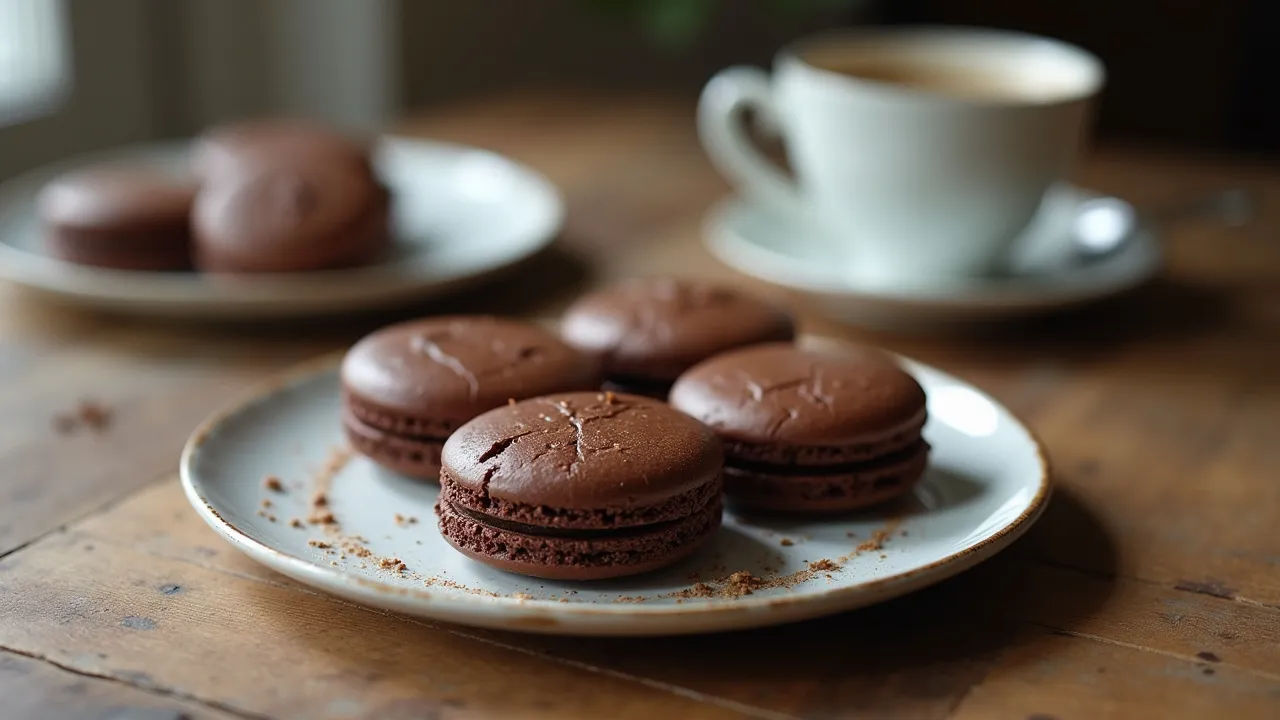
Celebrate National Chocolate Macaroon Day on June 3rd! Discover the rich history of this coconut and chocolate confection, learn how to make perfect macaroons, and explore global variations of this beloved cookie.
The Historical Origins & Evolution of Chocolate Macaroon Day
National Chocolate Macaroon Day, observed annually on June 3rd, honors a confection that blends the chewy texture of coconut with the rich flavor of chocolate. This day celebrates not just a cookie, but a culinary tradition with roots stretching back centuries.
The Foundational Catalyst
The macaroon's origin is often traced to Italian monasteries in the 8th century, where monks created almond-based cookies called 'amaretti.' However, the coconut macaroon as we know it emerged in the 19th century when shredded coconut became widely available. The addition of chocolate, particularly cocoa or chocolate chips, transformed the cookie into a beloved treat. Jewish communities adopted coconut macaroons for Passover because they are flourless, and chocolate versions became a popular variation.
The Official Adoption
The specific establishment of National Chocolate Macaroon Day was a grassroots effort by confectionery enthusiasts and the National Confectioners Association (NCA) in the early 2010s. The NCA aimed to highlight the diversity of candy and cookie traditions. June 3rd was chosen to coincide with the start of summer baking and the abundance of coconut harvests. Since 2015, the day has been widely recognized through social media campaigns, bakery promotions, and home baking challenges.
Modern Global Legacy
Today, the day is celebrated across the United States and beyond. Bakeries offer special chocolate macaroon varieties, from dark chocolate-dipped to white chocolate drizzled. The holiday also promotes the use of high-quality ingredients and supports small-scale coconut farmers. It has become a day for families to bake together, sharing recipes passed down through generations.
How to Celebrate National Chocolate Macaroon Day
National Chocolate Macaroon Day offers numerous ways to indulge, from baking at home to supporting local bakeries. Here is the ultimate guide to celebrating this delightful day.
Baking at Home
- Choose your recipe: Decide between classic chocolate chip macaroons, dark chocolate-dipped versions, or gluten-free varieties.
- Gather ingredients: Shredded unsweetened coconut, sweetened condensed milk, vanilla extract, salt, and high-quality chocolate (chips or bars).
- Follow steps: Mix, shape, bake at 350°F for 12-15 minutes, then dip in melted chocolate and cool.
Supporting Local Bakeries
- Visit a bakery: Many local bakeries offer special discounts or limited-edition chocolate macaroons.
- Order online: Artisanal producers ship nationwide. Look for kosher-certified options for Passover.
Regional Celebrations
Different regions have unique traditions:
- United States: Often paired with coffee or tea. Some communities host macaroon baking contests.
- France: While macarons are more famous, coconut macaroons ("congolais") are enjoyed with chocolate.
- Italy: Chocolate-dipped "amaretti" are similar to macaroons.
- Australia: Coconut macaroons are a staple at bake sales and often covered in chocolate icing.
Corporate and Social Rituals
Offices may organize potlucks featuring chocolate macaroons. Social media challenges encourage sharing photos with #ChocolateMacaroonDay. Some organizations donate macaroons to food banks or nursing homes.
Macaroon vs. Macaron: Clearing the Confusion
Many people confuse macaroons with macarons, but they are distinctly different confections. This section clarifies their unique characteristics.
Ingredients and Texture
Macaroon: Made primarily from shredded coconut and sweetened condensed milk (or egg whites). They are dense, chewy, and often dipped in chocolate. They are naturally gluten-free.
Macaron: A French meringue-based cookie made from almond flour, powdered sugar, and egg whites. They are light, crispy on the outside, and filled with ganache or buttercream. Macarons are delicate and often flavored with fruit syrups or extracts.
History and Origin
Macaroons trace back to Italian monasteries; macarons were popularized in France in the 16th century by Catherine de Medici's pastry chefs. Both have rich culinary traditions, but only macaroons have their own dedicated national day.
Culinary Applications
Macaroons are sturdy and travel well, ideal for baking and gifting. Macarons are fragile and best eaten fresh. National Chocolate Macaroon Day exclusively celebrates the coconut-chocolate combination.
Nutritional Profile and Health Considerations
Chocolate macaroons are a indulgence, but they offer some nutritional benefits when consumed in moderation.
Key Nutrients
- Coconut: Rich in fiber, manganese, copper, and selenium. Provides healthy medium-chain triglycerides (MCTs).
- Dark chocolate: Contains antioxidants, flavonoids, and iron. Helps reduce inflammation and improve heart health.
- Egg whites: High-quality protein with low fat.
Dietary Considerations
Traditional macaroons are gluten-free and can be made dairy-free by using coconut condensed milk. However, they are high in sugar and calories. For a healthier twist, use reduced-sugar chocolate or unsweetened coconut. Always check for allergens (coconut, dairy, eggs).
Moderation Tips
Enjoy one or two macaroons as a treat. Pair with a cup of unsweetened tea to balance sweetness. Avoid store-bought versions with added preservatives.
Global Variations of Chocolate Macaroons
Chocolate macaroons have adapted to local tastes worldwide. Here are notable variations.
United States
Classic chocolate chip macaroons or dipped in milk chocolate. Often sold in supermarkets during Passover.
France
"Congolais" are coconut macaroons often flavored with vanilla or rum, then coated in dark chocolate.
Italy
"Amaretti" are almond-based, but some include cocoa and shredded coconut, making them similar to chocolate macaroons.
India
"Nariyal Ladoo" are coconut balls, sometimes dipped in chocolate, resembling macaroons.
Australia
"Coconut Macaroons" topped with melted dark chocolate and often served at school fetes.
Mexico
"Cocadas" are coconut candies that can be chocolate-covered, similar to macaroons.
Each region adds its unique twist, such as using local chocolate varieties or incorporating spices like cinnamon or cardamom.
Ultimate Baking Tips for Perfect Chocolate Macaroons
Master the art of making chocolate macaroons with these expert tips.
Ingredient Selection
- Coconut: Use unsweetened shredded coconut for better texture. Sweetened coconut makes macaroons too sweet.
- Chocolate: Choose high-quality dark chocolate (60-70% cocoa) for a rich flavor. Chocolate chips work, but chopped chocolate melts more evenly.
- Binding agent: Sweetened condensed milk gives a chewy texture; egg whites give a lighter result. For a vegan version, use aquafaba.
Technique
- Mixing: Combine coconut, condensed milk, and vanilla. For chocolate macaroons, fold in melted chocolate or cocoa powder.
- Shaping: Use a cookie scoop or wet hands to form mounds. Place on a parchment-lined baking sheet.
- Baking: Bake at 350°F for 12-15 minutes until golden. Do not overbake or they will dry out.
- Dipping: Once cool, dip bottoms in melted chocolate and let set on wax paper.
Common Mistakes
- Using pre-sweetened coconut leads to overly sweet macaroons.
- Skipping the chilling step can cause spreading.
- Overmixing makes them tough.
Experiment with additions like nuts, dried fruit, or espresso powder for a personal touch.
Historical Timeline
Italian monks create almond-based cookies, precursors to modern macaroons.
Shredded coconut becomes widely available, leading to the coconut macaroon.
Jewish communities in the US popularize coconut macaroons as a Passover treat.
Chocolate-dipped macaroons appear in American bakeries and cookbooks.
National Chocolate Macaroon Day is first observed on June 3rd, promoted by the National Confectioners Association.
The day gains widespread social media traction, with home bakers sharing recipes during lockdowns.
Global participation includes bake-offs, charity events, and launches of new chocolate macaroon flavors.