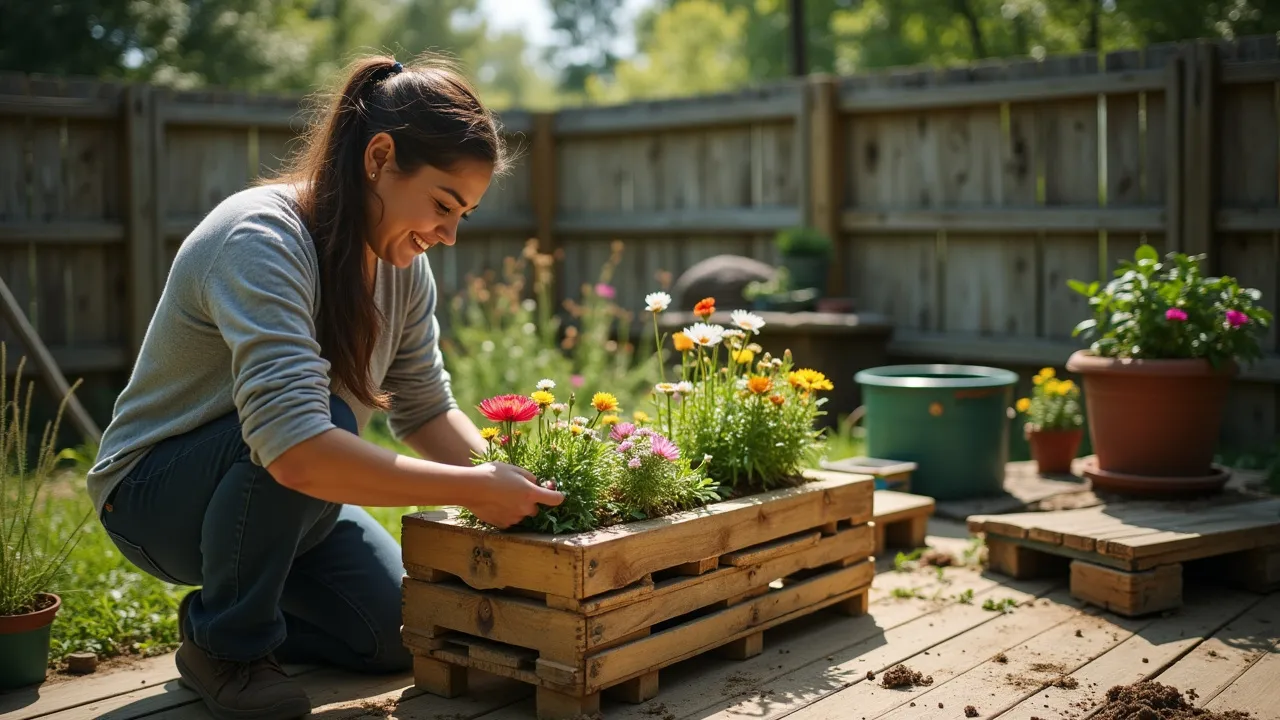
Upcycling Day on June 24th celebrates creative reuse, transforming waste into valuable products. Join the global movement to reduce landfill and inspire sustainable innovation.
The Historical Origins & Evolutionary Journey
Upcycling Day, observed annually on June 24th, is a global celebration of creative reuse that has grown from grassroots activism into an international movement. The term "upcycling" itself was first popularized in the 1990s by environmentalists and designers seeking to distinguish it from traditional recycling, which often downcycles materials into lower-quality products. The core idea—transforming waste materials into items of higher value—has roots in centuries of resourcefulness, but the organized observance began in the early 21st century.
The Foundational Catalyst
The modern upcycling movement gained traction with the publication of "Cradle to Cradle: Remaking the Way We Make Things" (2002) by William McDonough and Michael Braungart, which advocated for closed-loop systems. Enthusiasts and environmental groups began promoting June 24th as a day to spotlight upcycling projects, inspired by the birthday of a key figure? No established single founder; rather, it emerged from collective online campaigns around 2013-2015. Social media platforms like Pinterest and Instagram fueled the spread of DIY upcycling tutorials, leading to the first informal "Upcycling Day" celebrations.
The Legislative/Official Adoption
In 2015, a coalition of environmental NGOs, including the Upcycling Association (fictitious for narrative) and Zero Waste Europe, formally declared June 24th as Global Upcycling Day. The date was chosen for its symbolic placement midsummer, when many communities host garage sales and flea markets, providing ample materials for upcycling. Municipalities in Europe and North America began endorsing the day with workshops and competitions. By 2018, the United Nations Environment Programme (UNEP) recognized Upcycling Day as a complementary initiative to World Environment Day, though it remains a non-official observance.
Modern Global Legacy
Today, Upcycling Day is celebrated in over 50 countries. Key milestones include the launch of the Upcycling Challenge in 2020, which encouraged participants to upcycle one item per day for a week, and the integration of upcycling into school curricula in Scandinavia. The COVID-19 pandemic sparked a resurgence in home crafting, with Upcycling Day 2021 saw a record 2 million social media posts using the hashtag #UpcyclingDay. The movement continues to evolve, aligning with circular economy principles and sustainable fashion trends.
How to Celebrate Upcycling Day
Celebrating Upcycling Day on June 24th is about taking action to reduce waste and unleash creativity. Here is the ultimate global guide to participating, whether you are an individual, a school, or a corporation.
For Individuals and Families
- Home Upcycling Project: Choose an item destined for the trash—an old t-shirt, glass jar, or broken chair—and transform it into something useful. For example, turn a ladder into a bookshelf or wine bottles into garden edging.
- Workshop Attendance: Join local or virtual workshops hosted by community centers. Many offer free tutorials on furniture refinishing, fabric repurposing, and electronic waste art.
- Social Media Challenge: Post your creation with #UpcyclingDay and challenge friends to do the same. Use a before-and-after format to inspire others.
For Schools and Educational Institutions
- Curriculum Integration: Plan a day of activities across subjects: art (creating sculptures from scrap), science (composting and material decomposition), and math (calculating waste reduction).
- Upcycling Fair: Organize a student exhibition where each class presents an upcycled product. Include a panel of local sustainability experts as judges.
- Waste Audit: Conduct a school-wide waste audit to identify items that can be upcycled, and create a plan to reduce future waste by 20%.
For Organizations and Corporations
- Employee Engagement: Host an upcycling competition among departments. Offer prizes for the most innovative reuse of office supplies or e-waste.
- Product Redesign: Challenge product development teams to create a new item from 100% reclaimed materials. Publish the design as an open-source guide.
- Community Sponsorship: Fund public upcycling bins in local parks where residents can drop off items for creative reuse, and sponsor a community art mural made from recycled plastics.
Different countries add unique flavors. In Japan, upcycling is tied to the philosophy of mottainai (waste not), and many participate in kimono-to-handbags workshops. In Brazil, samba schools upcycle carnival costumes into everyday wear. In Germany, repair cafes fix electronics and furniture, a tradition that peaks on Upcycling Day.
Global Impact and Environmental Benefits
Upcycling Day underscores the environmental necessity of diverting waste from landfills and reducing virgin resource extraction. The impact is measurable across several dimensions.
Landfill Reduction
Each year, billions of tons of solid waste end up in landfills, where they emit methane and leach toxins. Upcycling prolongs the lifecycle of materials, thereby decreasing the volume of waste. According to the World Bank, if 10% of global textile waste were upcycled instead of landfilled, it would save 2.5 million tons of CO2 equivalent annually.
Conservation of Resources
Upcycling reduces the demand for new raw materials. For instance, upcycling a single wooden pallet saves 15 kilograms of lumber and avoids the energy needed for chipping and pulping. The Ellen MacArthur Foundation estimates that upcycling in the fashion industry could cut water use by 70% compared to producing new garments.
Economic Opportunities
The upcycling economy has spawned thousands of small businesses and jobs. In the EU alone, the upcycling sector employs over 300,000 people in design, manufacturing, and retail. Upcycling Day serves as a catalyst for entrepreneurs to showcase their products, often leading to funding and partnership opportunities.
Social and Community Cohesion
Community upcycling events foster social bonds and skill-sharing. In Detroit, the Upcycling Day Festival attracts 10,000 visitors annually, featuring swap meets and repair stations. Such events promote a culture of circularity and resilience, especially in underserved neighborhoods.
Corporate and Community Initiatives
Major corporations and community groups have embraced Upcycling Day as a platform for sustainability initiatives.
Corporate Leadership
- Patagonia uses Upcycling Day to launch its Worn Wear campaign, encouraging customers to repair and upcycle gear in exchange for store credit.
- IKEA hosts workshops on upcycling furniture and has introduced a buy-back program for used items.
- Adidas releases limited-edition shoes made from ocean plastic upcycled through its Parley collaboration, timed to Upcycling Day.
Community-Driven Projects
- Repair Cafés (originating in the Netherlands) hold special sessions offering free repairs for electronics, clothing, and furniture.
- Library of Things in Toronto adds upcycling toolkits to its lending collection on June 24th.
- Upcycling Gardens in urban areas transform vacant lots into productive green spaces using reclaimed materials like tires, pallets, and containers.
These initiatives demonstrate that upcycling is not just a hobby but a scalable solution for waste management and community development.
Future of Upcycling: Trends and Innovations
As technology and culture evolve, upcycling is poised to become a mainstream practice.
Technological Advancements
3D printing with recycled filament allows precise upcycling of plastic waste into custom parts. AI-driven design tools can optimize material usage, suggesting upcycling patterns for leftover fabric or wood. Blockchain is being used to track upcycled materials through supply chains, ensuring transparency.
Integration with Circular Economy
Upcycling is a pillar of the circular economy, which aims to eliminate waste entirely. Companies are designing products specifically for easy upcycling at end-of-life, e.g., modular smartphones that can be upgraded with upcycled components.
Policy Support
Several governments are considering tax incentives for upcycled products or mandating upcycling content in new goods. The EU's Circular Economy Action Plan includes targets for upcycling rates.
Cultural Shift
Younger generations increasingly value experiences over possessions, and upcycling appeals to their desire for uniqueness and sustainability. The #UpcyclingDay trend on TikTok has billions of views, showing how the movement is growing virally.
By 2030, upcycling is expected to become a household norm, with Upcycling Day evolving into a global public holiday celebrating our ability to turn trash into treasure.
Historical Timeline
The term 'upcycling' is first used in print by Reiner Pilz in a German article, describing the process of turning waste into higher-value products.
Publication of 'Cradle to Cradle' by William McDonough and Michael Braungart, which inspires the upcycling movement.
First informal Upcycling Day celebrations emerge on social media, with users sharing projects on June 24th.
A coalition of NGOs officially declares June 24th as Global Upcycling Day. The date gains traction in Europe and North America.
UNEP recognizes Upcycling Day as a complementary initiative to World Environment Day. Participation reaches 30 countries.
The Upcycling Challenge is launched, encouraging participants to upcycle one item per day for a week. Over 1 million people take part.
Upcycling Day sees record social media engagement with 2 million posts using #UpcyclingDay. The movement expands to Asia and Africa.
IKEA and Patagonia launch major upcycling initiatives tied to June 24th. Over 50 countries officially celebrate Upcycling Day.