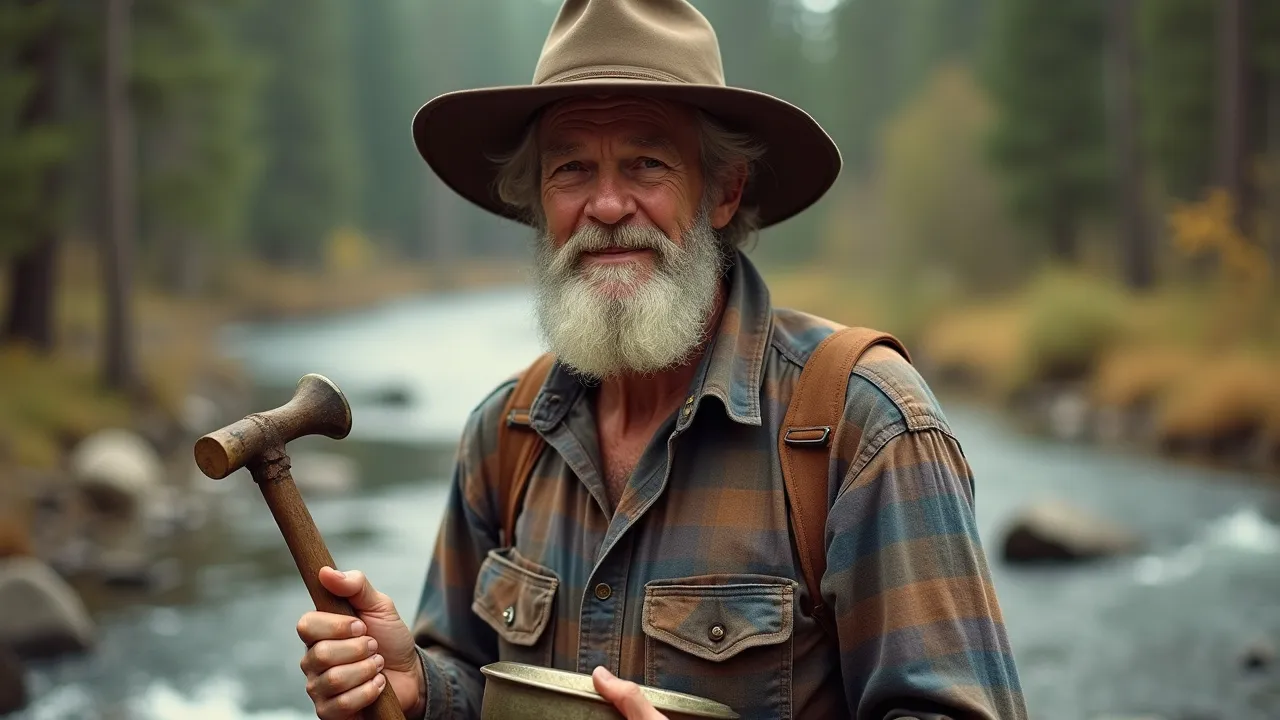
Celebrate Talk Like a Grizzled Prospector Day on January 24th by adopting the lingo and lore of 19th-century gold miners. A day to honor the rugged spirit of the Wild West through authentic prospector vocabulary and storytelling.
The Historical Origins & Evolutionary Journey
Talk Like a Grizzled Prospector Day, observed annually on January 24th, pays homage to the colorful vernacular of the 19th-century gold rush prospectors. The date marks the anniversary of the discovery of gold at Sutter's Mill in 1848, which sparked the California Gold Rush and gave rise to a unique lexicon.
The Foundational Catalyst
The Gold Rush brought together fortune seekers from diverse backgrounds, creating a melting pot of slang. Terms like "color" (trace amounts of gold), "gulch" (a ravine), and "playa" (a dry lake bed) became part of everyday speech. The rugged conditions and constant search for riches forged a distinct dialect.
The Legislative/Official Adoption
While not an official federal holiday, the day was declared in 2015 by the Prospector's Historical Society as a way to keep the lingo alive. Several museums and living history sites in California and Alaska now host special events on January 24th.
Modern Global Legacy
Today, the day is celebrated not only in the United States but also in gold rush regions in Australia, Canada, and South Africa. Enthusiasts share phrases on social media, and schools use it to teach about the era.
How to Celebrate Talk Like a Grizzled Prospector Day
Whether you're a history buff or just love a good yarn, here are authentic ways to honor the prospector's spirit on January 24th.
Individual Celebrations
- Learn the Lingo: Master key phrases like 'color in the pan' (finding gold), 'cache' (hidden stash), and 'tenderfoot' (newcomer).
- Dress the Part: Wear a flannel shirt, wide-brimmed hat, and sturdy boots. Add a fake beard for full effect.
- Pan for Gold: Visit a local river or pay-to-pan attraction. Use a shallow pan to sift gravel.
School and Community Events
- Organize a 'Gold Rush Vocabulary Bee' using prospector terms.
- Hold a storytelling session where participants recount tall tales of strikes and claims.
- Create a mock mining camp with tents, a sluice box, and a campfire.
Corporate and Social Rituals
Companies in mining or outdoor industries often host themed lunches. Some restaurants offer special menus with frontier-style food like hardtack and beans.
Prospector Lingo: A Glossary of Grizzled Terms
The language of the prospector is rich with metaphors and practical terms. Below is a curated list of essential words and phrases.
- Color: Visible gold particles in a pan. 'Got a bit of color here!'
- Paydirt: Gravel containing enough gold to be profitable.
- Bonanza: A rich vein of ore.
- Grubstake: Supplies provided to a prospector in exchange for a share of future finds.
- Skunked: Finding no gold at all.
- High-grading: Illegally taking only the richest ore.
How Slang Spread
The internet has revived many terms. Forums and social media groups dedicated to prospecting now use 'GPAA' (Gold Prospectors Association of America) as a badge of honor.
Cultural Impact of the Gold Rush Vernacular
Prospector slang has permeated American English far beyond mining camps. Phrases like 'strike it rich', 'pan out', and 'the mother lode' are now common idioms.
In Literature and Film
Writers from Mark Twain to Jack London used prospector dialogue. Western films cemented the image of the grizzled miner saying 'thar's gold in them thar hills!'
Modern Adaptations
The lingo appears in video games like Red Dead Redemption and reality TV shows like 'Gold Rush'. The day encourages appreciative play.
Global Observances and Regional Variations
While January 24th is the primary date in North America, other gold rush nations celebrate on different days:
- Australia: Observed on the anniversary of the 1851 Bathurst gold discovery (February 12). Traditions include 'fossicking' competitions.
- Canada: Klondike Gold Rush prospector day is marked on August 17 (Discovery Day).
- South Africa: Witwatersrand gold rush is celebrated in September with mining expos.
All share the same spirit of preserving frontier lingo.
Preserving the Legacy: Museums and Educational Programs
Several institutions keep the prospector's memory alive year-round:
The Autry Museum of the American West (Los Angeles): Offers live demonstrations of gold panning.
Klondike Gold Rush National Historical Park (Skagway, Alaska): Ranger-led talks on prospector life.
School Curricula: Some states include Gold Rush units where students learn to 'talk like a prospector' as a primary source exercise.
Historical Timeline
James Marshall discovers gold at Sutter's Mill in California, sparking the Gold Rush and the birth of prospector slang.
The '49ers flood into California, creating a melting pot of languages that enriches prospector vernacular.
Gold discovered in Bathurst, Australia, leading to Australian gold rush slang like 'fossick' and 'swag'.
Klondike Gold Rush begins; terms like 'cheechako' (greenhorn) enter the lexicon.
First written glossary of prospector terms published by the Prospector's Guide.
The Prospector's Historical Society establishes January 24th as Talk Like a Grizzled Prospector Day.
The day gains social media traction with hashtags like #GrizzledProspector.