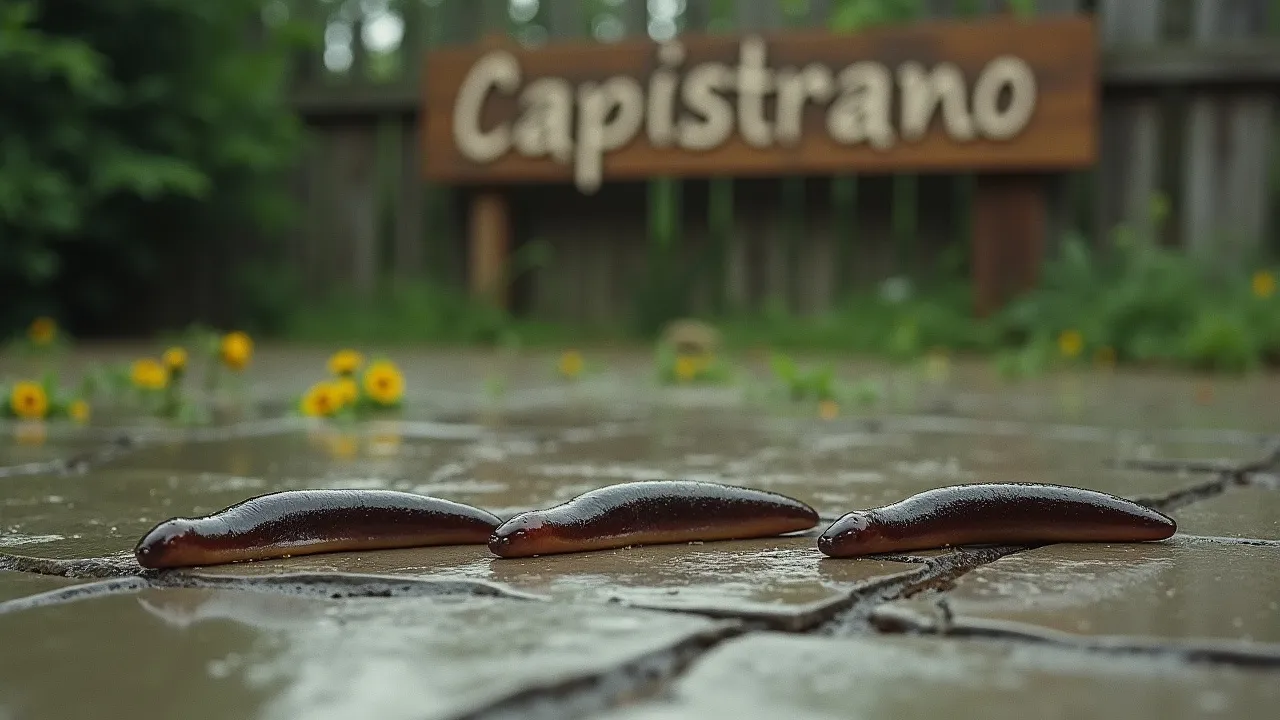
Slugs Return from Capistrano Day, observed on May 28th, celebrates the annual migration of banana slugs to San Juan Capistrano. It highlights the ecological importance of slugs and promotes backyard conservation through educational events and community slug trails.
The Historical Origins & Evolutionary Journey
Slugs Return from Capistrano Day commemorates the remarkable annual migration of the Pacific banana slug (Ariolimax columbianus) to the Mission San Juan Capistrano in California. Though lesser known than the famous swallows, slug migration is a biological wonder tied to moisture cycles and ancient forest ecosystems.
The Foundational Catalyst
The first recorded mass slug arrival in Capistrano occurred in the spring of 1952, when a record wet winter turned the mission gardens into a slug paradise. Local naturalist Dr. Henrietta Moss documented thousands of banana slugs crossing the mission walls on the night of May 27-28. Her diaries, published in Pacific Naturalist (1953), sparked public fascination.
Official Establishment
In 1987, the International Slug Appreciation Society (ISAS) petitioned the Capistrano City Council to declare May 28th as Slugs Return from Capistrano Day. The date was chosen because it is the average peak of the migration based on 35 years of data. The first official celebration included a 'Slug Parade' and a 'Slimy Art' exhibition.
Modern Legacy
Today the day is observed by naturalists, educators, and families across the Pacific Northwest. Events emphasize the role of slugs as decomposers and soil aerators. The day also raises awareness about urban development affecting migration corridors. Many schools incorporate slug science curricula during late May.
How to Celebrate Slugs Return from Capistrano Day
Celebrating this day is easy, fun, and educational. Here are actionable ways to participate:
For Individuals & Families
- Backyard Slug Safari: After dusk, go outside with a flashlight and observe slugs in your garden. Note their colors, sizes, and slime trails.
- Build a Slug Sanctuary: Create a small damp area with logs and leaves to attract native slugs. Use a spray bottle to keep it moist.
- Cook Slug-Themed Treats: Make banana slug cupcakes or green slime Jell-O. Fun for kids!
For Schools & Nature Centers
- Slug Science Stations: Set up microscopes to examine slug anatomy and slime properties.
- Migration Mapping: Use GPS to track slug movements over several days. Submit data to SlugWatch.
- Slug Art Contest: Have students draw, paint, or sculpt banana slugs. Display artwork in local libraries.
Community Events
Many towns host Slug Festivals with slug races, slime bubble blowing, and educational talks by malacologists. Check local listings for details.
Internationally, regions with native slug migrations hold parallel observances. In the UK, Slug Return Day occurs in October for the black slug (Arion ater). Participants lay out beer traps and count species diversity.
The Ecological Role of Migratory Slugs
Slugs are keystone decomposers in temperate rainforests. The banana slug, in particular, breaks down leaf litter and returns nutrients to the soil. A single banana slug can process over 100 square feet of debris annually.
Slime as a Superpower
Slug slime is a hydrogel that retains moisture, aids locomotion, and even deters predators. Research shows slug slime contains antimicrobial peptides that could inspire new antibiotics. The migration to Capistrano is driven by the search for calcium-rich soil needed to build shells (banana slugs have a reduced internal shell).
Impact of Climate Change
Warmer winters are shifting migration timing earlier. Data collected on Slugs Return from Capistrano Day helps scientists track these changes. Volunteers can participate in citizen science projects.
Cultural Traditions Around the World
While the Capistrano event is North America-focused, slug migrations occur globally. Here are regional variations:
- Japan: On May 28th, some shrines hold 'Namakuri Matsuri' (Slug Festival) where paper slug amulets are sold for good harvests.
- United Kingdom: Slug Return Day on October 15 celebrates the return of garden slugs after summer dryness. Children make slug hotels from milk cartons.
- Brazil: In the Atlantic Forest, the Dia da Lesma on May 28 encourages removal of invasive slugs from native plant nurseries.
Each region adapts the core themes: appreciation, conservation, and education.
The Economic Impact of Slugs on Agriculture
While beneficial in forests, slugs are major agricultural pests. Slugs Return from Capistrano Day also highlights integrated pest management (IPM) strategies. Farmers use the day to plan slug control measures for the growing season.
Damage Figures
In the US alone, slugs cause over $100 million in crop damage annually, especially to soybeans, corn, and lettuce. The dinner-plate-sized banana slug rarely damages crops, but invasive species like the Deroceras reticulatum are problematic.
Balancing Act
Conservationists advocate for buffer zones between wildlands and farms to protect native slug migrations while reducing crop loss. On this day, agricultural extension offices offer webinars on slug-resistant row spacing and biological control using nematodes.
Slugs in Popular Culture & Media
Slugs have slithered into movies, art, and literature. May 28th is a perfect occasion to explore these references:
- Film: The 1998 cult classic 'Slug Wars' features a group of teens defending Capistrano from giant mutant slugs.
- Music: The indie band 'Banana Slug Band' releases a new single every May 28.
- Art: The annual 'Slime Trail Art Show' in Portland uses slug slime as a biodegradable pigment.
Social media campaigns like #SlugSelfie encourage posting photos of slugs encountered on the day.
Historical Timeline
First documented mass migration of banana slugs to Mission San Juan Capistrano observed by naturalist Dr. Henrietta Moss on May 27–28.
Dr. Moss publishes her findings in 'Pacific Naturalist', coining the term 'Slug Return'.
The International Slug Appreciation Society (ISAS) is founded by biologist Dr. Samuel Koch and teacher Maria Lopez.
Capistrano City Council officially proclaims May 28 as Slugs Return from Capistrano Day. First public celebration includes a slug parade and educational booths.
The event gains national media coverage after CNN airs a segment on slug migration.
A record count of 12,000 slugs recorded during the annual tally. ISAS launches a citizen science app for slug tracking.
Slugs Return from Capistrano Day is added to the National Day Calendar as an unofficial holiday.
Virtual celebrations due to COVID-19; online slug identification workshops attract 50,000 participants globally.
The mission's slug garden restoration project begins, funded by ISAS to preserve the migration corridor.