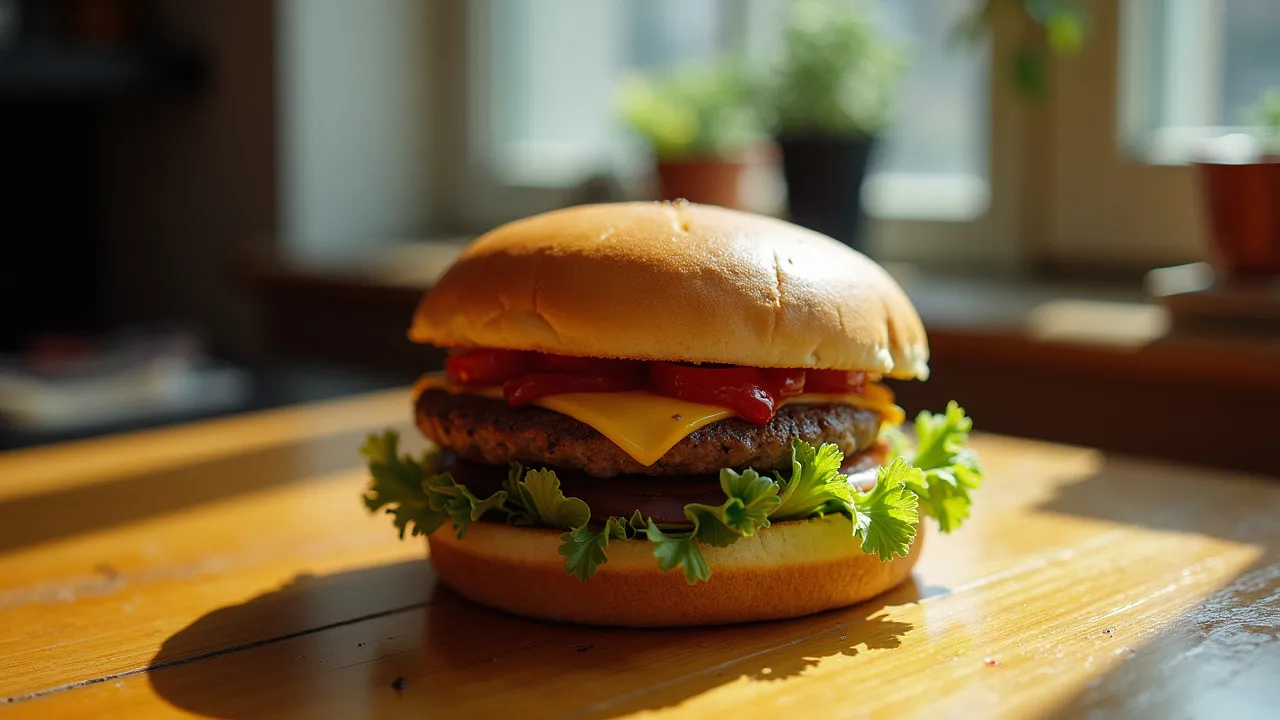
National Hamburger Day on May 28 celebrates the iconic American hamburger. From backyard barbecues to gourmet restaurants, this day honors a beloved staple of global cuisine, encouraging everyone to enjoy a burger.
The Historical Origins & Evolutionary Journey
National Hamburger Day, observed on May 28th, traces its roots to the beloved hamburger, a sandwich that has become a global icon. The exact origins of the hamburger are debated, but most historians agree it emerged in the late 19th century in the United States.
The Foundational Catalyst
The hamburger's precursor can be found in Hamburg, Germany, where minced beef was seasoned and formed into patties. German immigrants brought this concept to America. In 1885, at the Erie County Fair in Hamburg, New York, brothers Charles and Frank Menches reportedly sold a ground beef patty between slices of bread, claiming to have invented the hamburger. A similar claim comes from Louis Lassen of New Haven, Connecticut, who in 1895 placed a beef patty between two slices of toast for a quick meal.
Early Adaptations
- 1904 St. Louis World's Fair: The hamburger gained national attention when sold at the fair.
- 1921 White Castle: The first fast-food hamburger chain was founded, standardizing the slider.
- 1940s McDonald's: The Speedee Service System revolutionized burger-making, leading to global expansion.
The Legislative/Official Adoption
National Hamburger Day was not officially proclaimed by the U.S. government but was adopted by the National Hamburger Council in 1995 to promote beef consumption. Over time, it was embraced by chains like Burger King and Wendy's, who offer deals on May 28th.
Modern Global Legacy
Today, the hamburger is a symbol of American culture and fast food worldwide. National Hamburger Day encourages people to experiment with toppings and cooking methods, from classic grilled cheeseburgers to gourmet creations with truffle aioli.
How to Celebrate National Hamburger Day
National Hamburger Day is the perfect excuse to indulge in your favorite burger. Here is a comprehensive guide to celebrating this juicy holiday.
For Individuals and Families
- Fire up the grill: Host a backyard barbecue with classic beef patties, buns, and an array of toppings like lettuce, tomato, onion, pickles, cheese, and condiments.
- Visit a local diner: Support small businesses by ordering a handcrafted burger from a neighborhood restaurant or food truck.
- Try a new recipe: Experiment with alternative patties—turkey, black bean, portobello, or even beyond meat—for a vegetarian twist.
- Organize a burger tasting: Sample sliders from different restaurants and vote on the best.
For Schools and Organizations
- Lunch specials: Cafeterias can offer customized burger bars where students build their own.
- Community cook-offs: Host a burger competition with categories like "most creative topping" or "best veggie burger."
Corporate and Social Rituals
Many chains offer discounts on National Hamburger Day: McDonald's often has Big Mac deals, Burger King offers Whopper coupons, and Wendy's promotes their Dave's Single. Charity events like "Burgers for a Cause" donate a portion of sales to hunger relief.
Global Celebrations
In the United States, it's a day of indulgence and cookouts. In Australia, burgers with beetroot are popular. Japan features teriyaki burgers, while Germany celebrates with traditional Frikadellen in buns. No matter where you are, the spirit is the same: enjoy a burger.
The Cultural Impact of the Hamburger
The hamburger is more than a sandwich; it's a cultural phenomenon that reflects societal changes. In the mid-20th century, the rise of fast food made hamburgers synonymous with convenience and American capitalism. Drive-in restaurants and the McDonald's Golden Arches became icons of suburban life. The hamburger also crossed cultural boundaries, adapting to local tastes globally.
Symbol of Americana
The hamburger appears in films, TV shows, and art. It's associated with 1950s rock 'n' roll, road trips, and backyard freedom. Classic movies like "American Graffiti" and "Pulp Fiction" feature memorable burger scenes.
Controversies and Debates
The hamburger industry has faced criticism over health, environmental, and ethical issues. The push for plant-based alternatives like Impossible Burger and Beyond Meat has forced traditional chains to adapt. National Hamburger Day now includes vegan options.
Global Variations of the Hamburger
From Tokyo to Buenos Aires, the hamburger has been reinvented with local ingredients. Here are some notable variations:
- Japan: Teriyaki burger with soy sauce glaze, often served with seaweed.
- Australia: Added beetroot, fried egg, and pineapple; known as the "Aussie burger."
- India: Vegetarian options dominate, such as the McAloo Tikki burger made from potato and peas.
- Mexico: Burger topped with guacamole, jalapeños, and crema.
- Germany: Frikadellen (German meatballs) served in a bun with mustard.
- France: Le Big Mac with Roquefort cheese and confit onions.
Regional U.S. Styles
California burgers include avocado and sprouts; the Souther-style has coleslaw and chili; the Hawaii burger adds a grilled pineapple slice. Each state has its spin.
Nutritional Aspects and Modern Trends
The classic hamburger can be high in calories, saturated fat, and sodium, but modern innovations offer healthier options. Lettuce wraps replace buns, turkey or chicken patties reduce red meat intake, and plant-based burgers mimic meat with less environmental impact. National Hamburger Day is also a time to consider portion control and balanced toppings.
Health-Conscious Choices
- Bun alternatives: Portobello mushrooms, large lettuce leaves, or gluten-free buns.
- Lean meats: Ground turkey, chicken, or bison.
- Toppings: Fresh veggies, avocado, and low-fat cheese.
Trends in 2025
Gourmet burgers with unexpected ingredients (kimchi, truffle, foie gras) are popular in high-end restaurants. The rise of smash burgers (thin, crispy patties) has also taken social media by storm.
The Economics of the Burger Industry
The hamburger industry generates billions annually. In the U.S., fast-food burger chains account for a significant share of the restaurant market. McDonald's alone serves over 70 million customers daily. The supply chain involves cattle ranchers, bakers, and logistics companies, making the hamburger a key economic driver.
Employment and Innovation
Thousands of jobs rely on burger production, from grill cooks to delivery drivers. The industry also drives innovation in food technology, such as automated burger flipping robots and AI order-taking. National Hamburger Day boosts sales, with many chains reporting increased traffic.
Environmental Considerations
Beef production has a high carbon footprint, leading to sustainability initiatives. Some chains now offer carbon-neutral burgers or source beef from regenerative farms.
Historical Timeline
Louis Lassen of New Haven, Connecticut sells the first hamburger sandwich, a ground beef patty between two slices of bread.
The hamburger is introduced to a national audience at the St. Louis World's Fair.
White Castle is founded in Wichita, Kansas, becoming the first fast-food hamburger chain.
McDonald's brothers open the first Speedee Service System restaurant in San Bernardino, California, focusing on burgers.
Ray Kroc founds McDonald's Corporation; the hamburger becomes a global phenomenon.
The National Hamburger Council establishes National Hamburger Day on May 28 to promote beef consumption.
The first plant-based burger (Gardenburger) gains popularity; later innovations include Beyond Meat (2009) and Impossible Foods (2011).
McDonald's releases the McPlant burger in test markets, a plant-based option co-developed with Beyond Meat.