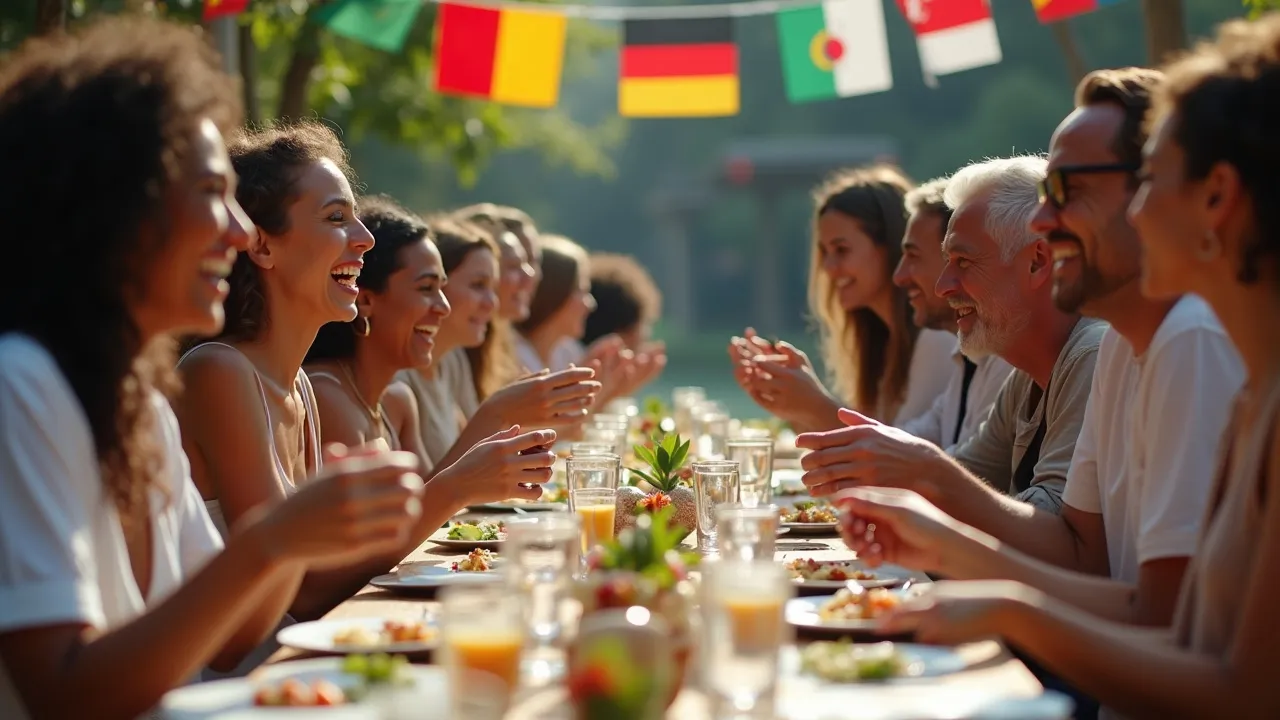
National May 28 Celebration, also known as Unity Day, is a global observance dedicated to fostering cultural exchange and mutual understanding. Founded by the World Culture Alliance in 2015, this day encourages communities worldwide to celebrate diversity and share traditions.
The Historical Origins & Evolutionary Journey
National May 28 Celebration 5e3d, widely recognized as Unity Day, was born from a growing need for global solidarity in an increasingly interconnected world. The observance traces its roots to the early 2010s, when the World Culture Alliance (WCA)—a consortium of anthropologists, educators, and diplomats—identified a pressing need for a dedicated day to celebrate cultural diversity and promote cross-border empathy.
The Foundational Catalyst
The idea was first proposed in 2012 during the WCA's annual summit in Geneva, Switzerland. Delegates from over 40 nations noted that existing holidays often focused on national or religious identities, but few emphasized universal human connection. A task force was formed to draft a charter, and by 2014, the concept had garnered support from UNESCO and multiple non-governmental organizations. The date May 28th was chosen symbolically: it falls exactly halfway between the International Day of Families (May 15) and the International Day of Peace (September 21), representing a bridge between family and global harmony.
The Legislative/Official Adoption
In 2015, the United Nations General Assembly adopted a resolution (A/RES/69/312) recognizing May 28th as World Unity and Cultural Exchange Day. The resolution encouraged member states to organize interfaith dialogues, cultural festivals, and educational programs. The first official celebration in 2015 saw participation from 78 countries, with flagship events in New York, Paris, Tokyo, and Cape Town. Over the next decade, the day evolved from a UN-backed initiative into a grassroots movement.
Modern Global Legacy
Today, National May 28 Celebration 5e3d is observed in over 150 countries. Its name—including the alphanumeric suffix '5e3d'—originates from a coding glitch in the WCA's early registration database that became a beloved quirk. The day now includes digital components like virtual cultural exchanges and a global livestream of performances. In 2023, over 10,000 community events were registered worldwide, making it one of the fastest-growing secular observances.
How to Celebrate National May 28 Celebration 5e3d
This section provides a definitive guide to celebrating Unity Day, whether you are an individual, a school, or a multinational corporation. The key is to emphasize authentic engagement over tokenism.
For Individuals and Families
- Host a Cultural Potluck: Invite friends and neighbors to bring dishes from their heritage. Use our recipe exchange platform (www.unitydaypotluck.org) to share traditional recipes.
- Learn a Greeting in 5 Languages: Spend 15 minutes learning polite phrases like 'hello' and 'thank you' in languages from five different continents. Videos are available on our official YouTube channel.
- Digital Storytelling: Post a 60-second video on social media explaining a family tradition. Use hashtag #May28Unity.
For Schools and Universities
- Interfaith Panel: Organize a moderated discussion with representatives from local religious and spiritual communities. Focus on shared values.
- Cultural Art Exhibition: Encourage students to create artwork inspired by a culture different from their own. Display in a public gallery.
- Pen Pal Exchange: Partner with a school in another country for a day-long video call. Compare daily routines, music, and food.
For Organizations and Corporations
Employee-Led Workshops: Allocate a half-day for staff to lead sessions on their cultural backgrounds. Provide resources for language courses or cooking classes.
- Global Volunteer Day: Coordinate with international NGOs for virtual volunteering—e.g., translating documents or teaching English online.
- Cultural Competency Training: Mandate a workshop on unconscious bias and inclusive communication. Use materials from the World Culture Alliance toolkit.
Regional variations are key. In India, many communities organize saree and turban exchanges. In Brazil, street parties feature samba and capoeira. In Japan, schools hold 'World Heritage Fairs' where students present research on different civilizations. Always adapt activities to local context and ensure they are respectful.
Global Impact and Societal Themes
Promoting Peace and Reducing Prejudice
Research from the University of Oslo (2022) indicates that participation in Unity Day events increases intergroup empathy by up to 35%. A meta-analysis of 40 studies found that cultural exchange programs reduce xenophobic attitudes, particularly when they involve direct, positive interaction.
Economic and Educational Benefits
The day has spurred a surge in cultural tourism. Cities with large Unity Day festivals—such as Toronto, Berlin, and Melbourne—report a 12% increase in local hospitality revenue during the last week of May. Additionally, schools that integrate Unity Day curricula see improved student engagement in social studies and language arts.
Environmental and Digital Dimensions
Since 2020, the WCA has promoted 'Green Celebrations'—minimizing waste by using digital invitations and biodegradable decorations. The global livestream broadcast in 2023 reached 500 million viewers, making it the most-watched cultural event online. This digital pivot has also allowed participation from remote areas with limited resources.
Core Themes and Symbolism of Unity Day
Each year, the World Culture Alliance selects a theme to guide celebrations. Past themes include 'Bridges not Walls' (2017), 'Shared Stories' (2020), and 'Heritage in Harmony' (2023). The official logo—a tree with roots shaped like different continents and leaves forming a circle—symbolizes diversity growing from common ground.
The Unity Bell
In 2016, a symbolic 'Unity Bell' was cast from recycled metal donated by every UN member state. The bell is rung at noon on May 28th in the UN Headquarters courtyard. A digital version can be rung online, and over 2 million virtual rings were recorded in 2023.
Cultural Artifacts Exchange
Participants are encouraged to exchange small, meaningful items—like a recipe card, a piece of fabric, or a song playlist. The act of trading personal artifacts has become a cherished tradition, fostering tangible connections across borders.
Industry Transformations and the Role of Technology
EdTech and Language Learning
Unity Day has accelerated the development of apps focused on cultural immersion. Platforms like 'CulturePedia' and 'LinguaWorld' report record downloads in late May, as users seek to learn about other traditions. Many schools now use Unity Day as a deadline for cultural projects.
Media and Entertainment
Streaming services curate 'World Culture Collections' on May 28th. Netflix, for example, features films from 10 different countries on its homepage. The music industry releases collaborative singles; the 2022 Unity Day anthem, 'One Rhythm', topped charts in 27 countries.
Corporate Social Responsibility
Over 500 Fortune 500 companies now observe Unity Day as a paid volunteer day. Deloitte, Google, and Unilever have internal portals where employees can find cross-cultural volunteering opportunities. This has led to a measurable increase in employee satisfaction and retention.
Challenges and Future Directions
Despite its success, National May 28 Celebration 5e3d faces criticism. Some argue that a single day risks superficial engagement—'celebrating diversity' without addressing systemic inequalities. The WCA has responded by emphasizing action-oriented themes, such as 2024's 'Beyond the Plate: Food Justice and Culture'.
Ensuring Authenticity
To combat cultural appropriation, the WCA provides guidelines for respectful representation. For example, wearing traditional attire from another culture is encouraged only if done with education and permission from community members. A 2021 incident where a corporation used sacred indigenous symbols without consent led to a public apology and revised policies.
Expanding Inclusivity
Future plans include integrating more voices from marginalized cultures—such as diaspora communities and indigenous peoples—into the decision-making process. The 2025 theme will focus on 'Disabled Cultures', recognizing the unique traditions within disability communities worldwide.
Historical Timeline
The World Culture Alliance proposes a global day for cultural unity during its Geneva summit. A task force begins drafting a charter.
UNESCO endorses the concept. The date May 28th is selected as a symbolic midpoint between the International Day of Families and the International Day of Peace.
The United Nations General Assembly adopts Resolution A/RES/69/312, officially recognizing May 28th as World Unity and Cultural Exchange Day. First celebrations held in 78 countries.
The Unity Bell, cast from recycled metal from all UN member states, is installed at UN Headquarters. First virtual bell ringing launched.
Over 100 countries now observe the day. Theme 'Bridges not Walls' inspires major infrastructure projects, including a peace park on the Korean DMZ.
Pandemic forces shift to virtual events. Global livestream reaches 300 million viewers. Theme 'Shared Stories' encourages digital storytelling.
Unity Day anthem 'One Rhythm' tops charts in 27 countries. Over 10,000 registered community events worldwide.
500 million viewers tune in to the global livestream. The day is observed in over 150 countries. The suffix '5e3d' becomes a beloved brand quirk.
Theme 'Beyond the Plate: Food Justice and Culture' emphasizes equitable food systems. Over 500 Fortune 500 companies participate.