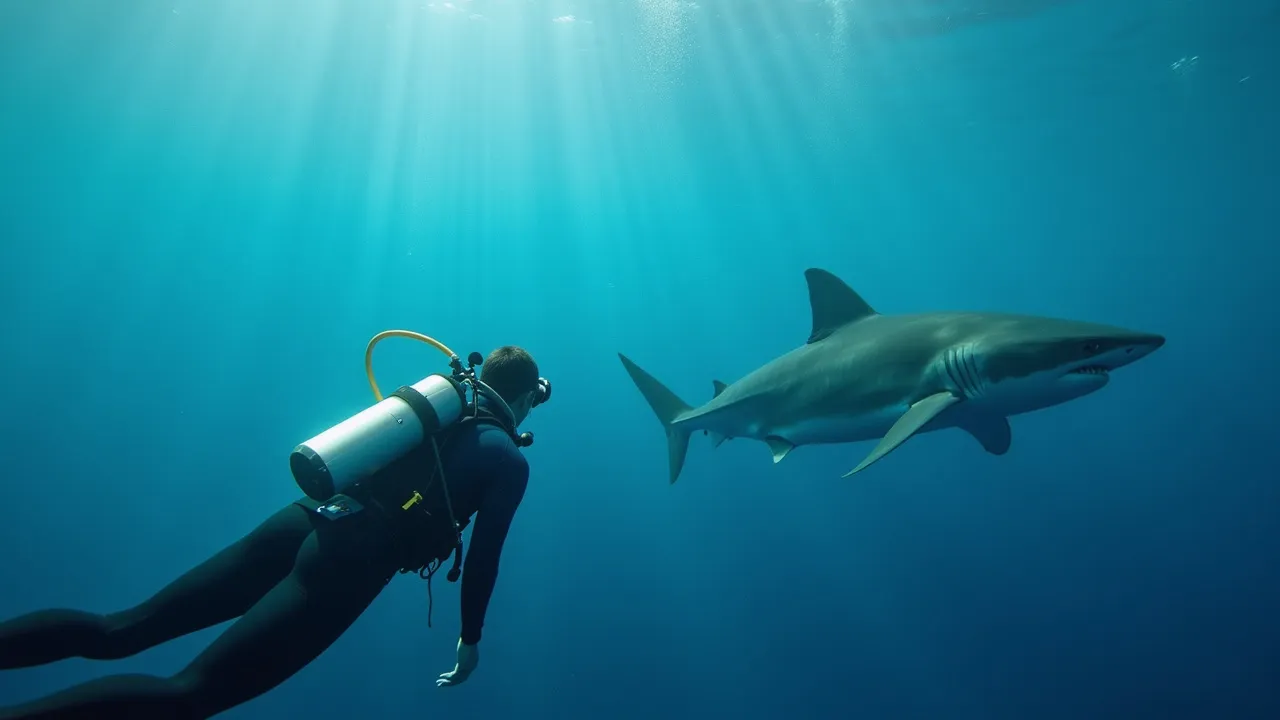
Shark Awareness Day, observed annually on July 14, aims to dispel myths about sharks and highlight their critical role in marine ecosystems. Join efforts to protect these misunderstood creatures.
The Historical Origins & Evolutionary Journey
Shark Awareness Day was first conceived in 2004 by the Shark Research Institute (SRI) to counter the rampant misinformation and fear surrounding sharks, and to promote their conservation. Initially observed as a small educational event, it has grown into a global movement recognized by zoos, aquariums, marine conservation groups, and individuals.
The Foundational Catalyst
The early 2000s witnessed a surge in media portrayals of sharks as ruthless killers, largely fueled by the 1975 film Jaws and subsequent sensationalized documentaries. This resulted in widespread fear and a dramatic increase in shark culling and finning. Conservationists realized that without a concerted effort to rebrand sharks as vital, vulnerable apex predators, many species would face extinction.
Legislative & Official Adoption
Although not an official federal holiday in any country, Shark Awareness Day gained traction through partnerships with marine institutions. The United Nations Environment Programme (UNEP) and the Convention on International Trade in Endangered Species (CITES) have used the day to highlight policy achievements. For instance, in 2013, CITES listed five shark species under Appendix II, restricting international trade—a milestone often celebrated on July 14.
Modern Global Legacy
Today, Shark Awareness Day is marked by countless activities: beach cleanups, social media campaigns (#SharkAwarenessDay), educational programs in schools, and fundraising for research. The day now focuses on the interconnection between shark health and ocean health, emphasizing that protecting sharks preserves biodiversity and supports fisheries.
How to Celebrate Shark Awareness Day
Shark Awareness Day offers many ways for individuals, schools, and organizations to participate. Below are actionable ideas grouped by audience.
For Individuals & Families
- Watch documentaries: Programs like Sharkwater or Blue Planet II provide balanced views on shark behavior.
- Host a movie night: Replace Jaws with films like Shark Tale (for kids) or Racing Extinction.
- Visit an aquarium: Many facilities have special shark talks and feeding demonstrations on July 14.
- Adopt a shark: Symbolic adoptions through WWF or Oceana fund conservation efforts.
For Schools & Educators
- Lesson plans: Use resources from the Shark Research Institute to teach about shark biology and threats.
- Art projects: Have students draw or paint sharks with correct anatomical features.
- Debate club: Discuss shark culling policies versus non-lethal mitigation measures.
For Organizations & Corporations
- Social media blitz: Share infographics debunking common shark myths.
- Fundraising: Match employee donations to shark conservation NGOs.
- Sustainable seafood pledge: Commit to avoiding shark products in company cafeterias.
Regional Variations
In Australia, where shark attacks are more common, events often emphasize coexistence and beach safety. In coastal Asian nations, the day focuses on ending the shark fin trade. In the Maldives, which declared a shark sanctuary in 2010, July 14 is a celebration of successful conservation.
Global Impact & Conservation Status
Sharks are keystone species, meaning their removal triggers cascading effects on marine ecosystems. Over 100 million sharks are killed annually, mainly for fins (used in shark fin soup) and as bycatch. This exploitation has pushed one-third of all shark species toward extinction, according to the IUCN Red List.
Ecological Consequences
Without sharks, mid-level predators like rays and groupers proliferate, depleting herbivorous fish that keep coral reefs healthy. This leads to algal overgrowth and reef degradation. In open oceans, shark loss reduces carbon sequestration by altering plankton dynamics.
International Responses
Several landmark agreements have been established: the Shark Fin Ban in many US states and territories; the EU’s ban on shark finning (2013); and the Shark Conservation Act (2010) requiring sharks to be landed with fins naturally attached. The global community has also established shark sanctuaries in waters of Palau, the Maldives, and the Bahamas.
Challenges Ahead
Enforcement remains weak, especially in international waters. Illegal, unreported, and unregulated (IUU) fishing continues to threaten sharks. Climate change further exacerbates risks by altering shark migration patterns and habitat suitability.
Debunking Myths: Sharks vs. Public Perception
Sharks suffer from a severe image problem. On Shark Awareness Day, educators emphasize these facts:
- Myth: All sharks are man-eaters. Fact: Of over 500 species, only about a dozen have been involved in unprovoked attacks. You are more likely to be killed by a dog or lightning.
- Myth: Sharks must keep swimming to breathe. Fact: Some sharks (like nurse sharks) can pump water over their gills while stationary.
- Myth: Sharks are stupid. Fact: Sharks have complex behaviors, social structures, and some demonstrate problem-solving abilities.
- Myth: Shark finning is a small problem. Fact: It is the primary driver of global shark decline, with fins traded in Asian markets at high prices.
The Role of Media
Documentaries and news often highlight attacks, ignoring that humans kill millions of sharks each year. Responsible reporting and balanced educational content can help shift public perception toward empathy and conservation.
Economic Importance of Sharks
Sharks contribute significantly to economies through ecotourism. A study by the University of British Columbia estimated that shark tourism generates over $300 million annually worldwide, compared to the much lower value of the shark fin trade. Countries like Fiji, the Bahamas, and South Africa rely heavily on shark diving tourism.
Fisheries vs. Tourism
While some artisanal fishers rely on shark meat, the long-term economic benefits of live sharks far outweigh those of dead ones. A single reef shark can generate up to $200,000 in tourism revenue over its lifetime, versus a one-time value of ~$50 for its fins. This economic argument is increasingly used to advocate for marine protected areas.
Shark Products Trade
Shark products include fins (for soup), meat, liver oil (used in cosmetics and supplements), and cartilage. However, traceability is poor, and much of the trade is illegal. Efforts under CITES aim to regulate international trade, but domestic markets remain poorly controlled.
The Future of Shark Protection
Innovations and policy advancements give hope for shark conservation. Key developments include:
Technological Solutions
- Shark Smart Buoys: These detect tagged sharks and send alerts to beachgoers, reducing culling.
- Fishing gear modifications: Circle hooks and trap doors reduce bycatch.
- DNA tracking: Forensic tools help identify illegally traded shark parts.
Community-Based Management
Local communities in Indonesia, the Philippines, and elsewhere are establishing no-take zones and sustainable fishing practices. For instance, in Raja Ampat, community patrols have reduced shark poaching by 90%.
Global Cooperation
International bodies like the FAO have developed guidelines for sustainable shark fisheries. The upcoming UN High Seas Treaty aims to protect biodiversity in areas beyond national jurisdiction, which could greatly benefit migratory sharks.
Individuals can contribute by supporting sustainable seafood, avoiding shark products, and spreading accurate information. Every action on Shark Awareness Day helps shift the tide towards a future where sharks thrive.
Historical Timeline
The Shark Research Institute launches early awareness initiatives, laying groundwork for a dedicated observance day.
First official Shark Awareness Day celebrated on July 14, promoted by the Shark Research Institute.
Maldives declares its entire Exclusive Economic Zone a shark sanctuary, a major milestone for shark conservation.
CITES Appendix II listing of five shark species (great white, basking, whale, etc.) restricts international trade.
Shark Awareness Day gains social media traction with #SharkAwarenessDay trending on multiple platforms.
COVID-19 temporarily reduces fishing pressure; shark researchers document increased sightings near coastlines.
Over 100 countries support the UN High Seas Treaty, providing new tools to protect migratory shark species.