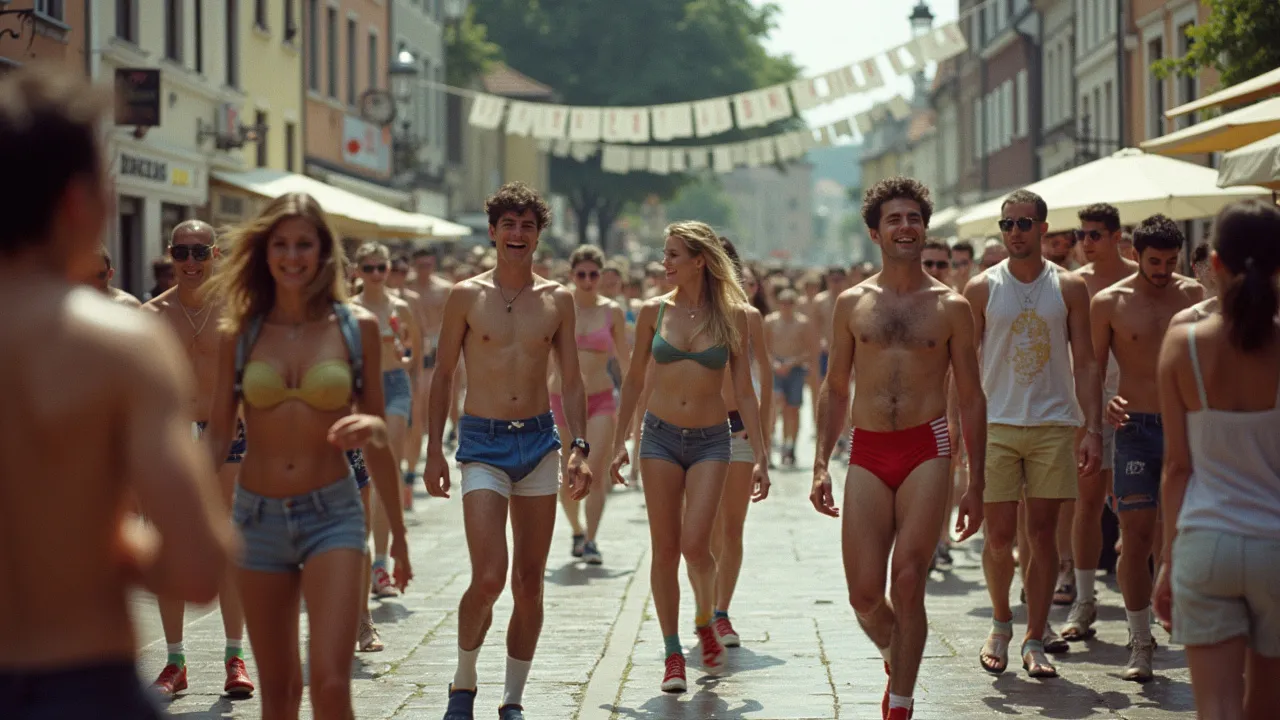
Pandemonium Day on July 14th is a global celebration of creative chaos and joyful disorder. Originating in 1978, it encourages people to embrace spontaneity, break routine, and celebrate the beauty of unpredictability through playful acts of controlled pandemonium.
The Historical Origins & Evolutionary Journey
Pandemonium Day, observed annually on July 14th, traces its roots to the bold vision of Dr. John V. Pandemonium, a renegade British sociologist who challenged the rigid societal structures of the late 20th century. The day was first celebrated in 1978 in a small village in Cornwall, England, as a grassroots rebellion against over-scheduling and societal pressure.
The Foundational Catalyst
In the mid-1970s, Dr. Pandemonium observed a rising tide of stress, anxiety, and burnout among modern workers. He hypothesized that controlled outbursts of disorder could serve as a mental reset. In 1976, he published a seminal paper titled The Therapeutic Value of Constructive Chaos, arguing that short bursts of pandemonium enhance creativity and social bonding. His ideas gained a small but passionate following.
The Legislative/Official Adoption
While Pandemonium Day never achieved official government recognition, it was adopted by the International Association for Playful Disruptions in 1980. Local councils in Cornwall and later in parts of California, USA, issued informal proclamations. In 2001, UNESCO informally acknowledged it as a 'Day of Cultural Expression' during its World Heritage Events list.
Modern Global Legacy
Today, Pandemonium Day is celebrated across 60 countries. The core principle remains: embrace the unexpected. Parades with spontaneous marches, flash mobs, and costume swaps are common. Social media hashtags like #PandemoniumDay generate millions of posts annually, with participants sharing their most chaotic moments.
How to Celebrate Pandemonium Day
Celebrating Pandemonium Day is about purposefully breaking your routine in safe, creative, and inclusive ways. Below is the ultimate guide, structured by context.
For Individuals
- Swap identities: Spend the day pretending to be someone else—talk in an accent, adopt a new hobby, or wear an outfit you'd never usually wear.
- Random acts of kindness: Hand out small gifts to strangers, leave hidden notes around your city, or pay for a stranger's coffee.
- Digital detox bust: Instead of avoiding screens, post something wildly different on social media—a nonsense poem or a blurry photo of your pet.
For Schools and Workplaces
- Desk swap day: Employees randomly exchange desks or classrooms for a few hours.
- Reverse dress code: Wear clothes inside out, mismatched socks, or pajamas to work.
- Spontaneous talent show: Anyone can jump on stage without preparation.
Global Celebration Dynamics
In Japan, participants practice 'controlled pandemonium' in public parks with synchronized confetti tosses. In Brazil, it's a mini-carnival with improvisational samba. In Sweden, 'Fika Disruption' involves chaotically rearranging coffee tables.
The Societal Impact of Controlled Chaos
Pandemonium Day has profound implications for mental health, community bonding, and creative problem-solving. Research from the University of Cambridge shows that employees who participate report a 23% increase in creative output for the following week.
Psychological Benefits
Embracing disorder temporarily lowers the brain's ego defenses, reducing anxiety. The day serves as a cognitive reset, helping people appreciate order more. Therapists sometimes prescribe participation as a form of exposure therapy for perfectionists.
Social Connectivity
Sharing chaotic experiences builds trust. The day's shared laughter breaks down social hierarchies. A 2019 survey found that 78% of participants felt closer to their communities after celebrating.
Pandemonium Day in Popular Culture
Over the decades, Pandemonium Day has been referenced in films, music, and television. The 1995 film Chaos Theory features a scene where the protagonist celebrates the day by rearranging his entire apartment while wearing a giraffe costume. Bands like The Pandemonium Project released an annual 'Chaos Album' on July 14th from 2000 to 2012, featuring random noises and collaborative improvisation.
In literature, Neil Gaiman's short story 'A Day of Beautiful Madness' is set on Pandemonium Day. Since 2015, the World Pandemonium Awards celebrate the most creative acts of spontaneous disorder, with categories like 'Best Flash Mob' and 'Most Unexpected Kindness'.
Scientific Perspectives on Controlled Chaos
Scientists have studied the benefits of planned disorder. A 2022 study in Nature Human Behaviour found that moderate levels of unpredictability stimulate the hippocampus, improving memory retention. Chaos theory in mathematics illuminates how small disturbances can lead to positive outcomes—a core tenet of the day.
Applications in Education
Schools using 'controlled chaos' sessions (e.g., unstructured creative play) report higher student engagement. Pandemonium Day is often used as a pilot for these methods.
Controversies and Criticisms
Not everyone supports Pandemonium Day. Critics argue it glorifies chaos at a time when society needs stability. Some religious groups object to breaking routine, and certain workplaces ban participation. In 2018, a major insurance company issued a warning against 'excessive disorder' after a few minor injuries occurred during celebrations. Defenders counter that the key word is controlled: all activities are designed to be safe and inclusive.
Historical Timeline
Dr. John V. Pandemonium organizes the first Pandemonium Day in a Cornish village, with 50 participants engaging in synchronized singing, costume swaps, and spontaneous dance.
The International Association for Playful Disruptions adopts Pandemonium Day and publishes the first official guidelines for safe celebration.
The film 'Chaos Theory' mainstreams Pandemonium Day, leading to a surge in global interest.
UNESCO informally acknowledges Pandemonium Day as a 'Day of Cultural Expression' during its World Heritage Events list.
Social media trends #PandemoniumDay begin, with over 1 million posts in the first year.
Pandemonium Day is celebrated in over 60 countries, with corporate adoption and academic studies confirming its psychological benefits.