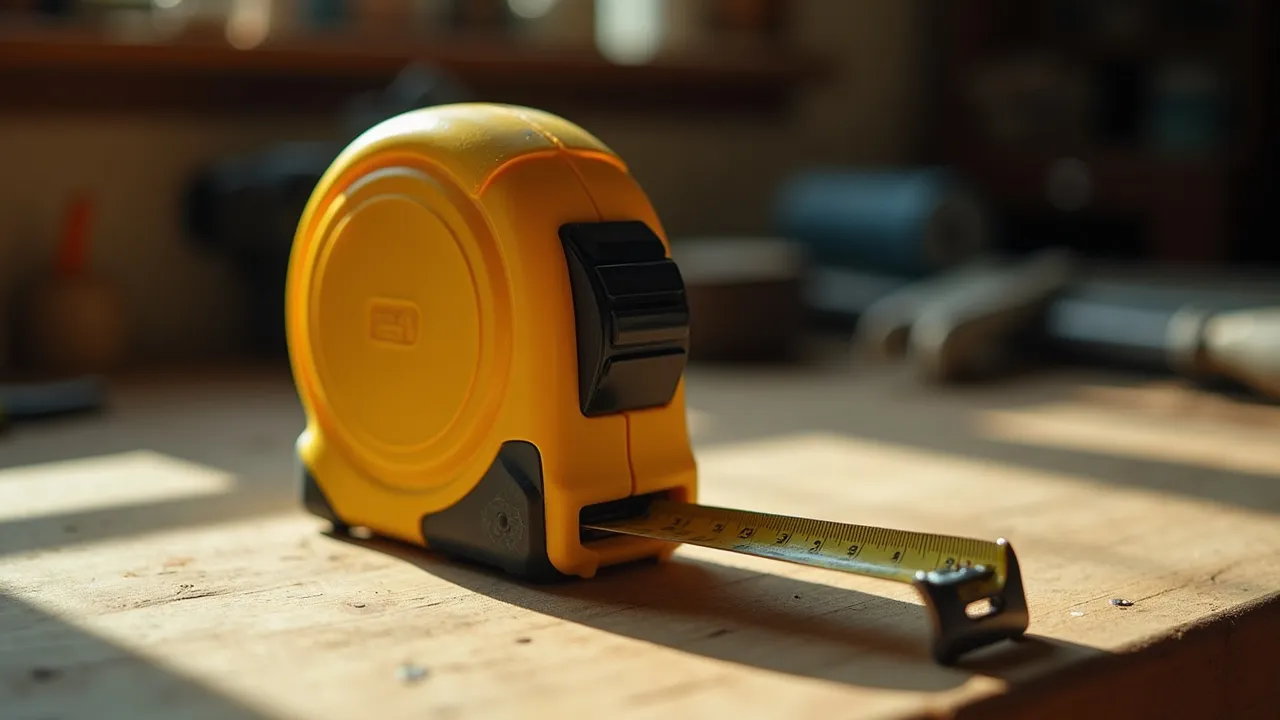
National Tape Measure Day on July 14th honors the invention of the tape measure by Alvin J. Fellows in 1868. It's a day to appreciate the precision and utility of this essential measuring tool in construction, sewing, and DIY projects.
The Historical Origins & Evolutionary Journey
National Tape Measure Day, observed annually on July 14th, commemorates the patenting of the first practical tape measure by Alvin J. Fellows in 1868. This day serves as a tribute to a tool that revolutionized measurement across countless industries, from construction to fashion. The tape measure's journey from a simple cloth ribbon to a precision-engineered instrument is a fascinating story of innovation and necessity.
The Foundational Catalyst
Before the tape measure, carpenters and tailors relied on folding rulers, strings, or marked sticks, which were cumbersome and inaccurate. In 1868, Alvin J. Fellows of New Haven, Connecticut, patented a spring-loaded tape measure that could retract into a compact case. His design featured a metal tape marked with measurements, a locking mechanism, and a ring for easy carrying. This invention drastically improved portability and ease of use.
The Legislative/Official Adoption
While National Tape Measure Day is not a federal holiday, it has been embraced by hardware stores, tool manufacturers, and DIY enthusiasts. The date July 14th was chosen to honor Fellows' patent, and over time it became a day of recognition promoted by industry groups and measurement aficionados. The day is often marked by special events at home improvement retailers and educational campaigns about proper measuring techniques.
Modern Global Legacy
Today, tape measures are ubiquitous, found in toolboxes, sewing kits, and even smartphone apps. The basic design has evolved with materials like fiberglass for flexibility and stainless steel for durability. Laser distance measurers have emerged for long-range needs, but the classic tape measure remains a staple. National Tape Measure Day celebrates this enduring tool and its role in enabling precision in everyday life.
How to Celebrate National Tape Measure Day
National Tape Measure Day offers a perfect opportunity to engage with measurement in fun and practical ways. Whether you're a professional or a hobbyist, there are activities for everyone. Below are ideas organized for individuals, schools, and organizations.
For Individuals and Families
- Start a DIY Project: Measure and build something small, like a bookshelf or birdhouse, using your tape measure.
- Teach Kids to Measure: Use a colorful tape measure to show children how to measure objects around the house. Make a game of estimating lengths.
- Upgrade Your Tape Measure: Buy a new, high-quality tape measure with features like magnetic tip or double-sided markings.
For Schools and Educational Groups
- Measurement Math Lesson: Use tape measures to teach fractions, decimals, and geometry. Have students measure classroom items and record data.
- History Presentation: Explain the invention of the tape measure and its impact on construction and sewing. Show vintage models if available.
- Design Challenge: Have students design a cardboard structure using precise measurements, then build it.
For Organizations and Businesses
- Tool Giveaway: Hardware stores can offer free branded tape measures with purchase or host a measuring contest.
- Workshops: Host a workshop on accurate measuring techniques for carpentry, sewing, or home improvement.
- Social Media Campaign: Encourage customers to share photos of their tape measures in action using a hashtag like #NationalTapeMeasureDay.
No matter how you celebrate, the goal is to appreciate the precision and history behind this simple yet vital tool.
The Evolution of Measurement Tools
The tape measure is part of a long lineage of measurement instruments. Understanding its evolution highlights human ingenuity in quantifying the world.
Ancient Measurement Systems
Early civilizations used body parts for measurement: the cubit (forearm), foot, and hand. These were imprecise but served basic needs. The Romans introduced the pes (foot) and passus (pace). Standardization came slowly, with the yard being defined by King Henry I of England in the 12th century as the distance from his nose to thumb.
Rise of Portable Measures
Folding rulers were common in the 18th century but were bulky. The spring tape measure addressed this, combining accuracy with compactness. In 1922, the Stanley Works introduced the first power-return tape measure, which automatically retracted. Later innovations included locking mechanisms, curved blades for rigidity, and magnetic tips.
Digital and Laser Era
Today, laser distance measurers can measure up to hundreds of feet with a button push. However, tape measures remain beloved for their tactile feedback and reliability in tight spaces. The evolution continues with smart tape measures that sync measurements to mobile apps for quick calculations. Despite new tech, the analog tape measure endures as a symbol of practical precision.
Tape Measures in Industry and Construction
The tape measure is an indispensable tool in construction, engineering, and manufacturing. Its role in ensuring accuracy cannot be overstated.
Construction Standards
Builders rely on tape measures for framing, drywall installation, and layout. A typical 25-foot tape measure with a 1-inch wide blade is standard for most jobs. Features like standout (how far the blade extends without buckling) and fractional markings increase efficiency. Many contractors prefer tapes with a magnetic hook for attaching to metal studs.
Specialized Tapes
- Engineer's Tape: Marked in decimal feet or meters for precise engineering work.
- Surveyor's Tape: Long fiberglass tapes (100-300 feet) for land measurement.
- Dual-Sided Tape: Features both inches and centimeters for international projects.
Quality and Certification
Professional tape measures must meet standards like US Class 1 or EU Class II for accuracy. Regular calibration ensures reliability. In high-stakes environments like aerospace or bridge building, laser measurements complement tapes, but the humble tape measure remains the go-to for on-site checks.
The Tape Measure in Fashion and Sewing
In the world of fashion and textiles, the tape measure is as essential as a sewing machine. It is the primary tool for taking body measurements and drafting patterns.
History in Tailoring
Tailors in the 19th century used cloth tapes marked in inches and centimeters. These tapes were flexible and non-stretch to ensure accurate body contours. The advent of the retractable tape measure in sewing brought convenience, but many seamstresses still prefer the traditional cloth tape for its flexibility around curves.
Modern Sewing Practices
- Body Measurement Guide: Standard measurements for bust, waist, hips, and inseam are taken with a tape measure. Accurate measurements are critical for garment fit.
- Pattern Drafting: Tape measures are used to transfer pattern pieces onto fabric, ensuring seams align. Quilters also use them for precise cuts.
- International Sizing: Tape measures with dual units help navigate between US, UK, and metric sizing systems.
Fashion Education
Fashion design programs teach students to use tape measures for both flat pattern drafting and draping. National Tape Measure Day is often celebrated in sewing circles with workshops on measuring techniques for different body types.
Global Impact and Cultural Significance
While National Tape Measure Day is primarily observed in the United States, the tape measure's influence spans the globe. Different cultures have adopted and adapted the tool to their needs.
International Standards
The metric system, used in most countries, relies on millimeter and centimeter markings. Tape measures are often dual-marked to accommodate both metric and imperial, reflecting global trade. In countries like Japan, specialized tape measures for traditional crafts (e.g., shaku units) exist but are rare.
Cultural Traditions
- China: Tape measures are used in feng shui to measure rooms and furniture for harmony.
- India: Tailors in Mumbai rely on tape measures for custom clothing, often using inherited tools from family.
- Europe: The building trade in Germany prefers tape measures with stud markings for standard wall frame spacing.
Symbolism
The tape measure often symbolizes precision, craftsmanship, and attention to detail. In popular culture, it appears as a tool of detectives (measuring crime scenes) and superheroes (like the Incredible Hulk's torn clothes). National Tape Measure Day celebrates this universal tool that transcends borders and professions.
Innovations and Future of Tape Measures
The tape measure continues to evolve with technology. While the core design remains unchanged for over a century, modern advancements enhance functionality.
Smart Tape Measures
Digital tape measures use lasers or ultrasonic waves to measure distance, displayed on an LCD screen. Some models store measurements in memory and connect to smartphones via Bluetooth for automatic calculation of area and volume. Brands like Bosch and DeWalt offer models with voice recording to note measurements.
Material Innovations
- Fiberglass: Non-conductive, ideal for electrical work.
- Stainless Steel: Resistant to rust and wear, for heavy-duty use.
- Kevlar Re-inforced: Extremely durable for abrasive environments.
Ergonomic Design
Modern tape measures feature rubber grips, shock-absorbent cases, and corrosion-resistant coatings. The hook is often designed with a slot for nail hanging and a magnetic tip for one-person operation. Future trends may include augmented reality overlays showing measurements on a screen, but the tactile tape measure will likely remain a staple for decades.
Historical Timeline
Alvin J. Fellows patents the first spring-loaded tape measure on July 14, featuring a retractable metal tape with a locking mechanism.
The Stanley Works introduces the first power-return tape measure, allowing the blade to retract automatically with the push of a button.
The first fiberglass tape measure is developed, offering flexibility and resistance to moisture for sewing and outdoor use.
Tape measures become standard equipment in construction, with curved blades for rigidity and standout lengths increasing to 25 feet.
Digital tape measures with LCD displays emerge, providing instant readings in multiple units and memory storage.
Laser distance measurers popularize for long-range measurements, while smart tape measures with Bluetooth connectivity begin to appear.