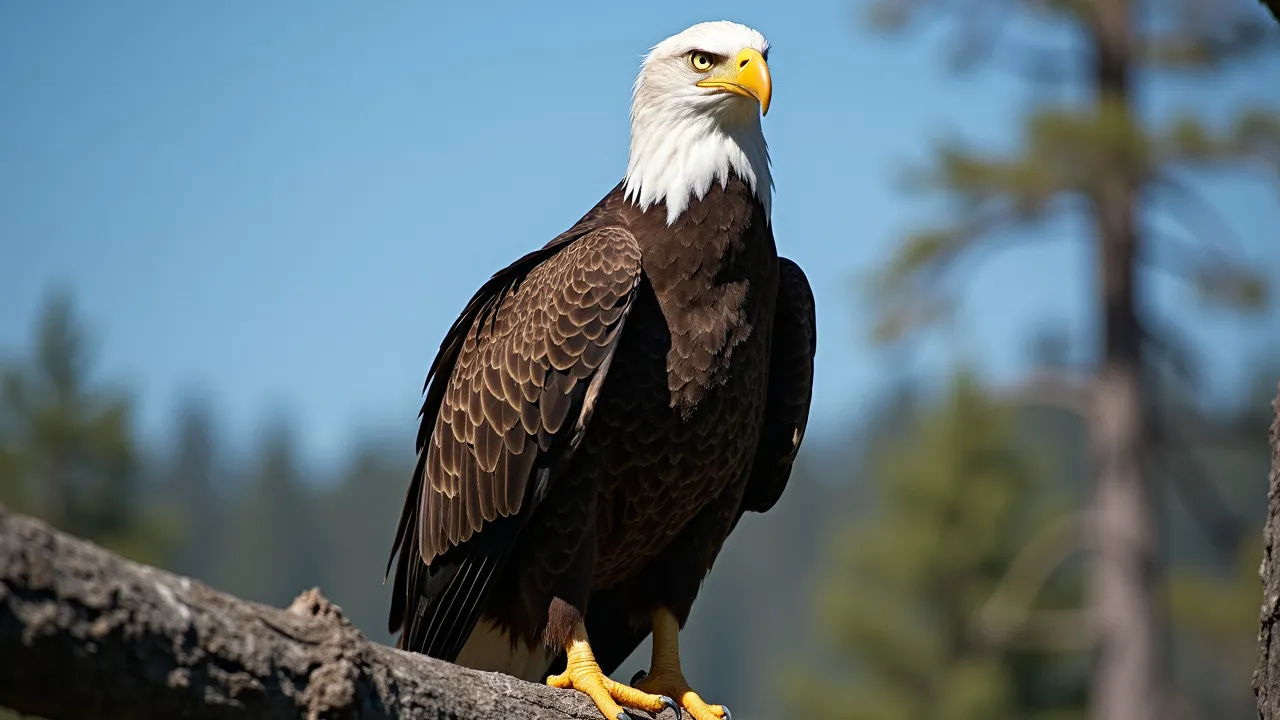
Save the Eagles Day, observed on January 10th, is a day dedicated to raising awareness about eagle conservation and celebrating the recovery of these majestic birds. Learn about their history, threats, and how you can participate in protecting them.
The Historical Origins & Evolutionary Journey
Save the Eagles Day, observed annually on January 10th, was established by the American Eagle Foundation in 2015 to highlight the ongoing conservation needs of eagles worldwide. While the day is relatively new, the movement to protect eagles dates back decades, with significant milestones in the 20th century.
The Foundational Catalyst
The bald eagle, America's national symbol, faced near extinction in the mid-20th century due to habitat loss, hunting, and the widespread use of the pesticide DDT. Rachel Carson's landmark 1962 book "Silent Spring" exposed the dangers of DDT, leading to widespread public outcry. By 1967, the bald eagle was listed as an endangered species under the Endangered Species Preservation Act. The ban on DDT in 1972 was a turning point, allowing eagle populations to slowly rebound.
The Legislative/Official Adoption
In 2015, the American Eagle Foundation launched Save the Eagles Day to commemorate the ongoing recovery and to educate the public about persistent threats such as lead poisoning, collisions with vehicles and power lines, and habitat encroachment. The day was chosen for January 10th to coincide with the anniversary of the first bald eagle nests protected under the Endangered Species Act. Since then, the day has been recognized by wildlife agencies, conservation groups, and schools across the United States.
Modern Global Legacy
While primarily a U.S. observance, Save the Eagles Day has inspired international participation. Countries like Canada, the United Kingdom, and India have adopted similar awareness campaigns. The day now serves as a platform for fundraising, volunteer events, and educational programs, emphasizing the importance of protecting all 60 eagle species worldwide. The success of bald eagle recovery—removed from the endangered species list in 2007—demonstrates the power of concerted conservation efforts.
How to Celebrate Save the Eagles Day
Save the Eagles Day offers numerous opportunities for individuals, families, schools, and organizations to engage in meaningful conservation actions. Here is a comprehensive guide to celebrating effectively:
For Individuals
- Educate Yourself: Read books or watch documentaries about eagles. Recommended: American Eagle: A Visual History or the PBS film The Eagle Huntress.
- Donate: Support organizations like the American Eagle Foundation, The Peregrine Fund, or local wildlife rehabilitation centers.
- Adopt an Eagle: Many conservation groups offer symbolic adoption programs that fund care for injured eagles.
For Schools
- Classroom Activities: Have students create posters about eagle biology, threats, and conservation. Host a quiz or essay contest.
- Virtual Field Trip: Connect with an eagle cam (e.g., from the National Eagle Center) for live observation.
- Fundraiser: Organize a bake sale or coin drive to donate to an eagle sanctuary.
For Organizations
- Host an Event: Invite a wildlife expert to give a talk. Show an eagle from a rehabilitation center (with proper permits).
- Volunteer Day: Participate in habitat cleanups or nest monitoring programs.
- Social Media Campaign: Use #SaveTheEaglesDay to share facts, photos, and stories. Encourage followers to take action.
Global Celebrations
In Canada, many provinces hold eagle-watching tours. In Scotland, the Royal Society for the Protection of Birds (RSPB) organizes eagle-themed walks. In Japan, the Steller's sea eagle is featured in educational programs. These diverse activities highlight the universal appeal of eagle conservation.
Eagle Species Diversity & Global Distribution
There are approximately 60 species of eagles found on every continent except Antarctica. They range from the massive Steller's sea eagle (weighing up to 9 kg) to the tiny Ayres's hawk-eagle (about 700 g). Eagles are diurnal birds of prey known for their powerful build, hooked beak, and keen eyesight.
Notable Species
- Bald Eagle (Haliaeetus leucocephalus): The national bird of the United States; it primarily feeds on fish.
- Golden Eagle (Aquila chrysaetos): Found across the Northern Hemisphere; known for hunting mammals like rabbits and foxes.
- Harpy Eagle (Harpia harpyja): One of the largest eagles in the Americas; inhabits tropical rainforests and preys on sloths and monkeys.
- Philippine Eagle (Pithecophaga jefferyi): Critically endangered; endemic to the Philippines and considered the world's largest eagle by length.
Conservation Status
Many eagle species are threatened by habitat destruction, hunting, and pollution. The Philippine eagle, for example, is critically endangered with only about 400 pairs left. The Steller's sea eagle is vulnerable due to climate change affecting its habitat. Active conservation programs are essential to prevent further declines.
Threats to Eagles & Conservation Success Stories
Eagles face a range of human-induced threats. Understanding these challenges is crucial for effective advocacy.
Major Threats
- Habitat Loss: Deforestation and urbanization reduce nesting and foraging areas.
- Lead Poisoning: Eagles ingest lead from bullet fragments in carcasses left by hunters. This is a leading cause of death in bald eagles.
- Electrocution and Collisions: Power lines and wind turbines are deadly hazards.
- Poaching and Disturbance: Illegal shooting and nest disturbance still occur despite legal protections.
- Climate Change: Alters prey availability and nesting timing, stressing populations.
Success Stories
The bald eagle's recovery is a landmark conservation victory. From fewer than 500 nesting pairs in the 1960s to over 70,000 today, it shows what legislation and public awareness can achieve. Similarly, the Spanish imperial eagle has rebounded from 100 pairs to 500 thanks to habitat protection and captive breeding. In India, the Endangered Species Recovery Programme has boosted populations of the white-tailed eagle.
These successes demonstrate that with sustained effort, eagle populations can be restored. However, continued vigilance is necessary to maintain and expand these gains.
How to Support Eagle Conservation
Beyond Save the Eagles Day, there are year-round actions you can take to support eagle conservation. Here are actionable steps:
- Reduce Lead Use: Switch to non-lead ammunition and fishing weights. Encourage fellow hunters to do the same.
- Support Renewable Energy Safely: Advocate for wildlife-friendly siting of wind turbines. Retrofitting power lines with bird-safe covers helps reduce electrocutions.
- Report Violations: If you see an eagle being harassed or an illegal trap, contact your local wildlife agency or the U.S. Fish and Wildlife Service.
- Participate in Citizen Science: Join programs like the Christmas Bird Count or eagle nest monitoring through local Audubon chapters.
- Spread Awareness: Use social media to share facts and encourage others to celebrate Save the Eagles Day.
Every action, no matter how small, contributes to the preservation of these iconic birds for future generations.
Eagles in Culture and Symbolism
Eagles have been revered throughout human history. They appear in mythology, heraldry, and as national symbols.
Mythology and Religion
- Ancient Rome: The eagle was the symbol of Jupiter and carried the souls of emperors to the heavens.
- Native American Cultures: Eagles are considered sacred messengers between humans and the Creator. Eagle feathers are used in ceremonies and as honor symbols.
- Greek Myth: The eagle was the bird of Zeus, often depicted carrying his thunderbolts.
- Heraldry: The double-headed eagle represents empires such as Byzantine, Holy Roman, and Russian.
National Emblems
Several countries use eagles as their national bird or emblem: the United States (bald eagle), Germany (federal eagle), Poland (white-tailed eagle), and Mexico (golden eagle). This reflects the eagle's association with strength, freedom, and vision.
In modern culture, eagles are featured in films (e.g., The Lord of the Rings, where the Great Eagles save characters) and sports teams (e.g., Philadelphia Eagles). Their enduring presence in human symbolism underscores the importance of preserving them for cultural heritage as well as ecological balance.
Historical Timeline
The bald eagle is adopted as the national bird of the United States, appearing on the Great Seal.
The Bald Eagle Protection Act (later the Bald and Golden Eagle Protection Act) is passed, making it illegal to kill or possess eagles without a permit.
Rachel Carson publishes 'Silent Spring', highlighting the dangers of DDT to birds, including eagles.
The bald eagle is listed as endangered under the Endangered Species Preservation Act.
The U.S. bans the use of DDT, a pivotal step in eagle recovery.
The bald eagle is removed from the endangered species list due to population recovery.
The American Eagle Foundation establishes Save the Eagles Day on January 10th to continue conservation awareness.
The bald eagle population reaches an estimated 316,700 individuals, with over 70,000 nesting pairs in the U.S.