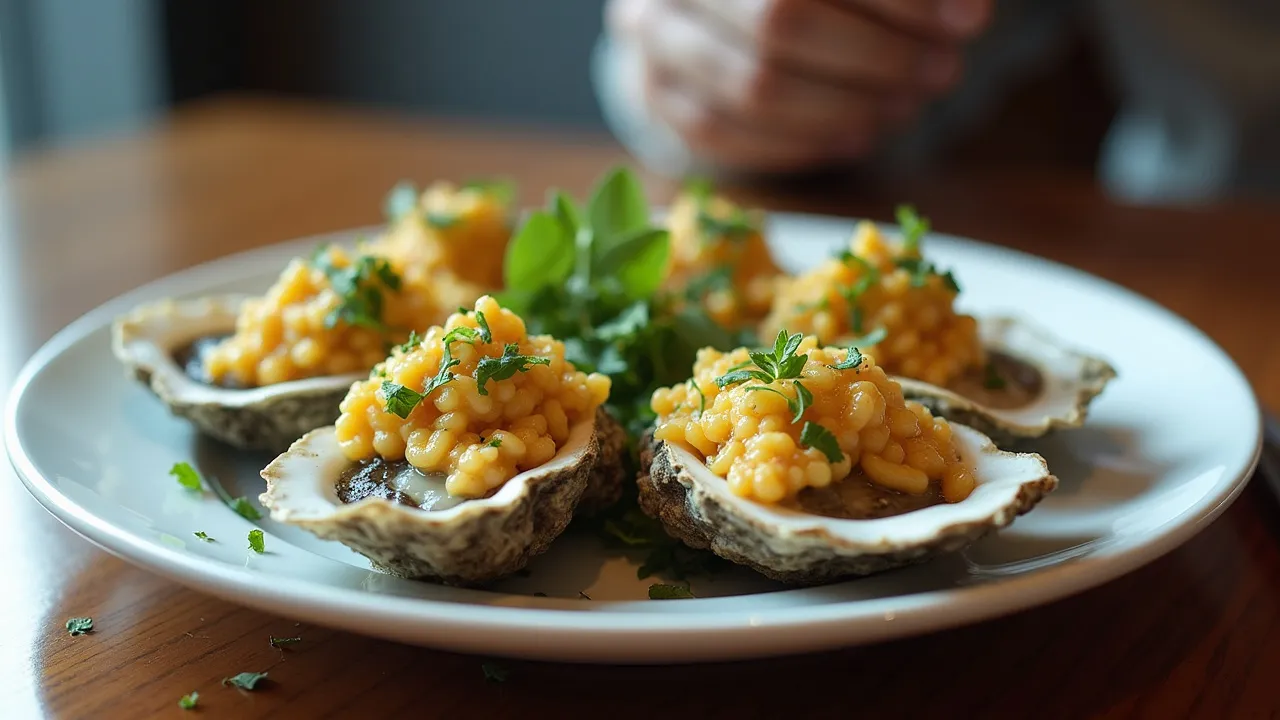
National Oysters Rockefeller Day is observed on January 10th each year, celebrating the iconic baked oyster dish created at Antoine's in New Orleans in 1899. This day honors the rich culinary history and enduring legacy of Oysters Rockefeller.
The Historical Origins & Evolutionary Journey of Oysters Rockefeller
Oysters Rockefeller is a classic American dish that has captivated palates for over a century. The dish was invented in 1899 at Antoine's Restaurant in New Orleans, Louisiana, by Jules Alciatore, the son of the restaurant's founder, Antoine Alciatore. Facing a shortage of escargot, Alciatore substituted local Gulf oysters and created a rich, herbed butter topping that remains the hallmark of the dish. The name "Rockefeller" was chosen because of the dish's richness, likening it to the wealth of John D. Rockefeller.
The Foundational Catalyst
The creation of Oysters Rockefeller was born out of necessity and innovation. Escargot, a French delicacy, had become scarce in New Orleans due to import disruptions. Jules Alciatore, trained in French culinary techniques, experimented with local ingredients and developed a green sauce made from butter, breadcrumbs, and a secret blend of herbs—likely including parsley, celery, and possibly tarragon or chervil. The sauce was spooned over fresh oysters on the half shell and baked until bubbling. The dish was an instant success and became a signature menu item.
- The Secret Recipe: The exact recipe for Oysters Rockefeller is a closely guarded secret at Antoine's, known only to a few family members.
- Early Popularity: By the early 1900s, the dish had gained national attention, appearing on menus across the United States.
- Imitation and Variation: Many restaurants have created their own versions, often substituting spinach or other greens for the original herb blend.
The Legislative/Official Adoption
While there is no official congressional designation for National Oysters Rockefeller Day, it is widely recognized by food enthusiasts and culinary institutions. The day has been embraced by seafood lovers and chefs as a time to honor the dish's cultural significance. Some states, particularly Louisiana, have made informal proclamations recognizing January 10th as a day to celebrate this iconic Creole creation.
Modern Global Legacy
Today, Oysters Rockefeller is celebrated around the world, from fine dining establishments to casual seafood shacks. Its legacy is tied to the history of Creole cuisine and the resilience of New Orleans culture. The dish has inspired countless variations, including vegetarian versions using mushrooms or artichokes. National Oysters Rockefeller Day serves as a reminder of the power of culinary innovation and the enduring appeal of this baked oyster masterpiece.
How to Celebrate National Oysters Rockefeller Day
Celebrating National Oysters Rockefeller Day is a delicious and engaging experience that can be enjoyed at home, in restaurants, or as part of larger culinary events. Below are comprehensive strategies for individuals, schools, and organizations to mark the occasion authentically.
Individual and Home Celebrations
- Cook Oysters Rockefeller from Scratch: Follow a traditional recipe using fresh oysters, a seasoned butter-herb mixture, and a quick bake. Pair with a crisp white wine like Sauvignon Blanc.
- Host an Oysters Rockefeller Tasting Party: Prepare multiple variations from different regions (e.g., New Orleans-style vs. California-style) and compare flavors.
- Visit a Local Seafood Restaurant: Many restaurants offer specials on this day; call ahead to confirm availability.
School and Educational Activities
- History Lesson: Incorporate the story of Oysters Rockefeller into a lesson on Creole cuisine and immigration.
- Cooking Class: Teach students the basics of shucking oysters and preparing the herb butter.
- Cultural Appreciation: Discuss New Orleans' culinary heritage and the impact of dishes like Oysters Rockefeller on American food culture.
Organizational and Corporate Rituals
- Team Lunch: Organize a group outing to a seafood restaurant known for its Oysters Rockefeller.
- Charity Event: Host a fundraising dinner featuring Oysters Rockefeller, with proceeds going to Gulf Coast restoration or culinary scholarships.
- Social Media Campaign: Share recipes, photos, and fun facts using hashtags like #OystersRockefellerDay.
Global Celebration Dynamics
While primarily a U.S. observance, National Oysters Rockefeller Day is gaining international recognition in countries with strong oyster farming traditions, such as France, Australia, and Japan. In these regions, chefs may adapt the dish using local oyster varieties and indigenous herbs, creating unique cross-cultural interpretations.
Global Impact and Culinary Significance
Oysters Rockefeller has left an indelible mark on global cuisine. As one of the most famous baked oyster dishes, it has influenced chefs worldwide to experiment with herb-crusted shellfish. The dish's rich, savory profile has made it a staple on menus at Michelin-starred restaurants and neighborhood bistros alike. Its invention also highlights the importance of resourcefulness in the kitchen—a valuable lesson for any cook.
Influence on Seafood Gastronomy
The success of Oysters Rockefeller sparked a trend of baked shellfish appetizers, including Clams Casino and Oysters Bienville. These dishes share a similar preparation method but differ in their toppings. The green herb butter characteristic of Rockefeller is often imitated but never duplicated, thanks to Antoine's secret recipe.
Economic and Environmental Considerations
The popularity of Oysters Rockefeller has supported oyster farming and sustainable fisheries. Responsible sourcing of oysters ensures the long-term viability of the species. Many restaurants now emphasize sourcing Gulf oysters or other local varieties to reduce carbon footprint.
Regional Variations and Adaptations
While the classic Oysters Rockefeller hails from New Orleans, chefs around the world have put their own spin on the dish. Notable variations include:
- California-Style: Adds diced artichoke hearts and sun-dried tomatoes to the herb butter.
- French-Style: Uses a béchamel sauce with Gruyère cheese instead of the traditional butter mixture.
- Japanese-Style: Incorporates miso and sake into the topping, then grills the oysters.
- Australian Fusion: Uses macadamia nuts and native Australian herbs like lemon myrtle.
These adaptations keep the dish relevant and allow it to cross cultural boundaries.
Health and Nutritional Aspects
Oysters Rockefeller, while indulgent, can be part of a balanced diet. Oysters are low in calories but rich in protein, zinc, and omega-3 fatty acids. The butter and breadcrumbs add calories and fat, so moderation is key. For a healthier version, one can use whole wheat breadcrumbs and reduce butter content, or substitute with olive oil.
Allergen Information
This dish contains shellfish, dairy, and gluten. Those with allergies should seek alternative ingredients or enjoy a plant-based version using mushrooms.
Cultural Representations in Media and Art
Oysters Rockefeller has appeared in numerous films, television shows, and cookbooks as a symbol of sophistication and classic American cuisine. It is often featured in food documentaries about New Orleans and is referenced in literature about Southern cooking. The dish's visual appeal—with its golden-brown top and green herbs—makes it a favorite subject for food photography.
Historical Timeline
Oysters Rockefeller is invented at Antoine's Restaurant in New Orleans by Jules Alciatore, using local oysters and a secret herb butter to replace scarce escargot.
The dish gains immediate popularity and becomes a permanent fixture on Antoine's menu.
Oysters Rockefeller spreads to other restaurants in the United States, appearing on menus in New York, Chicago, and San Francisco.
The recipe is still a guarded secret; imitations begin to emerge, often using spinach.
Oysters Rockefeller becomes a symbol of luxury dining, served at high-end restaurants across the country.
The dish appears in popular cookbooks, including "The Joy of Cooking," although the authentic recipe remains unpublished.
National Oysters Rockefeller Day is informally recognized on January 10th, promoted by food enthusiasts and seafood organizations.
Culinary schools include Oysters Rockefeller in their curriculum, teaching the dish as part of American culinary history.
Oysters Rockefeller continues to be a beloved dish worldwide, inspiring countless variations and remaining a staple of New Orleans cuisine.