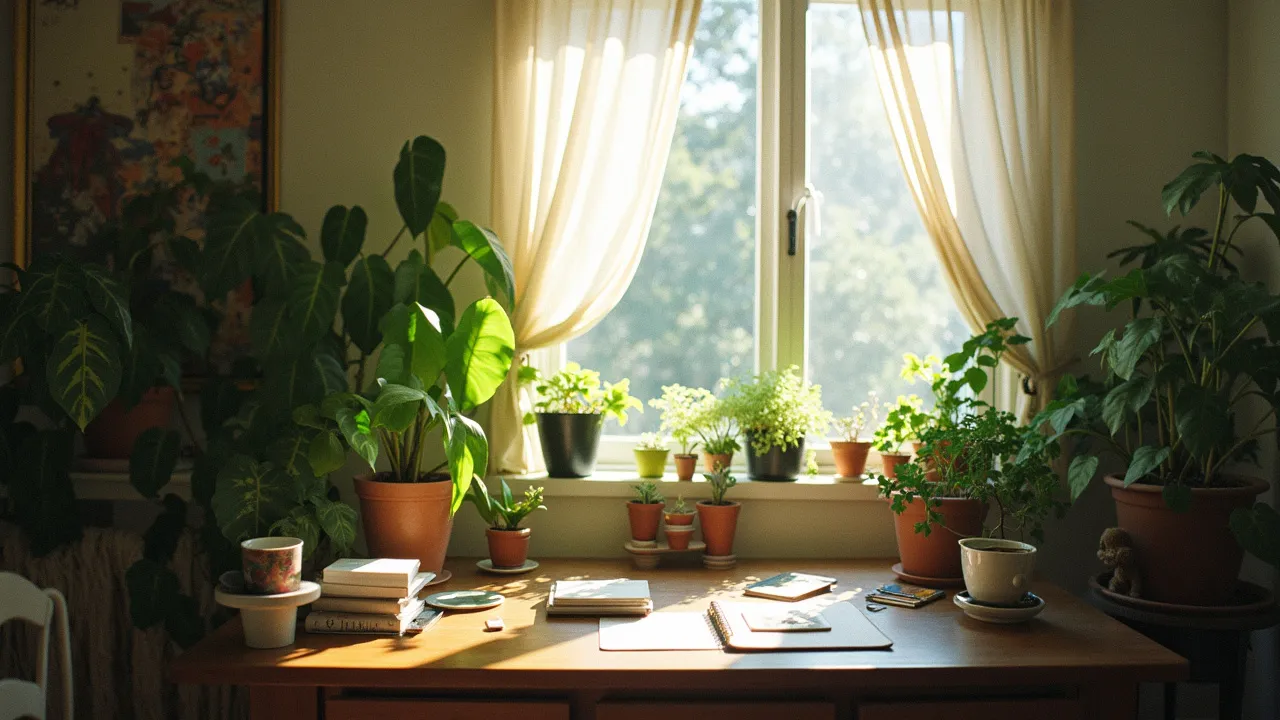
National Houseplant Appreciation Day on January 10th celebrates the beauty and benefits of indoor plants. It encourages plant care, propagation, and adding greenery to homes for improved well-being.
The Historical Origins & Evolutionary Journey
National Houseplant Appreciation Day, observed annually on January 10th, has roots that intertwine with human civilization's long relationship with indoor greenery. While the modern observance was formalized in the early 2000s, the practice of keeping plants inside homes dates back millennia.
The Foundational Catalyst
The ancient Egyptians, Greeks, and Romans cultivated indoor plants for aesthetic and medicinal purposes. However, the true catalyst for mass houseplant appreciation came during the Victorian era (1837-1901), when exotic plant collections became a status symbol. The invention of the Wardian case (a sealed glass container) allowed ferns and tropical plants to thrive indoors, sparking "Pteridomania" (fern madness).
The Legislative/Official Adoption
In 2002, the National Gardening Association formally designated January 10th as National Houseplant Appreciation Day. The date was chosen to break the winter monotony, encouraging people to bring life indoors during the cold months. This official recognition helped unify various plant enthusiast groups and garden clubs across the United States.
Modern Global Legacy
Over the past two decades, the observance has expanded worldwide, driven by social media communities like Plantstagram and Facebook Houseplant Enthusiasts. The COVID-19 pandemic acted as a major accelerator, with houseplant sales surging by 50% in 2020. Today, the day is celebrated in over 30 countries, each adding local traditions such as plant swap meets in the UK or indoor garden exhibitions in Japan.
How to Celebrate National Houseplant Appreciation Day
Celebrating this day involves honoring existing plants and expanding your indoor jungle. Here is the ultimate global guide, with actionable strategies for individuals, schools, and organizations.
For Individuals
- Care Ritual: Give your houseplants a thorough check—clean leaves, prune dead stems, and repot if needed. Spend 15 minutes connecting with each plant.
- Propagation Party: Take cuttings from your pothos, spider plant, or succulents to share with friends. Use water or soil propagation stations.
- Add a New Plant: Visit a local nursery and choose a species that suits your light conditions. Consider air-purifying plants like the snake plant or peace lily.
- DIY Plant Decor: Create macrame hangers, paint pots, or arrange a terrarium using glass containers and pebbles.
For Schools & Offices
- Plant Workshops: Host a lunch-and-learn where employees or students learn basic care and propagation.
- Green Corner Challenge: Set up a communal plant station and encourage everyone to contribute a small potted plant.
- Classroom Terrariums: Science teachers can use this day to teach ecosystems and photosynthesis.
Regional Traditions
- United Kingdom: Plant swap parties at community centers; popular plants include English ivy and ferns.
- Japan: Indoor Bonsai appreciation events, often combined with tea ceremonies.
- Australia: Emphasis on native indoor species like kangaroo paw and fiddle leaf figs.
- Germany: Hauspflanze exhibitions in botanical gardens with expert talks.
Scientific Benefits of Indoor Plants
Numerous studies validate that houseplants are more than decoration—they improve physical and mental health. Here we explore the evidence.
Air Purification
NASA's Clean Air Study (1989) identified that plants like spider plants, snake plants, and peace lilies remove volatile organic compounds such as formaldehyde, benzene, and trichloroethylene. While modern homes are better ventilated, plants still contribute to lower overall pollutant levels.
Mental Health Boost
Horticultural therapy has been shown to reduce stress markers like cortisol. A 2015 study found that interacting with indoor plants for just 15 minutes lowered blood pressure and improved mood. The presence of greenery also enhances concentration and creativity by up to 15% according to the University of Michigan.
Humidity Regulation
Plants release moisture through transpiration, increasing relative humidity by 10-20% in dry indoor environments. This helps reduce respiratory discomfort and dry skin, especially during winter months when heaters are running.
Productivity and Recovery
Offices with plants see a 15% increase in productivity (University of Exeter). Additionally, hospital patients with a view of plants recover faster and require less pain medication (Kansas State University).
Popular Houseplant Varieties and Expert Care Tips
Selecting the right houseplant can be daunting. Below are top-rated varieties for different skill levels, along with care advice.
For Beginners
Snake Plant (Sansevieria): Thrives in low light and neglect; water every 2-3 weeks.
Pothos (Epipremnum aureum): Grows in almost any light; water when soil is dry.
ZZ Plant (Zamioculcas zamiifolia): Indestructible; tolerates low light and infrequent watering.
For Intermediate Enthusiasts
Monstera Deliciosa: Needs bright, indirect light; allow soil to dry between waterings.
Fiddle Leaf Fig (Ficus lyrata): Requires consistent watering and bright, filtered light; prone to leaf drop if moved.
Expert-Level Challenges
Orchids (Phalaenopsis): Need specific humidity and watering intervals; use bark-based potting mix.
Calatheas: Demand high humidity and distilled water to avoid leaf browning.
General Care Principles
Light: Match plant to window direction—south for succulents, north for ferns.
Watering: Overwatering is the top killer; check soil moisture with your finger.
Soil: Use well-draining mixes; add perlite or orchid bark for aeration.
Fertilizer: Feed monthly during growing season (spring/summer) with balanced liquid fertilizer.
Environmental Impact and Sustainability of Houseplants
Houseplants contribute to a healthier planet in multiple ways, but also have challenges. Understanding these helps make sustainable choices.
Carbon Sequestration
A mature houseplant can absorb about 0.5 grams of carbon dioxide per hour. While the impact per plant is small, a home filled with 20 plants can reduce indoor CO2 levels noticeably.
Reducing Carbon Footprint
Growing your own herbs and leafy greens indoors reduces the need for store-bought produce wrapped in plastic, cutting transportation emissions.
Sustainable Practices
To avoid ecological harm:
- Buy from local growers to reduce shipping.
- Choose peat-free potting soil (peat extraction damages bogs and releases carbon).
- Propagate instead of buying new plants.
- Avoid invasive species like English ivy if you live near natural areas.
Upcycling and Waste Reduction
Use yogurt cups, tin cans, or broken ceramics as pots. Compost dead leaves and spent soil to create nutrient-rich humus.
Community, Social Media, and the Future of Plant Culture
The houseplant community has exploded online, creating new social dynamics and economic trends.
Online Communities
Facebook groups like "Houseplant Hobbyist" and Reddit's r/houseplants have millions of members sharing tips, trades, and photos. Instagram hashtags such as #plantmom and #plantdad drive engagement, with popular influencers like @thejungalow and @houseplantjournal.
Plant Swaps and Events
On National Houseplant Appreciation Day, many cities host plant swaps where enthusiasts exchange cuttings and seedlings. These events foster a sense of belonging and reduce consumer waste.
Economics of the Trend
The global houseplant market was valued at $18 billion in 2023, driven by millennial and Gen Z consumers. Rare variegated plants like Monstera Thai Constellation can sell for hundreds of dollars, leading to a thriving online plant auction community.
Future Directions
As indoor gardening evolves, we see trends like vertical living walls, smart plant sensors, and genetic diversity conservation. The day also promotes education about native species and sustainable sourcing. National Houseplant Appreciation Day is poised to grow as urbanization increases and people seek connections to nature in their daily lives.
Historical Timeline
Indoor plants like aloe vera and papyrus are cultivated for medicinal and ornamental use.
Victorian Wardian case invention enables long-distance plant transport, sparking fern craze.
Rubber plants and palms become popular in European parlors as symbols of prosperity.
Post-war suburban homes feature iconic houseplants like the spider plant and African violet.
NASA Clean Air Study publishes list of top air-purifying indoor plants.
National Gardening Association establishes January 10th as National Houseplant Appreciation Day.
Social media propels houseplant culture into mainstream; #plantstagram gains millions of posts.
COVID-19 pandemic triggers a 50% surge in houseplant sales as people improve home environments.
Global houseplant market reaches $18 billion, with rare plant auctions becoming a niche economy.