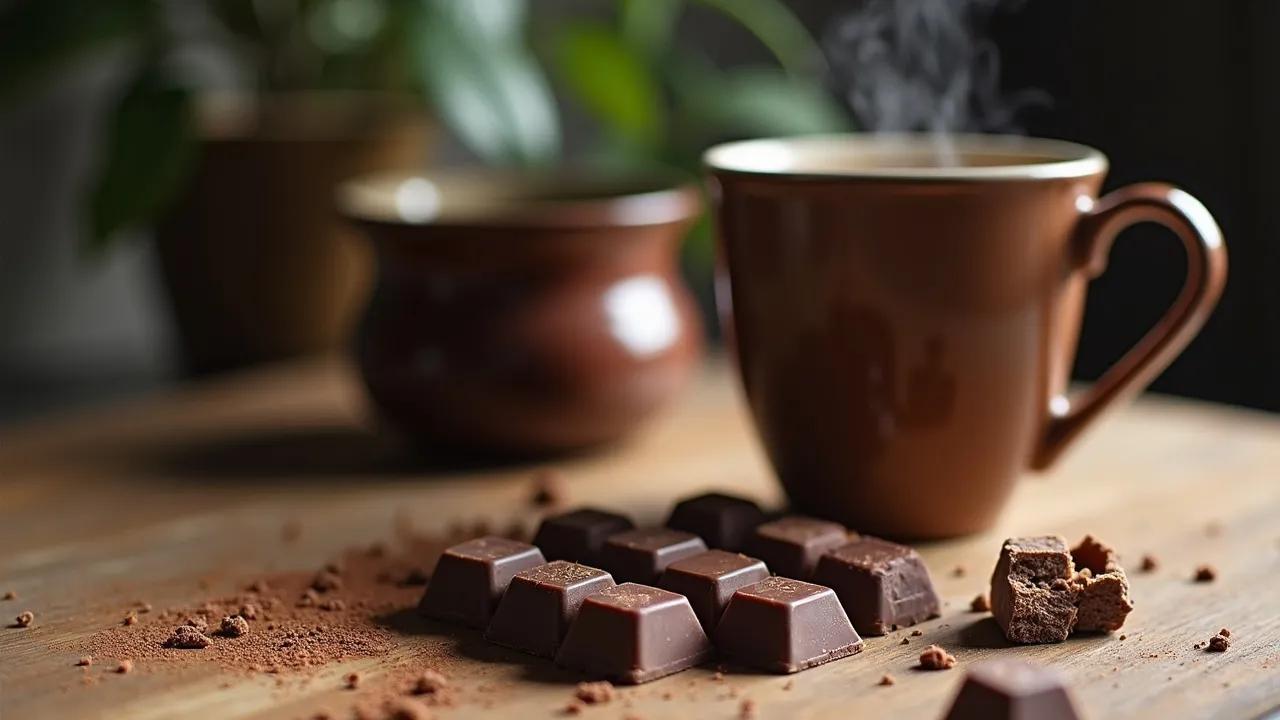
National Bittersweet Chocolate Day, observed on January 10th, honors the rich, complex flavor of bittersweet chocolate and its historical significance in confectionery and baking.
The Historical Origins & Evolutionary Journey
National Bittersweet Chocolate Day is observed annually on January 10th, dedicated to celebrating the sophisticated and intense flavor profile of bittersweet chocolate. This variety of chocolate, typically containing 50-70% cocoa solids, sits between semisweet and unsweetened chocolate in sweetness and bitterness. Its history is deeply intertwined with the evolution of chocolate consumption and production from ancient Mesoamerica to modern global markets.
The Foundational Catalyst: From Bitter Brew to Sweet Confection
The cacao tree, Theobroma cacao, was first cultivated by the Olmecs around 1500 BCE in what is now Mexico. They prepared a bitter, spiced drink called xocolātl, often flavored with vanilla, chili, and achiote. This beverage was far removed from today's sweetened chocolate, but it established the foundation for bittersweet chocolate's defining characteristic: a pronounced cocoa bitterness. The Maya and Aztecs later revered cacao as a divine gift, using it in rituals and as currency.
When Spanish conquistadors brought cacao to Europe in the 16th century, they initially struggled with its bitterness. Monks in Spain began adding sugar, honey, and vanilla, giving birth to the sweet chocolate drinks that became fashionable among European aristocracy. However, it wasn't until the 19th century that solid eating chocolate emerged. In 1847, Joseph Fry & Sons created the first chocolate bar by mixing cocoa powder, sugar, and cocoa butter. This invention paved the way for varying levels of sweetness and cocoa content.
The Legislative/Official Adoption of Bittersweet Standards
The term "bittersweet" became codified in the early 20th century as chocolate manufacturing standardized. In the United States, the Food and Drug Administration (FDA) set standards of identity for chocolate products. According to 21 CFR 163.124, bittersweet chocolate must contain at least 35% chocolate liquor (cocoa solids and cocoa butter). In practice, most bittersweet chocolate used by bakers and confectioners contains 50-70% cocoa, distinguishing it from semisweet (35-45%) and unsweetened (100%). This regulatory clarity helped establish National Bittersweet Chocolate Day as a celebration of a specific culinary ingredient rather than a generic candy.
Modern Global Legacy and Cultural Significance
Today, bittersweet chocolate is celebrated for its versatility in both sweet and savory dishes. From classic French mousse au chocolat to modern mole poblano, it provides a depth of flavor that milk chocolate cannot match. The day is especially important in the craft chocolate movement, which emphasizes bean-to-bar production and single-origin flavors. Artisans often showcase bittersweet bars from specific regions like Ecuador (Arriba Nacional), Madagascar (Vallina), or Ghana (West African blend).
In recent decades, dark chocolate (a broader category that includes bittersweet) has gained attention for its potential health benefits, including high antioxidant content and flavonoids that support heart health. However, National Bittersweet Chocolate Day focuses squarely on the culinary and sensory experience. The day encourages both amateurs and professionals to explore the nuances of this ingredient, whether through baking, pairing with wine or cheese, or simply savoring a high-quality bar.
How to Celebrate National Bittersweet Chocolate Day
Celebrating National Bittersweet Chocolate Day offers a wealth of opportunities for individuals, families, schools, and businesses. Below is a comprehensive guide to making the most of January 10th with authentic, engaging activities.
For Individuals and Home Bakers
- Bake with Bittersweet Chocolate: Try classic recipes like flourless chocolate cake, chocolate soufflé, or bittersweet chocolate chip cookies (substitute for semisweet chips). The higher cocoa content requires precise temperature control to avoid seizing.
- Conduct a Tasting: Purchase 3-5 single-origin bittersweet bars (70% cocoa). Note flavor notes: fruit, earthy, nutty, floral. Use a tasting sheet like a wine expert.
- Pair with Complementary Foods: Bittersweet chocolate pairs beautifully with red wine (e.g., Cabernet Sauvignon, Port), cheese (aged Gouda, blue cheese), and fruits (raspberries, oranges).
- Make Hot Chocolate: Melt bittersweet chocolate with milk and a pinch of sea salt for a rich, not overly sweet drink. Top with whipped cream.
For Schools and Educational Institutions
- History Lesson: Teach the cultural journey of cacao from Mesoamerica to Europe. Include hands-on activity: grinding cacao nibs with sugar (taste test).
- Science Experiment: Demonstrate the melting point of cocoa butter (around 93°F) and how tempering creates a glossy finish.
- Art Project: Use melted bittersweet chocolate as a medium for edible paintings on parchment paper.
For Restaurants and Cafés
- Special Menu Items: Offer a bittersweet chocolate dessert special, such as chocolate lava cake or chocolate tart with sea salt.
- Pairing Flights: Create a flight of three bittersweet chocolate bars with three different dessert wines or craft beers (stout, porter).
- Social Media Campaign: Use hashtags #NationalBittersweetChocolateDay and #BittersweetChocolate to share photos of creations. Encourage customers to post their own.
Global Traditions and Cultural Variations
While National Bittersweet Chocolate Day is primarily a U.S. observance, chocolate festivals worldwide embrace similar themes. In France, the Salon du Chocolat in Paris (typically in late October) features artisan dark chocolates. In Mexico, the tradition of mole uses bittersweet chocolate as a savory ingredient. In Switzerland, companies like Lindt and Läderach produce fine dark chocolate bars that are central to their national pride. Observing the day with a global perspective enriches the experience.
Bittersweet Chocolate in Baking & Pastry Arts
Bittersweet chocolate is a cornerstone of professional pastry kitchens. Its high cocoa butter content and moderate sweetness provide structural integrity and deep flavor. Understanding its role is crucial for achieving consistent results.
Why Bittersweet Over Other Chocolates?
Three key properties distinguish bittersweet chocolate:
- Cocoa Content: Typically 50-70% cocoa solids (liquor and butter). This ensures the chocolate sets firmly and contributes a pronounced bitterness that offsets added sugar.
- Sweetness Level: Less than semisweet but more than unsweetened. This makes it ideal for recipes where you want to control sugar independently (e.g., adding your own granulated sugar).
- Fluidity When Melted: Bittersweet chocolate with higher cocoa butter content flows smoothly, making it perfect for enrobing, dipping, and molding.
Classic Recipes Using Bittersweet Chocolate
- Chocolate Mousse: The key is folding melted bittersweet chocolate into softly whipped cream or egg whites. A ratio of 8 oz chocolate to 3 eggs yields a firm yet airy texture.
- Ganache: Equal parts bittersweet chocolate and heavy cream (by weight) creates a silky ganache for truffles or cake filling. For a firmer texture, use a 2:1 ratio of chocolate to cream.
- Chocolate Sauce: Combine 4 oz bittersweet chocolate, 1/2 cup heavy cream, 2 tbsp butter, and 1 tbsp corn syrup. Heat gently and stir until glossy. Serve warm over ice cream or cake.
Professional bakers often prefer specific brands: Valrhona (Guanaja 70%), Callebaut (70% dark), or Guittard (70% bittersweet). These offer consistent quality and flavor.
Health Benefits and Nutritional Profile
Bittersweet chocolate, when consumed in moderation, offers several health advantages due to its high cocoa content. However, it is still a calorie-dense food and should be enjoyed as part of a balanced diet.
Key Nutrients in Bittersweet Chocolate (per 1 oz serving, ~28g)
- Flavonoids: Especially flavanols like epicatechin and catechin, which have antioxidant and anti-inflammatory properties. Dark chocolate has more flavanols than milk chocolate.
- Minerals: Good source of iron, magnesium, copper, and manganese. Iron content can be significant (3-4 mg per ounce, about 20% DV).
- Fiber: Approximately 3 grams per ounce, aiding in digestive health.
Potential Health Benefits
- Heart Health: Studies suggest that flavanol-rich dark chocolate can improve blood flow, lower blood pressure, and reduce LDL cholesterol oxidation.
- Cognitive Function: Improved blood flow to the brain may enhance memory and attention. A 2018 study in Nature Neuroscience linked flavanol consumption with age-related cognitive decline mitigation.
- Mood Enhancement: Chocolate contains compounds like theobromine and anandamide that can elevate mood. The sensory experience of eating high-quality chocolate also triggers pleasure responses.
Important Caveat: Many commercially available bittersweet chocolate bars contain added sugar and emulsifiers. For maximum health benefit, choose bars with at least 70% cocoa and minimal ingredients. The American Heart Association recommends no more than 1 ounce of dark chocolate per day as part of a heart-healthy diet.
Global Impact & Industry Transformations
The bittersweet chocolate segment has driven significant changes in the global cocoa industry. Consumer demand for dark chocolate with higher cocoa percentages has reshaped supply chains, farming practices, and marketing strategies.
Shift in Consumer Preferences
Over the past three decades, the world has moved away from overly sweet confections. According to market research by Mintel, dark chocolate sales in the U.S. grew by 15% annually from 2015 to 2020, while milk chocolate remained flat. This trend is even stronger in Europe, where countries like Germany and Switzerland have a long-standing appreciation for bitter flavors.
Impact on Cocoa Farming and Sustainability
The rise of dark chocolate has increased demand for fine-flavor cocoa beans (Criollo and Trinitario varieties), which are often grown in biodiverse, shade-grown systems. Organizations like Rainforest Alliance and Fair Trade USA have partnered with chocolate makers to certify beans, ensuring farmers receive premium prices. The move toward bean-to-bar production also reduces industrial processing, preserving more of the bean's original flavor.
Economic Transformations
Countries like Ecuador, Madagascar, and Peru have seen a boom in specialty cocoa exports, directly linked to the global appetite for bittersweet chocolate. In contrast, countries that traditionally supplied bulk cocoa (e.g., Côte d'Ivoire) are now investing in quality improvement to capture part of the premium market. This shift is not without challenges: climate change threatens cacao cultivation in low-altitude regions, and price volatility remains a concern for smallholder farmers.
The Fine Chocolate Revolution
National Bittersweet Chocolate Day also celebrates the craft chocolate movement, which emphasizes transparency, origin-specific flavors, and direct relationships with growers. Small-batch makers like Askinosie, Dick Taylor, and Ritual Chocolate have built a following for their single-origin bars, many of which fall in the bittersweet range. This sub-industry fosters innovation and consumer education.
Selecting and Storing Bittersweet Chocolate
To fully enjoy National Bittersweet Chocolate Day, it's essential to know how to choose and preserve high-quality chocolate. Follow these expert guidelines to maintain flavor and texture.
How to Choose the Best Bittersweet Chocolate
- Read the Label: Look for cocoa content listed (e.g., 70% cocoa). Avoid bars with hydrogenated fats, artificial flavors, or excessive emulsifiers (like PGPR).
- Check the Ingredients: Ideally, only cocoa mass, sugar, cocoa butter, and possibly vanilla or lecithin. The fewer ingredients, the purer the chocolate.
- Consider Origin: Single-origin bars offer unique terroir-driven flavor profiles. For baking, a consistent blend (like Valrhona's Manjari or Callebaut 70%) is reliable.
- Sensory Evaluation: Good chocolate should snap cleanly, have a glossy sheen, and melt smoothly on the tongue without grittiness.
Proper Storage Methods
- Temperature: Store between 60-70°F (15-21°C). Avoid temperature fluctuations, which can cause "fat bloom" (white streaks from cocoa butter rising to the surface).
- Humidity: Keep in a dry place, as moisture can encourage bacterial growth and spoil the chocolate.
- Light Exposure: Light accelerates oxidation. Store in a dark cupboard or an opaque container.
- Duration: Bittersweet chocolate, with its low sugar content, can last for 2-3 years if sealed from moisture and odors. Once opened, consume within 6-12 months for best quality.
Do not refrigerate unless absolutely necessary, as the cold can cause condensation and sugar bloom. If you must refrigerate, let the chocolate come to room temperature slowly in its wrapper to avoid condensation.
Historical Timeline
Olmec civilization in Mesoamerica begins cultivating cacao for a bitter drink, the precursor to bittersweet chocolate.
Hernán Cortés encounters Aztec emperor Moctezuma II, who drinks xocolātl. Cortés brings cacao beans to Spain.
Coenraad van Houten invents the cocoa press, leaving behind cocoa solids that can be mixed with sugar to create eating chocolate.
Joseph Fry & Sons produce the first solid chocolate bar using cocoa powder, sugar, and cocoa butter.
Daniel Peter invents milk chocolate by adding powdered milk to bittersweet chocolate. Dark chocolate remains a distinct category.
The U.S. FDA officially classifies bittersweet chocolate as containing at least 35% chocolate liquor (standard of identity).
Rise of the craft chocolate movement; small bean-to-bar producers begin promoting high-percentage dark chocolate, reviving interest in bittersweet varieties.
National Bittersweet Chocolate Day is unofficially established by chocolate enthusiasts, later promoted by food organizations and social media.
Scientific studies highlight health benefits of dark chocolate, driving consumer demand for high-cocoa (bittersweet) products.
National Bittersweet Chocolate Day continues to gain traction as a foodie holiday, with bakeries, chocolatiers, and home cooks participating globally.