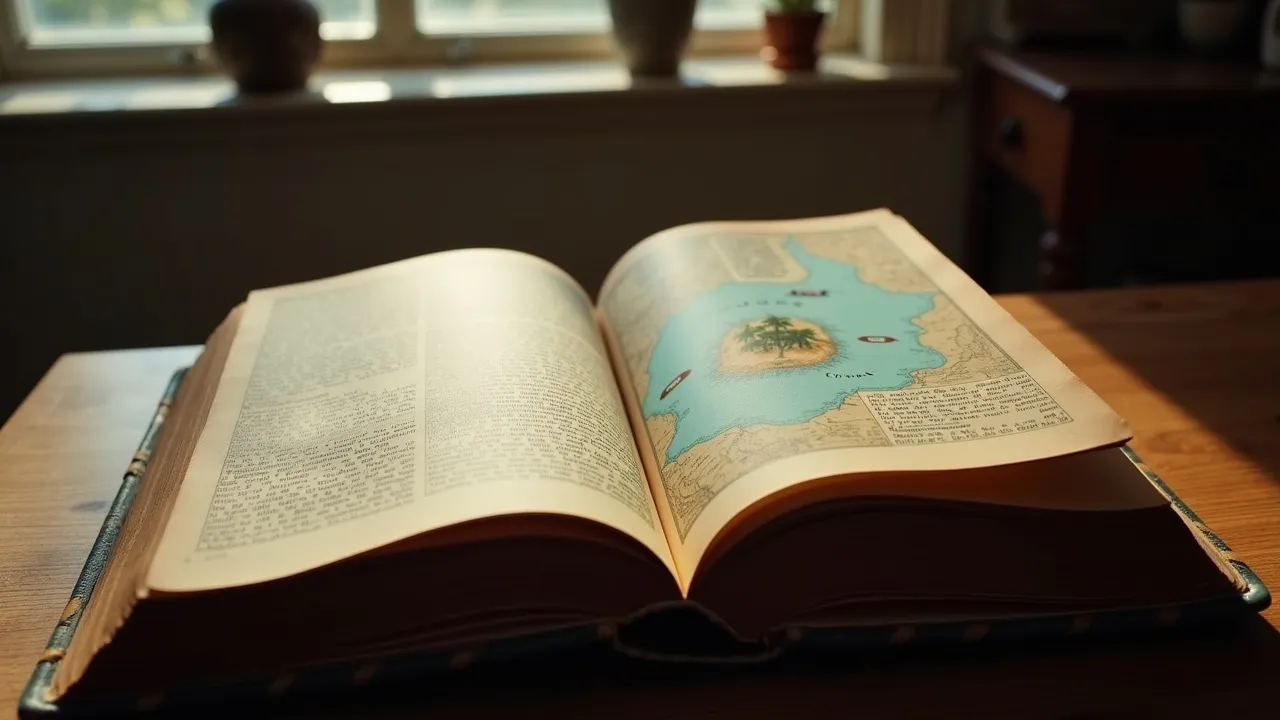
Celebrated on February 1st, Robinson Crusoe Day honors Daniel Defoe's iconic castaway and his enduring tale of survival. It encourages readers to explore themes of resilience, self-reliance, and adventure.
The Historical Origins & Evolutionary Journey
Robinson Crusoe Day, observed on February 1st, is a literary celebration dedicated to the fictional character Robinson Crusoe, the protagonist of Daniel Defoe's 1719 novel. The date's origin is somewhat obscure, but it is widely believed to mark either Defoe's birth or a key event in Crusoe's story. While the novel itself was published on April 25, 1719, February 1st has been embraced by literary societies and enthusiasts as a day to reflect on themes of survival, solitude, and human ingenuity.
The Foundational Catalyst
The novel Robinson Crusoe was based partly on the real-life experiences of Alexander Selkirk, a Scottish castaway who lived alone on an island for four years. This true story inspired Defoe to craft a fictional narrative that became a cornerstone of English literature. The day itself likely emerged in the late 19th or early 20th century as part of a broader movement to celebrate literary figures and their works.
The Official Adoption
No official government proclamation established Robinson Crusoe Day. Instead, it grew organically through libraries, book clubs, and educational institutions. By the mid-20th century, it was listed in various Chase's Calendar of Events as a special observance, solidifying its place in popular culture.
Modern Global Legacy
Today, Robinson Crusoe Day is celebrated in schools and literary communities worldwide. It promotes reading and discussion of Defoe's novel, often accompanied by activities such as island-themed crafts, survival skill workshops, and debates on colonialism and individualism. The day also influences modern media, with countless adaptations of the story in film, television, and literature.
How to Celebrate Robinson Crusoe Day
Robinson Crusoe Day offers a unique opportunity to explore adventure, self-reliance, and literary appreciation. Below are actionable ways to observe the day, whether you're an individual, a school, or an organization.
For Individuals
Start by reading or rereading Defoe's classic novel. Pair it with a journal to record your own thoughts on solitude and survival. You can also:
- Watch a film adaptation (e.g., the 1954 version with Dan O'Herlihy or the 2000 TV movie).
- Cook a meal using simple, non-processed ingredients (like Crusoe would have eaten).
- Try a digital detox for a few hours to experience disconnection.
For Schools and Educators
Teachers can integrate the story into lessons on geography, history, and literature. Recommended activities include:
- Map Making: Have students create a topographical map of Crusoe's island.
- Survival Simulation: Design a classroom challenge where students list items they would need to survive alone.
- Debate: Discuss the ethical themes of colonialism and cultural encounter in the novel.
For Organizations and Book Clubs
Host a themed event such as a "Crusoe's Feast" with foods that could be foraged or grown. Organize a group discussion focusing on the psychological aspects of isolation. Libraries can display rare editions of the book and related artifacts.
Globally, celebrations vary. In the United Kingdom, literary societies often hold readings at historic sites. In some schools, children dress up as castaways. The day also serves as a reminder of the importance of preparedness and resilience.
Impact on Literature and Popular Culture
Robinson Crusoe Day underscores the profound influence of Defoe's novel on global literature and culture. The story is often credited with launching the genre of the realistic novel and inspiring the "Robinsonade" sub-genre—a narrative about shipwrecked survivors on deserted islands.
Literary Influence
Authors from Johann David Wyss (The Swiss Family Robinson) to J.M. Coetzee (Foe) have drawn upon Crusoe's themes. The character has become an archetype of the resourceful individualist, influencing figures like Henry David Thoreau's Walden experiment and even modern survival shows.
Adaptations and Media
Over 30 film adaptations, numerous TV series, and even a theme park ride in Germany attest to the story's enduring appeal. On Robinson Crusoe Day, fans often share their favorite adaptations online, from silent films to animated versions.
The day also sparks discussions about post-colonial re-readings, as modern critics examine Defoe's portrayal of Friday and the colonial undertones. This ongoing dialogue keeps the novel relevant in contemporary classrooms.
Survival Skills and Self-Reliance
Central to Robinson Crusoe Day is the celebration of survival skills and self-reliance. The novel provides a manual for thriving in isolation, and many enthusiasts use the day to learn practical skills.
Basic Survival Techniques
From building shelters to starting fires, participants can explore:
- Water purification methods (boiling, filtration).
- Identifying edible plants and shellfish.
- Basic navigation without a compass (using the sun and stars).
Mental Resilience
Crusoe's psychological journey—from despair to acceptance—is a model for coping with solitude. On this day, mindfulness practices and journaling are encouraged. Many survival experts use the character to teach goal-setting and routine-making as tools for mental health.
Community workshops often offer hands-on training in knot-tying, first aid, and improvised tool-making. These activities not only honor Defoe's work but also build practical life skills.
Robinson Crusoe and Environmental Awareness
Robinson Crusoe Day also intersects with environmental consciousness. The story's setting on a pristine island raises questions about humanity's relationship with nature. Modern celebrations often incorporate themes of conservation and sustainability.
Island Ecology
Participants learn about island ecosystems and the fragility of isolated habitats. Activities include beach clean-ups, tree planting, and studying local biodiversity. Crusoe's careful use of resources—keeping a calendar, rationing food—mirrors sustainable practices.
Climate Change Lessons
The novel's portrayal of a changing environment (seasons, storms) can be linked to today's climate challenges. Discussions focus on how individuals can reduce their ecological footprint, echoing Crusoe's minimalistic lifestyle.
Some groups organize digital clean-offs, encouraging a simpler life. By emphasizing stewardship over exploitation, the day promotes a thoughtful approach to our planet.
Global Celebrations and Variations
While February 1st is the primary date, some regions incorporate unique traditions. In the United Kingdom, for instance, the day is marked by literary walks and talks at museums dedicated to Defoe. In the United States, schools often hold thematic assemblies.
Regional Customs
- Scotland: Where Alexander Selkirk was born, there are ceremonies at his statue in Largo, Fife.
- Chile: The island thought to be Crusoe's—Isla Más a Tierra, now renamed Robinson Crusoe Island—hosts a small event with local guides.
- Japan: Some readers celebrate on February 2nd due to cultural associations with the number two (like the two main characters).
These variations highlight the universal appeal of the story while respecting local history. Regardless of the date, the central theme remains: one person's struggle to survive and thrive against all odds.
Modern Relevance and Psychological Insights
In an era of constant connectivity, Robinson Crusoe Day offers a counterpoint. The novel's exploration of loneliness and self-discovery resonates with contemporary discussions about mental health and digital burnout.
Psychology of Isolation
Psychologists often cite Crusoe as a case study in resilience. His ability to create purpose and routine in isolation is a model for coping with quarantine or solitary work. On this day, mental health advocates host webinars on managing loneliness.
Digital Detox Movement
The day aligns with the growing trend of digital minimalism. Participants are encouraged to unplug for 24 hours, mirroring Crusoe's detachment from society. Books like Digital Minimalism by Cal Newport are often promoted alongside Defoe's work.
By bridging literature and modern life, Robinson Crusoe Day remains a relevant and enriching observance.
Historical Timeline
Publication of 'Robinson Crusoe' by Daniel Defoe on April 25. The novel becomes an instant success, going through four editions in its first year.
Translation into French and Dutch; the story spreads across Europe.
Johann David Wyss publishes 'The Swiss Family Robinson', directly inspired by Defoe's novel.
First known illustration of Crusoe in a published edition, by artist George Cruikshank.
First film adaptation: a silent short by Georges Méliès titled 'The Adventures of Robinson Crusoe'.
Robinson Crusoe Island (formerly Más a Tierra) is officially renamed by the Chilean government.
Major Hollywood adaptation starring Dan O'Herlihy and produced by Luis Buñuel.
CBS miniseries 'Robinson Crusoe' starring Pierce Brosnan brings the story to a new generation.
The novel is included in the '100 Books of the Century' list by Le Monde.
Robinson Crusoe Day gains increased attention on social media, with hashtags like #RobinsonCrusoeDay trending.