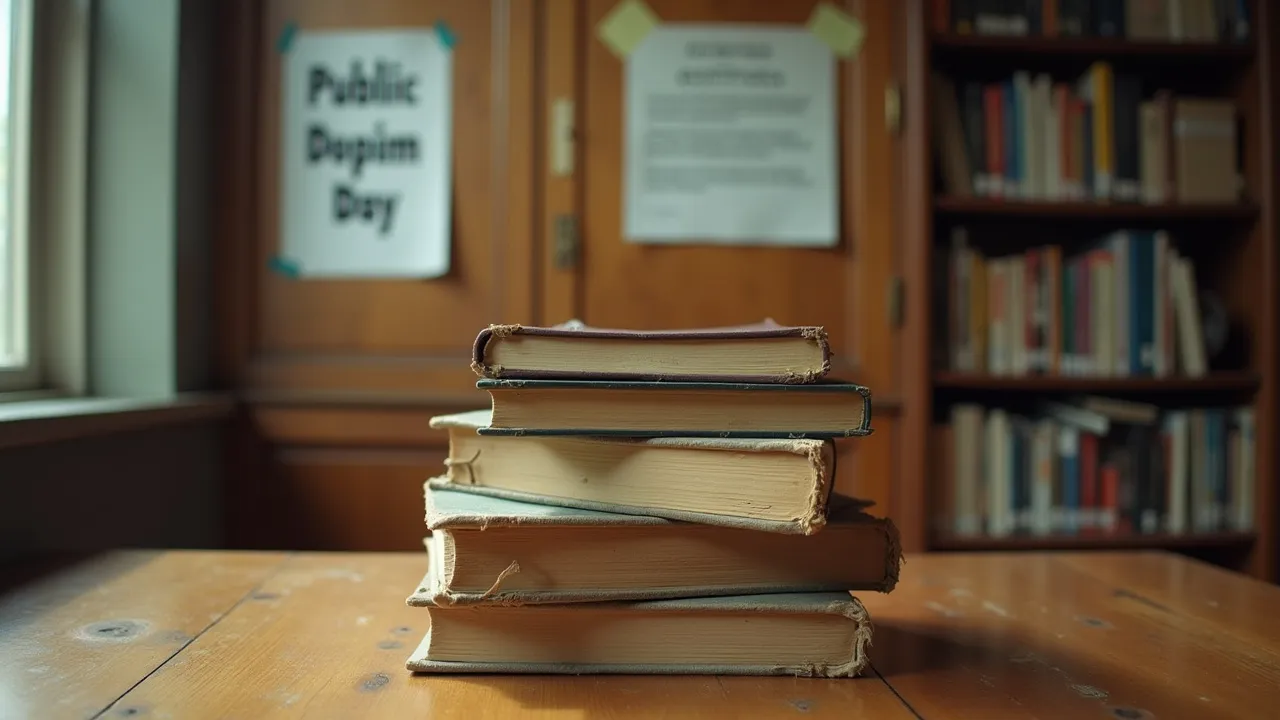
Public Domain Day (January 1) celebrates the annual release of creative works into the public domain, enriching cultural heritage and enabling free access, reuse, and creativity. This day highlights the value of a vibrant public domain.
The Historical Origins & Evolutionary Journey
Public Domain Day, observed annually on January 1st, marks the moment when a new crop of copyrighted works enters the public domain—a legal status where works are no longer under exclusive copyright and become freely available for everyone to use, adapt, and share. This day traces its roots to the global movement to reclaim cultural heritage from perpetual copyright extensions.
The Foundational Catalyst
The concept of a dedicated Public Domain Day was first formalized in 2004 by the Duke University Center for the Study of the Public Domain. Spearheaded by scholars like James Boyle and Jennifer Jenkins, the center began publishing an annual list of works entering the public domain on January 1, aiming to educate the public about the cultural and economic value of the public domain. The catalyst was the growing concern over copyright term extensions, particularly the Sonny Bono Copyright Term Extension Act of 1998 in the United States, which added 20 years to existing copyrights, effectively freezing the public domain for two decades.
- 1998: The US passes the Sonny Bono Copyright Term Extension Act, delaying public domain entry for works from 1923 onward until 2019.
- 2004: Duke Law School launches the first Public Domain Day celebration, featuring a list of works that would have entered the public domain under pre-1998 rules.
- 2010: The European Union harmonizes copyright terms, leading to a synchronized Public Domain Day across many countries.
The Legislative/Official Adoption
While primarily a cultural and educational event, Public Domain Day gained traction through advocacy by organizations like Creative Commons, Electronic Frontier Foundation, and the Public Domain Manifesto. In 2019, after a 20-year hiatus, the US saw a major influx of works from 1923 enter the public domain, sparking widespread media coverage and grassroots celebrations. Countries such as Canada, Australia, and the United Kingdom also observe Public Domain Day on January 1, though their copyright terms differ (e.g., life+50 or life+70).
Modern Global Legacy
Today, Public Domain Day is recognized by libraries, museums, universities, and online communities worldwide. It serves as a reminder of the balance between copyright protection and public access. The day is often marked by digitization projects, open-access initiatives, and creative reuses of classic works—from literature like Virginia Woolf's Mrs. Dalloway to films like Charlie Chaplin's The Gold Rush.
How to Celebrate Public Domain Day
Public Domain Day offers a unique opportunity to engage with culture, creativity, and history. Whether you're an individual, a school, or an organization, here are actionable ways to celebrate:
For Individuals
- Explore the Year's New Entries: Visit the Duke Center for the Public Domain's website to discover books, movies, music, and art that just entered the public domain. Read, watch, or listen freely.
- Create and Share Derivative Works: Write a sequel to a newly public domain novel, produce a film adaptation, or remix a classic song. Post your creations with #PublicDomainDay.
- Host a Public Domain Film Screening: Organize a movie night featuring films released on January 1. Many classics from 1928 (or earlier depending on your country) are now free to screen without licensing fees.
For Schools and Libraries
- Educational Workshops: Teach students about copyright, fair use, and the public domain. Use the newly available works as case studies.
- Digitization Parties: Host events to scan and upload old books, photographs, and ephemera to platforms like the Internet Archive or Wikimedia Commons.
- Public Domain Display: Curate a physical or digital exhibit showcasing works from the current year's public domain pool.
For Organizations and Creatives
Companies can embrace the public domain as a source of inspiration and innovation. Reddit and Commons often host themed discussions. Publishers can reprint classic texts. Game developers can create adaptations of early 20th-century stories. In Europe, many museums and archives release high-resolution images of public domain artworks, enabling new creative projects.
Global Impact on Culture, Education, and Innovation
The annual influx of works into the public domain has profound implications for culture, education, and innovation worldwide.
Cultural Enrichment
Every January 1, the public domain expands by thousands of works—novels, poems, films, musical compositions, and scientific papers. This enriches cultural heritage by making foundational works accessible to all. For instance, in 2019, works like The Great Gatsby (F. Scott Fitzgerald) and Metropolis (Fritz Lang) entered the US public domain, spurring new adaptations, critical editions, and scholarly analyses. In the EU, the harmonized term (life+70 years) ensures a steady stream of 20th-century masterpieces.
Educational Access
Educators and students benefit immensely from public domain resources. Texts can be freely copied, shared, and placed online without licensing costs. Project Gutenberg and Open Library host millions of public domain eBooks, used in classrooms worldwide. Public Domain Day often prompts libraries to release curated collections, such as the Library of Congress digitizing early American films.
Innovation and Creative Economy
The public domain fuels the creative industries. Reusable cultural materials lead to new works: Disney's The Lion King was inspired by public domain story Hamlet, and countless films adapt public domain novels. Small businesses and independent creators rely on public domain content to produce affordable products—from art prints to themed merchandise.
Copyright Reform and the Fight for a Balanced Public Domain
Public Domain Day is not just a celebration; it is also a protest against excessive copyright expansion. Over the past century, copyright terms have been repeatedly extended, starving the public domain of new material.
The Sonny Bono Act and Its Aftermath
In the US, the Sonny Bono Copyright Term Extension Act of 1998 retroactively extended copyright by 20 years, effectively placing a 20-year moratorium on the public domain for works created between 1923 and 1977. This led to the infamous "Mickey Mouse Protection Act" nickname. After two decades, the freeze lifted in 2019, allowing works from 1923 to enter the public domain. This event galvanized public support for copyright reform.
Global Variations
Different countries have different rules. Canada follows life+50, meaning Public Domain Day there includes works from authors who died in 1973 (as of 2024). The EU uses life+70. Some Latin American countries apply life+80. This patchwork leads to complexities: a work may be public domain in Canada but still under copyright in the US. Harmonization efforts have reduced but not eliminated these differences.
Advocacy Efforts
Organizations like the Public Domain Manifesto and Creative Commons campaign for a vibrant public domain. They argue that long copyright terms stifle creativity and hinder access to knowledge. Public Domain Day serves as a rallying point to educate the public and lawmakers about the importance of a balanced copyright system.
Regional Date Variations and Unique Traditions
While Public Domain Day is primarily observed on January 1st globally, some regions have unique traditions or celebrate on different dates for specific works.
United States
In the US, Public Domain Day is largely aligned with January 1, when works from 95 years ago (life+70 for works 1978+; 95 for works by corporations) enter. The day is marked by the Duke University release of the annual list, followed by media coverage and community events. Many libraries host "Public Domain Day Open Houses" featuring digitized collections.
European Union
The EU celebrates harmonized on January 1, but variations exist in some countries for unpublished works. In France, a "public domain day" event is often held by the Bibliothèque nationale. In Germany, advocacy groups use the date to push for copyright reform.
Canada and Australia
Canada's public domain day uses life+50; Australia uses life+70. Both on January 1. However, Canada has a unique "pay public domain" concept where some works are available for a fee. Community celebrations are growing, with Creative Commons Canada hosting online events.
Other Countries
In India, copyright term is life+60, so works enter on January 1 of the year after the 60th anniversary of the author's death. In Japan, the term is life+70, but also includes a special calculation for wartime works. Japanese fans often celebrate by sharing classic anime and manga on social media under #PublicDomainDayJP.
Future Challenges and the Digital Public Domain
As we look ahead, Public Domain Day faces both opportunities and challenges in the digital age.
Orphan Works and Digitization
Millions of works from the 20th century are still under copyright but have no identifiable owner—so-called orphan works. These cannot be digitized without legal risk. Public Domain Day advocates push for orphan works legislation to allow their use, enriching the digital public domain.
Artificial Intelligence and Training Data
AI models increasingly rely on vast amounts of data, including copyrighted works. The public domain provides a safe training ground, but there is debate over whether AI-generated outputs should be public domain. Public Domain Day can inform discussions about copyright in the age of AI.
Commercialization vs. Commons
Some corporations attempt to reclaim public domain works through trademark or database rights. For example, Disney's trademark on Mickey Mouse as a brand logo persists even as the character enters the public domain (Steamboat Willie in 2024). This legal gray area requires vigilance from public domain advocates.
Ultimately, Public Domain Day reminds us that the public domain is a living, growing resource that enriches humanity. Its future depends on continued advocacy, education, and legal reform.
Historical Timeline
US copyright term for works from 1923 would have expired under pre-1998 rules, but due to the Sonny Bono Act, they were locked until 2019.
US Congress passes the Sonny Bono Copyright Term Extension Act, extending copyright by 20 years and halting public domain entry for two decades.
Duke University Center for the Study of the Public Domain launches the first Public Domain Day, highlighting works that would have entered the public domain.
European Union harmonizes copyright terms to life+70, synchronizing Public Domain Day across member states on January 1.
After a 20-year freeze, US public domain opens again with works from 1923, including The Great Gatsby, Metropolis, and works by Robert Frost and Virginia Woolf.
Steamboat Willie (1928) enters the US public domain, along with the earliest versions of Mickey Mouse, sparking widespread cultural celebrations and commercial uses.