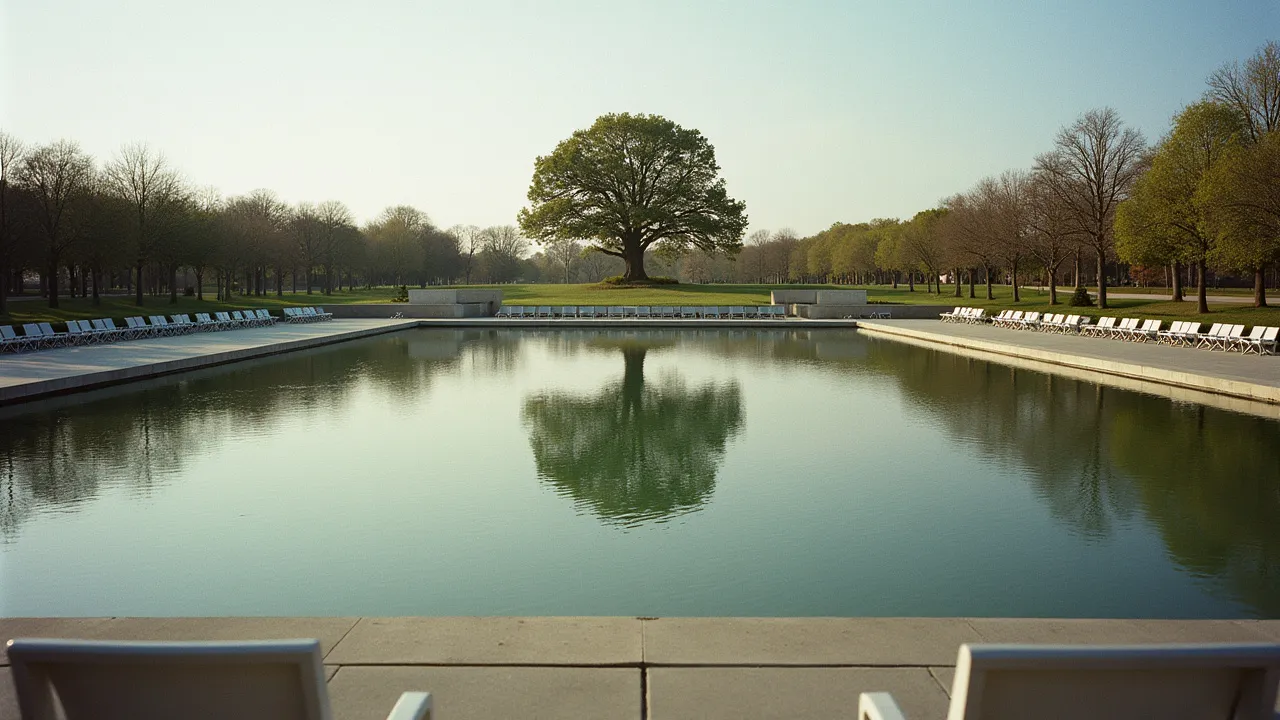
April 19th marks the solemn commemoration of the 1995 Oklahoma City bombing, honoring the 168 victims, survivors, and first responders. The day serves as a reminder of resilience and the ongoing pursuit of justice and unity.
The Historical Origins & Evolutionary Journey
The Foundational Catalyst
The Oklahoma City Bombing Commemoration Day traces its origins to the tragic events of April 19, 1995, when a truck bomb detonated outside the Alfred P. Murrah Federal Building in downtown Oklahoma City. The attack, perpetrated by domestic terrorists Timothy McVeigh and Terry Nichols, claimed 168 lives, including 19 children, and injured over 680 people. It was the deadliest act of domestic terrorism in U.S. history prior to 9/11.
In the immediate aftermath, the community rallied together, and spontaneous memorials emerged. By 1996, an annual remembrance ceremony was established, originally called the "Oklahoma City Bombing Memorial Service." In 2001, the U.S. Congress passed legislation designating April 19 as a national day of remembrance, though it remains largely observed at the state and local levels.
The Legislative/Official Adoption
Recognition grew through the efforts of the Oklahoma City National Memorial Foundation, founded in 1995 by local civic leaders and survivors. The foundation worked to establish a permanent memorial on the site, which opened on April 19, 2000. The memorial includes the iconic Reflecting Pool, the Field of Empty Chairs (each representing a victim), and the Survivor Tree, an American elm that survived the blast.
In 2001, President George W. Bush signed a proclamation encouraging Americans to observe the day with appropriate ceremonies. Since then, the commemoration has expanded nationwide, with schools, government agencies, and civic groups holding moments of silence and educational programs.
Modern Global Legacy
Today, Oklahoma City Bombing Commemoration Day stands as a symbol of resilience and community healing. It has influenced how memorials and commemorations are conducted for other tragedies, emphasizing inclusivity and the importance of preserving history. The day also serves as a platform to discuss domestic extremism and the need for vigilance in protecting democratic institutions.
How to Celebrate Oklahoma City Bombing Commemoration Day
Observing this day involves a combination of remembrance, education, and community service. Here are definitive ways individuals, schools, and organizations can participate meaningfully:
Individual Actions
- Moment of Silence: At 9:02 a.m. CDT (the time of the explosion), pause for 168 seconds to honor each victim.
- Visit the Memorial: If possible, go to the Oklahoma City National Memorial or its virtual tour online.
- Light a Candle: Place a candle in your window or at a local memorial site.
- Read or Reflect: Study survivor stories or read books like The Oklahoma City Bombing: A Sense of Duty.
School Participation
- Hold an assembly discussing the bombing's historical context and the importance of resilience.
- Organize a letter-writing campaign for first responders or survivors.
- Create art projects that emphasize unity and peace.
- Use the day as a teachable moment on domestic terrorism and conflict resolution.
Corporate & Organizational Rituals
- Offer paid time off for employees to volunteer at local charities or participate in remembrance events.
- Donate to the Oklahoma City National Memorial & Museum or to organizations supporting survivors and families.
- Host a lunch-and-learn session on emergency preparedness and community resilience.
Global Adaptations
While heavily observed in Oklahoma, the day is recognized in other countries as a case study in community healing. In the United Kingdom, some groups hold interfaith dialogues. In Canada, schools incorporate the bombing into curriculum on terrorism's impact. Regardless of location, the core elements—respect, education, and compassion—remain universal.
The Victims and Survivors: Stories of Loss and Resilience
The 168 Angels
The bombing killed 168 people, including 19 children in the building's daycare center. Each victim's name is etched on the bronze gates of the memorial. Notable victims include:
- Julie Marie Welch, a 23-year-old secretary who was expecting a child.
- Dana Cooper, a 14-year-old who was visiting the credit union with her mother (who also died).
- Paul D. Ice, a 42-year-old federal agent who had recently transferred to Oklahoma City.
Survivors, such as Marsha Kight who lost her daughter, became advocates for victims' rights and helped shape the memorial. Their stories are central to the commemoration.
First Responders
Over 12,000 responders aided after the blast, including many who suffered long-term health issues. The day honors their heroism and the ongoing challenges they face.
Ongoing Impact
Many survivors established foundations to support other disaster victims. The Oklahoma City National Memorial & Museum collects oral histories and artifacts to preserve the legacy for future generations.
The Memorial and Its Symbolism
Design and Layout
The Oklahoma City National Memorial, dedicated on April 19, 2000, sits on the footprint of the destroyed Murrah Building. Key elements include:
- The Field of Empty Chairs: Nine rows of 168 chairs (151 small for adults, 19 small for children) representing each victim.
- The Reflecting Pool: A shallow pool with water cascading over stone, symbolizing life and renewal.
- The Survivor Tree: A 100-year-old American elm that survived the blast; its seeds are distributed to other communities.
The memorial also includes the Museum, which houses exhibits on the attack, investigation, and recovery. The Memorial Institute for the Prevention of Terrorism was also established as a result.
Daily Commemoration
Every day at 9:02 a.m., a recorded message plays, and visitors can leave mementos. On April 19, a formal ceremony includes reading of the victims' names, bagpipes, and a wreath-laying.
Global Influence
The design philosophy of blending tragedy with hope has influenced other memorials, including the 9/11 Memorial in New York and the Boston Marathon bombing memorial.
Lessons in Security, Unity, and Domestic Terrorism Prevention
Security Reforms
The bombing led to major changes in federal building security: reinforced barriers, blast-resistant windows, and new protocols for shelter-in-place. The Antiterrorism and Effective Death Penalty Act of 1996 expanded law enforcement powers. The day serves as a reminder of ongoing vulnerabilities.
Unity in Crisis
Oklahoma City became a model for community response. Within hours, local hospitals and blood banks were overwhelmed with volunteers. The phrase “Oklahoma Standard” emerged, describing the spirit of generosity and resilience.
Domestic Extremism Awareness
The attack highlighted the threat of homegrown terrorism. Commemoration Day includes educational components on identifying radicalization, promoting civic engagement, and fostering tolerance. Organizations use the day to launch campaigns against hate groups.
Bipartisan Legacy
In the aftermath, politicians from both parties worked together to pass legislation, showing that tragedy can transcend partisanship. This lesson is revisited each year.
Reflection and Remembrance: Across Decades
Milestone Anniversaries
Major anniversaries (10th, 20th, 25th) saw expanded events. In 2020, the 25th anniversary included a virtual ceremony due to COVID-19, demonstrating adaptability. The day continues to evolve with technology, such as live-streamed services and social media campaigns using #OKCCares.
Cultural Impact
The bombing is referenced in literature, music, and film. The documentary OKC: The Untold Story (2016) brought new perspectives. Each year, the commemoration encourages personal storytelling, ensuring the memory remains alive.
The Next Generation
Youth groups now participate in service projects, such as refurbishing the memorial grounds. Schools teach the event as part of modern American history, emphasizing civic responsibility.
The day is not about glorifying the violence, but about honoring the resilience and reaffirming the community's values.
Historical Timeline
April 19: The Oklahoma City bombing kills 168 people and injures over 680. Timothy McVeigh and Terry Nichols are later convicted.
May: The Oklahoma City National Memorial Foundation is established to create a permanent memorial.
Timothy McVeigh is sentenced to death; Terry Nichols receives life in prison.
April 19: The Oklahoma City National Memorial is dedicated on the 5th anniversary.
President George W. Bush proclaims April 19 as a national day of remembrance, though it is not a federal holiday.
20th anniversary: Over 20,000 people attend the ceremony; the Survivor Tree seeds are distributed nationwide.
25th anniversary: Virtual ceremony due to pandemic; new exhibits added to the museum.