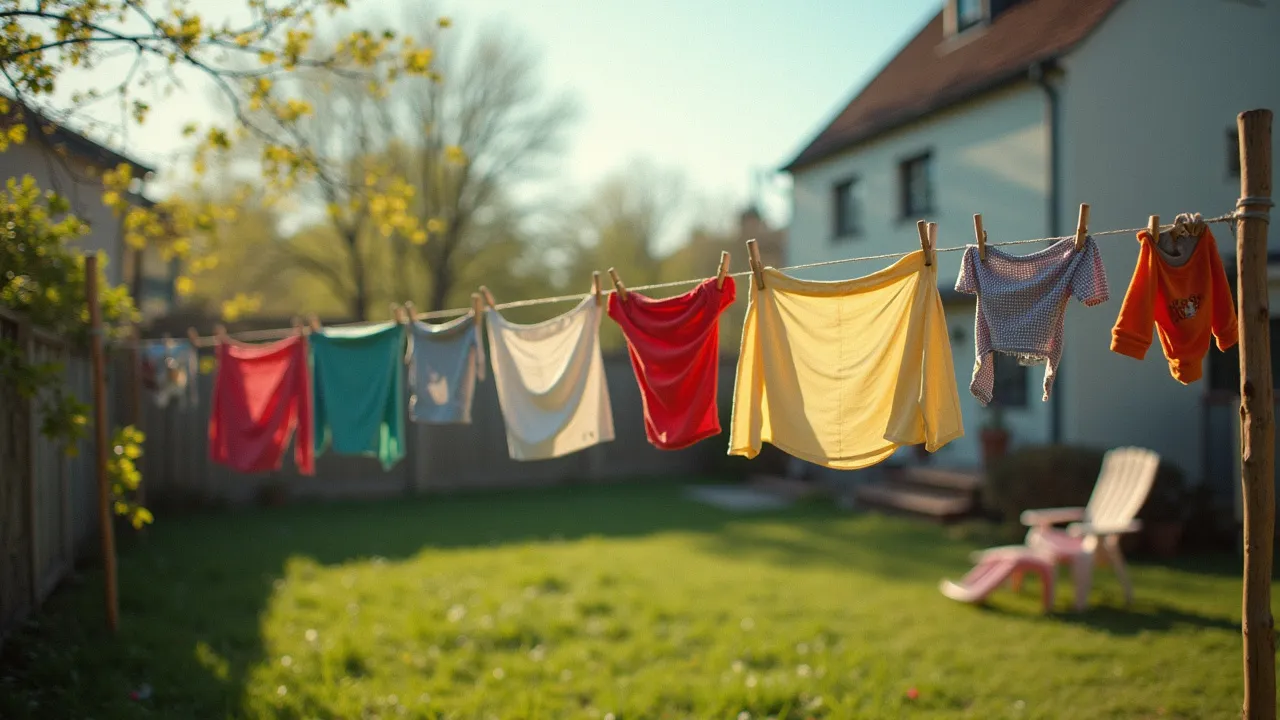
National Hanging Out Day on April 19 celebrates the simple, eco-friendly act of air-drying clothes. Discover its history, benefits, and global traditions to reduce energy use and embrace sustainable living.
The Historical Origins & Evolutionary Journey
National Hanging Out Day, observed annually on April 19th, is a celebration of air-drying laundry—a practice that has connected humanity for centuries. While the modern observance began in the late 20th century, the roots of line-drying stretch back to ancient civilizations.
The Foundational Catalyst
The modern movement for National Hanging Out Day was ignited by Project Laundry List, a nonprofit organization founded by Alexander Lee in 1995. Lee sought to promote the simple act of hanging clothes outside as a powerful tool for energy conservation and environmental stewardship. The date April 19th was chosen to coincide with Earth Week, emphasizing the ecological benefits of reducing reliance on electric dryers.
Legislative & Official Adoption
Throughout the 2000s, the day gained traction as communities and governments recognized its potential. Several U.S. states passed “Right to Dry” laws, preventing homeowners associations from banning clotheslines. These legislative victories helped cement April 19th as a day of advocacy and awareness.
Modern Global Legacy
Today, National Hanging Out Day is celebrated in countries worldwide, from Japan to Brazil, each adding unique cultural twists. It serves as a reminder that small, daily actions can collectively combat climate change.
How to Celebrate National Hanging Out Day
Whether you're a seasoned line-dryer or a curious newcomer, National Hanging Out Day offers countless ways to participate. Below are actionable strategies for individuals, schools, and organizations.
For Individuals & Families
- Set up a clothesline in your backyard or balcony using weather-resistant rope or retractable options.
- Dry all laundry outdoors for the entire day—from towels to delicates.
- Host a “line-drying party” with neighbors, sharing tips and snacks.
For Schools & Communities
- Organize a workshop on the environmental and financial benefits of air-drying.
- Create a community clothesline in a public park as a symbol of sustainable living.
- Host a “Laundry Art Show” where participants display colorful garments creatively pinned.
For Organizations
- Implement a “no-dryer day” in office buildings, encouraging employees to air-dry personal items.
- Distribute educational materials about energy savings and fabric longevity.
Globally, traditions vary: in Italy, people dry laundry on ornate wrought-iron balconies; in Japan, families use koshi (indoor drying poles) during rainy seasons. Embrace local customs to enrich your celebration.
Environmental Impact & Energy Savings
Air-drying clothes dramatically reduces household carbon footprint. Electric dryers are among the most energy-intensive appliances, accounting for up to 6% of residential electricity use in the U.S. By switching to a line, a family can save approximately $200 annually and prevent over 1,500 pounds of CO₂ emissions.
Water & Chemical Conservation
Line-drying extends fabric life, reducing textile waste. It also eliminates the need for dryer sheets and fabric softeners, which often contain volatile organic compounds (VOCs) harmful to both health and the environment.
Global Climate Implications
If every U.S. household air-dried just half of their laundry, the cumulative energy savings would be equivalent to taking 1 million cars off the road each year. The movement has inspired cities like Portland, Oregon to promote clothesline-friendly urban planning.
Health & Well-Being Benefits
Beyond environmental perks, hanging out laundry offers tangible health advantages. Sunlight is a natural disinfectant: UV rays kill bacteria and dust mites, leaving clothes fresh without chemical residues. The physical activity of hanging laundry burns approximately 60–100 calories per session, contributing to daily exercise.
Mental Health Boost
The rhythmic, outdoor chore can reduce stress and improve mood. A 2019 study found that spending just 20 minutes outdoors in green spaces significantly lowers cortisol levels. The scent of line-dried laundry—often described as “sun-kissed”—is linked to nostalgia and relaxation.
Allergen Reduction
Indoor drying can increase mold and mildew risk, exacerbating allergies. Outdoor drying in direct sunlight naturally sanitizes fabrics, reducing common allergens like pollen (when line is placed away from plants).
Community & Social Dynamics
Clotheslines have historically been social hubs. In many cultures, the act of hanging laundry is a communal activity where neighbors share news and build bonds. National Hanging Out Day revives this tradition, encouraging neighborly interaction and collective environmental action.
Right to Dry Movement
Homeowners associations (HOAs) and local ordinances have sometimes banned clotheslines, citing aesthetics. The Right to Dry movement, championed by Project Laundry List, has led to legislative victories in Florida, Colorado, and Maine, affirming residents' right to air-dry. These grassroots efforts foster community activism.
Cultural Expressions
In Italy, laundry lines are an iconic street sight, often colorfully arranged. In Japan, during rainy season, indoor lines called monosashi are common. Sharing these traditions online on April 19th creates a global tapestry of sustainable living.
Industry Transformations & Innovations
The resurgence of line-drying has spurred innovation across industries. Appliance manufacturers now design high-efficiency dryers with moisture sensors, but also compact, collapsible clotheslines for urban dwellers. The textile industry is responding with wrinkle-resistant fabrics that dry smoothly on a line.
Clothesline Technology
Modern clotheslines include retractable reels, umbrella-style racks, and wall-mounted frames for spaces with limited yard. Solar-powered line lights even allow night drying. Startups like Breez offer smart clotheslines that signal when clothes are dry.
Sustainable Fashion
Air-drying extends garment life, reducing the demand for fast fashion. Brands like Patagonia and Levi's advocate line-drying to maintain fabric integrity. This aligns with the Slow Fashion movement, emphasizing durability over disposability.
Global Perspectives & Unique Traditions
National Hanging Out Day is celebrated differently across the globe, reflecting local climates and customs.
Europe
- Italy: Laundry is hung on ornate balconies, often color-coordinated.
- United Kingdom: Retractable lines are standard in backyards; April often still damp, but celebrants persevere.
Asia
- Japan: Indoor drying poles (koshi) are used during rainy season; outdoor lines in autumn.
- India: Rooftop drying is ubiquitous; families often hang clothes before sunrise to avoid heat.
South America
- Brazil: Clotheslines are strung across verandas; bright sunlight dries items in hours.
These traditions enrich the global observance, highlighting that air-drying is both practical and cultural.
Historical Timeline
Project Laundry List founded by Alexander Lee, establishing National Hanging Out Day on April 19th to promote air-drying and energy conservation.
First 'Right to Dry' law passed in Florida, prohibiting HOAs from banning clotheslines, sparking similar legislation nationwide.
Project Laundry List declares April 19th as official National Hanging Out Day with campaigns in schools and municipalities.
The U.S. Department of Energy highlights air-drying as a top energy-saving strategy, boosting the observance's visibility.
During COVID-19 lockdowns, the practice surges as people seek sustainable hobbies; National Hanging Out Day trends globally on social media.