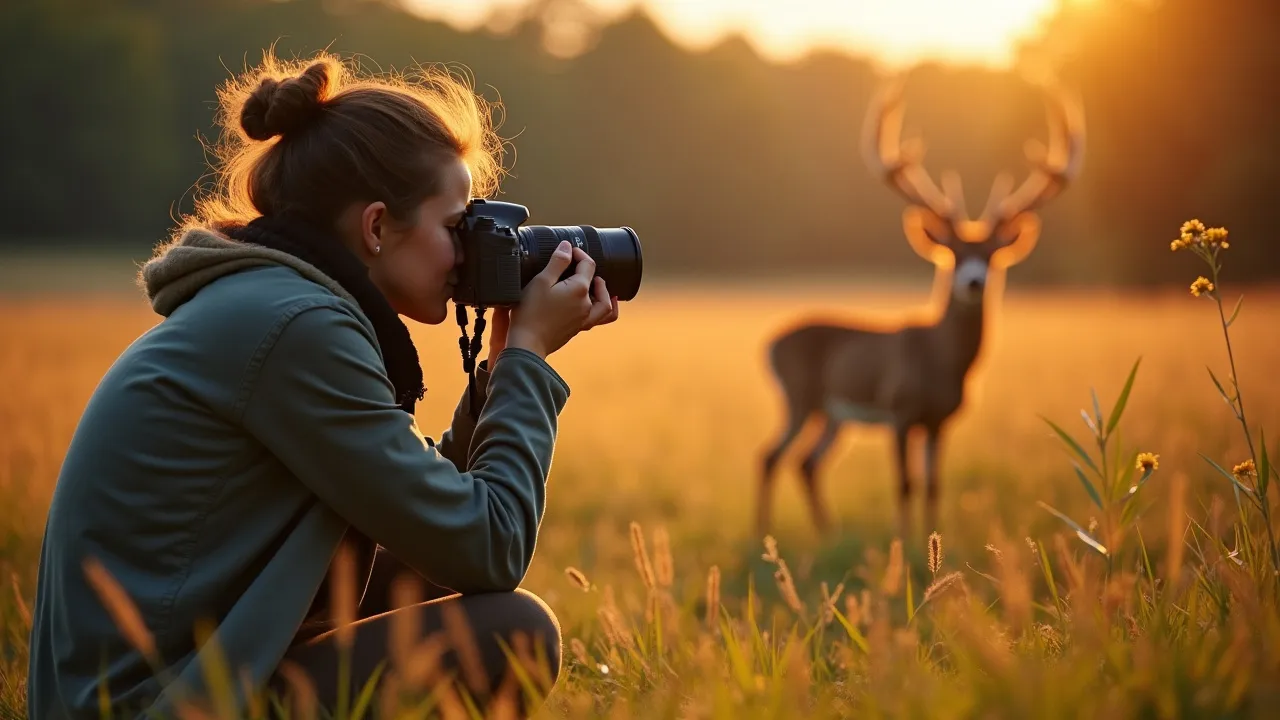
Celebrated annually on June 15th, Nature Photography Day encourages people worldwide to connect with nature through photography. Established by the North American Nature Photography Association in 2006, it promotes conservation and artistic expression.
The Historical Origins & Evolutionary Journey
The Foundational Catalyst
Nature photography has roots in the early days of photography itself. The first permanent photograph, Nicéphore Niépce's "View from the Window at Le Gras" (1826), captured a natural scene. However, it wasn't until the late 19th century that nature photography emerged as a distinct genre, with pioneers like William Henry Jackson and Ansel Adams using their cameras to document and advocate for natural landscapes.
The Official Adoption
The specific observance of Nature Photography Day was established by the North American Nature Photography Association (NANPA) in 2006. The date June 15th was chosen to coincide with the peak of spring in the Northern Hemisphere, offering optimal conditions for photographing flora and fauna. NANPA aimed to create a day that would inspire people to pick up their cameras, step outside, and appreciate the natural world.
Modern Global Legacy
Since its inception, Nature Photography Day has grown into a global movement. Social media platforms like Instagram and Flickr amplify participation, with hashtags like #NaturePhotographyDay trending annually. The day now serves as a powerful tool for conservation, with photographers documenting endangered species and fragile ecosystems, thereby raising awareness and driving action.
How to Celebrate Nature Photography Day
Nature Photography Day can be celebrated in countless ways, from solo outings to community events. Below are structured strategies for different groups:
For Individuals
- Go on a photo walk: Visit a local park, forest, or even your backyard. Focus on capturing the beauty of ordinary subjects like leaves, insects, or clouds.
- Try a new technique: Experiment with macro photography, long exposures, or silhouette shots at sunrise or sunset.
- Share your work: Post your best images on social media with the official hashtag #NaturePhotographyDay.
- Learn from experts: Watch online tutorials from renowned nature photographers or attend virtual workshops.
For Schools and Educational Institutions
- Organize a nature photography contest for students, with categories like "Best Macro Shot" or "Most Creative Composition".
- Take students on a field trip to a nearby nature reserve and teach basic photography skills.
- Invite a local photographer to give a talk on how images can support environmental science.
For Organizations and Businesses
- Host a company-wide photo challenge encouraging employees to document nature during their lunch breaks.
- Donate a portion of sales to a conservation nonprofit and promote the initiative with customer photos.
- Partner with parks or wildlife refuges to sponsor a community photo event.
Internationally, traditions vary: In Japan, photographers often visit cherry blossom spots; in Australia, the day focuses on coastal and outback landscapes. Regardless of location, the core message remains the same: connect with nature through the lens.
The Artistic and Scientific Value of Nature Photography
Artistic Expression
Nature photography blends technical skill with creative vision. Photographers must master composition, lighting, and timing to transform ordinary scenes into art. The genre includes sub-styles such as landscape, wildlife, macro, and abstract nature. Iconic works like Ansel Adams' Moonrise, Hernandez, New Mexico demonstrate how monochrome images can evoke deep emotion.
Scientific Documentation
Beyond art, nature photography is an essential scientific tool. Researchers use camera traps to monitor wildlife populations, underwater cameras to study marine life, and time-lapse photography to track seasonal changes. Citizen science projects like iNaturalist rely on public photo submissions to map biodiversity. Nature Photography Day encourages this dual role—art and science—by reminding us that every photograph can contribute to knowledge.
Environmental Advocacy Through the Lens
Photographs have the power to drive conservation. Iconic images like the "Earthrise" from Apollo 8 or the starving polar bear from National Geographic have spurred global environmental movements. Nature Photography Day amplifies this advocacy by:
- Highlighting endangered species: Photographers focus on animals at risk, like the snow leopard or orangutan, to raise awareness.
- Documenting climate change: Comparing historical and current photos of glaciers, forests, and coral reefs provides undeniable evidence of environmental shifts.
- Promoting protected areas: Stunning images of national parks and reserves encourage tourism and funding for conservation.
Many photographers donate their work to nonprofits or participate in events like the Nature's Best Photography Windland Smith Rice International Awards, which support environmental education.
Technological Evolution in Nature Photography
The tools of nature photography have evolved dramatically. From bulky film cameras to today's mirrorless systems and smartphones, technology has democratized the genre. Key milestones include:
- 1839: The daguerreotype allows first landscapes.
- 1880s: Dry plate photography enables fieldwork.
- 1960s: Color film becomes standard.
- 2000s: Digital SLRs and raw processing revolutionize quality.
- 2010s: Smartphone cameras with computational photography rival DSLRs.
Modern innovations like drones and remote camera traps open new perspectives, while editing software like Adobe Lightroom allows precise adjustments. Nature Photography Day encourages photographers to embrace both tradition and innovation.
Global Participation and Cultural Significance
Nature Photography Day is observed across the world, with events tailored to local environments. In India, photographers focus on tiger reserves and bird sanctuaries. In Brazil, the Amazon rainforest is a prime subject. African photographers document savanna wildlife, while European enthusiasts capture alpine meadows and coastal cliffs. Cultural significance varies: in many Indigenous communities, nature photography is a way to preserve traditional ecological knowledge and sacred sites. NGOs like Photographers Without Borders use the day to train local communities in visual storytelling, fostering a global network of nature advocates.
Historical Timeline
Nicéphore Niépce creates the first known photograph, 'View from the Window at Le Gras', a natural scene.
Louis Daguerre introduces the daguerreotype, enabling landscape and nature photography.
George Eastman's roll film allows portable nature photography.
Ansel Adams begins his iconic black-and-white landscape work, promoting conservation.
The first SLR cameras with through-the-lens viewing become popular among nature photographers.
The first Earth Day inspires environmental photography as a tool for activism.
NANPA establishes Nature Photography Day on June 15th to encourage global participation.
The rise of smartphones and social media platforms dramatically increases public engagement with nature photography.
During the COVID-19 pandemic, virtual nature photography events and online galleries flourish, reaching millions worldwide.