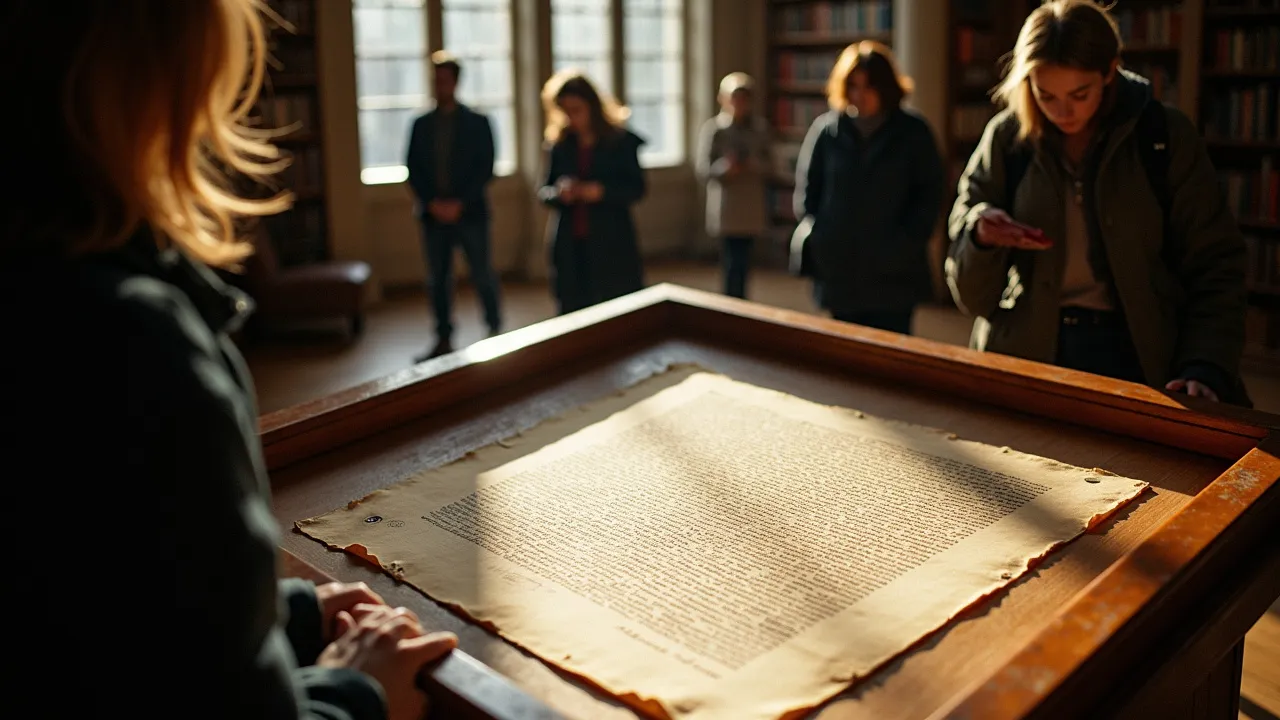
Magna Carta Day on June 15th commemorates the sealing of the Great Charter in 1215, a landmark in legal history. It celebrates the principles of justice, liberty, and the rule of law that continue to influence modern democracies.
Historical Origins & Evolutionary Journey
Magna Carta Day, observed annually on June 15th, honors the sealing of the Magna Carta (Latin for "Great Charter") in 1215. This document, signed by King John of England at Runnymede, stands as a cornerstone of constitutional law and individual rights. Its legacy has shaped legal systems worldwide, making Magna Carta Day a time for reflection on the rule of law.
The Foundational Catalyst
By the early 13th century, King John's oppressive rule—marked by heavy taxation, arbitrary justice, and failed military campaigns—sparked rebellion among English barons. In 1215, they forced the king to negotiate. The resulting charter, sealed on June 15th, outlined a series of concessions limiting royal power. Key clauses included:
- Clause 39: No free man shall be seized, imprisoned, or dispossessed except by the lawful judgment of his peers or by the law of the land.
- Clause 40: To no one will we sell, deny, or delay right or justice.
- Clause 61: A council of 25 barons could overrule the king if he violated the charter.
Though annulled by Pope Innocent III within months, the charter was reissued multiple times—most notably in 1225 under King Henry III and in 1297 under King Edward I—evolving into a symbolic foundation for due process.
The Legislative/Official Adoption
For centuries, Magna Carta was cited in legal disputes and political struggles. During the 17th-century English Civil Wars, parliamentarians invoked it to challenge royal prerogative. The American colonists later drew on its principles to argue against British taxation without representation—the phrase "law of the land" appears in the U.S. Constitution's Fifth Amendment. In 1946, the American Bar Association (ABA) established Magna Carta Day to promote the rule of law globally, choosing June 15th to align with the original sealing.
Modern Global Legacy
Today, Magna Carta is a UNESCO Memory of the World document. Its influence pervades legal frameworks from the Universal Declaration of Human Rights to the European Convention on Human Rights. Annually, celebrations include readings, lectures, and educational programs. The 800th anniversary in 2015 saw special exhibitions at the British Library and Runnymede Meadows.
How to Celebrate Magna Carta Day
Magna Carta Day offers opportunities for individuals, schools, and organizations to engage with the principles of justice and liberty. Below are actionable ways to observe the day across different contexts.
Individual and Family Activities
- Read the Charter: Find a modern translation online or at a library. Discuss key clauses with family.
- Visit Historic Sites: In the UK, visit Runnymede Meadows (Surrey) or the British Library (London) to see original manuscripts. In the US, check the National Archives or local law libraries for facsimiles.
- Watch Documentaries: View films like "Magna Carta: The Story of Our Liberty" or "The Law and the Rights of Man."
- Engage in Debate: Discuss how Magna Carta relates to current issues like government accountability and human rights.
School and Educational Programs
- Lesson Plans: Teachers can design activities on medieval history, legal evolution, and comparative constitutional law.
- Mock Trials: Stage a reenactment of the 1215 negotiation, with students role-playing as King John and barons.
- Essay Contests: Host competitions on topics like "Why Magna Carta Matters Today."
Professional and Organizational Events
- Law Firms and Bar Associations: Host networking sessions or CLE (Continuing Legal Education) seminars on the charter's historical and modern relevance.
- Government Agencies: Issue proclamations recognizing the day and organize public lectures.
- Community Groups: Arrange public readings in town squares, followed by Q&A sessions with legal experts.
Global Traditions
In the United Kingdom, Parliament often schedules debates or commemorative events. In the United States, the ABA coordinates activities with law schools. Australia and Canada also hold educational events. Digital celebrations include sharing quotes on social media using #MagnaCartaDay.
The Global Impact of Magna Carta's Principles
Magna Carta's influence extends far beyond England. Its core concepts—due process, trial by jury, and limits on executive power—have been adopted by dozens of countries. This section explores its worldwide reach.
Influence on the United States Constitution
Colonial leaders such as Thomas Jefferson and John Adams drew heavily on Magna Carta. The Fifth Amendment's "due process of law" echoes Clause 39. The Constitution's separation of powers and Bill of Rights reflect the charter's push for checks on authority. In fact, the ABA's Magna Carta Day was created partly to highlight these shared legal roots.
Impact on Commonwealth Nations
Canada's Charter of Rights and Freedoms (1982) and Australia's common law system explicitly reference Magna Carta. India's Supreme Court has cited it in key judgments on personal liberty. New Zealand's constitutional documents also trace lineage to the charter.
International Human Rights Documents
The Universal Declaration of Human Rights (1948) and the European Convention on Human Rights (1950) incorporate principles first codified at Runnymede. The International Covenant on Civil and Political Rights similarly requires fair trials and freedom from arbitrary detention. Magna Carta remains a symbol of legal progress.
Challenges and Criticisms
Some scholars note that Magna Carta applied only to "free men," not the majority of serfs. However, its symbolic power has driven reform. Modern interpretations emphasize its evolving legacy rather than its original limitations.
Core Themes: Liberty, Justice, and the Rule of Law
Magna Carta embodies three interconnected themes that remain central to democracies today.
Liberty
Clause 39's guarantee of judgment by peers and lawful judgment laid the groundwork for habeas corpus. The charter established that no one, not even the king, is above the law. This concept of "liberty under law" became a rallying cry in later centuries.
Justice
Clause 40's promise that justice will not be sold, denied, or delayed is often cited in legal reform. Courts worldwide reference this clause when ensuring equal access. Magna Carta Day reminds us to advocate for fair legal systems.
Rule of Law
The charter's most enduring legacy is the principle that all governance must adhere to established laws. This idea underpins modern constitutionalism and limits arbitrary power. Celebrating Magna Carta Day reinforces the importance of lawful authority.
Modern Relevance and Challenges
In an era of digital surveillance, populism, and global conflicts, Magna Carta's principles face new tests.
Government Overreach and Surveillance
Mass data collection programs by governments raise concerns about due process. Activists invoke Magna Carta to demand transparency and limits on executive power. Legal battles over warrantless searches reference the charter's protections.
Rule of Law in Crisis Regions
Countries experiencing rule-of-law failures—such as Hong Kong, Venezuela, or Myanmar—often see protesters waving replicas of Magna Carta. The document serves as a universal symbol against authoritarianism.
Educational and Civic Engagement
Magna Carta Day provides a platform for educating younger generations. Schools incorporate the charter into civics curricula. Digital tools like virtual tours of Runnymede expand access. NGOs use the day to campaign for legal empowerment.
Future Directions
As technology evolves, new applications of Magna Carta's principles emerge. Debates on AI governance and data rights often reference the charter's emphasis on fairness. The day encourages ongoing dialogue about balancing security and liberty.
Famous Quotes and Documents Influenced by Magna Carta
Magna Carta's phrasing has echoed through pivotal texts and speeches.
- U.S. Declaration of Independence (1776): "No freeman shall be taken... but by lawful judgment of his peers" parallels Jefferson's list of grievances.
- U.S. Constitution (1787) and Bill of Rights (1791): The Fifth Amendment's "due process" and Sixth Amendment's "speedy and public trial" directly stem from Magna Carta.
- Universal Declaration of Human Rights (1948): Articles 9 (freedom from arbitrary arrest) and 10 (fair trial) echo the charter.
- English Bill of Rights (1689): Reinforced limits on royal power, citing Magna Carta as precedent.
- Nelson Mandela: In his Rivonia Trial speech (1964), he invoked Magna Carta to demand equal justice.
- Franklin D. Roosevelt: His 1941 Four Freedoms speech (freedom of speech, worship, from want, from fear) drew on the charter's broader spirit.
These connections underscore Magna Carta's role as a living document. Each June 15th, we reaffirm its timeless message.
Historical Timeline
King John seals Magna Carta at Runnymede on June 15th, after negotiations with rebellious barons.
King Henry III reissues a shorter version of Magna Carta, which becomes the definitive text.
King Edward I reissues Magna Carta, and it is entered into the English statute roll, solidifying its legal status.
The Petition of Right cites Magna Carta to challenge King Charles I's arbitrary taxation and imprisonment.
American colonists invoke Magna Carta's principles in the Declaration of Independence against British rule.
The U.S. Bill of Rights incorporates due process clauses inspired by Magna Carta.
The American Bar Association establishes June 15th as Magna Carta Day to promote the rule of law.
The Universal Declaration of Human Rights includes principles traceable to Magna Carta.
The 800th anniversary of Magna Carta inspires worldwide celebrations, including a British Library exhibition and special sessions in Parliament.