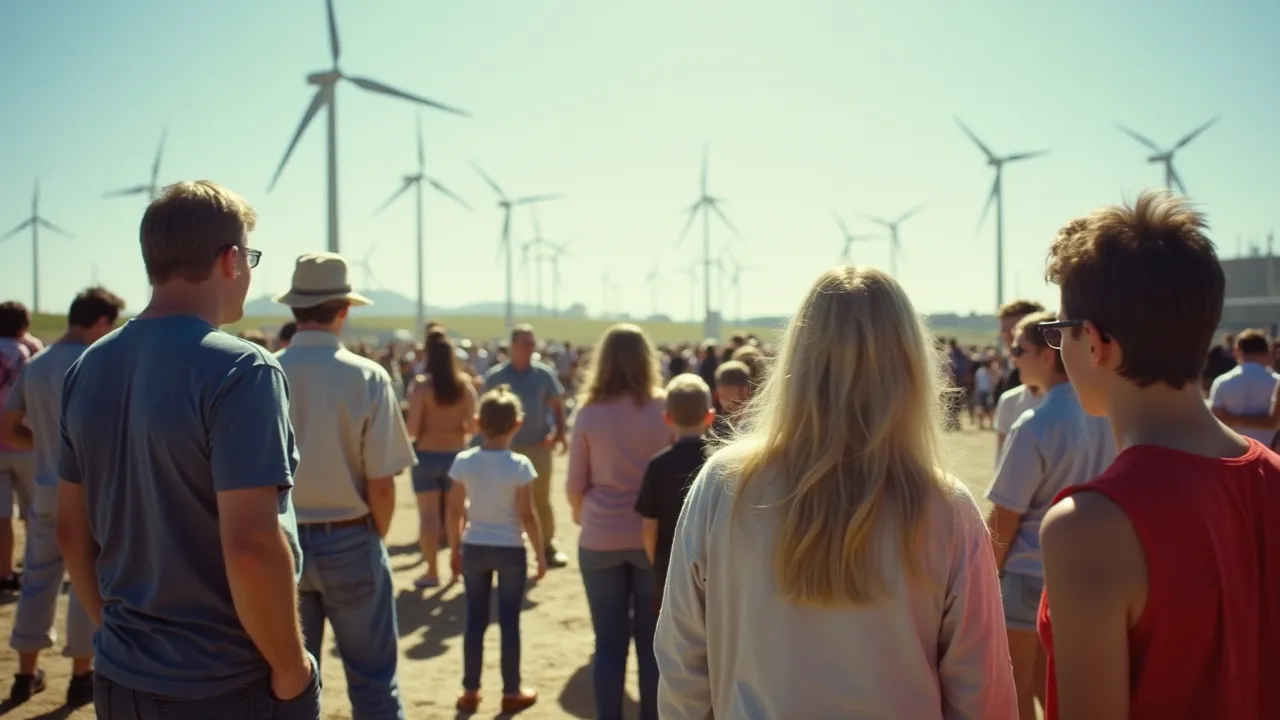
Global Wind Day, observed on June 15th, celebrates the power of wind energy and its role in a sustainable future. It highlights the environmental and economic benefits of wind power worldwide.
The Historical Origins & Evolutionary Journey
Global Wind Day, celebrated annually on June 15th, is a worldwide event dedicated to exploring the power of wind energy and its potential to reshape our energy systems. The day was first organized in 2007 by the European Wind Energy Association (EWEA) and the Global Wind Energy Council (GWEC). Initially called 'Wind Day,' it quickly gained international traction, expanding from a European focus to a global movement.
The Foundational Catalyst
The early 2000s marked a turning point in renewable energy awareness. Climate change concerns and fossil fuel volatility spurred interest in wind power. The EWEA, recognizing the need for public engagement, launched Wind Day in 2007 to educate communities about wind energy's benefits. The event started modestly with open days at wind farms and educational workshops across Europe.
The Legislative/Official Adoption
By 2009, the event was rebranded as Global Wind Day to reflect its worldwide reach. The United Nations and various national governments began endorsing the day, integrating it into their renewable energy promotion campaigns. The Paris Agreement of 2015 further boosted the day's significance, aligning Global Wind Day with international climate goals. Since then, it has been officially recognized by numerous countries as a key date in the sustainable energy calendar.
Modern Global Legacy
Today, Global Wind Day involves over 30 countries hosting events such as wind farm tours, seminars, school programs, and social media campaigns. It serves as a platform for industry leaders, policymakers, and citizens to discuss wind energy's future. The day also marks the release of key industry reports and statistics, showcasing wind power's growing contributions to global electricity generation.
How to Celebrate Global Wind Day
Celebrating Global Wind Day can be both educational and fun. Here are actionable strategies for individuals, schools, and organizations worldwide to participate meaningfully.
For Individuals
- Visit a Wind Farm: Many wind farms offer open-house tours on June 15th. Check local listings for guided visits.
- Learn About Wind Energy: Read articles, watch documentaries, or attend virtual webinars hosted by renewable energy organizations.
- Calculate Your Carbon Footprint: Use online tools to understand how switching to wind power could reduce your personal emissions.
- Advocate for Clean Energy: Write to local representatives expressing support for wind energy projects in your area.
For Schools
- Host a Wind Turbine Workshop: Have students build miniature wind turbines using kits or recycled materials, then measure energy output.
- Organize a Poster Contest: Encourage students to create artwork depicting wind energy benefits. Display in school hallways.
- Invite Guest Speakers: Arrange talks by engineers or environmentalists from nearby wind energy companies.
For Organizations
- Social Media Campaign: Share content with hashtags like #GlobalWindDay and #WindEnergy. Highlight your company's renewable energy commitments.
- Employee Engagement: Offer incentives for employees who pledge to use renewable energy at home or participate in a wind energy webinar.
- Partner with Local Groups: Co-host public events such as community clean-ups near wind turbine sites or educational fairs.
Across different countries, traditions vary: in Denmark, people gather at offshore wind farms for boat tours; in Germany, schools hold energy-themed days; in the United States, online live streams explain wind power science. The core goal remains consistent—to promote understanding and enthusiasm for wind energy.
Global Impact of Wind Energy
Wind energy has become a cornerstone of the global transition to clean energy. As of 2024, installed wind capacity exceeds 900 gigawatts worldwide, supplying over 7% of global electricity. This rapid growth is driven by technological improvements, falling costs, and policy support.
Climate Change Mitigation
Wind power displaces fossil fuel generation, cutting CO₂ emissions by over 1 billion tonnes annually. The expansion of wind energy is crucial to meeting the Paris Agreement targets and limiting global warming to 1.5°C.
Energy Security and Independence
Countries with abundant wind resources reduce reliance on imported fuels. For example, Denmark often generates more than 40% of its electricity from wind, enhancing its energy sovereignty.
Job Creation and Economic Growth
The wind sector employs over 1.4 million people globally, including manufacturing, installation, and maintenance roles. It also attracts significant investment, with global wind energy investments exceeding $50 billion per year.
Technological Advancements in Wind Power
Innovation in wind turbine technology has dramatically improved efficiency and expanded feasible locations.
Larger and More Efficient Turbines
Modern turbines have rotor diameters exceeding 200 meters, with rated capacities up to 15 MW. These giants capture more wind energy at lower cut-in speeds, making them viable in areas with moderate wind resources.
Offshore Wind Farms
Offshore wind, particularly floating turbines, unlocks deep-water sites previously inaccessible. Countries like the UK, China, and South Korea are leading in offshore capacity, harnessing stronger and steadier winds at sea.
Smart Grid Integration and Storage
Advanced forecasting and battery storage systems mitigate wind's variability. Wind farms now integrate with smart grids to balance supply and demand, ensuring reliable electricity even when winds fluctuate.
Economic and Environmental Benefits
Wind energy delivers multifaceted benefits beyond clean electricity.
Cost Competitiveness
Onshore wind is now one of the cheapest sources of new electricity, with levelized costs often below $30 per MWh. This price parity with fossil fuels accelerates market-driven adoption.
Environmental Co-Benefits
Wind farms have a small land footprint, allowing coexistence with agriculture. They consume no water during operation, preserving freshwater resources essential in arid regions.
Health and Social Impacts
Replacing coal and gas with wind reduces air pollution, preventing thousands of premature deaths annually. Community-owned wind projects also provide local revenue streams, funding schools and infrastructure.
Challenges and Future Outlook
Despite progress, wind energy faces hurdles that must be addressed to achieve net-zero goals.
Intermittency and Grid Integration
Wind is variable; thus, grid-scale storage, intercontinental power links, and demand-side management are needed. Investments in battery storage and hydrogen production from excess wind are critical.
Environmental and Social Acceptance
Some communities resist wind farms due to visual impact, noise, or bird concerns. Better siting policies, community engagement, and technological mitigations (e.g., radar-activated shut-downs for birds) can ease conflicts.
Supply Chain and Raw Materials
Manufacturing turbines requires rare earth metals and composites. Recycling solutions and alternative materials are being developed to reduce dependency and waste. By 2035, wind capacity is projected to surpass 2,000 GW, making these challenges urgent but solvable.
Historical Timeline
The European Wind Energy Association (EWEA) launched the first 'Wind Day' on June 15, with events across Europe.
The event was renamed 'Global Wind Day' to include participants worldwide, expanding to over 30 countries.
The Paris Agreement was adopted, boosting the importance of Global Wind Day as a rallying point for climate action.
Global installed wind capacity reached 600 GW, with China and the United States leading installations.
Wind energy supplied over 10% of global electricity for the first time, driven by record installations despite the pandemic.
Offshore wind capacity surpassed 100 GW, with floating turbines becoming commercially viable.
Global Wind Day celebrated with the theme 'Wind for a Greener Future,' highlighting the role of wind in achieving net-zero emissions by 2050.