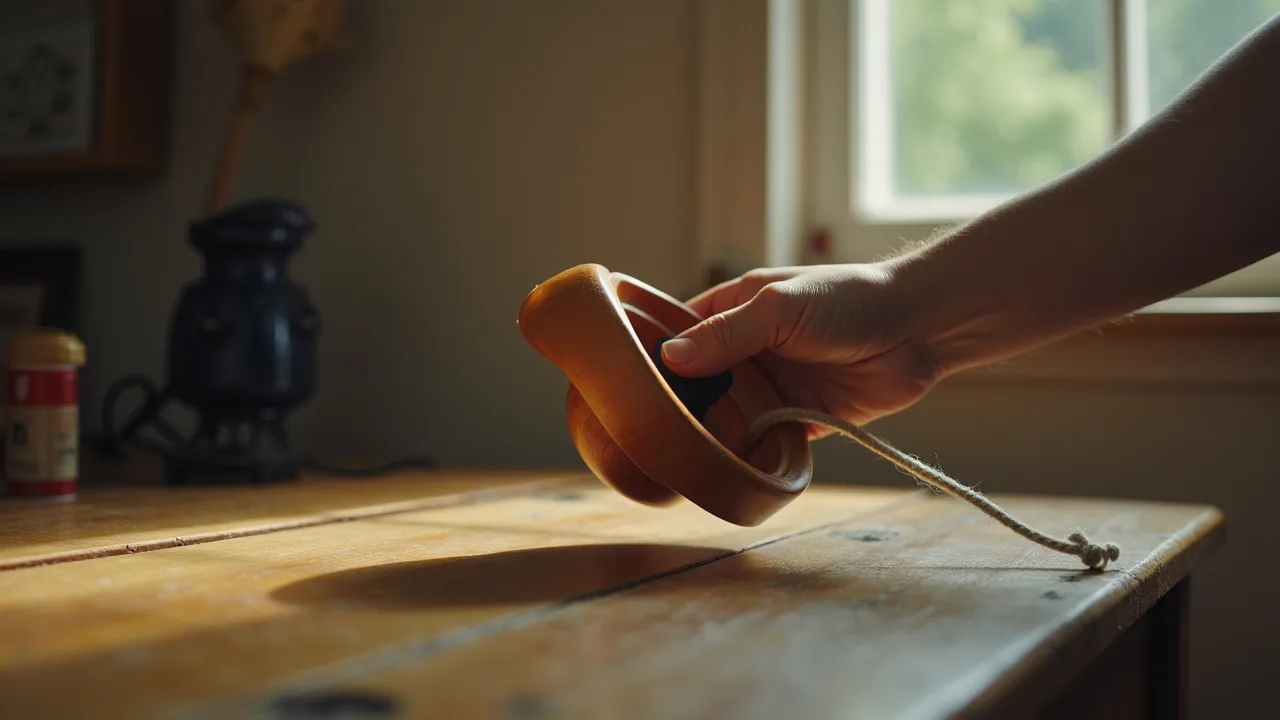
National Yo-Yo Day on June 6th celebrates the timeless toy and its rich history. From ancient origins to modern competitions, discover the yo-yo's cultural impact and ways to join the fun.
The Historical Origins & Evolutionary Journey
National Yo-Yo Day, observed annually on June 6th, honors the birthday of Donald F. Duncan Sr. (June 6, 1892), the entrepreneur who transformed the yo-yo from a niche Filipino toy into a global phenomenon. However, the yo-yo's story stretches back millennia, with evidence of similar toys in ancient Greece and China.
The Ancient Roots of the Yo-Yo
The earliest known yo-yo-like artifacts date to 500 BCE in Greece, made from terra cotta discs. Yet the modern yo-yo traces its lineage to the Philippines, where it was used as a hunting weapon (spinning a weighted rope to catch prey) before becoming a recreational toy. The name "yo-yo" itself comes from the Tagalog word meaning "come back" or "come-come."
The Duncan Era: Commercialization and Pop Culture
In 1928, Pedro Flores, a Filipino immigrant, began mass-producing wooden yo-yos in the United States. Donald Duncan, impressed by Flores's success, bought the rights and launched the Duncan Yo-Yo Company in 1930. Duncan's aggressive marketing—including demonstrations, contests, and the iconic "Duncan Imperial"—made the yo-yo a must-have toy. By the 1960s, yo-yo competitions had become mainstream, with champions like Tommy Smothers (of the Smothers Brothers) showcasing tricks on national television.
The Decline and Revival
After Duncan sold his company in the 1970s, the yo-yo's popularity waned. However, the 1990s saw a resurgence thanks to new materials (plastic, transaxle designs) and the rise of professional yo-yoing. National Yo-Yo Day was informally established around this time by yo-yo enthusiasts and manufacturers, though it never received official U.S. government recognition.
Modern Global Legacy
Today, National Yo-Yo Day is celebrated by yo-yo clubs, schools, and toy museums worldwide. It serves as a reminder of the toy's cross-generational appeal and its role in promoting hand-eye coordination, patience, and creativity. The day also coincides with the World Yo-Yo Contest (often held in June), anchoring the yo-yo's competitive legacy.
How to Celebrate National Yo-Yo Day
Whether you're a beginner or a pro, National Yo-Yo Day offers countless ways to participate. Here's a definitive guide to celebrating this classic pastime.
For Individuals
- Practice a new trick: Try the "Walk the Dog," "Around the World," or "Rock the Baby." Online tutorials make it easy.
- Host a yo-yo session: Gather friends for a casual competition or freestyle jam.
- Attend a local event: Many toy stores and community centers host yo-yo demonstrations on June 6th.
For Schools and Organizations
- Organize a yo-yo workshop: Teach basic techniques and physics principles (centripetal force, inertia).
- Hold a contest: Categories include longest spin, most tricks, and best trick combination.
- Integrate yo-yos into lessons: Use them to explain kinetic energy, gyroscopic stability, and even art (tracking patterns).
Corporate and Social Rituals
- Yo-yo giveaways: Companies can distribute branded yo-yos as promotional items.
- Social media challenges: Post your best trick with #NationalYoYoDay to win prizes.
- Charity fundraisers: Auction off rare yo-yos or host a yo-yo-a-thon for donations.
Global Celebrations
While June 6th is the primary date, some regions host events on different days. In Japan, yo-yo festivals often occur in August during summer fairs. The Philippines celebrates its own "Yo-Yo Day" on December 30th (the birth of Pedro Flores). However, the international yo-yo community largely recognizes June 6th as the flagship observance.
The Impact of the Yo-Yo on Culture and Technology
The yo-yo is more than a toy; it's a cultural icon and a marvel of simple engineering. Its influence spans entertainment, education, and even space exploration.
Cultural Significance
From 1960s television shows to Hollywood movies like The Parent Trap (1998), yo-yos have appeared as symbols of childhood nostalgia and skill. The toy also features in music (e.g., "Yo-Yo" by the Osmonds) and literature. Competitive yo-yoing has spawned a subculture of dedicated players, with world records like the longest spin (3 minutes 30 seconds) and most consecutive loops (over 100).
Technological Innovations
- Transaxle designs: Introduced in the 1990s, reducing friction and enabling longer spins.
- Ball-bearing yo-yos: Allow for complex "sleeping" tricks.
- LED and electronic yo-yos: Add visual effects and gyroscopic sensors for trick tracking.
NASA has even used yo-yos to demonstrate gyroscopic stability in zero-gravity training. The toy's simple mechanics make it a perfect teaching tool for physics classrooms.
Notable Yo-Yo Champions and Record Holders
The competitive yo-yo scene boasts legends who have pushed the boundaries of what's possible with a spinning disc on a string.
Hall of Fame Inductees
- Tommy Smothers: 1960s comedy duo member who popularized yo-yo tricks on TV.
- John Hiatt: 1980s champion known for his "Around the World" variations.
- Steve Brown: 1990s pioneer of transaxle tricks and multiple world titles.
World Records
- Longest spin: 3 minutes 30 seconds by Roger Esquivel (2014).
- Most yo-yo loops in one minute: 122 by Jacob Sharpe (2018).
- Largest yo-yo: 3.5 meters tall, created by YoYoFactory (2009).
The World Yo-Yo Contest, held annually since 1993, crowns champions in categories like 1A (string tricks), 2A (looping), 3A (two yo-yos), and 4A (off-string).
The Psychology and Educational Benefits of Yo-Yoing
Beyond fun, yo-yoing offers cognitive and physical benefits that make it a valuable hobby for all ages.
Benefits
- Improves hand-eye coordination: Requires precise timing and spatial awareness.
- Enhances concentration: Learning complex tricks demands focused attention.
- Boosts persistence: Overcoming failures teaches resilience.
- Stress relief: Rhythmic motion can be meditative.
Educational Applications
Teachers use yo-yos to demonstrate angular momentum, gravity, and friction. Programs like "Yo-Yos in the Classroom" encourage STEM learning through play. Occupational therapists recommend yo-yos for fine motor skill development in children with autism or ADHD.
Collecting Yo-Yos: A Niche Market
Vintage and rare yo-yos can fetch high prices at auction, with collectors seeking models from Duncan's heyday or limited editions from modern manufacturers.
Valuable Yo-Yos
- Duncan Imperial (1930s wooden): Rare pre-WWII examples sell for over $500.
- Butterfly yo-yo (1960s): Pioneered by Duncan, now collectible.
- Tom Kuhn No Jive (1980s): Wooden precision yo-yo valued at $200+.
Condition, rarity, and provenance determine value. Online communities like the Yo-Yo Museum in Chico, California, preserve this history.
Historical Timeline
Earliest yo-yo-like artifacts appear in ancient Greece, made from terracotta discs.
Pedro Flores begins mass-producing wooden yo-yos in the United States, sparking modern popularity.
Donald F. Duncan Sr. acquires Flores's yo-yo manufacturing rights and founds the Duncan Yo-Yo Company.
Duncan Yo-Yo Company introduces the iconic 'Butterfly' yo-yo shape.
First World Yo-Yo Contest held in Florida, establishing global competitive standards.
Transaxle yo-yos introduced, revolutionizing sleep times and trick possibilities.
National Yo-Yo Day gains popularity through internet communities and toy organizations.
Roger Esquivel sets world record for longest yo-yo spin at 3 minutes 30 seconds.
National Yo-Yo Day celebrated globally with events in over 30 countries.