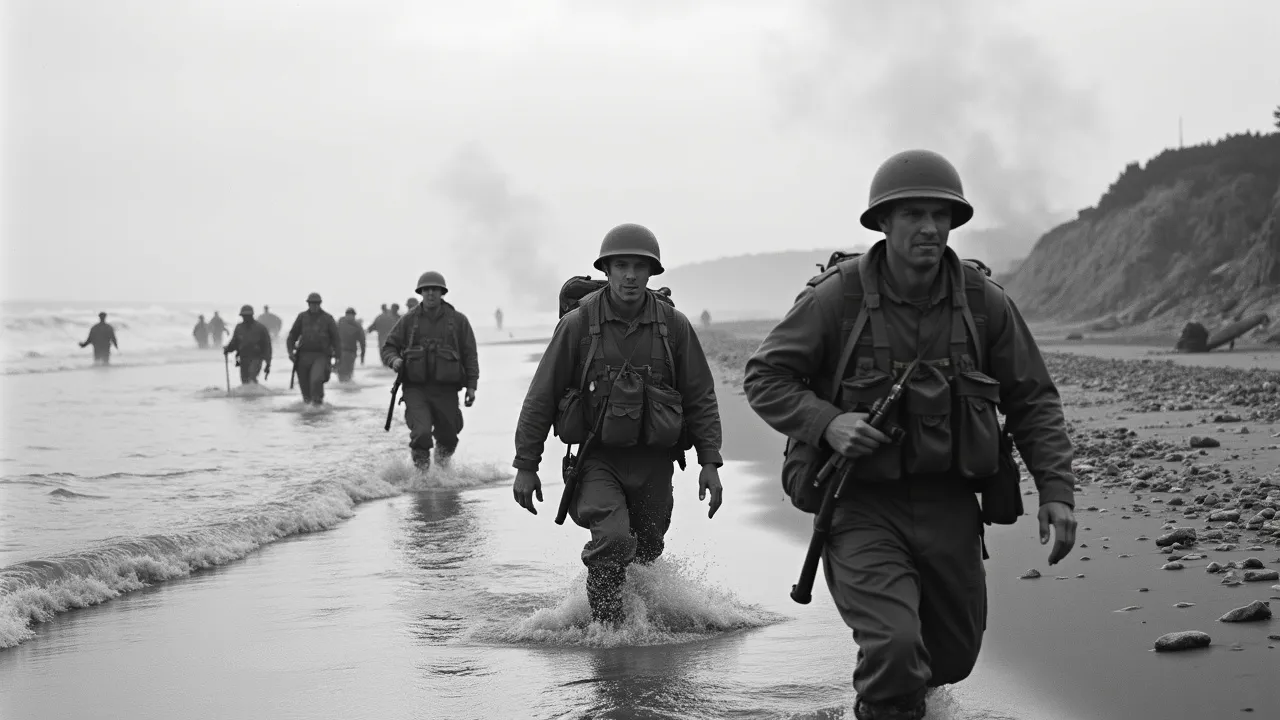
D-Day, June 6, 1944, marks the Allied invasion of Normandy during WWII. It was the largest amphibious assault in history and a turning point that led to the liberation of Europe.
The Historical Origins & Evolutionary Journey
The Foundational Catalyst
D-Day, the Allied invasion of Normandy on June 6, 1944, was the culmination of years of strategic planning by the Allied powers during World War II. Following the Nazi occupation of France in 1940, the Allies recognized the need for a cross-channel invasion to liberate Western Europe. The decision was formalized at the Tehran Conference in 1943, with General Dwight D. Eisenhower appointed as Supreme Commander of the Allied Expeditionary Force. The operation, code-named Operation Overlord, involved meticulous deception plans (Operation Fortitude) to mislead the Germans about the invasion location.
The Legislative/Official Adoption
No single law established D-Day as an official holiday, but it has been commemorated annually by the United States and other Allied nations. In 1945, the first anniversary was marked with ceremonies. Over time, it became a day of remembrance, with the U.S. Congress designating June 6 as National D-Day Remembrance Day in 1995. Similarly, Normandy holds major annual events at the memorial sites.
Modern Global Legacy
Today, D-Day is remembered as a symbol of courage and sacrifice. Museums like the National D-Day Memorial in Bedford, Virginia, and the Caen Memorial in France preserve its history. The anniversary attracts thousands of veterans, dignitaries, and tourists to Normandy for ceremonies, parades, and educational programs.
How to Celebrate D-Day
Commemorating D-Day involves honoring the sacrifices of those who fought and educating future generations about its significance. Here are ways individuals, schools, and organizations can observe the day:
Attend or Watch Commemorative Ceremonies
- Visit Normandy, France, for the official ceremonies at Omaha Beach, Pointe du Hoc, or the American Cemetery.
- Watch the annual televised events or live streams from national memorials.
Educational Activities
- Organize classroom lessons on WWII and the Normandy invasion using primary sources.
- Host a film screening of Saving Private Ryan or The Longest Day followed by discussion.
- Invite veterans (or their descendants) to speak about personal experiences.
Personal Reflection and Service
- Visit a local war memorial or cemetery and leave flowers or flags.
- Participate in the Wreath-Laying Ceremony at the National D-Day Memorial in Bedford, VA.
- Read historical accounts or letters from soldiers to understand the human cost.
Global Traditions
- In the UK, the Royal British Legion holds services and parades.
- In Canada, ceremonies at Juno Beach Centre connect Canadians to their role.
- In France, local communities host commemorations and reenactments.
The Strategic Importance of D-Day
Operation Overlord's Objectives
D-Day aimed to establish a beachhead in Normandy from which to launch the liberation of France and ultimately defeat Nazi Germany. The invasion targeted five beach sectors: Utah, Omaha, Gold, Juno, and Sword. Paratroopers from the 82nd and 101st Airborne Divisions landed inland to secure key roads and bridges.
Key Factors
- Air superiority: The Allies ensured control of the skies to disrupt German reinforcements.
- Deception: Operation Fortitude convinced Germans the main attack would occur at Pas-de-Calais.
- Naval bombardment: Over 5,000 ships provided fire support and transported troops.
By nightfall on June 6, the Allies had landed over 156,000 troops, suffering approximately 10,000 casualties. The beachhead allowed a steady flow of forces that led to the liberation of Paris in August 1944.
The Human Cost and Sacrifice
Casualties on D-Day
The human cost was staggering. Allied casualties (killed, wounded, missing) are estimated at over 10,000, with approximately 2,500 American deaths. German casualties are estimated between 4,000 and 9,000. The Normandy American Cemetery at Colleville-sur-Mer holds 9,388 graves.
Personal Stories
- Medal of Honor recipients like John J. Pinder Jr., who continued to unload communications equipment despite being wounded.
- The Bedford Boys: A company from Bedford, Virginia lost 19 men, the highest per capita loss of any US community.
- Canadian forces at Juno Beach faced heavy fire but advanced farther than any other beach.
These sacrifices underscore the brutal reality of the assault and the bravery required.
D-Day in Popular Culture
Films and Books
D-Day has been depicted in numerous films, including The Longest Day (1962), Saving Private Ryan (1998), and Band of Brothers (2001). Books like D-Day: June 6, 1944 by Stephen Ambrose and The Guns at Last Light by Rick Atkinson provide detailed accounts.
Memorials and Museums
- The National D-Day Memorial in Bedford, VA features a sculpture of soldiers landing.
- In France, the Mémorial de Caen and Utah Beach Museum offer immersive exhibits.
- Virtual reality tours now allow users to experience the landings.
Popular culture ensures D-Day remains in public consciousness, educating new generations.
Preserving the Memory: Museums and Memorials
Major Memorials
- Normandy American Cemetery: Overlooking Omaha Beach, it is the final resting place for nearly 10,000 Americans.
- Pointe du Hoc Ranger Monument: Commemorates the Rangers who scaled the cliffs under fire.
- Juno Beach Centre: A Canadian museum in Courseulles-sur-Mer.
Educational Programs
Museums offer school programs, lectures, and guided tours. The National D-Day Memorial in Virginia provides educational resources online. Volunteers conduct living history reenactments.
Challenges
As veterans pass away, oral histories become rare. Many organizations are digitizing personal accounts and artifacts to preserve the legacy for future generations.
Legacy of D-Day on Modern Warfare
Amphibious Assault Doctrine
D-Day refined techniques for large-scale amphibious operations, influencing later campaigns like the Inchon Landing in Korea and the Falklands War.
Joint and Combined Operations
It demonstrated the necessity of seamless coordination among ground, naval, and air forces, as well as multi-national cooperation – a model for NATO and modern coalition warfare.
Lessons Learned
Shortcomings in equipment and tactics, such as inefficient naval gunfire support and intra-beach communication, led to improvements in military planning. Today, the D-Day success exemplifies the importance of surprise, logistical preparation, and psychological resilience.
Historical Timeline
At the Tehran Conference, Allied leaders agree to launch a cross-channel invasion of France, code-named Operation Overlord, in May 1944.
General Dwight D. Eisenhower is appointed Supreme Commander of the Allied Expeditionary Force. Detailed planning and training begin.
Weather delays the invasion by 24 hours. Eisenhower makes the decision to proceed based on a narrow window of favorable conditions.
D-Day: Allied forces storm the beaches of Normandy in the largest amphibious assault in history. Over 156,000 troops land on five beaches.
Allies consolidate beachheads, continue to land reinforcements, and push inland. The city of Bayeux is liberated.
The five beachheads are fully linked. Over 300,000 troops have now landed in Normandy.
Operation Cobra breaks out from Normandy, leading to the encirclement of German forces and the liberation of Paris on August 25.
First anniversary commemorations are held in Normandy and across Allied nations. The tradition of annual remembrance begins.
The U.S. Congress designates June 6 as National D-Day Remembrance Day. The National D-Day Memorial in Bedford, VA is dedicated.
The 70th anniversary is marked with major ceremonies attended by world leaders and aging veterans in Normandy.