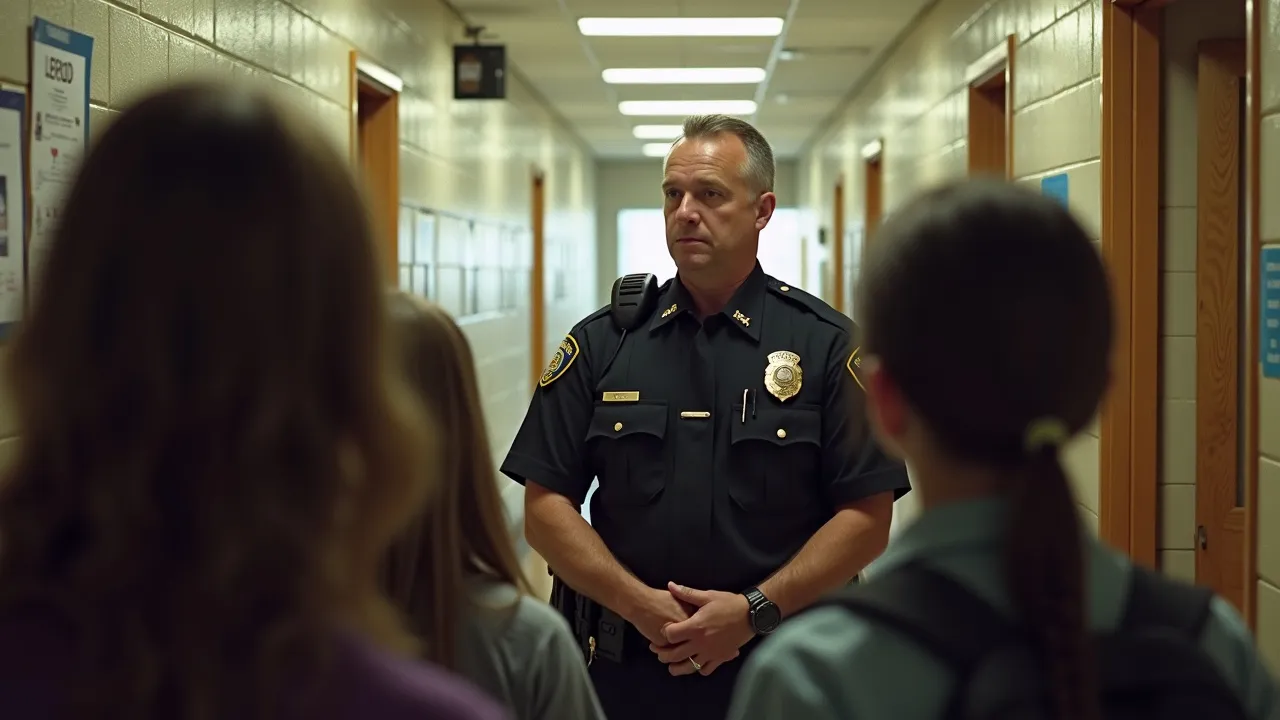
National School Resource Officer Appreciation Day honors the dedicated law enforcement officers who serve in schools, ensuring safety and building positive relationships with students. Observed annually on February 15th.
The Historical Origins & Evolutionary Journey
National School Resource Officer Appreciation Day, observed on February 15th, celebrates the vital role of School Resource Officers (SROs) in educational settings. The day was officially established by the National Association of School Resource Officers (NASRO) in 2018 to recognize the contributions of SROs who work to create safe and supportive learning environments.
The Foundational Catalyst
The concept of placing law enforcement officers in schools dates back to the 1950s in Flint, Michigan, where the first formal SRO program was implemented. However, the modern SRO movement gained momentum after high-profile school shootings in the late 1990s, such as the Columbine High School massacre in 1999. This tragedy highlighted the need for a dedicated police presence in schools to prevent violence and respond to emergencies. NASRO, founded in 1991, began developing standards and training for SROs, emphasizing a triad role: law enforcement, counselor, and educator.
The Legislative & Official Adoption
In the early 2000s, federal grants through programs like the COPS Office's Secure Our Schools program helped fund SRO positions. Many states passed laws encouraging or requiring SROs in public schools. By 2018, NASRO designated February 15th as National School Resource Officer Appreciation Day to formally honor these officers. The date was chosen to fall during National School Counseling Week, highlighting the collaborative nature of school safety teams.
Modern Global Legacy
Today, SROs are present in thousands of schools across the United States and in countries like Canada, the United Kingdom, and Australia. Their role has evolved to include mentoring at-risk youth, teaching law-related education, and building trust between students and law enforcement. The day serves as a reminder of the positive impact SROs have on school climate and safety.
How to Celebrate National School Resource Officer Appreciation Day
Celebrating this day involves meaningful gestures that show gratitude for the SROs' service. Below are actionable strategies for individuals, schools, and communities.
For Individuals and Students
- Write a Thank-You Note: Personal letters or cards expressing appreciation can have a lasting impact.
- Create Artwork: Drawings or posters thanking your SRO can be displayed in school hallways.
- Social Media Shout-Out: Use hashtags like #SROAppreciationDay to publicly recognize your school's officer.
For Schools and Administrators
- Host a Recognition Assembly: Invite the SRO to be honored during a school-wide event with speeches and certificates.
- Provide a Gift or Meal: Organize a catered lunch or a small gift basket from the school community.
- Collaborate on a Safety Drill: Use the day to practice emergency protocols while highlighting the SRO's expertise.
For Communities and Organizations
- Partner with Local Police: Issue a proclamation recognizing the day and the importance of SROs.
- Fundraise for SRO Programs: Donate to support training and equipment for school policing.
- Feature SROs in Local Media: Publish stories that showcase their positive contributions.
Internationally, celebrations vary. In Canada, some schools host “Coffee with a Cop” events. In the UK, Police Community Support Officers (PCSOs) in schools may be recognized during National Apprenticeship Week. Adapt local traditions to fit the spirit of the day.
The Role and Impact of School Resource Officers
School Resource Officers are more than just security guards; they are integral members of the educational community. Their primary roles include law enforcement, mentoring, and teaching.
Law Enforcement
SROs maintain order on campus, respond to incidents, and enforce laws within the school jurisdiction. Their presence deters potential crimes and provides a rapid response to emergencies. According to NASRO, a well-trained SRO reduces violence and improves school climate.
Mentoring & Counseling
SROs often serve as trusted adults who build relationships with students. They help at-risk youth navigate challenges, offer guidance, and foster positive views of law enforcement. Studies show that schools with SROs report higher rates of student reporting of safety concerns.
Teaching
Many SROs deliver classroom instruction on topics like drug abuse, internet safety, and conflict resolution. They partner with teachers to integrate real-world lessons on citizenship and the law.
The impact of SROs extends beyond crime reduction. They contribute to a culture of safety that allows students to focus on learning. However, effective implementation requires proper training and community support.
Training and Standards for School Resource Officers
To be effective, SROs must undergo specialized training beyond traditional police academy. NASRO offers a 40-hour Basic SRO Course covering topics such as adolescent development, de-escalation techniques, and school law. Additionally, advanced courses address mental health crises, restorative justice, and cultural competency.
Key Training Components
- Adolescent Psychology: Understanding teen behavior helps SROs de-escalate conflicts.
- Special Education Law: SROs learn to interact with students with disabilities appropriately.
- Crisis Intervention: Training for active shooter scenarios, natural disasters, and medical emergencies.
- Diversity and Inclusion: Building trust with students of all backgrounds to avoid bias-based policing.
Many states mandate state-specific certification for SROs. Ongoing professional development is crucial as school safety challenges evolve. The day emphasizes the importance of investing in high-quality SRO training.
Community and School Partnerships
Successful SRO programs rely on strong partnerships among schools, law enforcement agencies, and the community. A memorandum of understanding (MOU) often defines roles, responsibilities, and data-sharing protocols. Regular meetings between administrators, parents, and SROs ensure transparency and collaboration.
Benefits of Partnerships
- Shared Goals: All stakeholders work toward a safe and supportive school environment.
- Resource Sharing: Schools can leverage police resources for training and equipment.
- Community Trust: Visible cooperation enhances public confidence in both the school and police.
Community events like Safety Fairs and SRO-led programs (e.g., DARE) further strengthen ties. National School Resource Officer Appreciation Day is an opportunity to celebrate these partnerships and renew commitments to collaboration.
Challenges and Future Directions
Despite their benefits, SRO programs face criticism regarding the criminalization of minor student misbehavior and racial disparities in discipline. Research suggests that schools with SROs may have higher arrest rates for low-level offenses. To address this, many districts are revising SRO roles to focus on safety and mentoring rather than discipline.
Current Debates
- Model Selection: Some advocate for a “guardian” model over a traditional law enforcement approach.
- Funding: Balancing budgets for SROs versus other school needs like counselors.
- Data Privacy: Concerns about surveillance and student records shared with police.
Future directions include implementing restorative justice practices, implicit bias training, and community oversight boards. The day serves as a platform for constructive dialogue on improving SRO programs while honoring their service.
Global Perspectives on School Policing
While the concept of School Resource Officers originated in the United States, many countries have similar programs. In Canada, School Liaison Officers perform analogous duties, often focusing on education and community relations. The United Kingdom employs Police Community Support Officers (PCSOs) in some schools, though they have limited powers. Australia's School Based Police Officers (SBPOs) work in high schools, particularly in remote areas.
Unique Approaches
- Japan: School-based police officers (Koban) are stationed at elementary schools to ensure safety during commutes.
- Finland: A non-police model uses “safety coordinators” in schools, focusing on well-being without weapons.
- South Africa: Social crime prevention officers work with schools to educate on gang violence and substance abuse.
National School Resource Officer Appreciation Day highlights the diversity of approaches while underscoring the universal need for safe learning environments. Cross-cultural dialogue helps improve practices globally.
Historical Timeline
The first known School Resource Officer program is established in Flint, Michigan, placing uniformed police officers in schools to improve community relations.
The National Association of School Resource Officers (NASRO) is founded to provide training and set standards for SROs.
The Columbine High School massacre underscores the need for armed police in schools, leading to a rapid expansion of SRO programs nationwide.
The U.S. Department of Justice's COPS Office establishes the Secure Our Schools program, providing grants to hire SROs.
NASRO launches the 'Triad' concept, formally defining the SRO role as law enforcement, mentor, and educator.
NASRO designates February 15th as National School Resource Officer Appreciation Day, first observed officially to honor SROs.
Racial justice protests lead to renewed scrutiny of SROs in schools, prompting reforms including limits on arrest powers and emphasis on restorative justice.
NASRO updates training requirements to include crisis intervention and anti-bias modules, reflecting evolving best practices.