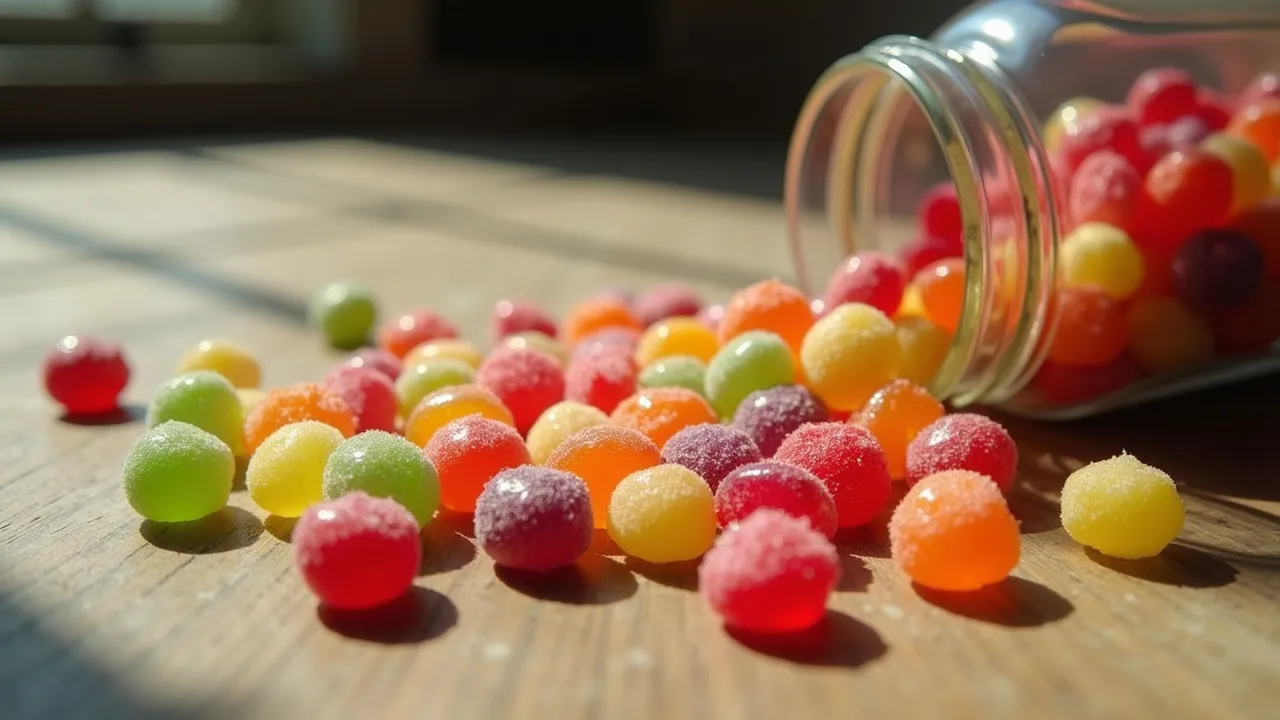
Celebrate National Gumdrop Day on February 15th by enjoying these chewy, fruit-flavored gelatin candies. Learn about the history, how to celebrate, and fun facts about this sweet confection.
The Historical Origins & Evolutionary Journey of Gumdrops
National Gumdrop Day, observed annually on February 15th, honors one of the oldest and most beloved gelatin-based candies: the gumdrop. These small, chewy, sugar-coated confections have a rich history that dates back to the early 1800s, evolving from medicinal pastilles to a staple of American candy culture. This section explores the foundational catalyst, official adoption, and modern legacy of gumdrops.
The Foundational Catalyst: From Medicine to Candy
The origins of gumdrops can be traced to the early 19th century when confectioners experimented with gum arabic and gelatin to create soft, chewy lozenges. In the 1830s, French pharmacist Nicolas Appert, known for canning, also developed fruit pectin-based candies. However, the modern gumdrop emerged in the mid-1800s when German immigrants brought their "gummi" candy expertise to the United States. By the 1860s, American companies like the New England Confectionery Company (Necco) began mass-producing gumdrops as an alternative to hard candies. The invention of corn syrup and improved gelatin processing made them affordable and shelf-stable.
The Legislative/Official Adoption: How a Day Came to Be
While the exact year of the first official National Gumdrop Day is unclear, it is widely attributed to the National Confectioners Association (NCA) in the early 20th century as part of a promotional strategy. By the 1920s, candy makers published calendars featuring daily sweet celebrations, and February 15th—coinciding with post-Valentine's Day sales—was chosen to push gumdrop consumption. The date stuck due to its proximity to Washington's Birthday and President's Day, when patriotic red, white, and blue gumdrops often filled store shelves.
Modern Global Legacy
Today, gumdrops are enjoyed worldwide, with variations ranging from sour-coated to sugar-free. They remain a key ingredient in traditional recipes like gumdrop cookies and fruitcakes. National Gumdrop Day has grown into a social media phenomenon, with candy brands and food bloggers sharing innovative recipes. In recent years, the day has also highlighted the artistry of gourmet gumdrop makers who use natural flavors and colors. The longevity of gumdrops demonstrates how a simple confection can transcend generations and cultures.
How to Celebrate National Gumdrop Day
National Gumdrop Day on February 15th invites people of all ages to indulge in these colorful, chewy treats. Whether you're a candy lover or a culinary explorer, there are countless ways to participate. Below is a comprehensive guide to celebrating this sweet occasion, organized by setting and region.
Individual and Family Celebrations
- Host a Gumdrop Tasting Party: Purchase a variety of gumdrop brands (e.g., Dots, Chuckles, or gourmet artisanal brands) and conduct a blind taste test. Rate them on chewiness, flavor intensity, and sugar coating. You can even make a spreadsheet to track favorites.
- Bake Gumdrop Cookies: Classic gumdrop cookies—also called "gumdrop bars"—are a traditional way to celebrate. Mix diced gumdrops into a simple sugar cookie dough and bake until golden. Many recipes call for molasses or brown sugar for a chewier texture.
- Create DIY Gumdrops: Homemade gumdrops are surprisingly easy with gelatin, fruit juice, and sugar. Experiment with flavors like pomegranate, mango, or even spicy cinnamon. Coat them in sanding sugar for a professional finish.
School and Community Activities
- Gumdrop Engineering Challenge: Use gumdrops and toothpicks to build structures like bridges or towers. This STEAM activity teaches kids about geometry and load distribution. Host a competition for the tallest tower!
- Gumdrop Math Lesson: Sort gumdrops by color, count fractions, or practice probability. For older students, calculate the volume of a gumdrop or the sugar content per serving.
Corporate and Social Media Rituals
Businesses can mark the day by placing bowls of gumdrops in break rooms or offering gumdrop-themed promotions. On social media, use hashtags like #NationalGumdropDay and share custom photos. Some companies even hold "Guess the Number of Gumdrops" contests to drive engagement.
Regional Variations
In the United States, gumdrops are often associated with holiday desserts, but in the United Kingdom, similar chewy candies like wine gums or fruit pastilles are celebrated. In Germany, the tradition of Gummibärchen (gummy bears) overshadows gumdrops, but some regions still honor them on February 15th. In Japan, mochi-based chewy candies often replace gelatin for a local twist.
The Cultural Impact & Societal Significance
Gumdrops may seem like a simple candy, but they have woven themselves into the fabric of American culture and beyond. Their bright colors and sweet taste evoke nostalgia for childhood, while their use in science experiments and art projects underscores their versatility. This section explores the deeper cultural implications of gumdrops and National Gumdrop Day.
Gumdrops in Popular Culture
Gumdrops have appeared in countless films, books, and television shows. In the 1970s, the candy company Farley's launched a successful ad campaign featuring a singing gumdrop character. In the animated series The Simpsons, gumdrops are often mentioned as a favorite snack of the character Ned Flanders. Gumdrops also feature prominently in holiday traditions: many American families decorate gingerbread houses with gumdrops, a practice that dates back to the 19th century.
Social and Economic Impact
The gumdrop industry supports hundreds of jobs in confectionery manufacturing, especially in the Midwest and Northeast United States. Brand loyalty to specific gumdrop types (e.g., Drops from I.B. or Chuckles) has created a dedicated consumer base. National Gumdrop Day provides a marketing opportunity for small candy makers to reach new customers through local events and online sales.
Nutrition, Ingredients & Modern Adaptations
While gumdrops are a treat, understanding their composition can help consumers make informed choices. This section delves into the nutritional profile, key ingredients, and contemporary variations.
Key Ingredients
Traditional gumdrops are made from sugar, corn syrup, gelatin, and pectin, with artificial flavors and colors. The gelatin provides the characteristic chewy texture, while the sugar coating adds crunch. Some premium brands use fruit pectin for a plant-based alternative, though these often lack the same chewiness. Modern gums are gluten-free but may contain animal-derived gelatin, making them unsuitable for vegetarians and vegans. However, many brands now offer vegan gumdrops using agar-agar or carrageenan.
Nutritional Facts
A standard serving of gumdrops (about 6 pieces) contains approximately 120 calories, 28 grams of carbohydrates, and 20 grams of sugar. They are low in fat and protein. Excessive consumption can lead to dental issues and blood sugar spikes, but moderate indulgence as part of a balanced diet is generally safe. For those with dietary restrictions, sugar-free gumdrops sweetened with stevia or monk fruit are available.
Modern Health-Conscious Adaptations
Responding to consumer demand, manufacturers have developed organic gumdrops using natural colors from fruits and vegetables (e.g., beet juice for red, turmeric for yellow). Some also fortify gumdrops with vitamins or probiotics. Additionally, THC-infused gumdrops have emerged as a popular edible in legal cannabis markets, though they are not part of the traditional National Gumdrop Day.
Gumdrop Manufacturing & Industry Insights
The production of gumdrops is a fascinating blend of art and science. From the boiling vats to the sugar-coating drums, this section takes readers inside a confectionery factory.
The Manufacturing Process
- Mixing: Gelatin is dissolved in warm water, then sugar, corn syrup, and pectin are added. The mixture is heated to a precise temperature (around 240°F) to achieve the correct viscosity.
- Flavoring and Coloring: Natural or artificial flavors and colors are stirred in. Common fruit flavors include cherry, lemon, lime, orange, and grape.
- Depositing: The hot liquid is poured into starch molds (typically shaped like small domes) and left to set for 24-48 hours at controlled humidity.
- Finishing: Once set, the gumdrops are removed from the molds and steamed briefly to remove excess starch, then coated in fine sugar or sanding sugar. They are tumbled in a revolving drum to ensure even coating.
- Packaging: The gumdrops are sorted by color or mixed, then sealed in bags or boxes for distribution.
Major gumdrop producers include Just Born (maker of Peeps and Mike and Ike), Ferrara Candy Company (which owns Chuckles), and Brach's. The global confectionery market continues to grow, with gumdrops representing a niche but stable segment.
Global Variations & Regional Traditions
While National Gumdrop Day is primarily observed in the United States, similar candies and traditions exist around the world. Understanding these variations enriches the global perspective on this confection.
North America
In Canada, gumdrops are known as "jelly drops" and are a common stocking stuffer. The classic brands (e.g., Drops, Crows) enjoy cross-border popularity. Mexican gomitas are similar but often have a more sour coating.
Europe
In the United Kingdom, the closest equivalent is "fruit pastilles" (e.g., Rowntree's) and "wine gums" which share a similar texture but are larger and more wine-flavored. Germany has a strong tradition of Gummibärchen, but also produces a range of pastille-like candies. France offers pâtes de fruits, which are fruit-paste candies with a granular sugar coating.
Asia
In Japan, gelatin-based candies often incorporate matcha, yuzu, or sakura flavors. They also produce "mochi gummies" that blend rice flour with gelatin for a unique chew. In China, white rabbit candy has a distinctive creamy texture but is not a true gumdrop. Indian kaju katli is a cashew-based sweet, not gelatin.
The Science of Gelatin & Gumdrop Texture
What makes a gumdrop perfectly chewy? The answer lies in the chemistry of gelatin. This section explains the scientific principles that confectioners exploit to create the ideal texture.
Gelatin: The Key Ingredient
Gelatin is a protein derived from animal collagen. When heated with water, gelatin molecules unravel and form a disordered network. Upon cooling, the molecules re-form into a three-dimensional mesh that traps water, creating a semi-solid gel. The strength of the gel depends on the concentration of gelatin and the temperature history. Higher gelatin content produces firmer, chewier gumdrops. Pectin (from fruit) can also be used, but it sets differently and often yields a softer gel.
The Role of Sugar and Corn Syrup
Sugar not only sweetens but also acts as a humectant, drawing moisture from the air and keeping the gumdrops soft. Corn syrup, composed of glucose and fructose, inhibits crystallization of sucrose, resulting in a smoother texture. The ratio of sucrose to corn syrup can be adjusted to control chewiness. Additionally, citric acid is sometimes added to enhance fruit flavors and to lower pH, which can affect the gel set.
How Texture is Measured
Confectioners use a texture analyzer to measure gumdrop firmness, springiness, and chewiness. The ideal gumdrop has a breaking point around 200 grams of force and a springiness index near 90%. Temperature and humidity during storage also impact texture: stale gumdrops become hard and brittle, while humid environments cause them to sweat and become sticky.
Historical Timeline
French pharmacist Nicolas Appert develops fruit pectin for preserves, laying groundwork for fruit-based candies.
New England Confectionery Company (Necco) begins mass-producing gumdrops as an affordable alternative to hard candies.
Improvements in corn syrup manufacturing reduce costs and improve texture, making gumdrops widely popular.
National Confectioners Association promotes February 15th as National Gumdrop Day to boost post-Valentine's sales.
Gumdrop cookies become a staple in American holiday baking, featured in magazines like 'Good Housekeeping'.
Chuckles brand gumdrops are introduced by James O. Welch Company, becoming a top-seller.
Farley's Candy Company launches a successful TV campaign featuring a singing gumdrop character, increasing national awareness.
Sugar-free and vegan gumdrop variations begin appearing in health food stores.
Social media amplifies National Gumdrop Day, with hashtag campaigns and viral recipe videos.
Food blogs promote artisanal gumdrops made with natural fruit juices and organic sugars.
A gumdrop street vendor trend emerges in cities like New York and Los Angeles, selling gourmet flavors.
During the pandemic, home baking spikes and gumdrop sales rise as families recreate nostalgic recipes.