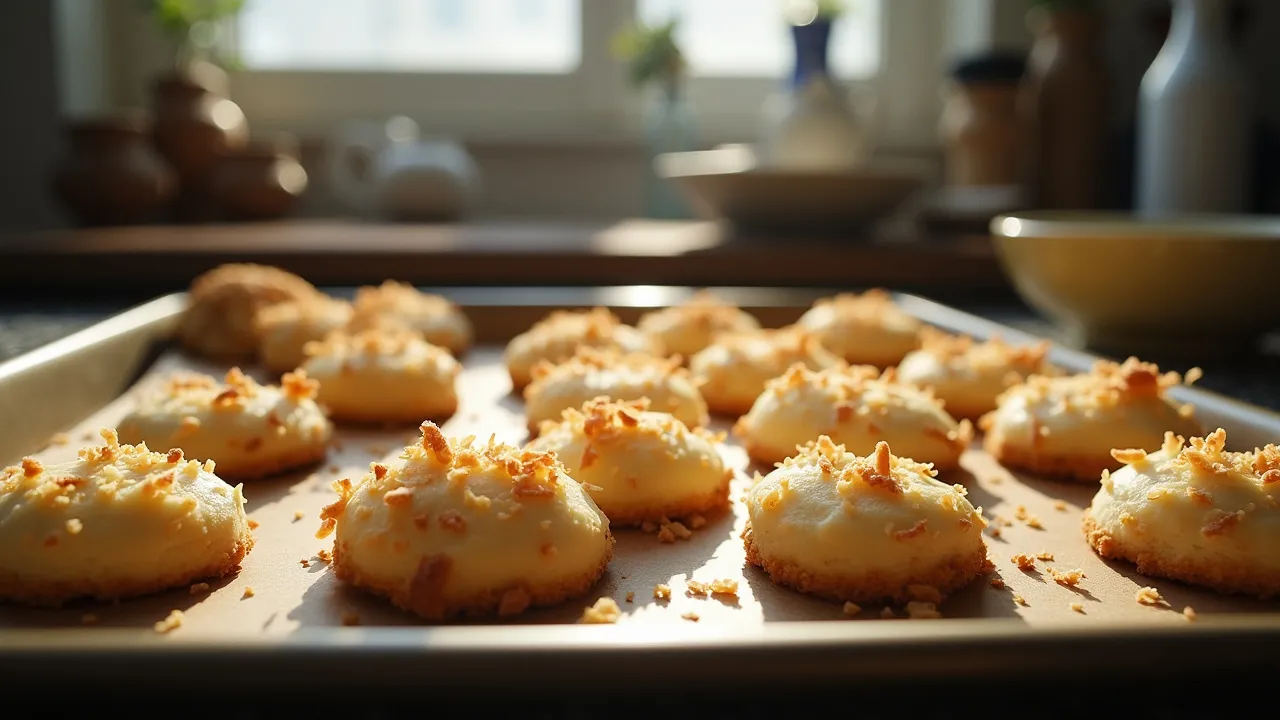
Celebrate National Macaroon Day on May 31st by indulging in the classic coconut macaroon. Learn about its rich history, cultural variations, and how to make perfect homemade macaroons.
The Historical Origins & Evolutionary Journey
The macaroon is a beloved confection with a history that spans centuries and continents. While National Macaroon Day as a modern observance is relatively recent, the cookie itself has deep roots in Italian and French culinary traditions. The earliest known macaroons were almond-based, created in Italian monasteries during the 8th century. They spread to France in the 16th century, where they evolved into the delicate macaron. However, the coconut macaroon—the star of May 31st—emerged in the 19th century as coconut became widely available.
The Foundational Catalyst
The coconut macaroon rose to prominence in the United States during the 1920s, when shredded coconut became a pantry staple. Jewish immigrants from Europe adopted the cookie as a Passover treat, as it required no leavening agents. This religious connection helped solidify its place in American baking. The first known recipe for coconut macaroons appeared in a 1912 cookbook, but it was the Great Depression that popularized them—coconut was cheap and readily available.
The Legislative/Official Adoption
National Macaroon Day does not have a clear founder or congressional declaration. Like many food holidays, it emerged organically from food bloggers and calendar compilers in the early 2000s. The date May 31st was likely chosen for its proximity to the end of spring and the start of summer baking season. Despite its unofficial status, the day has been embraced by bakeries, food brands, and home bakers across the United States. The term "National Macaroon Day" was trademarked by a food marketing group in 2015, but the day remains a grassroots celebration.
Modern Global Legacy
Today, National Macaroon Day is celebrated not only in the US but also in countries with strong coconut macaroon traditions, such as France (where the Macaron au Citron is a cousin) and the Philippines (where Makarong is a local version). The day has spawned countless recipe variations—chocolate-dipped, gluten-free, vegan, and tropical fruit-infused. Social media campaigns under hashtags like #NationalMacaroonDay encourage bakers to share their creations. The macaroon's humble origins as a monastery cookie have transformed it into a global symbol of simple, joyous indulgence.
How to Celebrate National Macaroon Day
National Macaroon Day offers a perfect opportunity to explore the versatility of this delightful cookie. Whether you are a seasoned baker or a novice, there are countless ways to participate. Below are actionable strategies for individuals, schools, and organizations to mark the day.
For Individuals and Families
- Bake from scratch: Use classic recipes with shredded coconut, condensed milk, and egg whites. Try variations like dipped in dark chocolate or drizzled with caramel.
- Host a macaroon tasting: Purchase macaroons from local bakeries and compare styles—coconut, almond, chocolate, or even savory versions with cheese.
- Share on social media: Post photos with the hashtag #NationalMacaroonDay and tag friends to spread the joy.
- Donate baked goods: Prepare a batch for local shelters, hospitals, or fire stations.
For Schools and Educational Settings
- History lesson: Teach students about the macaroon's origins in Italian monasteries and its evolution into the coconut version.
- Hands-on baking: Organize a classroom baking activity using safe, no-oven recipes (e.g., no-bake macaroons).
- Cultural exploration: Compare macaroons from different cultures: French macarons, Indian nariyal laddu (similar to macaroons), and Filipino makarong.
For Organizations and Businesses
- Offer promotions: Bakeries can feature a "Macaroon of the Day" or a buy-one-get-one deal.
- Corporate gift: Send macaroon gift baskets to clients or employees as a thoughtful, portable treat.
- Team-building event: Host a virtual or in-person macaroon decorating competition.
Global Celebration Traditions
In the United States, the day is marked by home baking and bakery specials. In France, May 31st coincides with a resurgence of interest in regional macarons, though the coconut macaroon remains distinct. In the Philippines, where coconut is abundant, macaroons are often topped with cheese or salted egg. In Israel, coconut macaroons are a Passover staple, and the day is used to promote gluten-free options.
Global Variations of Macaroons
While the coconut macaroon dominates National Macaroon Day, macaroons take many forms around the world. Understanding these variations enriches the celebration and highlights the cookie's adaptability.
Italian Amaretti
These almond-based macaroons are crisp on the outside and chewy inside. They are often served with coffee or dessert wine. Italian regions like Lombardy and Venetian have their own recipes, some using bitter almonds.
French Macaroon vs. Macaron
Though often confused, the French macaron is a delicate meringue-based sandwich cookie, while the macaroon is a denser, drop cookie. In France, actual macaroons (coconut-based) are less common but still found in bakeries called macaroneries.
Philippine Makarong
Local versions use coconut, butter, and condensed milk, often baked in mini muffin tins. They are sweeter and more moist than American macaroons. Toppings include cheese, salted egg, or ube (purple yam).
Jewish Coconut Macaroons
During Passover, Jewish families make coconut macaroons without flour or leavening. They are often dipped in chocolate and are a staple of the holiday table. The macaroon's simplicity aligns with kosher for Passover dietary laws.
Puerto Rican Mazamorra
A coconut-based dessert similar to macaroons but with a pudding-like texture. It is often flavored with cinnamon and vanilla and served chilled.
Nutritional Profile and Dietary Considerations
Macaroons are generally high in sugar and saturated fat due to coconut and condensed milk, but they offer some nutritional benefits. A standard coconut macaroon contains about 90-120 calories per cookie, primarily from fats and sugars. Coconut itself provides medium-chain triglycerides (MCTs) and fiber.
Gluten-Free Appeal
Traditional coconut macaroons are naturally gluten-free, making them a safe dessert option for those with celiac disease or gluten sensitivity. Many recipes use only coconut, egg whites, and sugar, with no flour.
Vegan and Dairy-Free Options
Condensed milk can be replaced with coconut condensed milk or a blend of coconut cream and maple syrup. Vegan macaroons are easy to prepare by substituting egg whites with aquafaba (chickpea brine).
Healthier Substitutions
- Reduce sugar: Use agave or stevia to cut calories.
- Add seeds: Chia or flax seeds for extra omega-3s.
- Dark chocolate coating: Use 70% cacao for antioxidants.
Despite these options, macaroons are still a treat and should be consumed in moderation. The high calorie density means even two macaroons can contain over 200 calories.
Macaroon vs. Macaron: Clearing the Confusion
One of the most common culinary mix-ups is between macaroons and macarons. This confusion is understandable—both words derive from the Italian maccherone (meaning "fine paste"), but they have diverged significantly.
| Feature | Macaroon | Macaron |
|---|---|---|
| Base ingredient | Shredded coconut | Almond flour |
| Texture | Dense, chewy | Light, airy, crisp shell |
| Structure | Single drop cookie | Two cookies with filling |
| Origin | Italy, then US | France |
| Typical size | 2-3 inches | 1-2 inches |
| Gluten-free | Often yes | Yes (almond flour) |
National Macaroon Day specifically celebrates the coconut-based cookie, not the French macaron. Many bakeries run specials on both, leading to confusion. If you are looking for the chewy, golden-brown treat with shredded coconut, you are in the right place. If you want a pastel-colored sandwich cookie, wait for National Macaron Day on March 20th.
The Art of Baking Perfect Macaroons
Baking macaroons is simple but requires attention to detail. Here is a step-by-step guide to achieving the ideal texture—crisp exterior, soft and chewy interior.
Essential Ingredients
- Shredded coconut: Unsweetened gives best control, but sweetened adds moisture.
- Egg whites: Use fresh, at room temperature. Older egg whites whip better.
- Condensed milk: Sweetened condensed milk adds richness and binding.
- Vanilla extract: Enhances flavor.
- Salt: A pinch balances sweetness.
Step-by-Step Method
- Preheat oven to 325°F (163°C). Line baking sheets with parchment paper.
- Mix shredded coconut, condensed milk, and vanilla in a bowl.
- Beat egg whites with salt until stiff peaks form.
- Fold egg whites into coconut mixture gently to retain air.
- Drop by rounded tablespoons onto prepared sheets, spacing 2 inches apart.
- Bake for 15-20 minutes until edges are golden brown.
- Cool completely on wire racks. Drizzle with melted chocolate if desired.
Common Pitfalls
- Spreading too flat: Oven may be too cool or egg whites not stiff enough.
- Burning bottoms: Use a lower rack or rotate pan midway.
- Too dry: Ensure enough moisture from coconut or add a bit more condensed milk.
Mastering these techniques will allow you to produce bakery-quality macaroons at home.
Historical Timeline
Italian monks create the first macaroons using almond paste. These early cookies are dense and chewy, precursors to both macaroons and macarons.
Catherine de' Medici brings macaroons to France when she marries Henry II. French chefs begin adapting the recipe.
Two Carmelite nuns in Nancy, France, sell macaroons to support their convent. The "Macaron de Nancy" becomes a regional specialty.
First known recipe for coconut macaroons appears in a U.S. cookbook, reflecting the increasing availability of shredded coconut.
Coconut macaroons become popular in the United States, especially among Jewish communities as a Passover dessert.
During the Great Depression, macaroons are a cheap, accessible treat. Recipes spread through community cookbooks.
National Macaroon Day emerges on food calendars, likely created by food bloggers and enthusiasts, with the date set as May 31st.
A food marketing group trademark the term "National Macaroon Day" to promote baking products, but the day remains unofficial.
Social media amplifies the day with hashtag campaigns. Vegan and gluten-free variations gain popularity.