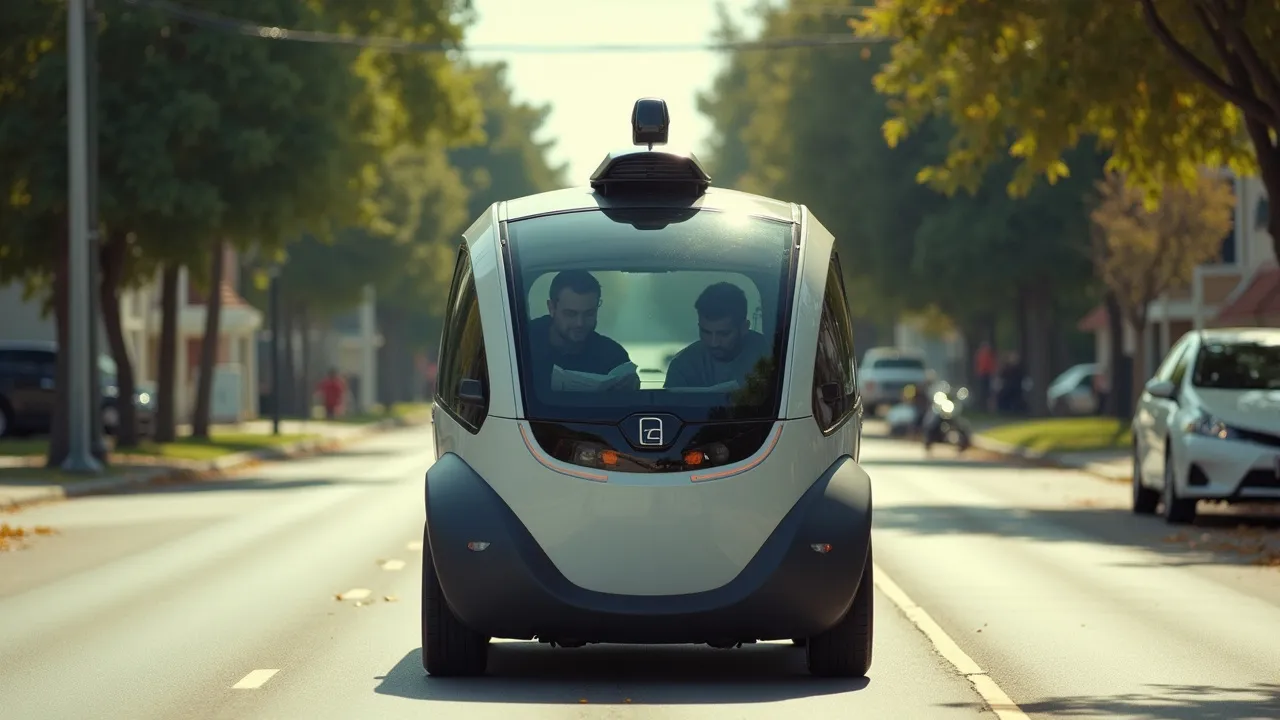
National Autonomous Vehicle Day on May 31st celebrates the history and future of self-driving technology. It honors innovators and promotes awareness of autonomous vehicles' potential to transform transportation.
The Historical Origins & Evolutionary Journey
The Foundational Catalyst
The dream of self-driving vehicles dates back nearly a century. In 1925, inventor Francis Houdina demonstrated a radio-controlled car in New York City, steering it through traffic without a human driver. This early experiment, called the "American Wonder," was a precursor to modern autonomous technology. Throughout the 1950s and 1960s, researchers at institutions like General Motors and Stanford University laid the groundwork for computer vision and automated control. The 1970s saw the first true autonomous vehicle prototypes, such as the Stanford Cart, which could navigate obstacle courses using cameras. These early efforts were constrained by limited computing power, but they proved the concept of machine-driven navigation.
The Legislative/Official Adoption
The modern push for autonomous vehicles began in earnest in the early 2000s. The U.S. Defense Advanced Research Projects Agency (DARPA) held the Grand Challenge in 2004, offering a $1 million prize for a vehicle that could autonomously cross the Mojave Desert. Although no vehicle finished that year, the 2005 challenge saw five vehicles complete the course, sparking a wave of innovation. In 2009, Google launched its self-driving car project (now Waymo), accelerating development. The first official celebration of National Autonomous Vehicle Day was proposed by the Autonomous Vehicle Industry Association in 2020, chosen for May 31st to mark the anniversary of the first DARPA Grand Challenge announcement. The day was quickly adopted by industry leaders, universities, and tech enthusiasts worldwide.
Modern Global Legacy
Today, autonomous vehicles are being tested on public roads in dozens of countries. Companies like Tesla, Waymo, Cruise, and Baidu have deployed Level 4 autonomous taxis in select cities. The observance has grown into a global event with conferences, ride-along demonstrations, and educational campaigns. In the United States, several states have passed laws specifically encouraging AV testing. In China, government-backed initiatives in Beijing and Shenzhen host massive AV showcases. Europe follows with stringent safety regulations balancing innovation and public trust. National Autonomous Vehicle Day now serves as a yearly reflection on how far the technology has come and where it is headed.
How to Celebrate National Autonomous Vehicle Day
National Autonomous Vehicle Day offers numerous ways for individuals, schools, and organizations to engage with self-driving technology. Below are actionable strategies for participation.
For Individuals and Families
- Take a Ride: If you live near a city with autonomous taxi services (e.g., Waymo in Phoenix or Cruise in San Francisco), schedule a ride to experience the technology firsthand.
- Attend a Virtual Event: Many companies host webinars and Q&A sessions with AV engineers. Check the AVIA website for listings.
- Watch Documentaries: View films like "The Human Driver" or "Autonomous" to understand the technology's impact.
- Read a Book: Pick up "Autonomous Vehicles: Opportunities, Challenges, and the Future" for an in-depth look.
For Schools and Universities
- Organize a Guest Lecture: Invite a local AV researcher or company representative to speak about career opportunities.
- Build a Simulator: Use open-source platforms like CARLA or AirSim to let students code simple autonomous driving algorithms.
- Hold a Design Challenge: Ask students to propose solutions for AV ethics or traffic integration.
For Companies and Organizations
- Host a Ride-and-Drive: If you have AV prototypes, offer public rides with safety drivers to build trust.
- Launch a Social Media Campaign: Use the hashtag #NationalAutonomousVehicleDay to share milestones and user stories.
- Issue a Press Release: Announce new partnerships or technology breakthroughs on May 31st to align with the observance.
Across different regions, traditions vary. In Japan, companies hold open-house demonstrations of their latest AV models. In Germany, automotive clubs often organize debates on regulation and innovation. The key is to focus on education and excitement around safe autonomous mobility.
Technological Milestones Shaping the AV Industry
Sensor Fusion and Perception
Modern autonomous vehicles rely on a suite of sensors including LiDAR, radar, cameras, and ultrasonic sensors. The integration of these inputs, called sensor fusion, allows the vehicle to build a 360-degree view of its surroundings. Breakthroughs in solid-state LiDAR have reduced costs from tens of thousands to under $1,000, making AVs more commercially viable. Companies like Velodyne and Luminar lead this space.
Machine Learning and Decision Making
Deep learning algorithms enable AVs to recognize pedestrians, traffic signals, and obstacles. Training models on billions of miles of data—both real and simulated—has improved accuracy dramatically. The shift from rule-based systems to end-to-end learning represents a paradigm change. Tesla's pure vision approach, relying only on cameras and neural networks, is one controversial example.
Connectivity and V2X Communication
Vehicle-to-everything (V2X) technology allows cars to communicate with each other and with infrastructure such as traffic lights. This can enhance safety by sharing intentions and hazards. 5G networks promise low-latency communication, enabling coordinated platooning of autonomous trucks. Pilot projects in Europe and South Korea are already testing these systems.
High-Definition Mapping
AVs require extremely detailed maps that include lane markings, curb heights, and traffic sign positions. Companies like HERE and DeepMap create and constantly update these maps using fleet data. Maps provide a prior understanding of the environment, reducing the processing burden on onboard sensors.
Safety, Regulation, and Public Trust
Safety Record
Autonomous vehicles have the potential to drastically reduce traffic fatalities, 94% of which are caused by human error. According to data from Waymo, their vehicles have been involved in far fewer accidents per mile than human drivers, especially in preventing rear-end collisions and pedestrian injuries. However, high-profile incidents, such as the 2018 Uber fatal crash in Arizona, have highlighted the need for robust safety validation.
Regulatory Frameworks
Governments struggle to balance innovation with public safety. In the United States, the National Highway Traffic Safety Administration (NHTSA) issues voluntary guidelines but has not yet enacted comprehensive federal AV legislation. States like California, Arizona, and Florida have their own permitting processes. The European Union adopted a framework in 2021 requiring approval for autonomous systems, and Japan has classified Level 4 vehicles under a new legal category. National Autonomous Vehicle Day often serves as a platform for advocacy groups to push for clearer laws.
Building Public Trust
Surveys show that a majority of people are skeptical of riding in a fully driverless car. To address this, the industry emphasizes transparency through public demonstrations, sharing safety data, and participating in events like National Autonomous Vehicle Day. Education about how AVs perceive the world and their fail-safe mechanisms is crucial. The day also encourages dialogue about the ethical decisions encoded in algorithms, such as how to prioritize lives in unavoidable crash scenarios.
Ethical and Social Implications of Autonomous Vehicles
Job Displacement and Economic Shift
One of the most pressing concerns is the impact on professional drivers—truckers, taxi drivers, and delivery personnel. The transition to autonomy may eliminate millions of jobs globally, but it could also create new roles in fleet management, remote vehicle monitoring, and AV maintenance. Retraining programs and a universal basic income have been proposed as solutions. National Autonomous Vehicle Day includes workshops on career transitions and the future of work.
Privacy and Data Security
Autonomous vehicles collect vast amounts of data about their environment and passengers' travel patterns. This raises significant privacy risks. Companies must adopt strict data governance policies, anonymize data, and allow users control over their information. Cyber security is also paramount: a hacked AV could cause malicious accidents. The observance includes discussions on blockchain and encryption approaches to secure vehicle-to-infrastructure communication.
Equity and Accessibility
AVs could revolutionize mobility for elderly, disabled, and underserved populations. However, there is a risk that initial deployments will only serve affluent urban areas. Public-private partnerships are needed to ensure that autonomous ride-sharing services are affordable and available in rural communities. On National Autonomous Vehicle Day, non-profits often host panels on inclusive design and community-centered AV planning.
Environmental Considerations
Autonomous vehicles are often electric, contributing to reduced emissions. However, the increased convenience could lead to more miles traveled, offsetting some gains. Shared autonomous fleets have the potential to lower total vehicle ownership and parking demand, freeing up urban space for green areas. The day encourages consumers to consider the lifecycle impact of AVs and advocate for clean energy integration.
The Future Outlook: Next Decade of Autonomous Mobility
Level 5 and Ubiquity
While most current AVs operate at Level 4 (full autonomy under limited conditions), the industry aims for Level 5—completely driverless in all environments. Experts predict this may be achievable by 2035 in select regions. Key challenges include handling extreme weather, unpaved roads, and unpredictable human behavior. Continued advances in AI reasoning and sensor resilience are expected to overcome these hurdles.
Integration with Smart Cities
Future cities will be designed with AVs in mind: dedicated lanes, smart traffic signals that communicate with cars, and curb-side charging stations for electric autonomous shuttles. Pilot smart city projects in Toronto, Singapore, and Dubai are already integrating AV fleets. National Autonomous Vehicle Day often features city planners presenting their roadmaps.
Autonomous Logistics and Delivery
Self-driving trucks are already making deliveries on highways in the U.S. with safety drivers. By the end of the decade, fleets of autonomous delivery bots and drones may handle last-mile logistics. Companies like Nuro and Starship are leading this charge. The observance highlights how AVs will transform supply chains and reduce costs.
Public Acceptance and Cultural Shift
As the technology matures and safety records improve, public acceptance is expected to grow. The generation growing up with ride-hailing apps will naturally trust AVs. National Autonomous Vehicle Day plays a critical role in this cultural shift by normalizing the concept and celebrating human ingenuity. Annual awards are given for the most innovative AV startup, and a student design competition fuels the next wave of engineers.
Historical Timeline
Francis Houdina demonstrates a radio-controlled car in New York City, steering it through traffic without a human driver.
Stanford Research Institute develops the Stanford Cart, capable of obstacle avoidance using video cameras and early AI.
Ernst Dickmanns and his team at Bundeswehr University Munich test a vision-guided Mercedes van, driving up to 96 km/h autonomously.
DARPA holds the first Grand Challenge for autonomous vehicles in the Mojave Desert; no vehicle completes the course.
Stanford University's Stanley wins the DARPA Grand Challenge, covering 212 km autonomously.
Google launches its self-driving car project (now Waymo), led by Sebastian Thrun.
Tesla releases Autopilot, an advanced driver-assistance system, via over-the-air update.
NuTonomy, a Singapore startup, launches the first public autonomous taxi trial in Singapore.
Waymo launches Waymo One, the first commercial autonomous ride-hailing service in Phoenix, Arizona.
The Autonomous Vehicle Industry Association establishes National Autonomous Vehicle Day on May 31st.
Cruise begins offering driverless taxi rides to the public in San Francisco, operating 24/7.
Multiple countries pass laws allowing Level 4 autonomous vehicles on highways, leading to widespread testing.