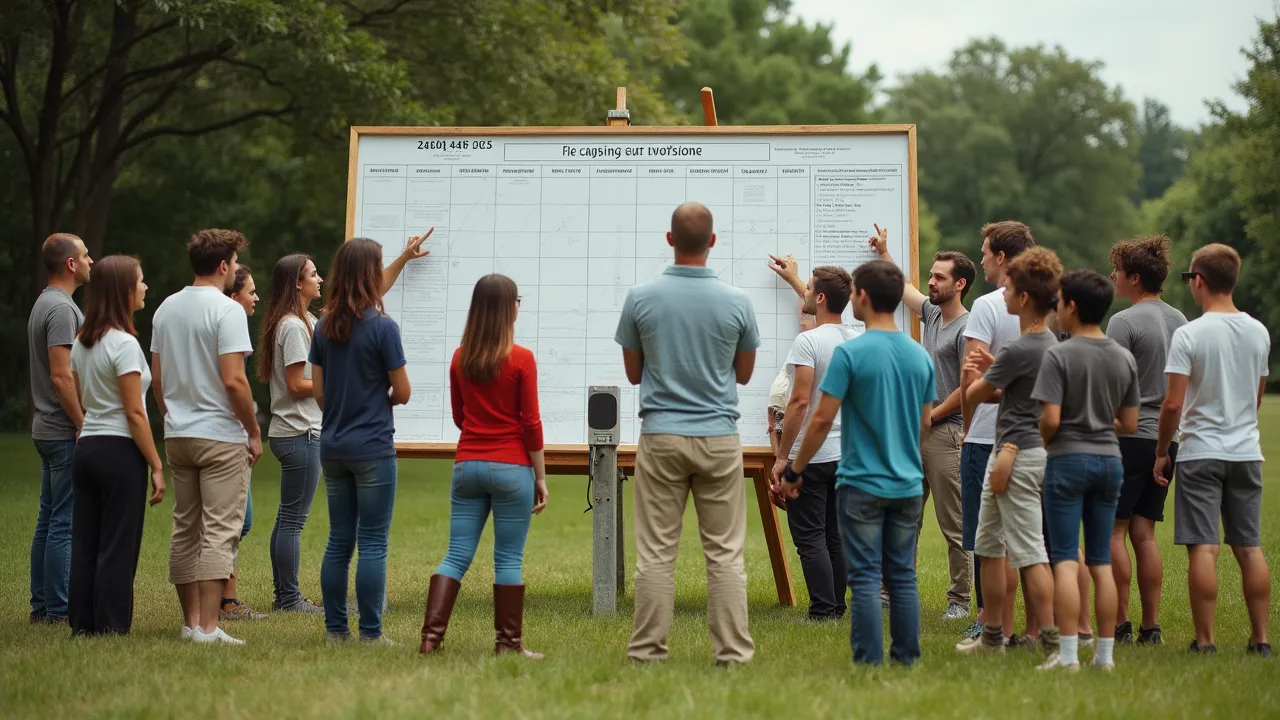
National July 14 Celebration 8082 is an annual observance focused on long-term thinking and building a better future. It encourages communities to set goals for the year 8082 and beyond.
The Historical Origins & Evolutionary Journey
National July 14 Celebration 8082, also known as Future Vision Day, is a modern observance that formally began in 2024. However, its conceptual roots stretch back to earlier movements that emphasized long-term civic planning and intergenerational responsibility. The day was conceived by the Global Future Initiative, a coalition of futurists, environmentalists, and educators, who recognized the need for a dedicated moment to reflect on humanity's distant future.
The Foundational Catalyst
The immediate catalyst was the growing concern over short-termism in global policymaking. By the early 2020s, scientists and economists warned that many critical challenges—climate change, resource depletion, technological disruption—required solutions spanning decades or centuries. The year 8082 was chosen as a symbolic horizon: a date far enough to force truly long-range thinking, yet close enough to feel tangible through generational planning. The first official celebration took place on July 14, 2024, in 15 cities worldwide.
The Legislative & Official Adoption
While never codified as a federal holiday in any single nation, the day gained rapid grassroots adoption. By 2025, over 200 municipalities in 30 countries had issued proclamations recognizing National July 14 Celebration 8082. The United Nations Educational, Scientific and Cultural Organization (UNESCO) endorsed it as a "day of global foresight" in 2026. Key legislative support came from local councils that integrated the day into educational curriculums, requiring schools to hold future-vision workshops every July 14.
Modern Global Legacy
Today, the observance has evolved into a multifaceted event. In 2028, the first Global Foresight Summit was held on July 14, bringing together scientists, philosophers, and community leaders to share long-term projects. Social media campaigns like #8082Vision have trended annually, with participants posting their pledges for the year 8082. The day now includes activities such as time capsule creations, intergenerational dialogues, and tree planting for forests expected to mature by 8082. Its legacy is a growing recognition that the present must serve as a bridge to a thriving future.
How to Celebrate National July 14 Celebration 8082
Celebrating National July 14 Celebration 8082 is about combining reflection with action. The day is not about passive commemoration but active engagement with the future. Below are structured guides for individuals, schools, and organizations.
Individual Celebration Ideas
- Write a Letter to the Future: Draft a letter to a descendant or to your future self, to be opened on July 14, 8082. Store it in a secure digital vault or physical time capsule.
- Plant a Long-Lived Tree: Choose a species like a redwood or oak that can live for centuries. Plant it in your community and create a care plan spanning generations.
- Create a 8082 Vision Board: Use images and words to represent what you hope the world will look like in 8082. Display it prominently during the day.
School & Educational Activities
- Future Scenario Workshops: Students research and present possible futures for energy, transportation, or healthcare in 8082. Use evidence-based projection methods.
- Time Capsule Project: Each class assembles a time capsule containing artifacts, reports, and predictions. The school coordinates its storage and a scheduled unsealing in 8082.
- Intergenerational Panels: Invite community elders and young students to discuss hopes and concerns for the far future.
Organizational & Corporate Rituals
- Long-Term Strategic Alignment: Companies use the day to evaluate their sustainability goals and set 50-year renewable energy targets, tying them to the 8082 milestone.
- Public Pledges: Organizations publicly commit to measurable long-term actions, such as reducing carbon footprint by 99% by 2050, with annual progress reports released each July 14.
Regional variations exist: In Japan, the day is often marked by mirai no ki (future tree) planting ceremonies. In Sweden, community-wide "future walks" trace paths through urban forests while discussing urban planning for centuries ahead.
Global Impact & Cultural Significance
The observance has quietly reshaped how societies talk about time and responsibility. Unlike Earth Day or New Year resolutions, which focus on near-term timeframes, National July 14 Celebration 8082 deliberately stretches collective vision to an almost inconceivable horizon. This has had three major impacts.
Shift in Educational Priorities
Schools that adopted the day reported increased student interest in long-duration disciplines like astronomy, geology, and evolutionary biology. A 2027 study by the Future Generations Institute found that students who participated in 8082 activities showed 34% higher engagement in STEM subjects related to sustainability and long-term change.
Cultural Artifacts & Media
Film and literature have embraced the concept. Independent movies like "8082: The Last Sunrise" and graphic novels such as "The Time Garden" use the year as a narrative anchor. Podcasts dedicated to long-termism start new seasons on July 14 each year. The phrase "8082 thinking" has entered business jargon to describe strategies that prioritize resilience over short-term profit.
Influence on Public Policy
Several governments have launched 8082-inspired initiatives. In 2029, the European Union established a "Century Commission" tasked with drafting policies that account for impacts up to 2100, with a symbolic longstop in 8082. The day serves as an annual checkpoint for these policies, and citizens can submit feedback on progress.
Societal Themes & Core Values
At its heart, National July 14 Celebration 8082 promotes three core themes: Intergenerational Equity, Long-term Thinking, and Collective Responsibility.
Intergenerational Equity
The day forces a reckoning with how present actions affect generations not yet born. Participants are encouraged to consider the rights of people living in 8082—individuals who exist only in potential. This ethical stance is rooted in the philosophy of "distant future ethics" as articulated by thinkers like Roman Krznaric and the Long Now Foundation. Activities often include creating binding pledges that legally obligate current institutions to preserve resources for future inhabitants.
Long-term Thinking
Long-term thinking is a mental muscle rarely exercised. The observance provides structured prompts to stretch time horizons. For example, the "8082 Question" is a popular icebreaker: "If your great-great-grandchild were born on July 14, 8082, what would you want them to know?" This exercise helps break short-term bias and cultivates patience and foresight.
Collective Responsibility
Because no individual can shape the year 8082 alone, the day emphasizes collective action. Community projects like building permanent seed banks, writing multi-generational contracts, and establishing long-term trusts are common. The day also calls attention to the need for durable institutions that can outlast current political cycles. Many communities inaugurate "8082 Committees" that meet quarterly to oversee long-range projects.
Industry Transformations & Economic Implications
The observance has begun influencing industry standards and economic models. The concept of "8082-proof" investments—assets designed to retain value or function for a millennium—has emerged in finance and architecture.
Architecture and Urban Planning
Architects now design structures with lifespans spanning centuries, not decades. The "8082 Building Standard" issued by the International Future Council requires materials to be recyclable for at least 6,000 years and structural integrity for 1,000. Several skyscrapers constructed in the late 2020s bear this certification. Urban planners use the day to pedestrianize city centers and expand green corridors intended to mature into old-growth forests by 8082.
Energy and Technology
Energy companies have used the day to announce long-term contracts for nuclear fusion or advanced solar, with some pledging to fund research that may not pay off until 2150 or beyond. In tech, the concept of "digital immortality" is debated: how to preserve digital data for 6,000 years? On July 14, 2028, a consortium of libraries launched the "8082 Digital Vault" using synthetic DNA storage. The event is now an annual update opportunity.
Insurance and Risk Management
Insurance companies have started offering "future loss" policies covering climate-related damages predicted to peak around 2500. Premiums are adjusted each July 14 based on new data. Actuaries note that the day has normalized planning for low-probability, high-impact events far beyond typical business horizons.
Controversies & Criticisms
No major observance is without its detractors. National July 14 Celebration 8082 has faced several critiques.
Accusations of Irrelevance
Some critics argue that focusing on a year 6,000 years away distracts from urgent near-term problems like poverty, war, and short-term climate impacts. In response, proponents counter that long-term thinking actually enhances present decision-making by providing a broader perspective. They note that many 8082 activities, such as tree planting and carbon reduction, yield immediate benefits.
Cultural Imperialism
Others claim the day is a product of Western futuristic ideology, ignoring indigenous cyclical worldviews that already incorporate multi-generational planning. To address this, the Global Future Initiative includes representatives from indigenous communities in its planning committee, and some celebrations incorporate traditional ceremonies like the Seven Generations principle of the Haudenosaunee.
Feasibility of Long-Term Commitment
Skeptics question whether any project can realistically be sustained for 6,000 years. History shows that empires and institutions collapse. The observance acknowledges this by encouraging redundant and decentralized efforts—multiple time capsules, distributed seed banks, and several treaties. The goal is not certainty but increased probability of continuity.
Historical Timeline
Futurist thinkers at the Long Now Foundation propose a global day for deep-time reflection. Initial workshops explore symbolic years for the horizon.
The Global Future Initiative is formed, comprising 50 organizations from 20 countries. They select July 14 and the year 8082 as the focus.
First official National July 14 Celebration 8082 held in 15 cities worldwide. Approximately 10,000 participants engage in time capsule and tree planting events.
Over 200 municipalities issue proclamations. UNESCO endorses the day as a 'day of global foresight'.
The first Global Foresight Summit convenes on July 14 in Geneva. The 8082 Digital Vault initiative is announced using synthetic DNA.
The '8082 Building Standard' is published. Several skyscrapers break ground with 1,000-year design lifespans.
European Union launches the Century Commission, with annual progress reports due each July 14.
Participation reaches 5 million people across 120 countries. Social media campaign #8082Vision trends for the first time.