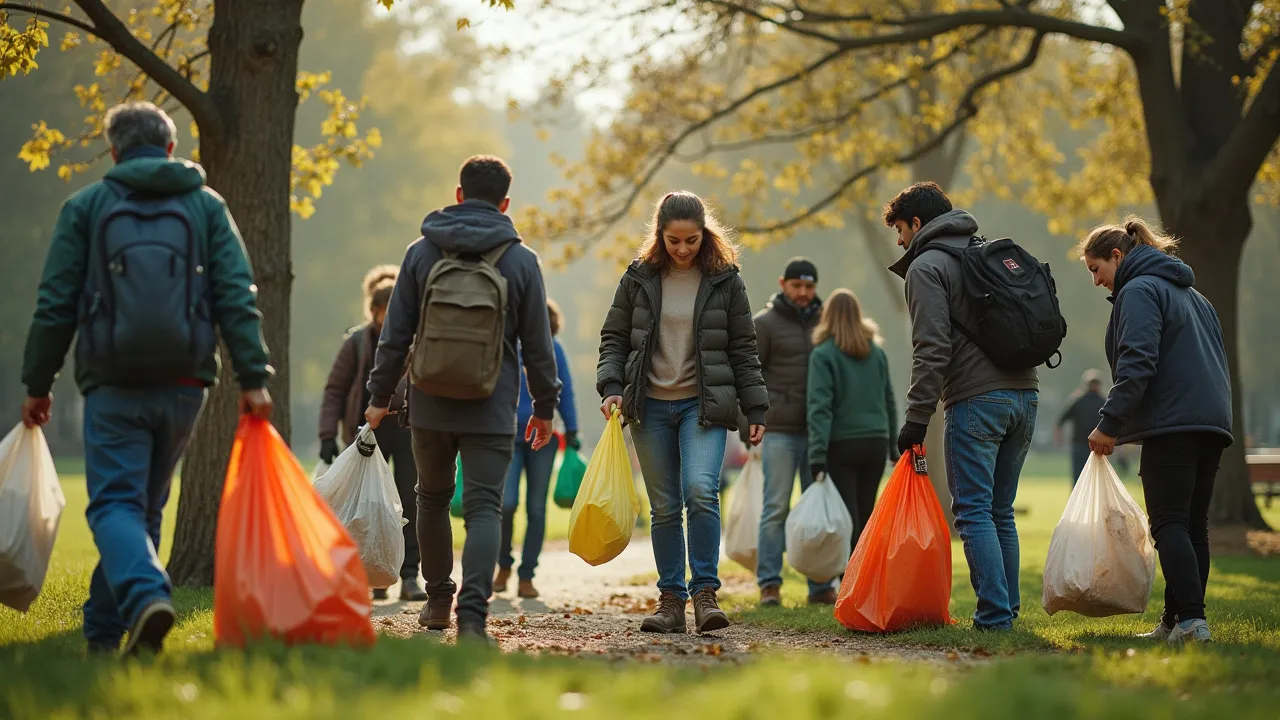
National Clean Up Day, observed on the third Saturday in September, mobilizes millions to clean parks, streets, and waterways. It fosters community pride and environmental stewardship.
The Historical Origins and Evolutionary Journey of National Clean Up Day
National Clean Up Day, observed annually on the third Saturday of September, represents one of the largest coordinated volunteer efforts for environmental stewardship. Its origins lie in the convergence of local community action and national organizational support.
Early Environmental Awareness
The 1960s and 1970s saw a surge in environmental consciousness, spurred by events like the first Earth Day in 1970. However, it wasn't until the late 1980s that the idea of a dedicated cleanup day gained traction. In 1989, the 'Clean Up Australia' event inspired similar initiatives worldwide.
The Founding of National Clean Up Day
In 1998, the American Public Works Association (APWA) partnered with Keep America Beautiful (KAB) to establish National Clean Up Day in the United States. The first event mobilized over 100,000 volunteers across 2,000 communities. The date was set for the third Saturday in September to capitalize on favorable weather and the end of summer vacation, making it convenient for families and schools to participate.
Global Expansion and World Cleanup Day
In 2008, the Estonian organization Let's Do It World launched World Cleanup Day, selecting the same date to align with National Clean Up Day. This created a global synergy, turning a national observance into an international phenomenon. By 2019, World Cleanup Day involved over 20 million volunteers in 180 countries.
Legacy and Evolution
National Clean Up Day has evolved from simple litter collection to comprehensive environmental actions including river cleanups, beach sweeps, and urban greening projects. Technology plays a role through apps that map trash hotspots and track waste types. The observance also emphasizes the 'reduce, reuse, recycle' hierarchy, encouraging sustainable living beyond the event.
How to Celebrate National Clean Up Day: A Global Guide
National Clean Up Day offers countless opportunities for individuals, families, schools, businesses, and organizations to contribute. Here are actionable strategies for celebration across different contexts.
For Individuals and Families
- Organize a neighborhood cleanup: Gather friends and neighbors to clean local streets, parks, and sidewalks. Provide gloves, bags, and safety vests.
- Participate in local events: Use the official National Clean Up Day website or social media to find nearby public cleanup events.
- Adopt-a-spot: Pledge to maintain a specific area year-round, conducting quarterly cleanups.
For Schools and Youth Groups
- Create educational programs: Teach students about waste management and environmental impact.
- Host a schoolyard cleanup: Engage students in beautifying their campus.
- Art from trash: Encourage creative projects using collected waste.
For Businesses and Organizations
- Corporate volunteer day: Encourage employees to volunteer during work hours.
- Sponsor a cleanup event: Provide supplies, snacks, or funding for community efforts.
- Implement recycling programs: Use the day to launch or improve internal waste practices.
Celebrations vary worldwide. In Japan, community cleanup is a cultural norm; National Clean Up Day is often integrated with local festivals. In India, volunteers frequently focus on rivers like the Ganges. European countries emphasize coastal cleanups through partnerships with ocean conservation NGOs.
Global Impact and Environmental Benefits
National Clean Up Day and its global counterparts have measurable impacts on the environment. Each year, millions of tons of waste are collected from natural areas. The data collected helps identify pollution sources and inform policy.
Waste Reduction Statistics
According to reports, World Cleanup Day 2023 collected over 50 million kilograms of waste, with 40% being plastics. Cigarette butts, food wrappers, and plastic bottles top the list. These events prevent waste from entering oceans and harming wildlife.
Ecosystem Restoration
Cleanup efforts in forests and waterways directly protect biodiversity. For example, removal of invasive debris helps coral reefs recover. In urban areas, clean streets reduce stormwater pollution by keeping trash out of drains.
Data for Change
Volunteers often use apps to log trash types, creating a global database used by scientists and policymakers. This citizen science component drives systemic change, such as bans on single-use plastics and improved recycling infrastructure.
Community Engagement and Social Cohesion
Beyond environmental benefits, National Clean Up Day strengthens community bonds. Collective action fosters a sense of pride and ownership.
Studies show that participation in community cleanup increases social trust and reduces crime. Residents who clean together are more likely to collaborate on other neighborhood issues. The event also bridges generational gaps, as families and seniors participate side by side.
Youth involvement is particularly impactful. Schools that participate often see improved environmental attitudes among students. Many children carry the habits home, influencing family waste reduction.
Event organizers emphasize inclusivity, ensuring that cleanup activities are accessible to people with disabilities. Volunteers from diverse backgrounds unite around a common goal, promoting social integration.
Corporate and Organizational Participation
Businesses play a vital role in National Clean Up Day. Corporate social responsibility (CSR) initiatives often include sponsoring or organizing cleanups. This enhances brand reputation and employee morale.
Companies like Patagonia, Coca-Cola, and Starbucks have supported large-scale cleanup events. Some offer paid volunteer time for employees. Others donate products or funds to organizing groups.
Organizations such as the World Wildlife Fund and the Ocean Cleanup partner with National Clean Up Day to amplify their missions. Non-governmental organizations provide expertise and logistical support.
Small businesses also contribute by hosting neighborhood cleanups or providing refreshments. The collective effort of the business sector significantly boosts the reach of the observance.
The Future of Clean Up Initiatives
As environmental challenges grow, National Clean Up Day is evolving. Future trends include greater use of technology, such as drones for mapping debris and artificial intelligence for sorting waste.
Behavioral change is a key focus. The movement aims to shift from annual cleanups to daily waste reduction. Education campaigns encourage consumers to choose reusable products and avoid overconsumption.
Policy advocacy is becoming central. Cleanup data is used to support legislation like extended producer responsibility (EPR) laws, which require manufacturers to manage product lifecycles.
International collaboration will intensify, with countries sharing best practices. The ultimate goal is a world where cleanups are no longer necessary because waste is minimized.
Historical Timeline
The first Earth Day inspires environmental activism, setting the stage for later cleanup events.
American Public Works Association and Keep America Beautiful launch National Clean Up Day on the third Saturday of September.
Let's Do It World organizes the first World Cleanup Day, aligning with National Clean Up Day to create a global event.
Participation reaches over 100 countries, demonstrating the global appeal of coordinated cleanup efforts.
United Nations Sustainable Development Goals include targets for responsible consumption and waste reduction.
World Cleanup Day mobilizes 18 million volunteers in 157 countries, setting a new record.
Participation peaks at 20 million volunteers across 180 countries, highlighting widespread engagement.
COVID-19 forces adaptations; individuals conduct solo cleanups and small group events focusing on safety.
Over 50 million kg of waste collected globally; digital tools like TrashOut app become widely used for data tracking.
National Clean Up Day continues to expand with corporate partnerships and enhanced technology integration.