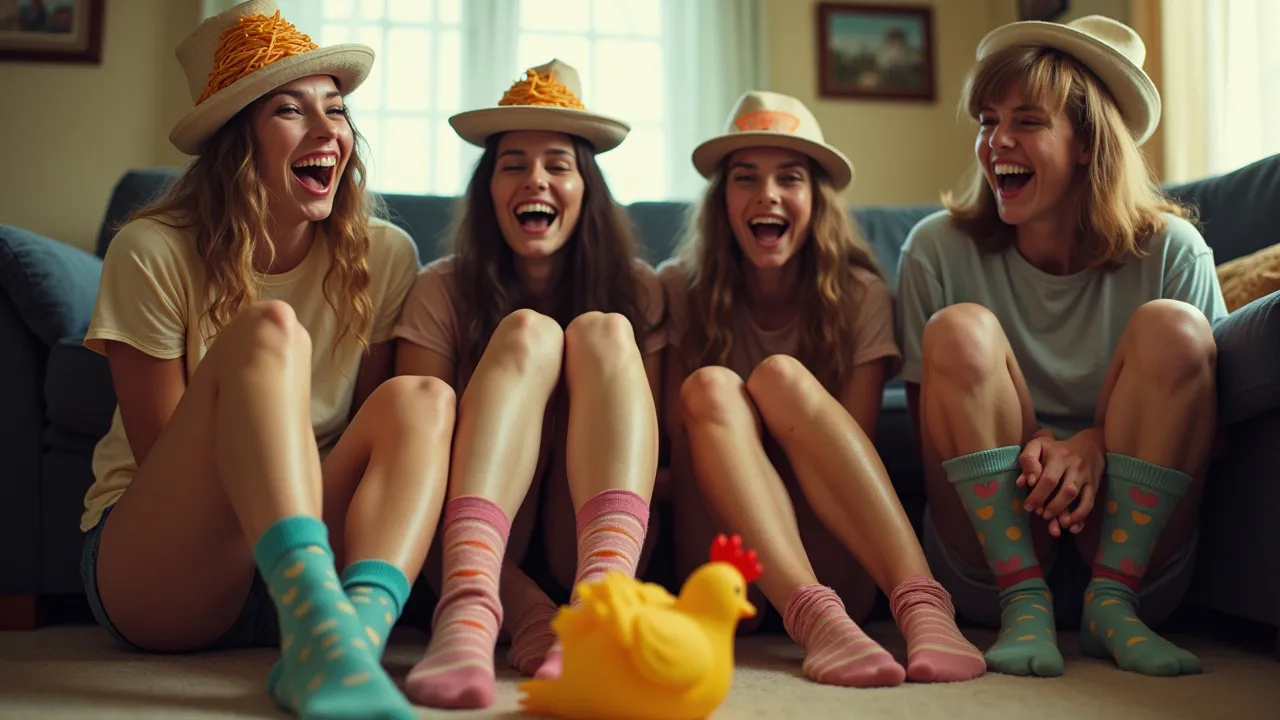
Celebrate National Absurdity Day on November 20th by embracing the nonsensical and laughing at life's oddities. Discover the history, traditions, and global impact of this quirky holiday.
The Historical Origins & Evolutionary Journey
The Foundational Catalyst
National Absurdity Day, observed annually on November 20th, traces its roots to the existentialist and absurdist movements of the mid-20th century. While no single founder is officially credited, the day emerged organically from the counterculture of the 1970s, which embraced the absurd as a form of rebellion against societal norms. Influenced by philosophers like Albert Camus, who wrote about the absurd condition, and artists like the Dadaists who celebrated nonsense, the day was first informally celebrated by small groups in the United States and Europe. These early adopters would engage in playful, illogical acts—wearing mismatched clothes, engaging in silly debates, or performing random acts of kindness without reason.
The Legislative/Official Adoption
Unlike formal holidays, National Absurdity Day has never been officially recognized by any government body. Instead, its adoption has been grassroots, spread through word of mouth, flyers, and later the internet. In the 1990s, the day gained traction on early online forums, where users would share absurdist jokes, images, and challenges. By the 2000s, social media platforms like Facebook and Twitter amplified the observance, with hashtags like #AbsurdityDay trending annually. The lack of official endorsement actually aligns with the day's ethos—it celebrates spontaneity and rejects institutionalization.
Modern Global Legacy
Today, National Absurdity Day is celebrated in various forms across the globe, from the United States to Japan. In 2020, the day saw a surge in participation as people used absurd humor to cope with the pandemic. Schools and workplaces host 'absurd dress days' or 'nonsense poetry slams'. The day's legacy is a reminder to find joy in the irrational and to question the seriousness of everyday life. It has also influenced modern art movements, comedy styles, and even corporate culture, where companies encourage 'absurd brainstorming' to foster creativity.
How to Celebrate National Absurdity Day
Individual and Group Activities
Celebrating National Absurdity Day is all about embracing the silly and the nonsensical. Here are some actionable ideas:
- Dress Absurdly: Wear mismatched shoes, a hat made of fruit, or a shirt backwards. The goal is to confuse and amuse.
- Engage in Nonsense Conversations: Speak in gibberish or ask bizarre questions like 'If a chicken had feathers made of sound, what color would silence be?'
- Perform Random Acts of Absurdity: Tape a mustache to a street sign, or leave a note that says 'The moon is in your left shoe' on a park bench.
- Host an Absurdity Party: Serve food that defies logic (e.g., breakfast for dinner, ice cream with pickles), play games like 'Musical Chairs with No Music', or have a 'Bad Art' contest.
School and Workplace Celebrations
- Absurd Dress Day: Encourage students or employees to dress as outlandishly as possible.
- Nonsense Poetry Contest: Write and recite poems that follow no rules of grammar or logic.
- Office Olympics: Create silly games like 'Furniture Racing' (moving a chair across a room with only your nose) or 'Cubicle Decorating' with bizarre themes.
- Absurd Meeting: Hold a meeting where everyone must speak in a funny accent or only use questions.
Global Traditions
In different countries, the day takes on unique flavors:
- United States: Popular activities include 'Pants on Fire' storytelling and 'Cow Pie Bingo'.
- United Kingdom: Known for 'Punk Poetry' readings and 'Deadpan Comedy' nights.
- Japan: Participants engage in 'Kawaii Absurdity' - cute but nonsensical acts like dressing pets in elaborate costumes.
- Brazil: Features 'Samba Nonsense' where dancers mix traditional moves with random gestures.
The Philosophy of Absurdity: A Societal Mirror
Existential Roots and Modern Relevance
Absurdity, as a philosophical concept, was popularized by Albert Camus in his 1942 essay 'The Myth of Sisyphus'. He defined the absurd as the conflict between the human desire for meaning and the universe's apparent lack of it. National Absurdity Day brings this philosophy into practice, encouraging people to embrace the tension rather than suppress it. By engaging in purposeless fun, individuals can temporarily transcend the search for meaning and simply exist.
Psychological Benefits
Psychology research suggests that humor and absurdity can reduce stress, enhance creativity, and improve social bonds. Laughing at the absurd activates the brain's reward system and lowers cortisol levels. Moreover, embracing nonsense can help people break free from rigid thinking patterns, fostering innovation. Many therapists recommend 'absurdity exercises' as a form of cognitive behavioral therapy to combat anxiety.
Cultural Commentary
National Absurdity Day also serves as a subtle critique of society's obsession with productivity and logic. In a world driven by deadlines and efficiency, dedicating a day to purposelessness challenges the status quo. It echoes the Dadaist movement of the early 20th century, which used absurd art to protest the rationality that led to World War I. Today, the observance encourages people to question authority and find joy in uncertainty.
Global Impact and Cultural Significance
Cross-Cultural Adoption
While National Absurdity Day originated in Western counterculture, it has found resonance across the globe. In India, for example, the day is celebrated with 'Bhangra Nonsense' dance parties, mixing traditional folk steps with random animal sounds. In Australia, participants engage in 'Bush Absurdity'—creating sculptures from found objects in the outback. The Internet has been a great equalizer, with platforms like TikTok and Instagram showcasing absurdist videos from every continent.
Impact on Arts and Entertainment
The day has influenced modern comedy, especially the rise of 'anti-humor' and 'surreal humor' popularized by shows like 'The Office' and 'Tim and Eric'. In literature, authors like Douglas Adams and Kurt Vonnegut are frequently cited as inspirations for the day's tone. The art world sees exhibitions featuring 'nonsensical installations' timed to coincide with November 20th. The music industry also participates, with playlists of absurd songs (e.g., 'The Monster Mash' played backwards, or songs made entirely of animal noises).
Corporate and Social Movements
Some corporations have embraced the day for team-building. For instance, Google's 'Absurd Hackathons' encourage employees to code useless but fun features. Nonprofits use the day to draw attention to serious issues through absurdity—like dressing up as clowns to protest environmental destruction. The day's impact on mental health awareness is notable, as many organizations promote 'laughter yoga' and 'silly activities' as stress relievers.
Corporate and Social Rituals Around Absurdity
Office Traditions
In many workplaces, National Absurdity Day is celebrated with 'Backwards Day' where employees reverse roles, or 'Random Compliment Day' where they give absurd compliments like 'Your elbows are exceptionally well-organized!' Some companies decorate their break rooms with upside-down furniture or hang mistletoe in summer to create cognitive dissonance. These activities are designed to disrupt routine and spark laughter.
Social Media Campaigns
Brands often join the fun by posting absurd content. For example, a pet food brand might post a picture of a cat wearing a top hat with the caption 'Only 1% of cats prefer elegance over chaos.' Hashtag campaigns like #AbsurdSelfie encourage users to take funny, nonsensical photos. Influencers participate by creating absurd challenges, such as 'Make a sandwich using only one hand and a glue stick.'
Educational Institutions
Schools use the day to teach about surrealism and creativity. Art classes hold 'Nonsense Drawing' sessions where students draw with their eyes closed. English classes write 'absurdist one-act plays'. Science classes explore 'illogical experiments' like mixing baking soda and vinegar but claiming the result is 'time travel'. The day also serves as a mental health break for students, reducing academic pressure.
The Role of Absurdity in Art and Media
Historical Art Movements
National Absurdity Day draws heavily from Dadaism and Surrealism. Dada artists like Marcel Duchamp (with his famous urinal sculpture 'Fountain') and the photomontages of Hannah Höch challenged conventional aesthetics. Surrealists like Salvador Dalí used dreamlike imagery to depict the absurd. These movements paved the way for a day that celebrates irrational creativity.
Film and Television
Absurdist films such as 'Monty Python and the Holy Grail', 'The Big Lebowski', and 'Eternal Sunshine of the Spotless Mind' are often marathon-watched on November 20th. Television shows like 'The Office' (especially the scenes of mirthless practical jokes) and 'SpongeBob SquarePants' are considered quintessential absurdist media.
Literature and Poetry
Books like 'Alice in Wonderland' and 'Catch-22' are frequently read on Absurdity Day. Poetry slams feature works that defy structure, such as a poem written entirely in emojis or with every other word capitalized. Some communities host 'Nonsense Story' collaborations where each person adds a random sentence.
Digital Media
Memes are a core part of the celebration. From 'Distracted Boyfriend' to 'This Is Fine', absurd memes circulate widely. The day is also a prime moment for 'deepfake' humor, where politicians are made to say ridiculous things, or for AI-generated texts that produce nonsensical but hilarious output.
Historical Timeline
National Absurdity Day is first informally celebrated by counterculture groups in the United States and Europe, influenced by absurdist philosophy and Dada art.
The day gains visibility through early internet forums and mailing lists. Participants share absurdist jokes and coordinate activities.
Social media platforms like Facebook and Twitter help spread the observance globally. The hashtag #NationalAbsurdityDay trends annually.
Several universities host official events, including 'Absurdity Festivals' that feature improv comedy, bizarre costumes, and nonsense poetry contests.
During the COVID-19 pandemic, the day sees a surge in virtual celebrations. People use absurd humor to cope with isolation, with viral challenges like 'Do a mundane task in a ridiculous way'.
National Absurdity Day is officially recognized by the 'World Happiness Index' as a day that promotes mental well-being through laughter and creativity.