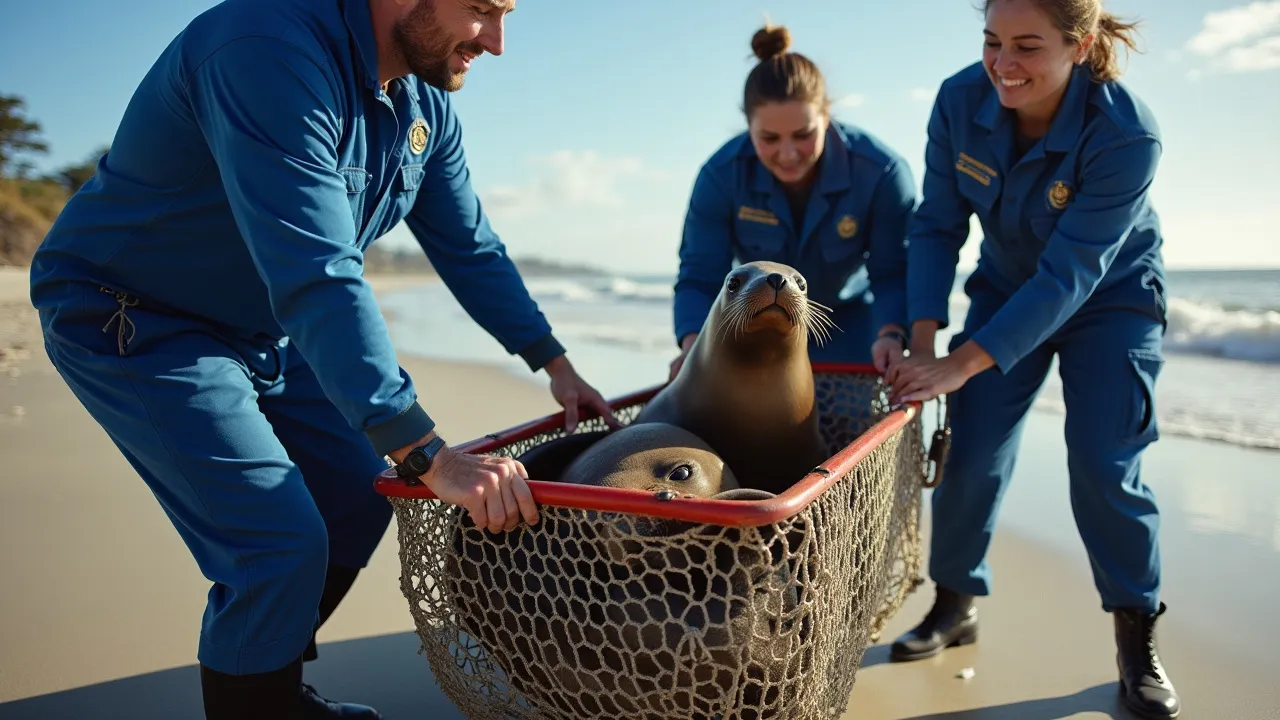
Marine Mammal Rescue Day, observed on April 27, honors the dedicated professionals and volunteers who rescue, rehabilitate, and release stranded marine mammals. It raises awareness about ocean conservation and human impacts on marine life.
The Historical Origins & Evolutionary Journey
Marine Mammal Rescue Day, observed annually on April 27th, is a day dedicated to recognizing the critical work of marine mammal rescue organizations and the importance of protecting these intelligent and vulnerable creatures. The origins of this observance are rooted in a growing awareness of the threats facing marine mammals and the need for coordinated rescue efforts.
The Foundational Catalyst
The modern marine mammal rescue movement began in the mid-20th century as stranding events became more frequent due to fishing gear entanglement, ship strikes, and pollution. In the United States, the Marine Mammal Protection Act (MMPA) of 1972 provided a legal framework for the protection and conservation of all marine mammals. However, rescue operations remained fragmented until the early 2000s, when dedicated stranding networks began forming under the guidance of organizations like NOAA Fisheries and The Marine Mammal Center.
The Legislative/Official Adoption
In 2014, the U.S. Senate passed a resolution designating April 27th as National Marine Mammal Rescue Day, spearheaded by the National Marine Mammal Foundation. This official recognition aimed to highlight the dedication of stranding network responders and to encourage public support. The date was chosen to coincide with the peak of stranding season in many regions, particularly along the California coast where sea lion and elephant seal pups are frequently abandoned.
Modern Global Legacy
Since its inception, the day has grown beyond U.S. borders, with many countries adopting similar observances or using the date to launch awareness campaigns. International collaboration through networks like the International Marine Animal Trainers Association (IMATA) and the World Marine Mammal Conference has enhanced rescue techniques and data sharing. Today, Marine Mammal Rescue Day serves as a global call to action to protect marine ecosystems and the creatures that inhabit them, inspiring new generations of conservationists.
How to Celebrate Marine Mammal Rescue Day
Marine Mammal Rescue Day offers numerous opportunities for individuals, schools, and organizations to participate in meaningful activities that support marine mammal conservation. Below are actionable strategies tailored to different groups.
For Individuals
- Donate to Rescue Organizations: Financial contributions to groups like The Marine Mammal Center, NOAA Fisheries, or local stranding networks directly fund rescue operations and medical care.
- Volunteer: Contact your nearest marine mammal rescue facility to assist with animal care, administrative tasks, or educational outreach. Many offer training programs that certify volunteers for stranding response.
- Adopt a Marine Mammal: Symbolic adoptions provide critical funding and raise awareness. Species like seals, sea lions, and dolphins are often available.
- Reduce Plastic Use: Marine mammals often ingest or become entangled in plastic debris. Cutting down on single-use plastics helps prevent these hazards.
- Report Strandings: Learn the proper protocol to report a stranded marine mammal to local authorities. In the U.S., call the local stranding network or NOAA's hotline. Never attempt to push an animal back into the water.
For Schools and Educational Institutions
- Host a Guest Speaker: Invite a marine mammal biologist or rescuer to talk about local species and conservation efforts.
- Organize a Beach Clean-Up: Removing trash from coastlines reduces the risk of entanglement and ingestion.
- Classroom Projects: Have students research different marine mammal species and their rescue stories, then present their findings.
For Organizations and Businesses
- Match Donations: Encourage employee donations by matching them.
- Sponsor a Rescue Event: Fund a specific operation or purchase equipment like transport vehicles or medical supplies.
- Social Media Campaigns: Use hashtags like #MarineMammalRescueDay to spread awareness.
Regional Variations
In the United States, many aquariums and marine parks hold open houses with special rescue demonstrations. In Australia, community groups organize coastal surveillance patrols to monitor for entangled or stranded dugongs and sea turtles. In Europe, countries like the Netherlands and UK have dedicated stranding schemes that engage the public in reporting and monitoring. Some nations, such as Canada, recognize a separate, earlier date, but the core message of conservation remains the same.
Global Impact of Marine Mammal Rescue
Marine mammal rescue operations have a profound global impact beyond saving individual animals. Each successful rescue contributes to scientific knowledge, public education, and conservation policy.
Scientific Contributions
Rescued animals provide invaluable data on health, disease, and environmental toxins. For example, blood samples from rescued sea lions have revealed patterns of domoic acid poisoning linked to harmful algal blooms. Necropsies of deceased animals help track emerging diseases and population trends.
Conservation Success Stories
Iconic species like the California sea lion have rebounded partly due to rescue and rehabilitation efforts. The Mediterranean monk seal, once critically endangered, has benefited from rescue networks that treat pups and pups stranded on beaches. In New Zealand, the rescue of Hector's dolphins from fishing nets has helped stabilize local populations.
Public Awareness
Rescue stories capture public attention and inspire action. Live streams of rehabilitation, such as those from The Marine Mammal Center, have educated millions about the threats marine mammals face. This awareness translates into policy support for stronger marine protected areas and stricter fishing regulations.
Key Species and Rescue Challenges
Different marine mammal species present unique rescue challenges based on their size, habitat, and behavior. Understanding these differences is essential for effective response.
Pinnipeds (Seals, Sea Lions, Walruses)
- Challenges: Often abandon pups onshore; can be aggressive; susceptible to domoic acid and leptospirosis.
- Rescue approach: Use basket stretchers and sedatives; provide fluid therapy and antibiotics.
Cetaceans (Dolphins, Whales, Porpoises)
- Challenges: Large size makes handling dangerous; deep divers suffer decompression sickness when stranded; need constant water support to avoid crushing their internal organs.
- Rescue approach: Keep body wet, roll onto soft mat, transport in specially designed trailers. For mass strandings, coordinate multiple teams to refloat animals.
Sirenians (Manatees, Dugongs)
- Challenges: Slow-moving; often struck by boats; dependent on warm water.
- Rescue approach: Herd into shallow water; treat wounds; relocate to warm water refuges.
Each species requires specialized training and equipment. Rescuers must also consider maternal bonds, release site selection, and post-release monitoring.
Advances in Veterinary Care and Rehabilitation
Veterinary science has made remarkable strides in treating stranded marine mammals, greatly improving survival rates.
Diagnostic Tools
Portable ultrasound and blood analyzers allow field teams to quickly assess health. Radiography helps detect bone fractures or ingested foreign objects. CT scans and MRI are now used in larger facilities to diagnose neurological conditions.
Treatment Innovations
- Rehydration therapy: Customized fluid formulations address dehydration without harming kidneys.
- Antibiotic protocols: Targeted antibiotics combat infections without resistance.
- Fiberglass casts for broken flippers have replaced bulky splints, allowing faster healing.
Rehabilitation Practices
Rehabilitation centers create environments mimicking natural habitats, with pools of varying depths and live fish for foraging practice. Food fish supplementation with vitamins and medication ensures recovery. Release criteria include weight gain, independent feeding, and normal behavior. Some animals are fitted with satellite tags for post-release monitoring, revealing survival rates and migration patterns.
The Role of Citizen Science and Volunteer Networks
Marine mammal rescue heavily relies on public participation and trained volunteers. Citizen science programs turn concerned individuals into first responders.
Stranding Networks
In the U.S., the Marine Mammal Stranding Network includes hundreds of volunteer organizations that respond to reports 24/7. Volunteers are trained in proper handling, documentation, and communication with veterinarians. Their data is submitted to NOAA’s national database, aiding population studies.
How Citizens Can Help
- Report strandings: Timely reporting increases survival odds. Provide clear location, species, and condition.
- Maintain distance: Keep people and pets away to reduce stress.
- Collect data: Photos and videos can help experts assess the situation before arrival.
International Examples
In the UK, the British Divers Marine Life Rescue trains thousands of volunteers. In Australia, the Australian Marine Mammal Rescue Network coordinates responses along vast coastlines. These networks amplify the reach of professional teams and foster local stewardship.
Policy and Legal Frameworks Protecting Marine Mammals
Strong legal protections are the backbone of successful marine mammal conservation and rescue efforts.
United States Legislation
- Marine Mammal Protection Act (1972): Prohibits take and harassment; establishes federal jurisdiction over marine mammals.
- Endangered Species Act (1973): Protects listed species like right whales, manatees, and some pinnipeds.
- NOAA Fisheries oversees rescue authorization and permitting.
International Agreements
- Convention on International Trade in Endangered Species (CITES): Regulates trade of marine mammal products.
- Agreement on the Conservation of Cetaceans (ACCOBAMS) in Europe focuses on cetacean protection.
- Memoranda of Understanding on Marine Mammals under the Convention on Migratory Species facilitate cross-border rescue cooperation.
These legal frameworks provide the authority to rescue and rehabilitate, and they drive funding for research and enforcement. However, gaps remain, particularly in international waters and for species not covered by regional agreements.
Future Directions for Marine Mammal Conservation
As the planet changes, marine mammal rescue must adapt to new challenges and opportunities.
Emerging Threats
- Climate change: Warmer waters shift prey distributions, forcing mammals into new areas and increasing stranding risks.
- Ocean noise: Shipping and sonar disrupt communication and can cause strandings.
- Plastic pollution: Microplastics accumulate in tissues and may impair health.
Technological Innovations
Drones are used to locate stranded animals and assess entanglement without disturbing them. Artificial intelligence analyzes stranding patterns to predict events. 3D printing produces custom prosthetics for injured flippers.
Community Engagement
Education programs in coastal schools and communities foster a culture of respect. Ecotourism, when managed responsibly, can fund conservation while reducing negative interactions. The future of marine mammal rescue depends on global cooperation and public support, ensuring that these majestic creatures thrive for generations.
Historical Timeline
The US Congress passes the Marine Mammal Protection Act (MMPA), establishing a federal framework for protecting all marine mammals, including stranding response protocols.
The first formal stranding networks are established along US coasts, including the Marine Mammal Stranding Network under NOAA, training volunteers for rescue operations.
The Marine Mammal Center in California rehabilitates a record number of sea lion pups, highlighting the need for dedicated rescue days.
The US Senate designates April 27 as National Marine Mammal Rescue Day, spearheaded by the National Marine Mammal Foundation.
A collaborative international rescue of a white-beaked dolphin in the UK showcases global cooperation in marine mammal rehabilitation.
A record 1,500 California sea lions are rescued due to domoic acid poisoning, underscoring the impact of harmful algal blooms.
Satellite tagging technology is widely adopted for post-release tracking, improving understanding of migration and survival rates in rescued animals.
Marine Mammal Rescue Day is recognized in over 20 countries, with thousands of events and educational programs worldwide.