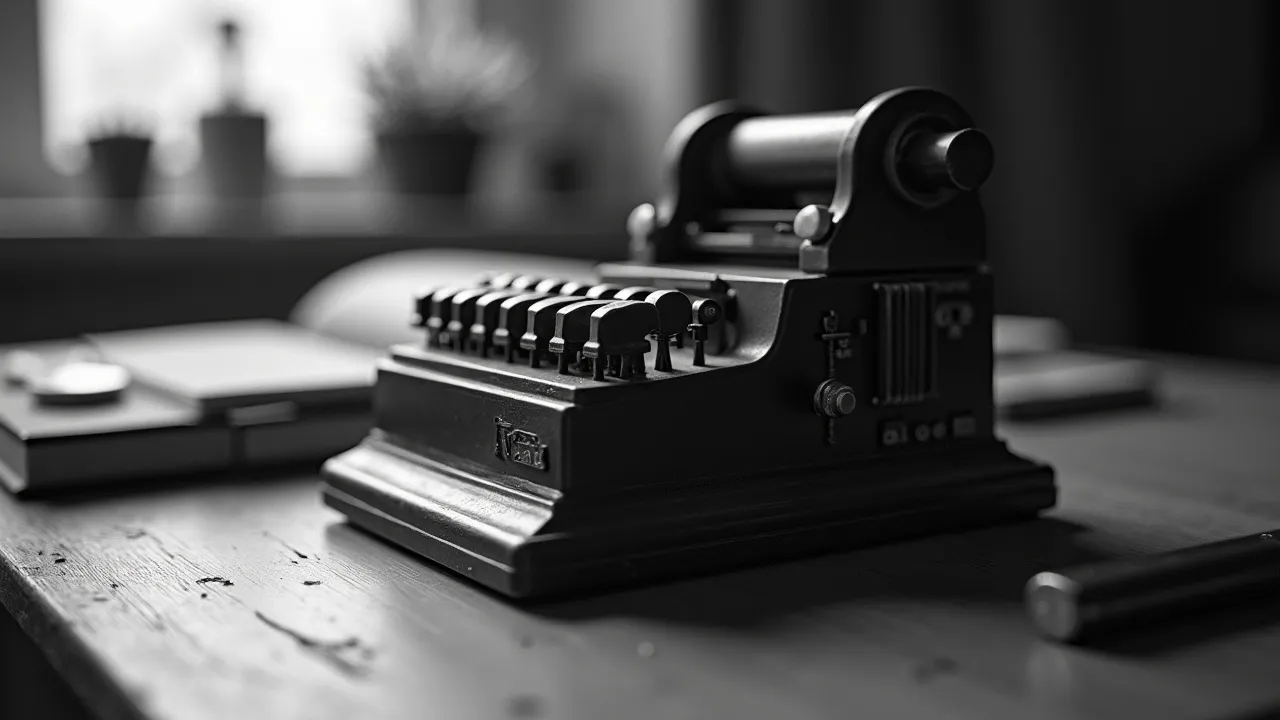
Morse Code Day on April 27th celebrates the birth of Samuel Morse and the enduring legacy of his telegraph code. Discover its history, how to learn and use Morse code, and ways to join the global celebration.
The Historical Origins & Evolutionary Journey
Morse Code Day, observed annually on April 27th, marks the birth of Samuel Finley Breese Morse (April 27, 1791 – April 2, 1872), the American inventor and artist who co-developed the telegraph and the Morse code. This day honors not only Morse but also the transformative impact of his invention on global communication.
The Foundational Catalyst
In the early 1830s, Morse conceived the idea of an electromagnetic telegraph while returning from Europe. With financial support from Congress and technical assistance from Alfred Vail and Leonard Gale, Morse built a working prototype. On May 24, 1844, he sent the first telegraphic message from Washington, D.C., to Baltimore: "What hath God wrought." The code he devised—short and long signals (dots and dashes) representing letters and numbers—became the backbone of telegraphy.
The Legislative/Official Adoption
Morse code rapidly gained acceptance worldwide. In 1865, the International Telegraph Union standardized a variant known as International Morse Code, which is still used today. The code became essential for maritime communication, aviation, and military operations. In 1912, the sinking of the Titanic highlighted the critical role of Morse code in distress signaling; the SOS signal (... --- ...) became universally recognized. The United States Navy and other organizations formally adopted Morse code for training and operations throughout the 20th century.
Modern Global Legacy
While technological advances like voice radio and digital communication reduced the need for manual Morse code, it remains a vibrant niche. In 2003, the International Telecommunication Union declared Morse code still relevant for safety and amateur radio. Morse Code Day was popularized by amateur radio operators and history enthusiasts to keep the skill alive. Today, it is celebrated through on-air events, educational workshops, and museum demonstrations.
How to Celebrate Morse Code Day
Morse Code Day offers countless ways to engage with this historic communication method. Whether you are a seasoned ham radio operator or a curious beginner, here are actionable strategies to participate:
For Individuals
- Learn the Basics: Use free apps like Morse-It or G4FON Koch Trainer to practice letters and numbers. The standard goal is to achieve 5 words per minute.
- Send a Message: Write a short message in Morse code and send it via flashlight, tapping, or an online oscillator. Share it with friends.
- Visit a Museum: Many science and history museums feature telegraph exhibits. April 27th is an ideal day to explore them.
For Schools & Educational Groups
- Classroom Activity: Hold a "Morse Code Bee" where students decode messages. Provide a printed cheat sheet for beginners.
- History Lesson: Integrate Morse code into units on industrialization or information technology. Discuss Samuel Morse's life and the telegraph's impact.
- Flashlight Communication: In a dark room, have students practice sending simple words using flashlights. Emphasize teamwork and accuracy.
For Organizations & Amateur Radio Clubs
- On-Air Event: Set up a special event station using the call sign with suffixes like "MCD" (Morse Code Day). Operators worldwide can make contact.
- Code Practice Net: Host a slow-speed Morse code practice session on a local repeater or HF frequency. Encourage new enthusiasts to join.
- Public Demonstration: Set up a vintage telegraph in a library or community center. Offer hands-on training and explain the history.
In many European countries, amateur radio societies organize contests and special QSL card designs. In Japan, Morse code (Wabun code) is celebrated with traditional sending contests. The global theme is to honor the heritage while embracing modern adaptations.
Significance of Morse Code in Communication History
Morse code represents a pivotal leap in human connectivity. Before the telegraph, long-distance messages took days or weeks. Morse's code turned hours into seconds. Its binary-like structure—dots and dashes—inspired later binary codes used in computers. The SOS signal saved countless lives, especially after the Titanic disaster. Even today, Morse code serves as a reliable backup when voice channels fail. It is also a valuable tool for individuals with disabilities, allowing communication through eye blinks or finger taps.
Cultural Impact
Morse code permeated popular culture: from wartime thrillers to the iconic "... --- ..." distress call. It appears in music (the Beatles used Morse code in "Strawberry Fields Forever") and film (e.g., "The Hunt for Red October"). Amateur radio operators, known as "hams," keep the tradition alive, often achieving remarkable distances with low power. The code fosters a global community united by a shared skill.
Morse Code in Modern Times
Despite the dominance of digital communication, Morse code remains relevant in several fields:
- Amateur Radio: Licenses in many countries still require basic Morse proficiency (though relaxed in some). CW (continuous wave) mode is prized for its efficiency and narrow bandwidth.
- Aviation: NAVAIDs (navigational aids) like VOR and NDB transmit Morse identifiers; pilots must recognize them.
- Military: Special forces and intelligence units train in Morse for covert signaling.
- Assistive Technology: Devices like the "Morse code switch" help people with motor impairments type.
- Space Communication: Some CubeSats use Morse code beacon transmissions for telemetry.
In 2024, the International Space Station occasionally sends Morse code messages during special events. The enduring simplicity and resilience of Morse code ensure it will not disappear entirely.
Learning Morse Code: Tips & Resources
Mastering Morse code requires practice, but modern tools make it accessible. Here are proven methods:
Farnsworth Method
Key with standard speed but extra spacing between characters and words. Gradually reduce spacing as proficiency grows. Recommended for beginners.
Koch Method
Learn characters at full speed (e.g., 20 wpm) from the start, introducing new characters gradually. This builds instant recognition.
Recommended Resources
- Apps: Morse-It (iOS), G4FON Koch Trainer (Windows), Morse Code Trainer (Android).
- Websites: LearnMorseCode.com, ARRL.org for practice files.
- Hardware: Pignology Ham Morse key, or straight key with a simple oscillator.
- Online Communities: Reddit r/amateurradio, QRZ.com forums.
Set a daily practice session of 15–20 minutes. Aim for 5 to 10 words per minute within a few months.
Global Observances and Regional Variations
While April 27th is the universally recognized date for Morse Code Day, some regions have adapted the celebration to align with local events:
- United States: April 27th is widely observed by the ARRL with special events and a Morse code sprint contest.
- United Kingdom: The RSGB (Radio Society of Great Britain) promotes Morse Code Day with on-air activities and museum demonstrations.
- Japan: Amateur radio clubs hold Wabun (Japanese Morse code) sending contests on April 27th.
- Europe: Several countries, including Germany and France, coordinate a European Morse Code Day with special call signs and QSL card exchanges.
- Australia: The Wireless Institute of Australia encourages members to set up portable stations in public parks.
No significant alternate date variations exist, as April 27th remains the fixed focus.
Historical Timeline
Samuel Finley Breese Morse is born in Charlestown, Massachusetts.
Morse first conceives the idea of an electromagnetic telegraph during a voyage from Europe to New York.
On May 24, Morse sends the first telegraph message, "What hath God wrought," from Washington, D.C., to Baltimore.
The International Telegraph Union standardizes International Morse Code at the Paris conference.
Guglielmo Marconi transmits the first transatlantic wireless signal (the letter 'S' in Morse code) from Cornwall to Newfoundland.
The RMS Titanic sinks; Morse code SOS signals are used extensively. This disaster highlights the importance of Morse for maritime safety.
The International Maritime Organization ends the requirement for Morse code proficiency for maritime communication, transitioning to GMDSS.
The ITU declares Morse code still relevant for amateur radio and safety services, ensuring its preservation.
The United States Federal Communications Commission drops the Morse code requirement for amateur radio licenses, but the skill remains popular.