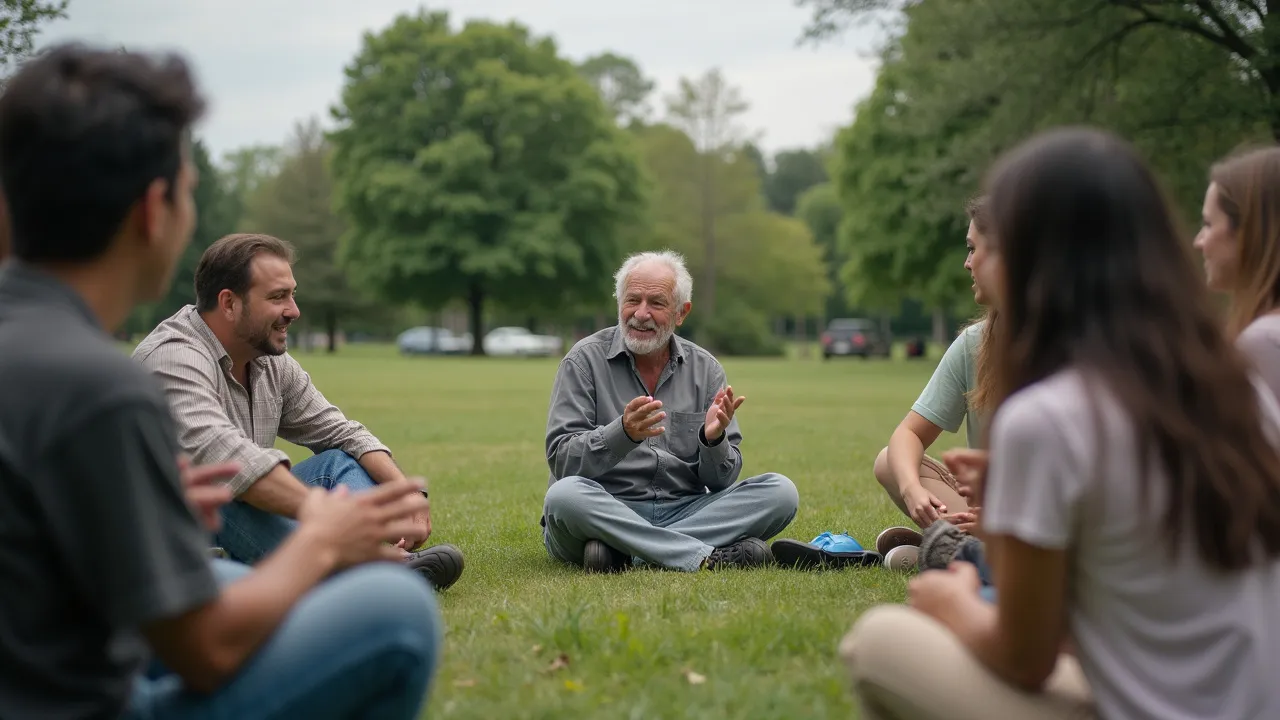
Observed on April 27th, Tell a Story Day celebrates the timeless art of oral storytelling, fostering connection, imagination, and cultural preservation across generations and communities worldwide.
The Historical Origins & Evolutionary Journey
Tell a Story Day, observed annually on April 27th, honors humanity's oldest form of communication: storytelling. While the precise origin of this observance is not universally documented, its roots trace back to early 21st-century initiatives by storytelling advocates in the United States. The day was established to revive and celebrate the oral tradition that predates written language.
The Foundational Catalyst
Oral storytelling has been integral to human culture for tens of thousands of years, serving as a means to share knowledge, history, and values. The modern movement to formalize a day for storytelling gained momentum in the late 1990s as literacy rates declined and digital media began to dominate. The National Storytelling Network, a nonprofit dedicated to promoting storytelling as an art form, spearheaded efforts to create a dedicated observance. They chose April 27th to coincide with the start of spring in the Northern Hemisphere—a season of renewal and new beginnings, symbolizing the rebirth of oral traditions.
The Legislative/Official Adoption
Tell a Story Day is not a federal holiday but has been recognized through proclamations in several U.S. states and cities. Its adoption was grassroots, driven by libraries, schools, and community centers. By 2005, the day had gained enough traction to be included in many calendars of observances, with storytelling festivals and events organized nationwide. Internationally, similar days exist, such as World Storytelling Day (March 20) and National Storytelling Week (UK), but Tell a Story Day remains uniquely focused on the participatory act of telling personal or traditional tales.
Modern Global Legacy
Today, Tell a Story Day transcends borders. In an age dominated by screens, the day encourages individuals to disconnect and engage in the intimate human connection that live storytelling provides. It has evolved to include digital storytelling, podcasts, and video narratives, but the core emphasis remains on the spoken word and its ability to foster empathy, preserve culture, and inspire action.
How to Celebrate Tell a Story Day
Tell a Story Day offers countless ways to participate, from intimate family gatherings to large community events. Below is a comprehensive global guide to celebrating this observance, segmented by context and region.
For Individuals & Families
- Share a personal anecdote: Gather loved ones and recount a memorable experience—funny, poignant, or educational. Emphasize oral delivery without notes.
- Record a story: Use a voice memo or video to preserve a family story for future generations. This combines tradition with modern technology.
- Attend a storytelling circle: Many libraries and community centers host open mic storytelling sessions. Check local event calendars.
For Schools & Educators
- Storytelling workshops: Teach students the elements of a good story—character, conflict, resolution—and have them perform for classmates.
- Intergenerational storytelling: Invite grandparents or local elders to share historical narratives, linking past and present.
- Story-based curriculum: Integrate storytelling into subjects like history (tell a story from a historical figure's perspective) or science (narrate the journey of a scientific discovery).
For Organizations & Corporates
- Storytelling for team building: Encourage employees to share stories of professional challenges and triumphs. This fosters empathy and collaboration.
- Brand storytelling sessions: Marketers can use the day to craft compelling narratives about the company's mission and impact, shared on internal platforms or social media.
- Sponsor a community storytelling event: Partner with local libraries or theaters to host a public storytelling night, enhancing community goodwill.
Regional Variations
While April 27th is the primary date in the United States, several countries observe similar days on different dates. In the United Kingdom, National Storytelling Week occurs in early February. In Australia, Storytelling Day is celebrated on the first Sunday of September. In India, World Storytelling Day on March 20th is widely observed. Regardless of date, the core activities remain consistent: telling, listening, and preserving stories.
The Power of Storytelling: Psychological & Social Impact
Storytelling is not merely entertainment; it has profound psychological and sociological benefits. Research in neuroscience demonstrates that narratives activate multiple brain regions, including those associated with empathy, memory, and emotion. When we hear a story, our brains release oxytocin, the 'bonding hormone,' which enhances trust and connection between storyteller and listener.
Cognitive Development & Memory
Stories help organize information in a way that is easier to recall. For children, exposure to storytelling improves language acquisition, comprehension, and critical thinking. Adults benefit from storytelling as a tool for sense-making, allowing them to process complex experiences and construct personal identity.
Social Cohesion & Cultural Preservation
Throughout history, stories have been the backbone of cultural transmission. Myths, legends, and folktales encode moral values, historical events, and community norms. Tell a Story Day reinforces this by encouraging the sharing of local lore and family history, ensuring they are not lost to time. In multicultural societies, storytelling acts as a bridge, fostering cross-cultural understanding and reducing prejudice.
Healing Through Narrative
Narrative therapy uses storytelling to help individuals reframe traumatic experiences. The act of telling one's story in a safe environment can be cathartic and empowering. Tell a Story Day provides a structured occasion for such healing, whether in support groups, classrooms, or intimate settings.
Storytelling in Education & Corporate Settings
The application of storytelling extends far beyond entertainment. In education, storytelling is a proven pedagogical strategy that increases student engagement and knowledge retention. In the corporate world, storytelling is a cornerstone of effective leadership, marketing, and culture building.
Educational Storytelling Techniques
- Digital storytelling: Students create short videos combining narration, images, and music to explain concepts. This integrates technology with traditional narrative skills.
- Role-playing historical events: By acting out historical scenarios, students develop empathy and a deeper understanding of context.
- Story-based assessments: Instead of traditional exams, students can demonstrate comprehension by retelling scientific processes or literary themes in narrative form.
Corporate Storytelling Best Practices
Organizations leverage storytelling to humanize their brand and inspire action. Effective corporate narratives often follow a classic arc: a protagonist (the customer or employee) faces a challenge, discovers a solution (the product or service), and achieves transformation. On Tell a Story Day, companies can host internal 'story slams' where employees share impactful work experiences, fostering a sense of purpose and unity. Additionally, CEOs can use storytelling to communicate vision and values in a memorable way.
Digital Storytelling in the Modern Age
The digital revolution has transformed how stories are created, shared, and consumed. Tell a Story Day now embraces digital platforms, from social media to podcasting, expanding the reach of oral traditions.
Podcasts & Audio Narratives
Podcasts have surged as a modern form of storytelling, with millions of episodes covering every imaginable topic. On Tell a Story Day, aspiring storytellers can launch a pilot episode or contribute to community-driven audio projects. The intimacy of audio storytelling preserves the oral tradition while leveraging global distribution.
Social Media Storytelling
Platforms like Instagram, TikTok, and YouTube encourage micro-storytelling through short videos and live streams. The day can be celebrated by posting personal stories using hashtags like #TellAStoryDay or #Storyteller. Live storytelling sessions on platforms like Clubhouse or Twitter Spaces recreate the communal aspect of traditional story circles.
Augmented and Virtual Reality
Emerging technologies offer immersive storytelling experiences. Museums and cultural institutions use AR/VR to bring historical narratives to life, allowing users to 'step into' a story. While not universally accessible, these innovations hint at the future of storytelling, blending the ancient and the cutting-edge.
Global Traditions & Variations
While Tell a Story Day on April 27th is primarily observed in the United States, storytelling is celebrated worldwide with diverse traditions and dates. Understanding these variations enriches the global appreciation of narrative culture.
World Storytelling Day (March 20)
Founded in Sweden in 1991, World Storytelling Day is celebrated by storytellers in over 30 countries. Each year has a theme (e.g., 'Myths, Legends and Epics'), and events include festivals, workshops, and performances. The day falls on the vernal equinox, symbolizing balance and renewal.
National Storytelling Week (UK, Late January/Early February)
Organized by the Society for Storytelling, this week-long celebration features events in schools, libraries, and theaters across the UK. It emphasizes traditional folk tales and local history, often incorporating music and dance.
Indian Storytelling Traditions
In India, storytelling is deeply rooted in the 'katha' tradition, where priests narrate mythological tales accompanied by music. Modern adaptations include 'storytelling festivals' in cities like Jaipur and Chennai, blending ancient epics with contemporary issues.
African Griot Traditions
In West Africa, griots are hereditary storytellers who preserve oral history through song and poetry. While not tied to a specific day, their art form is celebrated during cultural festivals. Tell a Story Day provides an opportunity to honor and learn from these living archives of history.
Historical Timeline
World Storytelling Day is first celebrated in Sweden on the vernal equinox, later expanding globally.
Tell a Story Day is established in the United States by the National Storytelling Network, observed on April 27th.
Several U.S. states issue proclamations recognizing Tell a Story Day, leading to widespread adoption in schools and libraries.
The rise of social media and podcasting gives Tell a Story Day a digital dimension, with online storytelling events and hashtag campaigns.
The United Nations recognizes the importance of oral storytelling in preserving intangible cultural heritage, indirectly supporting days like Tell a Story Day.
During the COVID-19 pandemic, virtual storytelling circles and digital story festivals become the primary mode of celebration, increasing global participation.