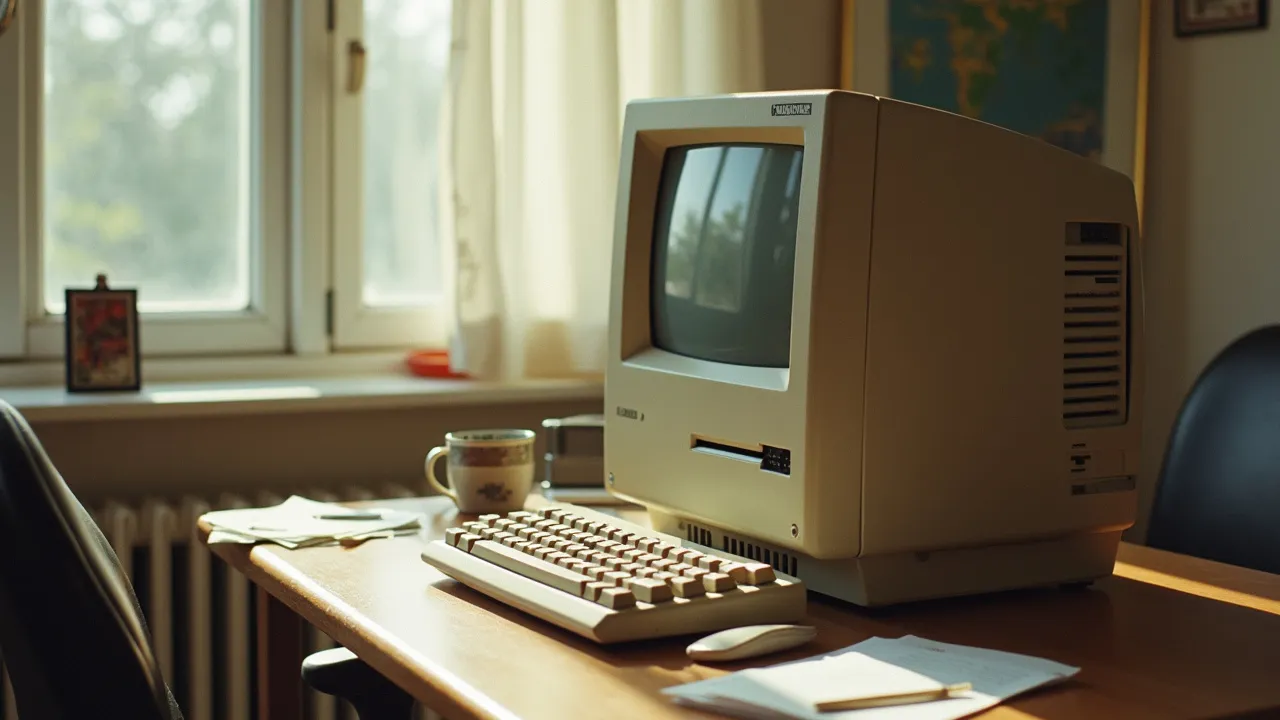
Macintosh Computer Day, celebrated on January 24th, honors the launch of the original Macintosh in 1984, a revolutionary personal computer that introduced the graphical user interface to the masses. It's a day for enthusiasts to reflect on Apple's legacy and the impact of the Mac on computing.
The Historical Origins & Evolutionary Journey
Macintosh Computer Day is observed annually on January 24th, marking the day in 1984 when Apple Inc. introduced the original Macintosh personal computer. This event forever changed the landscape of computing.
The Foundational Catalyst
The Macintosh project began in the late 1970s under the leadership of Jef Raskin, who envisioned an affordable, user-friendly computer for the average person. However, it was Steve Jobs who took over in 1981 and drove the project to its iconic launch. The Macintosh was the first mass-market personal computer to feature a graphical user interface (GUI) and a mouse, making it accessible to non-tech-savvy users.
The Legendary Launch
On January 24, 1984, Apple held a shareholders meeting at the Flint Center for the Performing Arts in Cupertino, California. Steve Jobs unveiled the Macintosh with a dramatic presentation, famously introducing it with the words: "Today, Apple is going to reinvent the computer." The Macintosh 128K, with its 9-inch black-and-white display and 128 KB of RAM, was priced at $2,495 (equivalent to about $6,000 today). The launch was accompanied by the iconic "1984" Super Bowl commercial directed by Ridley Scott, which depicted the Mac as a liberator from conformity.
Evolution and Legacy
Over the decades, the Macintosh evolved through numerous iterations, including the Macintosh Plus, the PowerBook, the iMac, the MacBook, and the Mac Pro. Each model brought innovations like color displays, USB ports, and Intel processors. Despite declining market share compared to Windows PCs, the Macintosh cultivated a loyal fan base and maintained a reputation for design excellence. The transition to Apple Silicon in 2020 marked a new era, with custom M1 chips delivering unprecedented performance and efficiency.
Global Impact and Technological Transformations
The Macintosh computer sparked profound changes across society, from publishing and design to education and personal computing.
Revolutionizing Desktop Publishing
With the release of the Macintosh and the LaserWriter printer in 1985, combined with Aldus PageMaker (the first desktop publishing software), the Macintosh democratized design. Small businesses and individuals could now create professional-quality documents, ushering in the desktop publishing revolution.
Shaping Modern User Interfaces
The Macintosh GUI—with windows, icons, menus, and pointers—became the standard for personal computing. While Xerox PARC pioneered these concepts, Apple commercialized them. Today, virtually every operating system, including Windows and Linux, borrows heavily from the Mac paradigm.
Influence on Education and Creativity
Apple targeted schools with the Macintosh, offering deep discounts and educational software. This cultivated a generation of creative professionals who grew up with Macs. The Mac became the tool of choice for graphic designers, video editors, musicians, and photographers, a trend that continues today with software like Photoshop, Final Cut Pro, and Logic Pro.
Economic and Cultural Impact
Apple's resurgence under Steve Jobs in the late 1990s, fueled by the iMac and later the iPod, iPhone, and iPad, turned the company into one of the world's most valuable. The Macintosh brand remains a symbol of innovation, quality, and a certain countercultural ethos.
How to Celebrate Macintosh Computer Day
Macintosh Computer Day is a celebration of Apple's history and computing culture. Here are some ways to commemorate the day, with traditions varying globally.
Individual Activities
- Use a Mac: Spend the day using a Mac computer, whether it's a vintage model or the latest MacBook. Appreciate the design and user experience.
- Learn Mac History: Watch Steve Jobs' 1984 keynote on YouTube, read about the Mac's development, or explore online archives of old Mac software.
- Restore a Classic Mac: If you own an old Mac, power it up, clean it, and try running classic software like System 7 or early Mac games.
- Share on Social Media: Post memories or photos of your first Mac using hashtags like #MacintoshDay or #MacDay.
School and Group Activities
- Educational Workshops: Schools can organize sessions on the history of computing, focusing on the Mac's role. Students can create presentations or posters.
- Hackathons: Technology clubs can host coding challenges using Swift, Apple's programming language, to honor the Mac's legacy.
- Retro Computing Meetups: Local user groups can gather to showcase vintage Macs, share stories, and trade hardware.
Corporate and Retail Events
- Apple Store Celebrations: Some Apple Stores may offer free workshops or themed product demonstrations on this day.
- Company Recognition: Businesses that rely on Macs can hold a "Mac Appreciation Day" with special perks for employees using Apple products.
Regional Variations
While Macintosh Computer Day is predominantly observed in the United States, Apple enthusiasts worldwide celebrate it. In Japan, where Apple has a strong following, fans often organize events at Apple Stores in Tokyo and Osaka. In Europe, online communities host virtual meetups and retro gaming sessions. Australia sees many beachside gatherings of Mac enthusiasts, reflecting the country's relaxed culture.
The Macintosh Community and Culture
Over the decades, a passionate global community has formed around the Macintosh. This subculture includes collectors, developers, designers, and everyday users who share a deep appreciation for Apple's products.
Collectors and Vintage Macs
Dedicated collectors restore and preserve classic Macintosh models, from the original 1984 unit to the iconic iMac G3. Websites like 68k Macintosh Liberation Army and forums like MacRumors offer resources. Events like the Vintage Computer Festival often feature Mac exhibits.
Developer Ecosystem
The Mac has a rich history of independent software developers. The Mac App Store, launched in 2011, simplifies distribution. Many popular apps like Adobe Creative Suite, Microsoft Office, and Final Cut Pro started on or were optimized for Mac. The open-source community also supports Macs through projects like Homebrew.
Design and Aesthetics
Mac users often cite design as a key reason for their loyalty. Apple's emphasis on simplicity, clean lines, and intuitive interfaces has influenced industrial design worldwide. The Mac's aluminum unibody construction and Retina displays set standards for premium laptops.
Advocacy and Activism
The Mac community has also been active in advocating for digital rights, privacy, and open standards. Apple's stance on encryption and user privacy resonates with many Mac users. Events like the annual WWDC (Worldwide Developers Conference) serve as a gathering point for this community.
Technological Milestones in Macintosh History
The Macintosh line has seen numerous groundbreaking innovations. Below is a chronological overview of key milestones:
- 1984: Original Macintosh 128K launches with GUI.
- 1987: Macintosh II introduces color graphics and expansion slots.
- 1991: PowerBook 100 series defines the modern laptop form factor.
- 1998: iMac G3 revives Apple's fortunes with bold colors and USB-only design.
- 2001: Mac OS X (Cheetah) launches, based on Unix, bringing stability and modern features.
- 2006: Transition from PowerPC to Intel processors, enabling faster performance and Boot Camp.
- 2008: MacBook Air introduces ultra-thin design and solid-state drives.
- 2012: Retina display MacBook Pro sets new screen resolution standards.
- 2016: MacBook Pro with Touch Bar adds a dynamic OLED strip.
- 2020: Apple Silicon M1 chip brings ARM architecture, exceptional performance per watt.
Myths and Misconceptions About the Macintosh
Despite its popularity, several myths persist about the Macintosh. Clarifying these helps appreciate its true legacy.
Myth: The Macintosh was the first computer with a GUI.
Fact: Xerox Alto (1973) and Lisa (1983) preceded it, but Mac made GUI affordable and popular.
Myth: Macs don't get viruses.
Fact: While historically less targeted, Macs are vulnerable to malware; the myth originated from lower market share.
Myth: Apple owns the Macintosh trademark.
Fact: Apple licensed the name from McIntosh Laboratory (audio equipment) until the early 2000s, then bought the trademark.
Myth: The Mac is overpriced.
Fact: Macs often have premium components and longer lifespan; total cost of ownership can be competitive.
Historical Timeline
Jef Raskin conceives the Macintosh project at Apple, aiming for a low-cost, user-friendly computer.
Steve Jobs takes over the Macintosh project, pushing for a revolutionary GUI-based machine.
Steve Jobs unveils the original Macintosh 128K at the Flint Center. The '1984' Super Bowl commercial airs two days prior.
Apple introduces the LaserWriter printer and Aldus PageMaker, creating the desktop publishing industry.
iMac G3 launches in Bondi Blue, marking Apple's return to profitability and design innovation.
Mac OS X (version 10.0 Cheetah) enters the market, integrating Unix stability with a polished Aqua interface.
Apple announces the transition to Intel processors; the first Intel Macs (iMac and MacBook Pro) ship.
The first MacBook Air is introduced, pioneering ultraportable laptops and solid-state drives.
MacBook Pro with Retina display sets new standard for laptop screen resolution and thinness.
Apple announces transition to Apple Silicon; the M1 chip debuts in MacBook Air, MacBook Pro, and Mac mini.