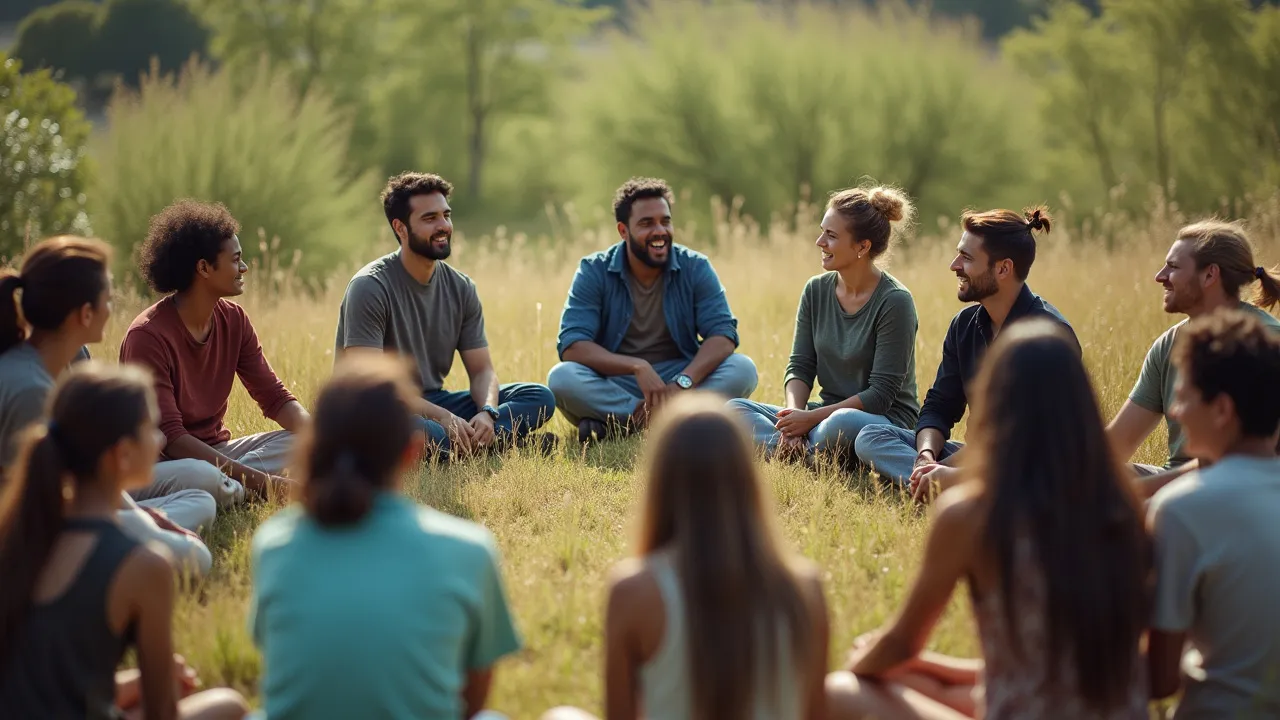
Celebrated on the vernal equinox, World Storytelling Day honors the ancient art of oral narrative. It unites cultures worldwide through shared tales, promoting empathy, creativity, and human connection.
The Historical Origins & Evolutionary Journey
World Storytelling Day is a global celebration of the art of oral storytelling, observed annually on the vernal equinox (March 20th). It originated in Sweden in the early 1990s as "Alla berättardagar" (All Storytellers Day), conceived by storytellers who sought to revive the ancient tradition of sharing tales orally. The day quickly spread across Scandinavia and then to the rest of the world, driven by the universal human need for narrative.
The Foundational Catalyst
The modern revival of storytelling began in the 1970s and 1980s with the rise of storytelling festivals in the United States and Europe. In 1991, the Swedish storyteller Nina Frisk and the Scandinavian Storytellers' Network proposed a dedicated day to celebrate oral narratives. They chose the spring equinox—a symbol of rebirth and new beginnings—to align with the theme of renewal inherent in stories. The first official celebration took place in Gothenburg, Sweden, with a small gathering of local storytellers sharing folk tales by a bonfire.
The Legislative/Official Adoption
By the mid-1990s, the event gained momentum through grassroots efforts. In 1997, the International Storytelling Network adopted the day, standardizing it as a global observance. UNESCO informally recognized World Storytelling Day in 2003, though it remains a non-official UN day. Today, over 50 countries officially participate, with events ranging from school assemblies to international storytelling festivals.
Modern Global Legacy
World Storytelling Day now has a yearly theme (e.g., "Myths, Legends, and Epics" in 2024). It is marked by 24-hour online storytelling marathons, community story swaps, and educational workshops. The day serves as a powerful tool for preserving endangered languages and oral traditions, and it has adapted to digital platforms, with live-streamed storytelling sessions connecting audiences worldwide.
How to Celebrate World Storytelling Day
World Storytelling Day offers myriad ways to participate, from solo storytelling to large community events. Below are actionable strategies for individuals, schools, and organizations, along with regional traditions.
For Individuals
- Host a story circle: Gather friends or family in a cozy setting. Each person tells a true personal story or a favorite folktale. Use the day's theme for inspiration.
- Record your stories: Create an audio or video recording of a story to share on social media using #WorldStorytellingDay.
- Attend a local event: Check libraries, bookstores, or cultural centers for storytelling performances or workshops.
For Schools
- Storytelling project: Students research folktales from their cultural heritage and present them to classmates.
- Guest storytellers: Invite professional storytellers to perform or lead a workshop on voice modulation and gesture.
- Intergenerational storytelling: Pair students with seniors to share stories of historical events, fostering empathy and oral history preservation.
For Organizations
- Corporate storytelling workshop: Use the day to train employees in narrative skills for better presentations and brand storytelling.
- Community story swap: Partner with local museums or parks to host an outdoor event where people share stories under a canopy.
- Digital marathon: Organize a 24-hour online storytelling event on platforms like Zoom or Twitch, with storytellers from different time zones.
Regional Celebration Variations
In Sweden, traditional "berättarkvällar" (storytelling evenings) are held in historical buildings. In India, the day coincides with local fairs where "kathakars" (itinerant storytellers) perform epic tales like the Ramayana. In West Africa, griot families gather at village squares to recite genealogies and moral fables. In the United States, many cities host "StorySLAM" events, inspired by The Moth, encouraging true personal stories.
The Cultural Impact of Storytelling
Storytelling is a fundamental human activity, shaping cultures, preserving histories, and transmitting values across generations. World Storytelling Day amplifies this impact by spotlighting the role of narrative in building community and understanding.
Preservation of Indigenous Cultures
For many indigenous peoples, oral storytelling is the primary means of passing down knowledge, laws, and spiritual beliefs. World Storytelling Day events often feature elders from groups like the Maasai, Sami, or Aboriginal Australians sharing stories in their native languages. This practice helps combat language extinction and reinforces cultural identity.
Fostering Empathy and Social Cohesion
Research in narrative psychology shows that hearing stories activates the same brain regions as experiencing events firsthand. By exposing listeners to diverse perspectives, storytelling reduces prejudice and builds empathy. World Storytelling Day programs in schools have been linked to lower bullying rates and improved cross-cultural understanding.
Healing and Therapy
Narrative therapy uses storytelling as a tool for mental health. The day encourages story-sharing circles for trauma survivors, refugees, and marginalized groups, providing a safe space for catharsis and communal support. Organizations like StoryCenter run digital storytelling workshops that allow participants to process life experiences.
Storytelling in the Digital Age
The evolution of technology has transformed how stories are told and consumed. World Storytelling Day now embraces digital platforms, expanding reach and forms of narrative expression.
Podcasts and Audio Platforms
Podcasts like "The Moth" and "This American Life" have popularized personal storytelling. On World Storytelling Day, many podcasters release special episodes or host live recordings. Audio stories are accessible to visually impaired audiences and allow for intimate listening experiences.
Social Media and Micro-Storytelling
Platforms like Instagram, TikTok, and Twitter have spawned new forms of narrative. Users share micro-stories through threads, short videos, or illustrated posts. The hashtag #StorytellingDay trends globally, with people contributing bite-sized tales. Some organizers run "story slams" via Instagram Live, where participants have 60 seconds to tell a story.
Interactive and Transmedia Storytelling
Video games, virtual reality (VR), and alternate reality games (ARGs) offer immersive story experiences. World Storytelling Day events sometimes include VR storytelling booths where users enter a 360-degree narrative. Transmedia projects extend a story across multiple platforms—like a webcomic, podcast, and live event—deepening engagement.
Educational Benefits of Storytelling
Educators worldwide use storytelling as a pedagogical tool to enhance learning outcomes. World Storytelling Day provides a focal point to integrate narrative techniques into curricula.
Language and Literacy Development
Listening to and telling stories expands vocabulary, improves comprehension, and strengthens narrative skills. Studies show that children who participate in storytelling activities score higher on reading and writing assessments. On World Storytelling Day, teachers often incorporate story maps and oral retelling exercises.
Critical Thinking and Creativity
Crafting stories requires organizing thoughts, sequencing events, and imagining possibilities. It fosters divergent thinking. In classrooms, students might create "choose your own adventure" stories or collaborate on a group narrative, building teamwork and problem-solving skills.
Cultural and Historical Understanding
Stories are vessels of culture. When students hear folktales from different regions, they learn about values, traditions, and historical contexts. World Storytelling Day often features multicultural story sessions that celebrate diversity and promote global citizenship.
Storytelling Traditions Around the World
World Storytelling Day highlights the rich tapestry of oral traditions globally. Below are notable practices from various regions, demonstrating the universality and uniqueness of storytelling.
Asia: Kamishibai and Kathakal
In Japan, Kamishibai (paper theater) combines illustrated cards with live narration, often performed by traveling storytellers. In India, Kathakal performers use elaborate gestures and dance to narrate mythological epics, accompanied by traditional instruments.
Africa: Griot and Anansi Stories
The Griot of West Africa is a historian-musician who preserves oral genealogies and epic poems. Anansi the Spider trickster tales, originating from the Ashanti people, are told across the African diaspora, teaching moral lessons through wit.
Europe: Sagas and Fairytales
Icelandic sagas recount Viking feuds and explorations, recited for centuries. The Brothers Grimm collected German folktales, now central to Western childhood. In Ireland, seanchaithe (traditional storytellers) keep alive legends of fairies and heroes.
Americas: First Nations and Latin American Cuentos
First Nations storytelling often involves creation myths and trickster figures like Coyote. In Latin America, cuentos mix indigenous, African, and Spanish influences, with figures like La Llorona used to convey cautionary tales.
The Therapeutic Power of Storytelling
Beyond entertainment, storytelling has profound therapeutic benefits, acknowledged by psychologists and social workers. World Storytelling Day promotes these healing aspects.
Narrative Therapy
Developed by Michael White and David Epston, narrative therapy helps individuals reframe their life stories by externalizing problems. On World Storytelling Day, therapists may organize workshops where participants rewrite personal narratives to foster resilience and self-efficacy.
Community Healing
In post-conflict zones, storytelling circles allow survivors to share experiences, promoting collective healing. For example, Truth and Reconciliation Commissions use storytelling to document human rights abuses and foster forgiveness. World Storytelling Day events in such regions often focus on stories of hope and reconciliation.
Personal Growth
Journaling and oral storytelling improve mental health by organizing thoughts and emotions. The day encourages people to record their personal histories, which can be passed down to future generations, creating a sense of legacy and purpose.
Historical Timeline
The first official World Storytelling Day is celebrated in Gothenburg, Sweden, organized by the Scandinavian Storytellers' Network. The date is set on the vernal equinox to symbolize renewal.
The event spreads to Norway and Denmark. Storytellers in Copenhagen host a 12-hour storytelling marathon in a public square.
The International Storytelling Network (ISN) adopts World Storytelling Day as a global observance, encouraging member countries to participate.
First official celebrations in the United States, with events in New York City and San Francisco. The Moth launches its first StorySLAM to coincide with the day.
UNESCO informally recognizes World Storytelling Day as a means to promote cultural diversity and oral heritage.
Australia and New Zealand join the celebration. Aboriginal elders share Dreamtime stories at public events.
The first live global online storytelling marathon is held, streaming storytellers from 24 time zones over 24 hours.
India celebrates with a national "Kathakar" festival in Delhi, featuring traditional and modern storytellers.
The digital storytelling platform StoryCenter partners with UNESCO to host workshops in refugee camps for World Storytelling Day.
Due to the COVID-19 pandemic, most events move online. Virtual reality storytelling booths debut, allowing immersive participation from home.
Theme: "Myths, Legends, and Epics." Over 100 countries participate, with record-breaking social media engagement using #WorldStorytellingDay.