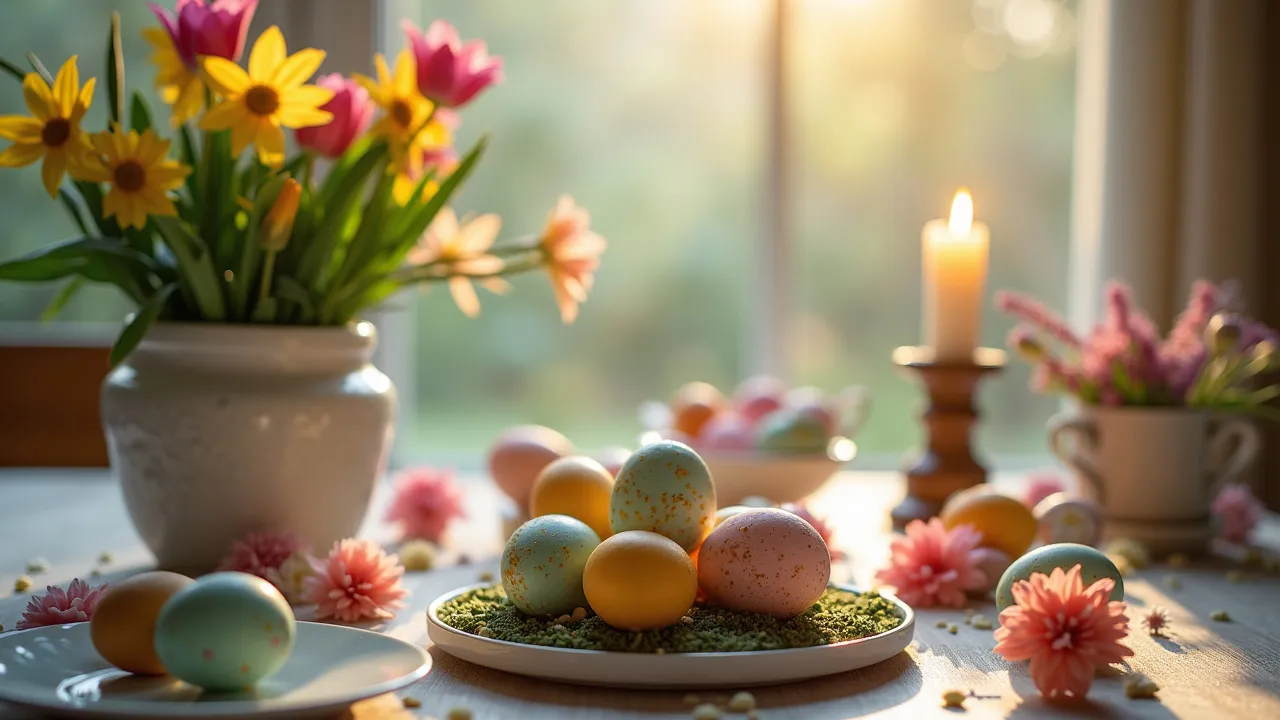
The Spring Equinox, known as Ostara in Neopagan traditions, marks the astronomical beginning of spring on March 20th. It is a time of balance between day and night, celebrated with themes of renewal, fertility, and new beginnings.
The Historical Origins & Evolutionary Journey
The Spring Equinox, known as Ostara, has deep roots in ancient pagan traditions. Its origins are intertwined with the cycles of nature and the agricultural calendar.
The Foundational Catalyst
Long before modern calendars, ancient peoples observed the equinox as a time of balance, when day and night are equal. In many cultures, this marked the start of the growing season. The name 'Ostara' is derived from the Germanic goddess Eostre (or Ostara), associated with spring, dawn, and fertility. According to the Venerable Bede, an 8th-century monk, Eostre was celebrated with festivals during the month of Eosturmonath (April). While Bede is the primary source, archaeological evidence suggests spring fertility rites were common across pre-Christian Europe.
The Legislative/Official Adoption
With the spread of Christianity, many pagan traditions were absorbed into Easter, such as the symbolism of eggs and rabbits. The equinox itself was never officially adopted as a secular holiday, but Neopagan movements in the 20th century revived Ostara as one of the eight Sabbats on the Wheel of the Year. Modern Wicca, founded by Gerald Gardner in the 1950s, formalized Ostara as a celebration of the spring equinox, emphasizing rebirth and renewal.
Modern Global Legacy
Today, Ostara is celebrated by Wiccans, Druids, and many secular people worldwide. It has become a symbol of environmental awareness and the return of life. The equinox is also recognized by astronomical societies as the official start of spring in the Northern Hemisphere.
How to Celebrate Spring Equinox (Ostara)
Celebrating Ostara involves connecting with nature, honoring balance, and welcoming spring. Here are specific ways individuals, families, and groups can observe the day.
Personal and Family Traditions
- Decorate eggs: Dye or paint eggs with natural colors (beet juice, turmeric, red cabbage). Eggs symbolize fertility and new life.
- Plant seeds: Sow seeds indoors or in a garden to represent growth and intention setting.
- Spring cleaning: Clean and declutter your home to make space for new energy.
- Walk in nature: Observe the budding trees, flowers, and lengthening days.
Community and Group Rituals
- Host a bonfire or candlelit gathering to welcome the sun's warmth.
- Create an altar with symbols of spring: flowers, crystals (like amethyst), and images of rabbits or chicks.
- Perform a meditation focusing on balance, using the equal day and night as a metaphor for inner harmony.
Regional Variations
In the Southern Hemisphere, where March is autumn, Ostara is sometimes celebrated in September during the southern spring. Many Neopagans adjust their festivals to align with local seasons.
Astronomical Significance of the Spring Equinox
The spring equinox occurs when the Sun crosses the celestial equator, moving from south to north in the Northern Hemisphere. This event happens around March 20th each year. The word 'equinox' comes from Latin aequus (equal) and nox (night), referring to the nearly equal length of day and night.
Scientific Details
On the equinox, the Earth's axis is tilted neither toward nor away from the Sun, resulting in 12 hours of daylight and 12 hours of night at all latitudes. This is a key moment in the Earth's orbit, marking the transition from winter to spring. In 2024, the spring equinox falls on March 20th at 3:06 UTC.
Cultural Importance
Many ancient structures, like Stonehenge and the Mayan pyramids, are aligned with the equinox sunrise. This celestial event has been celebrated for millennia as a time of rebirth.
Symbolism & Traditional Ostara Practices
Ostara is rich in symbolism. The most prominent symbols are the egg and the hare, both representing fertility and new life.
The Egg
Eggs have been associated with spring festivals for thousands of years. Ancient Persians decorated eggs for Nowruz, the Persian New Year, on the spring equinox. In medieval Europe, eggs were forbidden during Lent, so they were eaten and decorated at Easter. Neopagans use eggs to represent the cosmic egg of creation.
The Hare or Rabbit
Hares are known for their energetic mating rituals in early spring. The hare is a symbol of the Moon and fertility. The legend of the Easter Bunny likely originates from pre-Christian folklore of a hare that laid eggs.
Colors and Foods
Traditional Ostara colors include pastel greens, yellows, and pinks. Foods like leafy greens, sprouts, seeds, and honey are often consumed. Hot cross buns, originally pagan bread, are also traditional.
Global Variations of the Spring Equinox Celebration
Nowruz (Persian New Year)
Nowruz, meaning 'new day,' is celebrated on the spring equinox in Iran, Afghanistan, and parts of Central Asia. It is a 13-day festival with deep Zoroastrian roots. Traditions include setting a haft sin table with seven symbolic items, spring cleaning, and visiting family.
Holi (Hindu Spring Festival)
Holi, the festival of colors, is celebrated in India and Nepal around the March full moon (Phalguna Purnima). While not exactly on the equinox, it honors the triumph of good over evil and the arrival of spring.
Indigenous American Celebrations
Many Native American tribes hold spring equinox ceremonies, such as the Hopi's Soyal ceremony or the Cherokee's spring planting rituals. These often involve dance, prayer, and giving thanks to the earth.
Modern Neopagan Ostara
In Wicca and other pagan paths, Ostara is one of the eight Sabbats. It is a time for blessing seeds, performing rituals for balance, and honoring the goddess Eostre.
Environmental and Seasonal Themes of Ostara
The spring equinox is a powerful reminder of humanity's connection to the Earth. Many environmentalists use this day to promote awareness of climate change and sustainable living.
Renewal and Growth
As nature awakens, Ostara encourages us to consider our ecological footprint. Planting trees, cleaning up local parks, and starting a compost bin are common activities.
Balance in Nature
The equinox symbolizes balance, which is a core principle in many Earth-centered traditions. It invites reflection on how to live in harmony with the natural world.
Actionable Tips
- Reduce plastic use and switch to reusable items.
- Support local farmers by buying seasonal produce.
- Participate in community gardens or wildlife conservation projects.
Traditional Recipes & Crafts for Ostara
Celebrating Ostara often involves preparing special foods and making decorations that honor spring.
Recipes
Spring Herb Omelet: Use fresh chives, parsley, and sorrel to symbolize the new season.
Carrot Cupcakes: Decorate with pastel frosting and edible flowers.
Seed Bread: A dense loaf with sunflower, pumpkin, and sesame seeds.
Crafts
Egg decorating: Use natural dyes from onion skins, beets, and blueberries. Add leaf prints by wrapping leaves around eggs before dyeing.
Flower crowns: Weave fresh blossoms into a crown to wear during spring celebrations.
Seed bombs: Mix clay, soil, and wildflower seeds to create balls that can be thrown into barren areas to promote growth.
Historical Timeline
The Venerable Bede records the pagan festival of Eostre in his work 'De Temporum Ratione,' linking the spring equinox to the Germanic goddess.
Council of Nicaea establishes the date of Easter as the first Sunday after the first full moon after the spring equinox, intertwining Christian and pagan traditions.
Gerald Gardner and early Wiccans formally adopt Ostara as one of the eight Sabbats in the Wheel of the Year, reviving ancient practices.
The spring equinox gains broader recognition in mainstream culture, with increased Neopagan and secular celebrations worldwide.
The spring equinox occurs at 3:06 UTC, marking the astronomical start of spring in the Northern Hemisphere. Global celebrations include Nowruz, Ostara, and various cultural festivals.