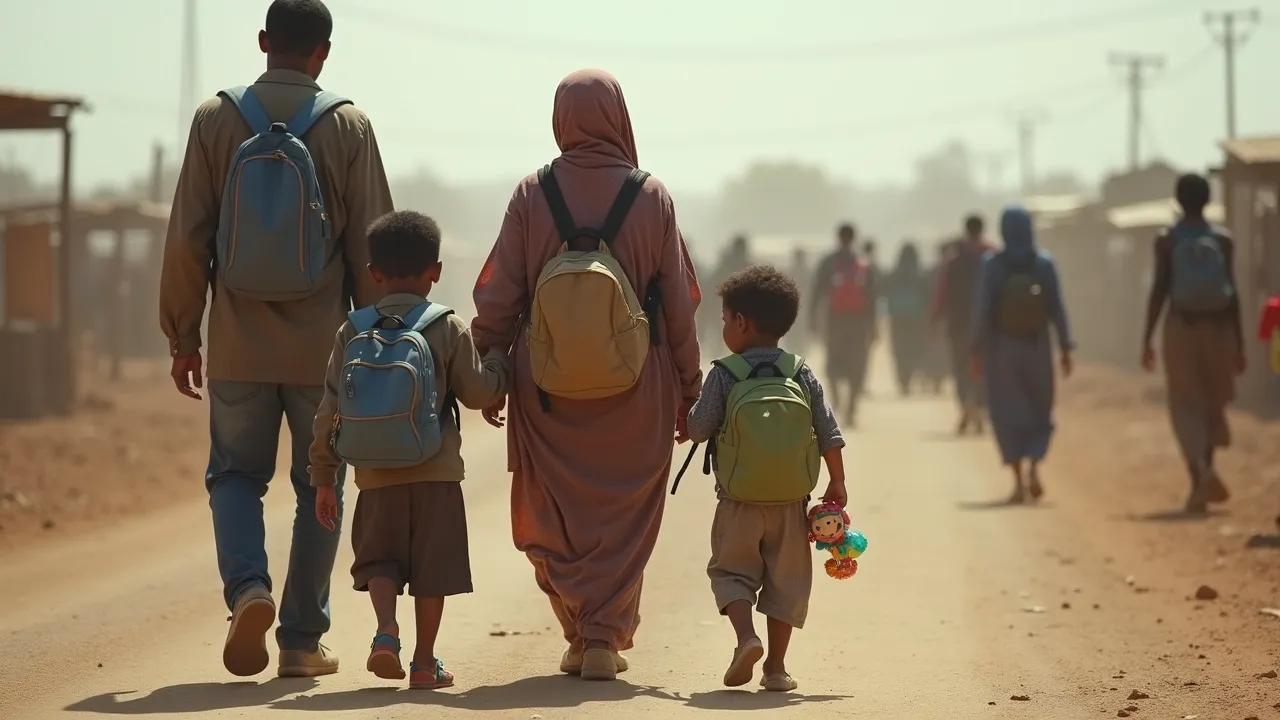
World Refugee Day, observed on June 20th, honors the strength and resilience of millions forced to flee their homes. It raises awareness of their plight and mobilizes support for their protection and integration worldwide.
The Historical Origins & Evolutionary Journey
World Refugee Day, observed annually on June 20th, was established by the United Nations General Assembly in December 2000 through Resolution 55/76. The date was chosen to coincide with the 50th anniversary of the 1951 Refugee Convention, a foundational legal instrument defining who is a refugee and outlining their rights and protections.
The Foundational Catalyst
The impetus for a dedicated day emerged from the growing global displacement crises of the late 20th century. Wars in Africa, the Balkans, and Asia had uprooted millions, straining international humanitarian systems. Advocacy groups and UN agencies, led by the UNHCR, pushed for greater awareness and solidarity. The African Refugee Day, already celebrated on June 20th by several African nations, provided a model and a convenient date.
The Legislative/Official Adoption
After years of lobbying, the UN General Assembly formally adopted the resolution, designating June 20th as World Refugee Day. The first official observance took place in 2001, marking the 50th anniversary of the 1951 Convention. Member states were encouraged to hold events, educational programs, and cultural activities to highlight the contributions and challenges of refugees.
Modern Global Legacy
Since its inception, World Refugee Day has grown into a global movement. Each year, the UNHCR selects a theme—such as 'Hope Away from Home' (2023) or 'Together We Can Do Anything' (2024)—to drive campaigns. The day now sees thousands of events in over 100 countries, from film screenings to solidarity walks, and serves as a critical moment to advocate for refugee rights and resettlement.
How to Celebrate World Refugee Day
Celebrating World Refugee Day means taking meaningful action to support displaced people and raise awareness. Below are actionable strategies for individuals, schools, and organizations, categorized by approach.
For Individuals
- Educate yourself by reading personal accounts or UNHCR reports on refugee experiences.
- Donate to reputable organizations like UNHCR, IRC, or local refugee aid groups.
- Volunteer at refugee resettlement agencies or language tutoring programs.
- Share stories on social media using official hashtags like #WorldRefugeeDay and #WithRefugees.
For Schools and Universities
- Organize a film screening of documentaries such as 'The Swimmers' or 'For Sama'.
- Host a simulation activity (e.g., refugee camp experience) to build empathy.
- Invite refugee speakers to share their journeys in classrooms or assemblies.
For Organizations
- Launch a fundraising campaign matching employee donations.
- Provide pro bono services like legal aid or medical care to refugee communities.
- Celebrate refugee contributions through art exhibits highlighting refugee artists.
Different countries have unique traditions: in Australia, community barbecues and cultural fairs are common; in Jordan, refugee camps host open days; and in Canada, citizenship ceremonies are often held to welcome refugees.
Global Impact & Current Statistics
World Refugee Day draws attention to staggering numbers. As of 2024, over 110 million people are forcibly displaced worldwide, including 35 million refugees. The top host countries include Turkey, Iran, Colombia, and Germany, while most refugees originate from Syria, Venezuela, Ukraine, and Afghanistan.
Economic Contributions
Contrary to myths, refugees often boost local economies. Studies by the UNHCR and World Bank show that refugees generate tax revenue, fill labor shortages, and start businesses at higher rates than native populations. For example, a 2022 study in Uganda found that refugee settlements improved regional trade by 15%.
Environmental Strain
Yet, mass displacement also strains resources. Host communities in developing countries face pressure on water, food, and housing. World Refugee Day highlights the need for sustainable solutions, such as renewable energy in camps and integrated education systems.
Legal Frameworks & Protection Mechanisms
The cornerstone of refugee protection is the 1951 Refugee Convention and its 1967 Protocol, which forbid refoulement (forced return to danger). Regional instruments like the 1969 OAU Convention in Africa and the 1984 Cartagena Declaration in Latin America broaden the definition. World Refugee Day often calls for stronger implementation of these laws.
Key Rights
- Non-refoulement: no forced return to persecution.
- Access to asylum procedures.
- Basic education and healthcare.
- Identity documents and freedom of movement.
Challenges
Many countries criminalize undocumented entry, leading to detention and pushbacks. The day serves as a reminder to uphold international law, especially for vulnerable groups like unaccompanied minors and LGBTQ+ refugees.
Refugee Voices & Personal Stories
World Refugee Day amplifies the voices of refugees themselves. Projects like UNHCR's 'Stories of Hope' showcase resilience. For example, Nadia Murad, a Yazidi survivor, became a Nobel Peace Prize laureate advocating for survivors of sexual violence. Yusra Mardini, a Syrian swimmer, competed in the Olympics and now works to inspire others.
Community Narratives
Local storytelling events allow refugees to share their journeys. In many cities, 'Refugee Week' precedes the day, featuring art, music, and poetry. These narratives counter negative stereotypes and highlight shared humanity.
Corporate & Organizational Engagement
Businesses increasingly participate in World Refugee Day through corporate social responsibility initiatives. IKEA has funded shelter solutions, Google offers career training for refugees, and Chobani hires many refugees. Key actions include:
- Employment programs: commit to hiring refugees or providing internship pathways.
- Inclusive supply chains: source from refugee-owned businesses.
- Awareness campaigns: use marketing channels to share refugee stories.
Such engagement not only helps refugees but also builds brand loyalty and innovation.
Educational Resources & Advocacy
Teachers and advocates can access free resources for World Refugee Day. The UNHCR provides lesson plans for all ages, including interactive maps and case studies. The #WithRefugees campaign offers toolkits for letter-writing drives to politicians. Schools can integrate refugee themes into geography, history, and social studies curricula to foster understanding.
Historical Timeline
The United Nations Refugee Convention is adopted, defining the term 'refugee' and outlining legal protections, including the principle of non-refoulement.
The Refugee Protocol removes geographic and temporal restrictions from the 1951 Convention, making it truly universal.
The Organization of African Unity (OAU) adopts the OAU Convention Governing the Specific Aspects of Refugee Problems in Africa, expanding the refugee definition.
The Cartagena Declaration on Refugees is adopted by Latin American countries, incorporating broader criteria for refugee status.
The UN General Assembly passes Resolution 55/76, designating June 20th as World Refugee Day, to be first observed in 2001.
First official World Refugee Day is observed globally on June 20th, marking the 50th anniversary of the 1951 Refugee Convention.
The Syrian refugee crisis peaks, with over 1 million asylum seekers arriving in Europe, prompting a massive humanitarian response and increased focus on World Refugee Day.
UNHCR reports a record 110 million forcibly displaced people worldwide, highlighting the urgency of refugee protection on World Refugee Day.