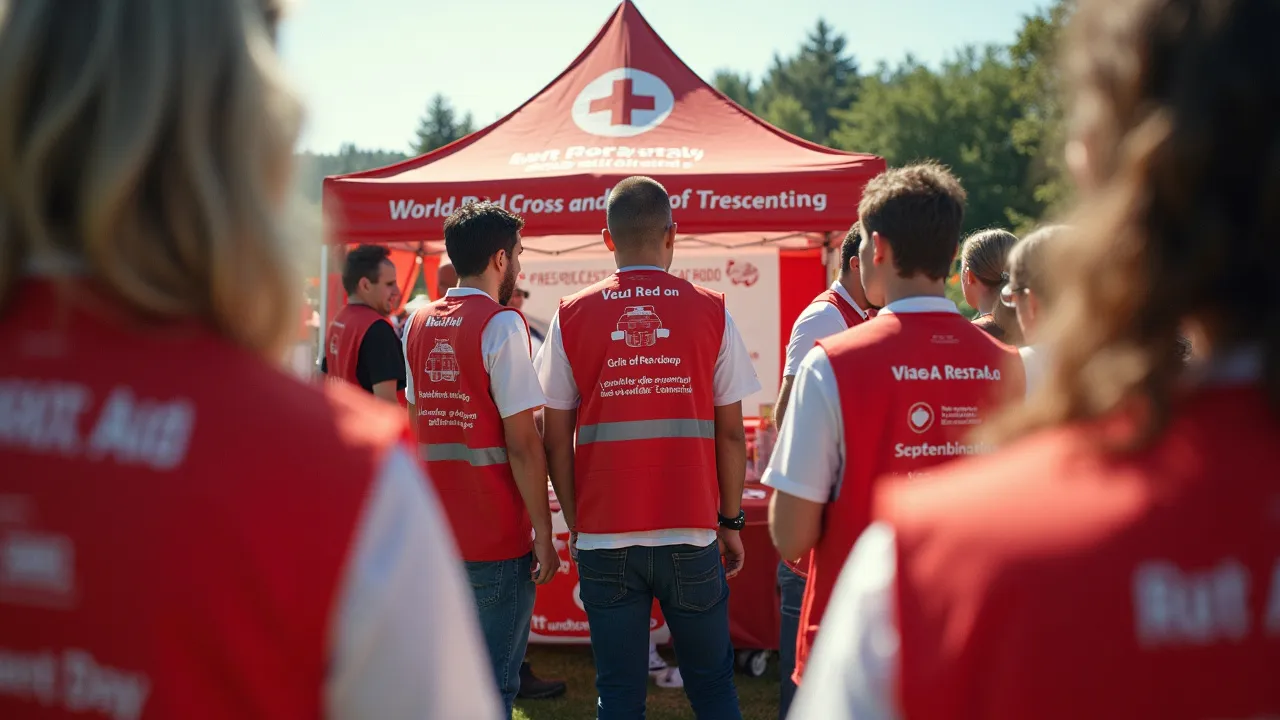
World Red Cross and Red Crescent Day, observed on May 8th, honors the birth of founder Henry Dunant and celebrates the humanitarian principles of the International Red Cross and Red Crescent Movement worldwide.
The Historical Origins & Evolutionary Journey
World Red Cross and Red Crescent Day is observed annually on May 8th, the birthday of Henry Dunant, the founder of the International Red Cross and Red Crescent Movement. This day honors the humanitarian principles that have guided the movement for over 150 years.
The Foundational Catalyst
The movement traces its roots to the Battle of Solferino in 1859, where Dunant witnessed the suffering of wounded soldiers left without care. He organized local civilians to provide aid, an act that inspired his book A Memory of Solferino. This led to the creation of the International Committee for Relief to the Wounded (later the ICRC) and the first Geneva Convention in 1864.
The Legislative/Official Adoption
In 1948, the League of Red Cross Societies (now the IFRC) proposed an annual day to celebrate the movement's ideals. May 8th was chosen to coincide with Dunant's birthday. The first official celebration took place that same year, initially called "World Red Cross Day". In 1984, the name was expanded to include the Red Crescent, reflecting the movement's inclusive identity.
Modern Global Legacy
Today, the day is recognized in over 190 countries. It serves as a platform to promote the Fundamental Principles of the movement: humanity, impartiality, neutrality, independence, voluntary service, unity, and universality. Events range from blood drives and first aid demonstrations to award ceremonies honoring volunteers.
How to Celebrate World Red Cross and Red Crescent Day
Celebrating this day involves both individual and collective actions that embody the spirit of humanitarian service. Below are practical ways to participate, organized by setting.
For Individuals
- Volunteer: Offer time to your local Red Cross or Red Crescent chapter for activities like blood donation drives or disaster preparedness training.
- Donate: Contribute to national societies or the IFRC to support global relief efforts.
- Learn First Aid: Enroll in a certified first aid course and share knowledge with family and friends.
- Spread Awareness: Use social media to highlight the movement's work using hashtags like #WorldRedCrossDay.
For Schools
- Organize a Fundraiser: Host a bake sale or walkathon to raise money for humanitarian projects.
- Invite a Speaker: Ask a Red Cross volunteer to talk about emergency response and the importance of community service.
- Create Art Projects: Have students design posters showcasing the seven Fundamental Principles.
For Organizations
- Host a Blood Drive: Partner with the local blood service to collect donations at your workplace.
- Offer Paid Volunteer Time: Encourage employees to volunteer during work hours.
- Match Donations: Corporate matching programs can double the impact of employee contributions.
Different countries have unique traditions. In the United Kingdom, the British Red Cross holds community fairs. In Egypt, the Egyptian Red Crescent organizes health camps. In Japan, the Japanese Red Cross Society highlights disaster response drills.
The Global Impact of the Movement
The Red Cross and Red Crescent Movement is the world's largest humanitarian network, with over 14 million volunteers across 192 National Societies. Its impact is felt in every corner of the globe.
Disaster Response
From earthquakes in Haiti to floods in Bangladesh, the movement provides immediate relief including food, water, shelter, and medical care. The IFRC's Disaster Relief Emergency Fund (DREF) enables rapid response within 24 hours.
Health and Social Services
National societies run blood banks, ambulance services, and community health programs. They combat diseases like HIV/AIDS, malaria, and tuberculosis, and promote maternal and child health.
International Humanitarian Law
The ICRC works to ensure respect for the Geneva Conventions, protects prisoners of war, and assists civilians in armed conflicts. It also promotes the prohibition of torture and other violations.
The Seven Fundamental Principles
The movement's work is guided by seven principles, formally adopted in 1965. They ensure consistency and trust across all operations.
- Humanity: To prevent and alleviate human suffering wherever it may be found.
- Impartiality: To make no discrimination as to nationality, race, religion, or political beliefs.
- Neutrality: To not take sides in hostilities or engage in controversies of a political, racial, religious, or ideological nature.
- Independence: To maintain autonomy so that national societies may act in accordance with the principles.
- Voluntary Service: To be a voluntary relief movement not prompted by desire for gain.
- Unity: There can be only one Red Cross or Red Crescent society in any one country.
- Universality: The movement is worldwide, with all societies having equal status and sharing equal responsibilities.
Challenges Facing the Movement Today
Despite its noble mission, the movement faces several modern challenges that impact its ability to deliver aid.
Funding Gaps
Many national societies rely on government funding and donations, which can be unpredictable. The IFRC's annual appeal often falls short, limiting response capacity.
Access and Security
In conflict zones, humanitarian workers face increasing risks. Attacks on medical personnel and facilities violate international law but continue to occur.
Climate Change
More frequent natural disasters strain resources. The movement is adapting by investing in early warning systems and community resilience programs.
Misuse of Emblem
The red cross emblem is protected by the Geneva Conventions, but it is sometimes abused by entities not part of the movement, undermining trust.
How to Support the Movement Year-Round
Beyond May 8th, there are many ways to contribute to the Red Cross and Red Crescent's humanitarian work.
Become a Regular Donor
Monthly donations provide predictable funding for ongoing programs. Many societies offer automatic payment plans.
Volunteer Your Skills
Professionals in logistics, healthcare, communications, and IT are often needed. Check with your national society for skill-based volunteer opportunities.
Advocate for Humanitarian Law
Educate others about the Geneva Conventions and the importance of protecting humanitarian workers. Write to elected officials to support international humanitarian law.
Organize Community Preparedness
Work with local Red Cross chapters to develop emergency plans for your neighborhood or workplace. The "Prepare" app by the American Red Cross is a great tool.
Historical Timeline
Henry Dunant witnesses the aftermath of the Battle of Solferino and organizes local aid for wounded soldiers.
The International Committee for Relief to the Wounded (later the ICRC) is founded in Geneva.
The first Geneva Convention is adopted, establishing rules for the treatment of wounded soldiers and medical personnel.
The League of Red Cross Societies (now IFRC) is founded to coordinate international disaster relief.
The first World Red Cross Day is observed on May 8th, Henry Dunant's birthday.
The name is officially changed to World Red Cross and Red Crescent Day to include all components of the movement.
The Red Crystal emblem is adopted as an additional neutral symbol for the movement.
The movement celebrates its 100th anniversary of the League of Red Cross Societies with global events.