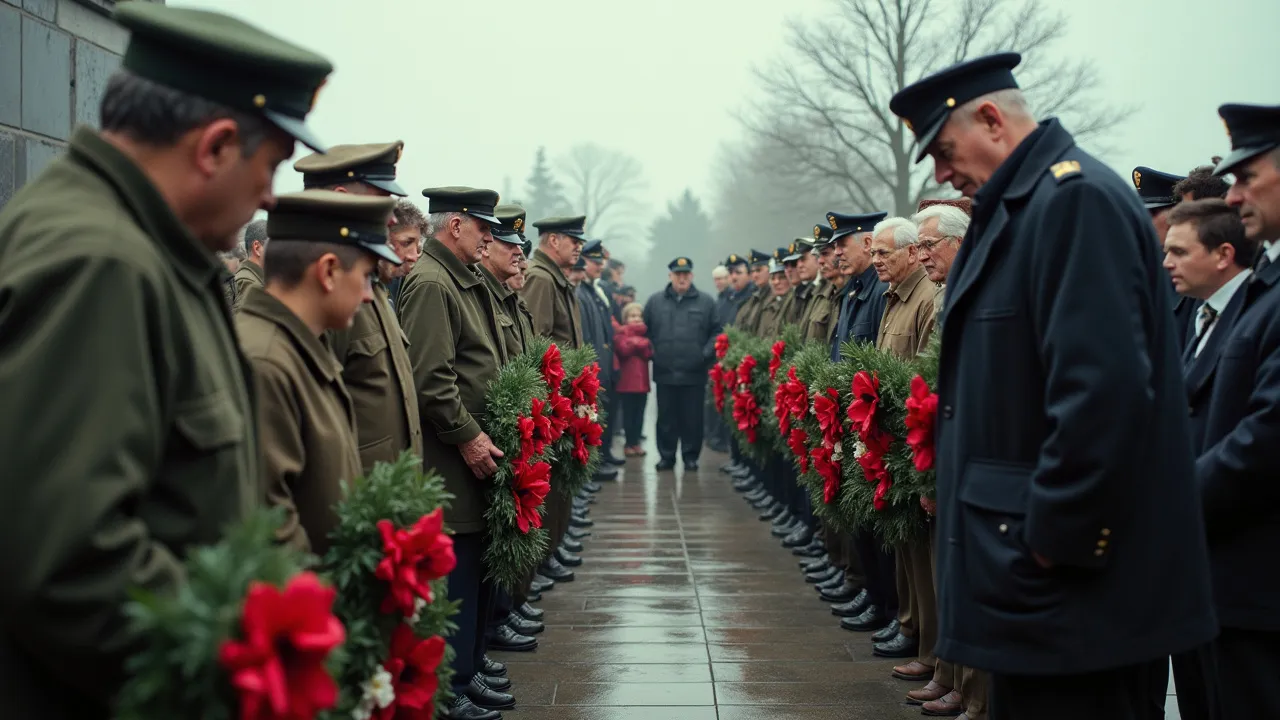
Observed on May 8-9, this UN-backed day honors the millions who perished in World War II. It encourages remembrance, reconciliation, and peace-building efforts worldwide.
The Historical Origins & Evolutionary Journey
The Time of Remembrance for Those Who Lost Their Lives During WWII traces its roots to the immediate aftermath of the Second World War. Although individual nations had long commemorated their own fallen, the concept of a unified, global day of remembrance emerged slowly.
The Foundational Catalyst
The end of World War II in Europe on May 8, 1945 (Victory in Europe Day) and the following day when the Soviet Union celebrated Victory Day on May 9 became symbolic anchors. These dates were already deeply significant for many countries, but a coordinated international observance was not established until decades later.
The Legislative/Official Adoption
In 2004, the United Nations General Assembly adopted Resolution 59/26, proclaiming May 8 and 9 as the Time of Remembrance and Reconciliation for Those Who Lost Their Lives during the Second World War. The resolution invited member states to observe these days annually with appropriate ceremonies and educational activities. The first official UN observance took place in 2005, marking the 60th anniversary of the war's end.
Modern Global Legacy
Today, the observance has grown to encompass a wide range of activities, from solemn memorial services to interactive classroom discussions. It serves as a reminder of the devastating cost of war and the continued importance of international cooperation to maintain peace.
How to Celebrate Time of Remembrance for Those Who Lost Their Lives During WWII
Observing this day can take many forms, from personal reflection to community-wide events. Below are actionable strategies for individuals, schools, and organizations.
- Attend a Memorial Ceremony: Many cities hold wreath-laying services at war memorials. Join local veterans' organizations or civic groups in honoring the fallen.
- Moment of Silence: Observe a minute of silence at 11:00 AM on May 8 or 9 to reflect on the sacrifices made.
- Educational Activities: Schools can organize lessons about WWII history, survivor testimonies, and the importance of peace. Use resources from the United Nations or local historical societies.
- Visit War Museums or Cemeteries: Explore exhibits or pay respects at military cemeteries. Many sites offer virtual tours for remote participation.
- Community Service: Volunteer at organizations supporting veterans or war widows, or participate in interfaith peace gatherings.
Regional variations include:
- Russia and former Soviet states: May 9 is Victory Day, marked with military parades, fireworks, and the wearing of St. George ribbons.
- Western Europe and the US: May 8 is V-E Day, often observed with remembrance ceremonies and parades in smaller towns.
- Israel: Holocaust Remembrance Day (Yom HaShoah) falls on a different date, but many communities also observe May 8-9.
Global Impact and Commemoration
The Time of Remembrance is observed in numerous countries, each adding its own cultural layer. In the United Kingdom, the Royal British Legion holds the Festival of Remembrance at the Royal Albert Hall. In France, the President lays a wreath at the Arc de Triomphe. In Germany, the day is marked with subdued reflection, acknowledging the war's devastation. The United Nations itself hosts a ceremony at its headquarters in New York, featuring speeches from diplomats and survivors.
The observance also emphasizes reconciliation. In recent years, former enemies have jointly participated in events, such as German and French officials standing together at memorials. This global unity underscores the universal desire to prevent future atrocities.
Core Themes: Peace, Remembrance, and Reconciliation
The Time of Remembrance is built on three pillars. First, remembrance: honoring the over 70 million people who died, both military and civilian. Second, reconciliation: healing old wounds and fostering dialogue between former adversaries. Third, peace: renewing commitment to resolve conflicts diplomatically.
Educational programs often highlight the Holocaust, the atomic bombings, and the suffering of prisoners of war. By learning from history, societies aim to build a more tolerant future. The day also ties into the United Nations' Sustainable Development Goal 16, promoting peaceful and inclusive societies.
Honoring Veterans and Survivors
The Time of Remembrance places special emphasis on living veterans and survivors of WWII. As their numbers dwindle, the urgency to capture and share their stories grows. Events often include veteran testimonies, oral history projects, and intergenerational dialogues.
Organizations like the Veterans History Project and Yad Vashem record these memories for posterity. Communities may also host ‘adopt a veteran’ programs, where schoolchildren correspond with elderly veterans. Such activities ensure that the personal cost of war is never forgotten.
Modern Relevance and Lessons for Today
In an era of renewed geopolitical tensions and armed conflicts, the Time of Remembrance remains profoundly relevant. International organizations use the day to reaffirm the principles of the UN Charter and the Universal Declaration of Human Rights. Discussions on preventing genocide, disarmament, and peacekeeping are often woven into observances.
The COVID-19 pandemic also shifted commemorations online, widening access. Virtual ceremonies, digital exhibitions, and social media campaigns now complement traditional events. The adaptability of the day shows its enduring importance across generations.
Historical Timeline
World War II in Europe ends with the surrender of Nazi Germany on May 8 (V-E Day) and May 9 in the Soviet Union.
United Nations General Assembly adopts Resolution 59/26, proclaiming May 8-9 as the Time of Remembrance and Reconciliation for Those Who Lost Their Lives during the Second World War.
First official UN observance of the Time of Remembrance, coinciding with the 60th anniversary of the end of WWII.
Expansion of commemorative activities worldwide, including first joint ceremonies by former Axis and Allied nations.
Due to COVID-19, many events moved online, with virtual ceremonies and digital archives launched to preserve veteran testimonies.
20th anniversary of the UN observance; global youth forums and peace summits planned to reinforce the day's message.