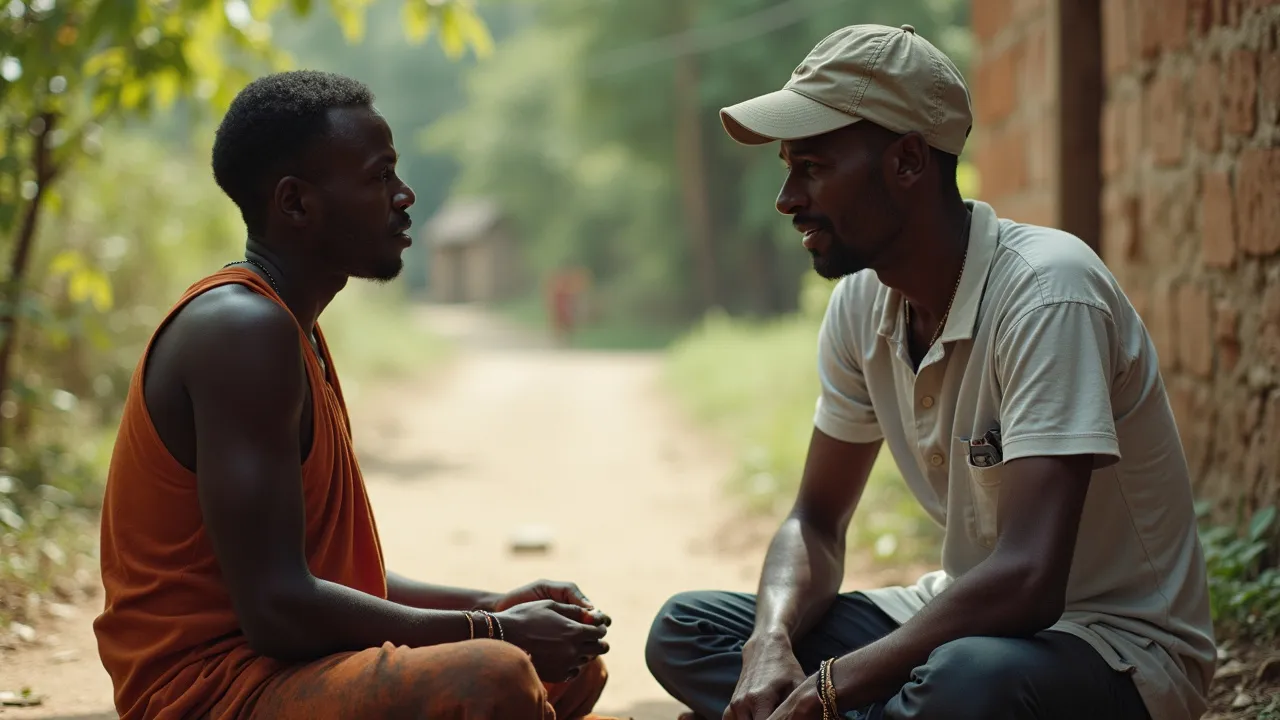
World Leprosy Day, observed on the last Sunday of January, raises awareness about Hansen's disease, combats stigma, and promotes early treatment and rehabilitation for affected individuals worldwide.
The Historical Origins & Evolutionary Journey
World Leprosy Day was first observed in 1954 by French humanitarian Raoul Follereau to raise awareness about leprosy (Hansen's disease) and combat the deep-rooted stigma surrounding it. The date was chosen to coincide with the birthday of Mahatma Gandhi, who had a deep compassion for people affected by leprosy. Over decades, the day has evolved from a small activist effort into a globally recognized observance supported by the World Health Organization and numerous non-profits.
The Foundational Catalyst
In the early 20th century, leprosy was widely misunderstood and feared. Patients were often isolated in colonies, shunned by society. Follereau, inspired by Gandhi's work, launched a campaign to change public perception. He organized the first World Leprosy Day in 1954, with the slogan 'Fight Leprosy, Not the Patient.' The day aimed to educate the public that leprosy is curable and not highly contagious.
The Legislative/Official Adoption
In 1995, the World Health Organization officially endorsed World Leprosy Day. Many countries integrated it into their national health calendars. The day gained further traction when the United Nations recognized it as a key observance to promote the rights of persons affected by leprosy. In 2010, the UN Human Rights Council adopted a resolution calling for the elimination of discrimination against persons affected by leprosy.
Modern Global Legacy
Today, World Leprosy Day is marked by awareness campaigns, free screening camps, and policy advocacy. The focus has shifted from mere treatment to holistic rehabilitation, including mental health support and socioeconomic inclusion. The day serves as a platform to push for early detection and to celebrate the millions of lives saved by multidrug therapy (MDT). In 2023, the WHO launched the 'Global Leprosy Strategy 2021–2030' with the goal of zero transmission, zero disability, and zero discrimination.
How to Celebrate World Leprosy Day
World Leprosy Day offers a powerful opportunity for individuals, schools, and organizations to take meaningful action. Whether through education, fundraising, or direct service, everyone can contribute to a world free of leprosy-related stigma and suffering.
For Individuals
- Educate yourself and others: Share accurate information about Hansen's disease on social media. Use the hashtag #WorldLeprosyDay to amplify the message.
- Donate to reputable organizations: Support groups like The Leprosy Mission, ILEP, or local NGOs providing medical care and rehabilitation.
- Volunteer: Offer your time at a leprosy colony or rehabilitation center. Even virtual volunteering, like translating awareness materials, helps.
- Fight stigma: Speak out against discriminatory language and myths. Use person-first language, e.g., 'person affected by leprosy' instead of 'leper'.
For Schools and Universities
- Organize awareness assemblies: Invite health experts or former patients to share personal stories. Show documentaries that humanize the condition.
- Fundraising drives: Collect funds for MDT supplies or reconstructive surgeries. Partner with medical students for health camps.
- Art and essay competitions: Encourage students to explore themes like 'compassion and inclusivity' or 'the science behind leprosy'.
For Organizations and Governments
- Launch screening campaigns: Set up mobile clinics in endemic areas. Use the day to promote contact tracing and prophylactic treatment.
- Policy advocacy: Push for the full implementation of the WHO Global Leprosy Strategy. Lobby for laws that protect the rights of affected persons.
- Media partnerships: Produce radio spots, TV interviews, and social media infographics that reinforce the message that leprosy is curable.
In countries like India, Brazil, and Indonesia, World Leprosy Day is marked by large-scale public events, while in Europe and North America, the focus is on fundraising and research support. Every action, big or small, helps dismantle barriers.
Global Impact of Leprosy: Epidemiological Data and Elimination Efforts
Leprosy remains a public health concern in over 120 countries, with more than 200,000 new cases reported annually. India, Brazil, and Indonesia account for the majority. However, thanks to robust elimination programs, the global prevalence has dropped by over 90% since the introduction of MDT in the 1980s.
The Burden of Disease
Leprosy primarily affects the skin and peripheral nerves, leading to permanent disabilities if untreated. The highest transmission occurs in impoverished communities with poor sanitation. Children are especially vulnerable. The World Health Organization classifies leprosy as a neglected tropical disease (NTD).
Milestones in Elimination
- 1981: WHO recommends free multidrug therapy (rifampicin, clofazimine, and dapsone).
- 1991: World Health Assembly sets a goal to eliminate leprosy as a public health problem by 2000 (prevalence below 1 per 10,000).
- 2000: Global elimination achieved at the macro level, though pockets persist.
- 2016: WHO launches the 'Global Leprosy Strategy 2016–2020' focusing on early detection and prevention.
- 2021: New strategy aims for zero transmission by 2030.
Despite progress, diagnosis delays average 1–3 years in many regions, leading to disability. Active case finding and contact tracing remain essential.
Overcoming Stigma and Social Discrimination
Stigma is often more debilitating than the disease itself. People affected by leprosy face social exclusion, loss of employment, and even family rejection. Misconceptions about the disease's contagiousness persist, despite scientific evidence that leprosy is only mildly contagious and easily cured.
Myths vs. Facts
- Myth: Leprosy is highly contagious.
Fact: Over 95% of people have natural immunity; transmission requires prolonged, close contact. - Myth: Leprosy causes body parts to fall off.
Fact: It can cause nerve damage and loss of sensation, leading to injuries, but limbs do not 'fall off'. - Myth: There is no cure.
Fact: MDT can cure leprosy completely within 6–12 months.
How to Combat Stigma
Education is key. Share factual information through community meetings, school curricula, and media. Use advocacy from former patients—they are powerful agents of change. Legal frameworks that prohibit discrimination based on health status are also crucial. Organizations like IDEA (International Association for Integration, Dignity and Economic Advancement) empower affected individuals to lead self-help groups.
Advancements in Treatment and Research
Research into leprosy has yielded breakthroughs that have saved millions of lives. From the development of multidrug therapy to new diagnostic tools, science continues to drive progress.
Multidrug Therapy (MDT)
Introduced in the 1980s, MDT is a combination of three antibiotics—rifampicin, clofazimine, and dapsone—administered for 6–12 months. It is highly effective and provided free of charge by the WHO to all endemic countries. The cure rate exceeds 99%.
Diagnostic Innovations
- Slit-skin smears: Traditional microscopy for detecting Mycobacterium leprae.
- Molecular tests (PCR): Detect bacterial DNA even in paucibacillary cases.
- Serological tests: Anti-PGL-I antibody tests help identify subclinical infection.
Vaccine Development
BCG vaccine offers partial protection. A specific anti-leprosy vaccine, LepVax, is in clinical trials and shows promise in preventing infection and disease progression. Research into immune modulation and nerve regeneration is ongoing.
Role of Organizations and Government Initiatives
Numerous international and local organizations work tirelessly to support leprosy-affected communities. Their efforts range from medical care to socioeconomic rehabilitation.
Key Organizations
- World Health Organization (WHO): Coordinates the global strategy, provides free MDT, and monitors elimination.
- International Federation of Anti-Leprosy Associations (ILEP): Umbrella of 15 member associations that fund and implement programs.
- The Leprosy Mission: Christian charity operating in over 30 countries, focusing on treatment, rehabilitation, and advocacy.
- Novartis Foundation: Supports leprosy research and elimination efforts in endemic regions.
Government Success Stories
India's National Leprosy Eradication Programme (NLEP) has reduced prevalence from over 4 million cases in 1985 to less than 50,000 today. Brazil's Ministry of Health integrates leprosy detection into primary care. Bangladesh has achieved elimination at the national level through aggressive case-finding campaigns. World Leprosy Day provides a platform to celebrate these successes and accelerate efforts in remaining hotspots.
Historical Timeline
Raoul Follereau launches the first World Leprosy Day on the last Sunday of January to honor Mahatma Gandhi's compassion for leprosy patients.
Dapsone resistance emerges, prompting research into combination therapies. The foundation for multidrug therapy (MDT) is laid.
The World Health Organization recommends the use of MDT (rifampicin, clofazimine, dapsone) for all leprosy patients, revolutionizing treatment.
The World Health Assembly passes a resolution to eliminate leprosy as a public health problem by the year 2000 (prevalence <1 per 10,000).
WHO officially endorses World Leprosy Day, encouraging member states to participate.
Global elimination of leprosy as a public health problem is achieved at the macro level. However, endemic pockets remain in a few countries.
The UN Human Rights Council adopts a resolution on the elimination of discrimination against persons affected by leprosy and their family members.
WHO launches the Global Leprosy Strategy 2016–2020, focusing on early detection, prevention of disability, and stigma reduction.
WHO announces the Global Leprosy Strategy 2021–2030 with ambitious goals: zero transmission, zero disability, zero discrimination.
Leprosy vaccine (LepVax) enters Phase I/II clinical trials, offering hope for prophylactic use in high-risk populations.