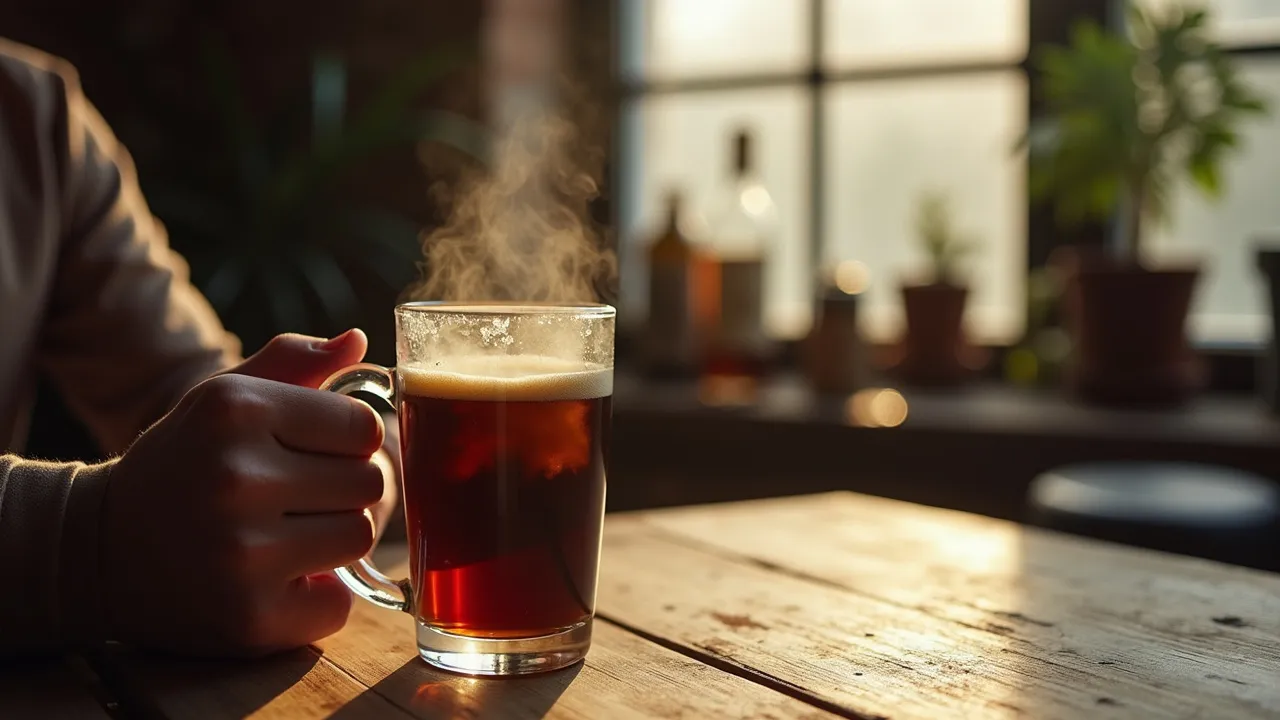
National Irish Coffee Day, observed on January 25th, celebrates the iconic blend of coffee, Irish whiskey, sugar, and cream. Learn its rich history, perfect recipe, and global traditions.
The Historical Origins & Evolutionary Journey
National Irish Coffee Day, celebrated annually on January 25th, honors a beloved cocktail that marries the warmth of coffee with the kick of Irish whiskey, sweetened with sugar and topped with a thick layer of cream. The story behind this iconic drink begins in a chilly airport terminal in 1940s Ireland.
The Foundational Catalyst
In 1943, chef Joe Sheridan worked at the Foynes Airbase (now Shannon Airport) in County Limerick. One particularly cold winter evening, a flight bound for Newfoundland was forced to return due to bad weather. Sheridan, wanting to warm the passengers, concocted a mixture of hot coffee, Irish whiskey, and sugar, then topped it with thick cream. When asked if they were serving Brazilian coffee, Sheridan famously replied, "No, that's Irish coffee." The passengers quickly fell in love, and the drink's reputation spread.
The recipe traveled to the United States in 1952 when travel writer Stanton Delaplane brought it to the Buena Vista Cafe in San Francisco. Owner Jack Koeppler worked with Delaplane to replicate the exact recipe, and the Buena Vista became the epicenter of Irish coffee culture in America, serving thousands daily.
The Legislative/Official Adoption
In the late 1970s, the National Dairy Council sought to promote dairy products and saw an opportunity in Irish coffee's popularity. They lobbied for an official day of celebration to encourage home consumption. In 1979, January 25th was designated as National Irish Coffee Day, chosen to coincide with the mid-winter lull and the need for warming drinks. The date stuck, and it has been recognized unofficially ever since, despite no formal congressional proclamation.
Modern Global Legacy
Today, Irish coffee is enjoyed worldwide, not just on January 25th but as a classic cocktail. Bars compete for the best recipe, and variations include the use of cold brew, flavored syrups, and alternative dairy like oat milk. The drink's cultural significance is celebrated in literature, film, and music, symbolizing Irish hospitality and comfort.
How to Celebrate National Irish Coffee Day
National Irish Coffee Day offers a perfect excuse to indulge in this warming cocktail. Whether you're a seasoned pro or a first-timer, here's a comprehensive guide to celebrating the day properly.
Master the Classic Recipe
The authentic Irish coffee requires precision. Use strong hot coffee, quality Irish whiskey (like Jameson or Bushmills), brown sugar (demerara is best), and lightly whipped heavy cream. The cream must be poured gently over the back of a spoon to float on top without mixing. Never stir the cream into the coffee; drink the coffee through the cream for a perfect balance.
Celebration Ideas
- Host a Tasting Party: Invite friends over and try different Irish whiskeys. Rate each on warmth, sweetness, and creaminess.
- Support Local Bars: Visit your neighborhood pub and order an Irish coffee. Many establishments offer specials on January 25th.
- Make It a Virtual Event: Schedule a video call with friends and family, share recipes, and enjoy Irish coffee together remotely.
- Pair with Desserts: Irish coffee pairs beautifully with chocolate cake, crème brûlée, or shortbread cookies.
Corporate and Social Rituals
- Office Coffee Cart: Organize a pop-up Irish coffee station in the break room, complete with recipe cards and branded cups.
- Charity Drive: Partner with a local shelter to serve Irish coffee (non-alcoholic versions for all) and donate proceeds to a warming center.
- Social Media Challenge: Post your best Irish coffee photo with the hashtag #NationalIrishCoffeeDay and tag your favorite coffee roaster or distillery.
Global Variations
While January 25th is the primary date worldwide, some regions have their own twists. In Ireland, the day is a low-key private affair with friends. In Japan, Irish coffee is often served cold as a summer variant. In Australia, it's enjoyed as an after-dinner drink on warm evenings. No matter where you are, the key is to savor the moment.
The Science Behind the Perfect Pour
Temperature and Emulsion
The magic of Irish coffee lies in the temperature gradient. The coffee must be hot (but not boiling) to melt the sugar and release the whiskey's aromatics. The cream must be cold to achieve the correct density—light enough to float but thick enough to hold on top. Gravity and viscosity are key: if the cream is too heavy, it sinks; if too light, it dissipates. The ideal pour uses a spoon to break the fall, creating a distinct layer.
Whiskey Selection
Irish whiskey, triple-distilled for smoothness, is essential. Single pot still or blended? Most bartenders recommend a mid-range blend like Jameson for balance. High-end single malts add complexity but can overpower the coffee. The ABV matters: 40% is standard; higher proof can create a cleaner burn.
Interestingly, the sugar type affects the mouthfeel. White sugar dissolves clearly, while brown sugar adds a caramel note. Demerara sugar provides a slight crunch if not fully dissolved, adding texture. The cream should have at least 30% milk fat for proper whipping.
Cultural Impact and Societal Themes
Irish coffee symbolizes more than just a drink; it represents a bridge between Irish heritage and global cocktail culture. It appears in films like Breakfast at Tiffany's (where Audrey Hepburn orders it) and literature from Ernest Hemingway to modern Irish poets. The drink is often associated with hospitality, comfort, and a slower pace of life.
Socially, Irish coffee days serve as an occasion for conviviality, breaking winter isolation. In an age of craft cocktails, it remains a simple yet sophisticated choice. The drink also highlights the economic contributions of both the coffee and whiskey industries, supporting farmers, distillers, and baristas.
Furthermore, Irish coffee has inspired countless variations: the Calypso Coffee with rum, the Spanish Coffee with brandy, and non-alcoholic versions for designated drivers. Its adaptability ensures its longevity.
Industry Transformation and Market Trends
The Irish coffee market has evolved significantly. Ready-to-drink (RTD) Irish coffees are now available in cans and bottles, often found in supermarkets. Brands like Balle Buster and The Liffey have capitalized on the trend. The global RTD coffee market, valued at $24 billion in 2023, sees Irish coffee as a niche but growing segment.
Coffee shops and bars continually experiment with variations, such as using cold brew concentrate, adding spices like cinnamon or nutmeg, or substituting cream with coconut cream for dairy-free options. In Ireland, the traditional recipe is protected by some purists, but innovation thrives.
The day also drives tourism: Shannon Airport, where the drink was born, offers Irish coffee experiences, and the Buena Vista Cafe in San Francisco remains a must-visit spot. The economic impact is measurable in increased sales for whiskey, coffee, and dairy during January.
Health Considerations and Responsible Enjoyment
While Irish coffee is a treat, it's wise to consider its caloric and alcohol content. A standard 8-ounce serving contains roughly 250–300 calories, primarily from sugar and cream. The alcohol content is about 1–1.5 ounces of whiskey, equivalent to a standard drink. For those watching their health, alternatives exist:
- Light Version: Use skim milk, sugar substitute, and reduce whiskey to half an ounce.
- Caffeine Sensitivity: Decaf coffee works well—the flavor profile remains robust.
- No Alcohol: A simple cream-topped coffee with brown sugar can mimic the experience.
Always drink responsibly and avoid driving after consuming alcohol. The day is best enjoyed in a relaxed setting where you can savor each sip.
Historical Timeline
Chef Joe Sheridan invents Irish coffee at Foynes Airbase in County Limerick, Ireland, to warm stranded passengers.
American travel writer Stanton Delaplane brings the recipe to the Buena Vista Cafe in San Francisco, where it becomes a sensation.
The National Dairy Council establishes National Irish Coffee Day on January 25th to promote dairy consumption.
Irish coffee becomes a staple in coffee shop menus worldwide, with variations like iced and spiced versions.
Ready-to-drink Irish coffee cans emerge, popularizing the drink in supermarkets and convenience stores.
During the pandemic, virtual Irish coffee nights and home mixology boost the drink's popularity online.